Published: July 11, 2026 | Author: Karl Huang
Why you can trust this guide
Most of what gets written about Ghost City Xinjiang online is a copy of a copy, full of the same three adjectives and a sunset photo that could be anywhere. I am not writing from a brochure, and I am not going to pretend the place is comfortable. Ghost City Xinjiang earned its name because the wind never stops and the shapes look like ruined buildings. I drove into the Urho yardang field myself on a windy Tuesday in early June 2025, rode the park shuttle with a retired geology teacher from Karamay, and came back with wind-burned lips and a phone full of bad night shots. Everything below comes from that trip plus what the on-site rangers and the geopark’s own signage told me. Where I am unsure, I say so.
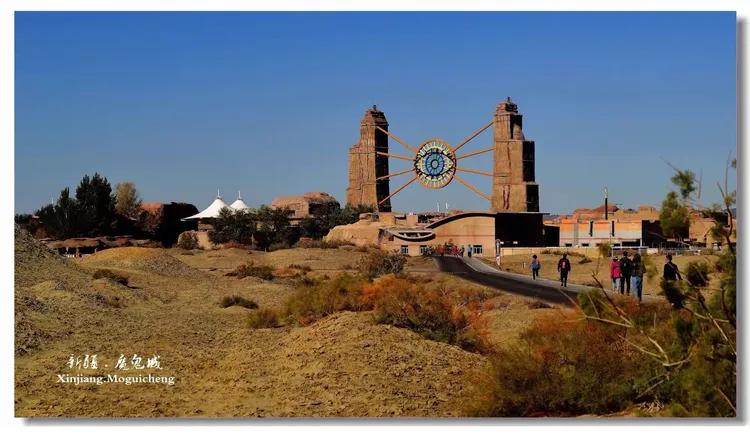
The place locals call “the ghost city” is officially the World Ghost City (世界魔鬼城), a yardang geopark inside Urho District of Karamay, in the far north of Xinjiang. A yardang is not a mountain and not a canyon. It is what happens when soft rock sits in a wind tunnel for a few million years. The result looks like a flooded city whose buildings eroded sideways, which is exactly why 19th-century travelers started calling these fields “ghost towns.”
Quick reference
| Item | Detail |
|---|---|
| Official name | World Ghost City (世界魔鬼城), Urho Yardang Geopark |
| Where it is | Urho District, Karamay City, northern Xinjiang |
| Distance from Karamay | About 100 km, roughly 1.5 hours by car |
| Landform | Yardang, wind- and water-eroded sandstone and mudstone |
| Best months | May through October |
| Ticket + shuttle | Around 62 RMB per person (verify on the official park site before you go) |
| Time needed | 2 to 3 hours inside the park |
| Facilities | Paved boardwalks, shuttle buses, viewing platforms, one cafe at the gate |
What it actually feels like on the ground
We arrived at the gate around 5 p.m., which the ranger at the ticket booth told us was the right call. The wind was already moving hard, a steady 40 km/h gust that pushed the shuttle door shut on my finger. Inside the park the road loops past formations the geopark has named: the “Sphinx,” the “Great Hall of the People,” the “Three Musketeers,” a lump they call the “Kirin.” Some of the names are a stretch. The Sphinx mostly looks like a Sphinx if you squint and already believe.
What is not a stretch is the sound. With no trees and no buildings for miles, the wind whips through the eroded gullies and makes a low moan that genuinely spooked my travel partner Emma, who had read the ghost stories the night before. That moan is the whole reason for the name. It is not ghosts. It is acoustics. But standing there at dusk, with the rock going from brown to purple, I understood why nobody wanted to sleep out here.
The geopark signs explain the geology in plain Chinese and English: the rock here is mostly late Cretaceous mudstone and sandstone, laid down when this was a lake bed, then carved by the dominant northwest wind once the climate dried out. Our shuttle driver, a quiet man named Batyr, said the tallest “building” is about 50 meters. I did not measure it. The sign did not either, so treat that as local lore.
One thing the signs left out, and Batyr filled in, is how fast the field is still changing. A formation that stood proud twenty years ago can slump after a wet spring, because the mudstone softens and then the next dry season’s wind takes a chunk out of it. He pointed to a stump near the Kirin where, he said, there used to be a clear “head.” It was gone. That is the part no photo captures: this is not a monument, it is a process, and the process is slowly erasing the thing you came to see. I found that oddly moving rather than sad.
Getting to Ghost City Xinjiang
There is no train that drops you at the gate. The practical ways in:
- From Karamay city: Hire a car or join a day tour. It is a straight 100 km run northwest on the G217, about 90 minutes. Most hotels in Karamay can arrange a driver for 300 to 400 RMB round trip.
- From Urumqi: Driving the G217 desert highway takes 4.5 to 5.5 hours depending on stops. Many people pair this with the route up to Burqin and Kanas, since the ghost city sits on that line. If you would rather not drive, look at Xinjiang’s high-speed rail network to get within reach of Karamay first, then transfer to road.
- Organized tours: Several Urumqi and Karamay operators run one-day loops that include the geopark. Cheaper than a private car if you are solo, but you lose the late-afternoon light.
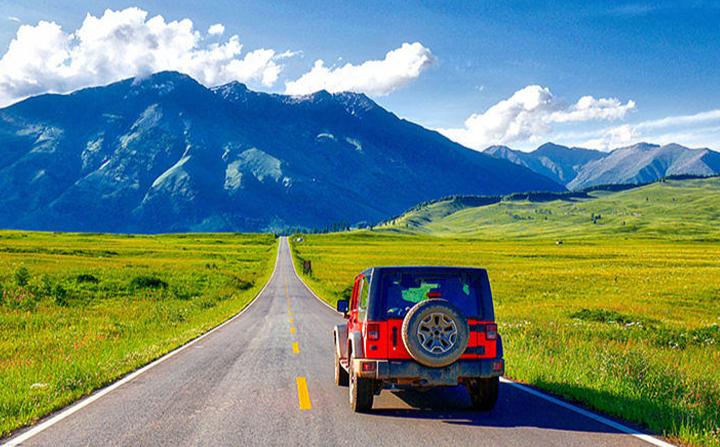
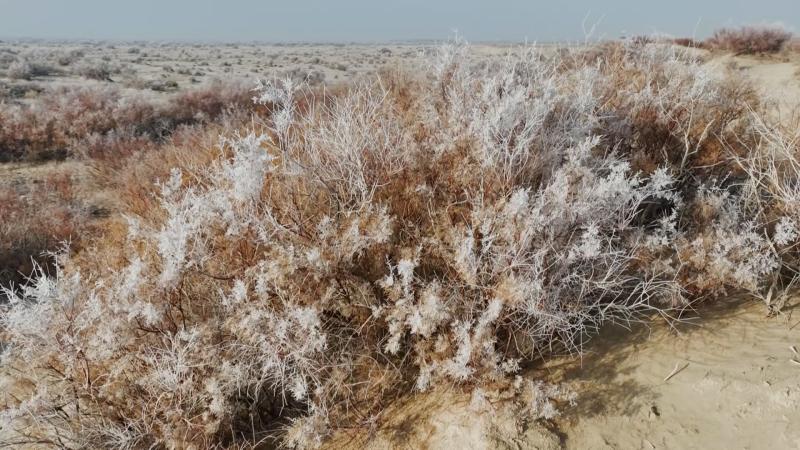
A practical note on the drive: the G217 between Karamay and Urho is flat, paved, and boring, which is the good kind of road in Xinjiang. The section north of Urho toward Burqin is where it gets interesting, with long straight shots across open Gobi and the occasional herd of camels blocking the lane. Fuel up in Karamay. The stretch has gas but not always at the hour you want it, and the wind can kick up dust that drops visibility fast. If you are driving yourself, leave the speeding for the highway and watch the road, not the skyline.
Best time to visit
Late spring to early autumn is the window. May and September are the sweet spots: warm enough to be comfortable, windy enough to hear the place work, but not the furnace heat of July and August, when surface temperatures on the exposed boardwalks hit the high 30s Celsius. We went in early June and it was about 26 degrees with a brutal wind, which I preferred to the alternative.
Winter is possible and almost empty, but the geopark gets below minus 20 at night and some shuttle service is reduced. I would only go then if you are already in Karamay for the ice and accept a shorter visit. Whatever the season, aim to be inside between 4 and 7 p.m. The light does the work the names cannot.
Where to stay
Karamay city is the sensible base. It is a real oil town with proper hotels from budget chains to a couple of four-stars, good food, and easy morning departures. Expect to pay from about 220 RMB for a clean budget room to 600 plus for a top-end place, with summer being the tight season. Urho District itself has smaller guesthouses and one or two newer hotels right by the geopark gate if you want to be first in at open and last out at close. We stayed in Karamay and left at 3 p.m., which gave us the late light without paying resort prices. If you are continuing north toward Burqin, sleep there instead and hit the ghost city on the way out. Booking ahead matters in July and August, when the Kanas-bound traffic fills every bed between Karamay and the north.
What to eat
Karamay eats like the rest of northern Xinjiang: hand-pulled laghman, grilled chuanr, and the usual Xinjiang staples every traveler should know before arriving. Inside the geopark there is one cafe at the entrance selling overpriced instant noodles and warm cola, so eat in the city first. The oil-worker diners near the Karamay bus station do a mean da pan ji (big plate chicken) with belt-thick noodles, and they open late, which matters after a long drive back.
Practical tips
- Wind protection: Bring a scarf or buff for your face. The grit gets everywhere, including your camera sensor.
- Water and sun: Shade is almost none. Hat, sunscreen, two liters of water per person in summer.
- Shoes: Boardwalks are solid, but if you step off them the ground is loose mudstone that crumbles. Stay on the path; the park fines off-trail walking.
- Photos: A polarizer helps cut the haze. For composition ideas by region, our Xinjiang photography guide breaks down timing across the whole region.
- Cash backup: Card and Alipay work at the gate, but the remote shuttle stop had no signal the day we went. Keep some cash.
Sample half-day itinerary
2:30 p.m. Leave Karamay by car. 4:00 p.m. Arrive, buy the combo ticket, board the shuttle. 4:15 to 6:15 p.m. Loop the named formations, walk the Sphinx boardwalk, shoot the purple hour. 6:30 p.m. Gate cafe for a snack, then drive back. 8:00 p.m. Dinner in Karamay. If you are self-driving north the next day, swap Karamay for a Urho guesthouse and leave at 9 a.m. toward Burqin.
FAQ
Is the Ghost City the same as a Yadan landform?
Close enough for a traveler. “Yadan” is the geological term for this exact wind-carved ridge shape. The Urho site is one of the most accessible yardang fields in China, which is why it got the geopark status.
Can I visit without a tour?
Yes. Buy a ticket at the gate, ride the included shuttle. You do not need a guide, though the ranger talks at the main stops are worth catching.
Was a movie filmed here?
The geopark has been used as a backdrop for several Chinese films and TV dramas because the landscape is so strange. I could not confirm which ones on site, so I will not guess.
How long is the shuttle loop?
About 9 km with seven or eight stops. The full ride with photo breaks took us just under two hours.
Disclaimer
Prices, opening hours, shuttle routes, and ticket bundles at World Ghost City change without notice, and the figures above reflect a single visit in June 2025. Always confirm the current rate and any seasonal closure on the official Karamay tourism channels or at the gate before you commit to a driver. This article is a personal travel account, not official advice, and I am not responsible for changes, closures, or the state of your camera after the wind.
About the author
Karl Huang is a Xinjiang-based travel writer who has spent the last several years driving the region’s back roads from the Gobi to the Pamir. He focuses on practical, first-hand guidance for independent travelers and contributes to Xinjiang Attractions. He has visited the Urho yardang field personally and wrote this guide from that trip.