Published: July 24, 2026 | Author: Nils Aaberg, architectural historian and heritage documentation photographer
The first thing that struck me in Kashgar was not a building but a doorway. It was carved timber, painted the faded blue of a winter sky, set into a plain mud-brick wall with nothing announcing what lay behind it. That gap between the modest street and the ornament of the threshold is, in a sentence, what makes Xinjiang Islamic architecture so rewarding to study. Over four field trips between 2016 and 2024 I measured, sketched, and photographed dozens of mosques and tombs across the region, and I still find new details every visit. This guide is what I wish someone had handed me before my first one.
Why Xinjiang Islamic architecture looks the way it does
Sitting on the old Silk Road, Xinjiang absorbed building ideas from every direction and kept the ones that worked in a dry, hot, earthquake-prone land. You will see Persian pointed arches and glazed tilework, Central Asian domes and slender minarets, and, further east, timber brackets and upturned eaves borrowed from Chinese carpentry. Local craftsmen tied these together with materials at hand: sun-dried brick, poplar beams, carved gypsum (a technique called ganch), and the deep turquoise and cobalt tiles that survive the region’s brutal temperature swings.
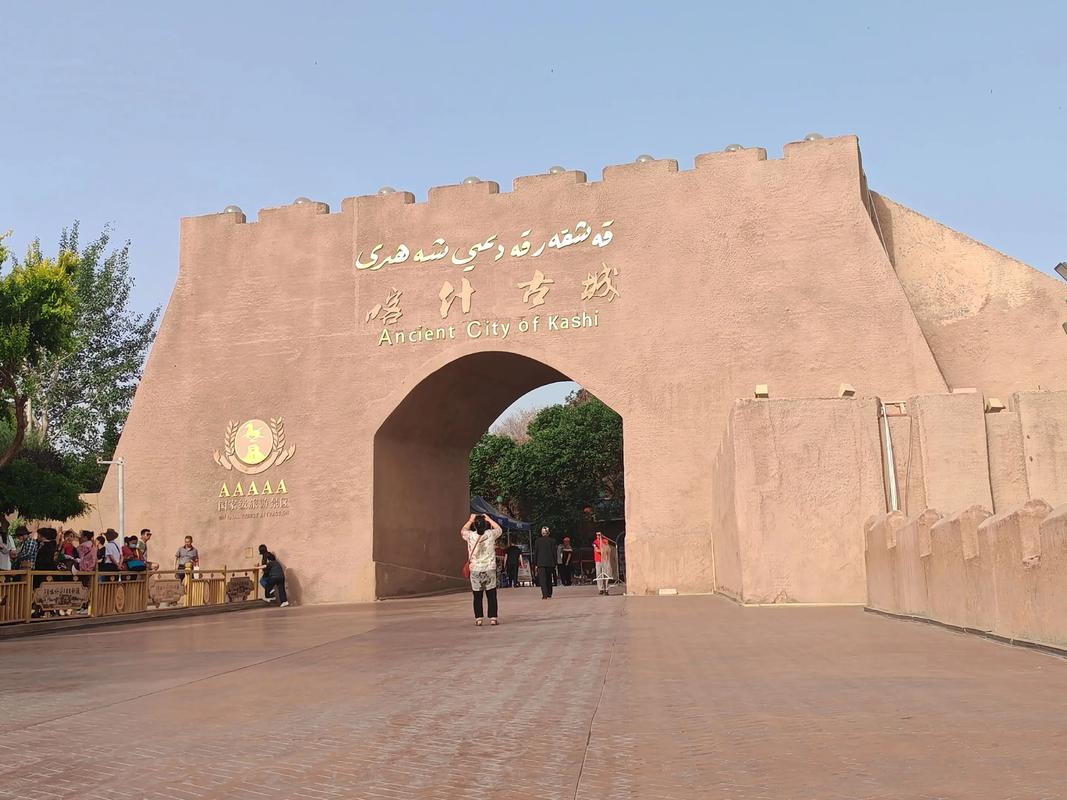
Because much of the region is seismic, older structures rarely reach for great height. Instead they spread horizontally, with flat or shallow-domed prayer halls and forests of slim wooden columns. When we walked the lanes of the Kashgar Old City, our guide pointed out how neighborhood mosques hide in plain sight, their entrances no grander than the houses around them. Grandeur was reserved for the tombs of saints and rulers.
Quick reference: Xinjiang Islamic architecture at a glance
| Site | Type | What makes it special | Location |
|---|---|---|---|
| Id Kah Mosque | Congregational mosque | Yellow-tiled portal, poplar-column hall, largest mosque in the region | Kashgar |
| Apak Khoja Mausoleum | Tomb complex | Green-tiled dome, family crypt, glazed geometric tilework | Kashgar (east) |
| Emin Minaret (Sugong Ta) | Minaret + mosque | 44m tapering brick tower with 15 patterned bands, built 1778 | Turpan |
| Neighborhood mosques | Local prayer halls | Carved doors, painted ceilings, quiet courtyards | Across southern Xinjiang |
The mosques: from the grand to the everyday
The obvious starting point is the Id Kah Mosque in Kashgar. Its yellow-tiled front gate, flanked by two round minarets, is the postcard image, but the part that held me was the prayer hall behind it: rows of painted poplar columns holding up a low wooden ceiling, the light coming in soft and horizontal. It feels less like a monument and more like a shaded grove, which I suspect is the point in a place where summer heat is the real enemy.
What most photographs miss is how these buildings breathe with the seasons. On a January morning the courtyard was nearly empty and the tile glaze looked almost grey; by the following autumn the same tiles blazed gold in the low sun. If you can, visit at two different times of day. Early light rakes across the carved surfaces and shows you texture that midday flattens out.
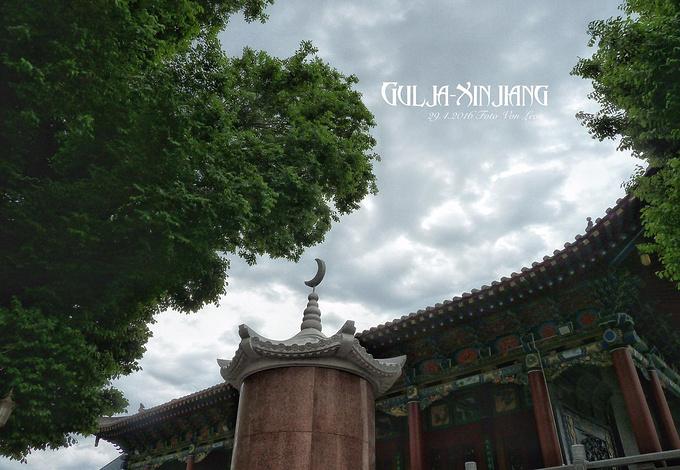
Do not skip the small neighborhood mosques. They are usually locked outside prayer times and are not tourist sites, so admire them from the street rather than expecting to go in. The reward is in the details: a hand-carved door, a painted eave, a niche of turquoise tile set into an otherwise bare wall. These are the buildings that taught me how much artistry ordinary communities poured into a modest space.
The mausoleums: where the tilework goes wild
If mosques here tend toward restraint, the tombs let loose. The Apak Khoja Mausoleum on the eastern edge of Kashgar is the finest example: a single great dome sheathed in green and white glazed tile, framed by corner towers, with a family crypt inside holding rows of tiled cenotaphs. The building is often linked in popular stories to the “Fragrant Concubine,” and while the historical claims are shaky, the architecture needs no legend to justify the visit.
Stand close to the dome and you start to read the tilework like a text. The patterns are almost entirely geometric and floral, in keeping with the tradition of avoiding figural images in religious contexts. When I spent an afternoon photographing the base of the dome, I could pick out repeating star-and-polygon grids, each tile cut and fired separately, then set by eye. The slight irregularities are what make it beautiful; a machine-perfect version would feel dead.
Minarets and the Turpan exception
The single most distinctive structure in the region is the Emin Minaret outside Turpan, known locally as Sugong Ta. Finished in 1778, it is a tapering tower of plain sandy brick, and instead of tile it is decorated entirely through brickwork: fifteen or so horizontal bands, each laid in a different geometric pattern, so the whole 44-metre column reads like a woven basket turned to stone. I have photographed a lot of minarets, and this is the only one where the ornament and the structure are the same thing. Pair a visit with the Emin Minaret guide for the historical background.
Getting there and how to plan a route
Most of the best religious architecture clusters in the south, around Kashgar, with Turpan sitting on the eastern side near Urumqi. A practical loop is to fly into Kashgar, spend two or three days on the old city, Id Kah, and Apak Khoja, then travel east. High-speed and conventional trains connect Kashgar, Aksu, Korla and Urumqi; from Urumqi, Turpan is a short train ride and easy as a day trip or overnight.
Within cities, taxis and ride-hailing are cheap and simple. For Apak Khoja and the Emin Minaret, both slightly outside their town centres, a metered taxi or a booked half-day car is the least stressful option. I usually hire a local driver for the Turpan sites so I can chase the good light without watching the clock.
Best time to visit
For architecture photography, aim for late April to early June or September to October. Summer works but Turpan in July can top 45 degrees, which is punishing for a day of walking. Winter has its own austere beauty and almost no crowds, though some sites keep shorter hours. Whatever the season, the first two hours after sunrise and the last two before sunset are when tile and carved brick look their best.
Where to stay and what to eat
In Kashgar, staying inside or on the edge of the old city puts you within walking distance of Id Kah and lets you photograph the lanes before the day-trip buses arrive. In Turpan, a hotel near the town centre keeps the minaret and the karez sites in easy reach. After a morning of shooting I usually end up at a bazaar for hand-pulled noodles or a plate of pilaf; the Urumqi International Bazaar is a good place to combine food, tile souvenirs and people-watching if you pass through the capital.
Practical tips for visiting religious sites respectfully
- Dress modestly: cover shoulders and knees, and carry a scarf. See our Xinjiang dress code guide for specifics.
- Remove your shoes before entering any prayer hall, and follow whatever the caretaker signals.
- Avoid visiting during the main prayer times if you are only there to sightsee; come mid-morning or mid-afternoon instead.
- Ask before photographing people at prayer. Photographing the buildings themselves is almost always fine.
- Keep your voice low inside tombs and halls. These are living places of worship, not museums.
A sample two-day architecture itinerary
Day 1 (Kashgar): Sunrise walk in the old city, then Id Kah Mosque as it opens. Late morning at a teahouse to escape the heat. Afternoon at the Apak Khoja Mausoleum for the low, warm light on the dome. Evening back in the old city for dinner.
Day 2 (Turpan, if time allows): Early train or drive east. Emin Minaret first thing for the brick patterns before the sun gets high, followed by the nearby karez site. Return in the evening. To understand the living culture behind these buildings, read our overview of Uyghur culture and daily life.
Frequently asked questions
Can non-Muslims enter the mosques in Xinjiang? Major sites like Id Kah admit visitors for a ticket outside prayer times. Small neighborhood mosques are generally not open to tourists, so view them from outside.
Is there an entrance fee? The well-known sites charge a modest ticket, typically in the range of a few tens of yuan. Prices change, so check locally.
What is the difference between a mosque and a mausoleum here? A mosque is a place of communal prayer; a mausoleum is a tomb, often of a religious figure or ruler. In Xinjiang the tombs tend to carry the most elaborate tilework.
How much time do I need? Two full days covers the headline sites in Kashgar plus Turpan. Add a day if you want to slow down and photograph properly.
Is the “Fragrant Concubine” buried at Apak Khoja? The popular story is romantic but historically unproven. Enjoy the building on its own architectural merits.
Disclaimer
Details such as opening hours, ticket prices and access rules change frequently and can vary by season and local circumstance. Please verify with official site notices or a licensed local guide before you travel. This article reflects my personal observations across visits between 2016 and 2024 and is intended as general travel guidance, not religious instruction. I have kept the focus on architecture and visitor etiquette and avoided any political commentary.
About the author
Nils Aaberg is an architectural historian and heritage documentation photographer based in Oslo. He has spent four field seasons across Xinjiang (2016 to 2024) measuring and photographing Silk Road religious buildings, and has lectured on Central Asian tile and brick ornament. He travels with a licensed local guide and defers to community norms at every site he documents.