Published: July 26, 2026 | Author: Hugh Prentice, hot-climate travel writer
Most people treat Turpan as a half-day box to tick: bus in from Urumqi, march around a ruin or two, buy a bag of raisins, bus out. I did exactly that on my first pass in 2019 and regretted it. This Turpan city guide is what I wish someone had handed me back then, written after two proper stays: eleven nights across August 2023, when the thermometer at the Flaming Mountains read 46 C, and a gentler week in May 2025 when the grape trellises were just leafing out. The town rewards people who slow down, and it punishes people who ignore the heat.
I write about hot cities for a living, from Seville to Jodhpur, so Turpan sits squarely in my wheelhouse. Everything below is stuff I paid for, ate, or got wrong myself. Prices are what I actually handed over, rounded to the nearest yuan.
Why trust this Turpan city guide
I am not a tour operator and nobody comped my rooms. I stayed in the old grape-growing lanes near the city’s northeast edge, took the local buses, argued (badly) over melon prices, and spent an embarrassing amount on cold apricot juice. Where I only heard something secondhand, I say so. Turpan changes fast in summer as new hotels open, so double-check opening hours the week you go.
Quick reference: Turpan at a glance
| Detail | What to know |
|---|---|
| Best months | Late April to early June; September to mid-October |
| Summer reality | July-August daytime often 42-48 C in the sun |
| Nights needed | 2 to 3 to see the city and its edges properly |
| Getting there | High-speed train from Urumqi (about 1 hr) to Turpan North |
| Money | Mobile pay everywhere; carry ~100 CNY cash for melon stalls |
| Local speciality | Grapes, Hami melon, hand-pulled laghman, cold noodles |
What I got wrong, and what I got right
My biggest 2023 mistake was scheduling. I planned a 1 pm walk through the old town on my first full day. By 1:30 I was hiding in a mosque courtyard with a headache, having drunk a litre of water and sweated all of it out. Turpan runs on a split rhythm in summer: locals do their errands before 11 am, vanish indoors through the worst of the afternoon, then reappear around 7 pm when the light softens and the grape courtyards fill up. Copy that rhythm and the city opens up. Fight it and you will spend your trip miserable and indoors.
What I got right, eventually, was staying inside the grape lanes rather than at a business hotel by the train station. My guesthouse courtyard had a vine roof so thick the light came through green, and it was genuinely five or six degrees cooler than the street. The owner, a retired schoolteacher named Rahman, kept a clay jar of cold apricot kernels and refused to let me leave in the afternoon. That courtyard, not any ruin, is my strongest memory of the place.
Getting to Turpan and moving around
The easy way in is the high-speed train from Urumqi to Turpan North station, which took me about an hour and cost 54 CNY in second class. Book a day ahead in peak season because the Urumqi tourists fill it. The catch: Turpan North sits roughly 15 km outside town, so budget a taxi (around 40-50 CNY) or the shuttle bus into the centre. Slower green trains stop at the old Turpan station, which is even further out, so I would skip those unless you enjoy transfers.
In town, city buses cost 1 CNY and are fine for the museum and bazaar. For the outlying sights I used ride-hailing; a one-way Didi to the Flaming Mountains ran me about 60 CNY. If you want to string several edge sights together in a day, negotiating a half-day car (I paid 300 CNY in 2023) is less hassle than chaining separate rides in the heat. Many travellers fold Turpan into a broader loop, and it slots neatly into a Xinjiang 7-day itinerary as the desert-heat contrast to the northern lakes.
When to visit
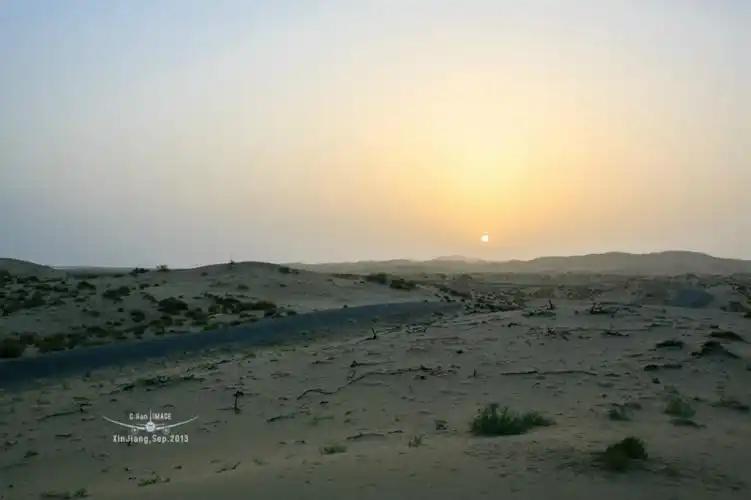
I will be blunt: July and August are brutal. Turpan sits in a basin below sea level, which is why the nearby Aydingkol Lake holds the title of the lowest point in China, and that geography traps heat like an oven. If summer is your only window, come anyway but plan around it, hydrate hard, and treat midday as downtime.
The sweet spots are spring and autumn. Late April into early June gives you mild mornings and the first grape leaves; September into mid-October brings the harvest, when the drying houses are stuffed with fruit and the markets overflow. For a month-by-month breakdown across the whole region, the Xinjiang weather by month guide is worth a read before you lock in dates.
Where to stay
Turpan splits into three lodging zones. The train-station area has newer chain hotels, convenient if you arrive late but soulless and far from the food. The city centre near the museum and bazaar is practical, with mid-range hotels around 220-320 CNY a night in high season. My pick, though, is the grape-lane guesthouses on the northeast fringe, where family courtyards run 180-260 CNY and come with the vine shade that makes summer bearable. Book direct or by phone; a couple of the smaller ones are not on the big apps. Whichever zone you choose, ask specifically whether the air-conditioning is a real unit or a swamp cooler, because in a dry-heat town that difference matters.
What to eat
Turpan eats like the rest of Xinjiang but leans sweeter, thanks to the fruit. My daily loop looked like this. Breakfast was a bowl of cold noodles, liangpi, dressed with vinegar and chilli oil for about 12 CNY, eaten before the heat set in. Lunch, if I ate at all, was laghman, the hand-pulled noodles topped with peppers and lamb, around 25 CNY. Dinner was the point of the day: I would wait for the night market to wake up and work through lamb skewers at 3-5 CNY each, a whole baked samsa pastry, and as much melon as I could carry.
Do not leave without sitting in a grape-trellis courtyard restaurant with a plate of fresh grapes and a pot of tea. It sounds like a cliche until you are doing it at 8 pm with the temperature finally dropping. Turpan is also the heart of the region’s wine story; if that interests you, the Xinjiang wine scene runs straight through these vineyards.
Beyond the ruins: what fills a city day
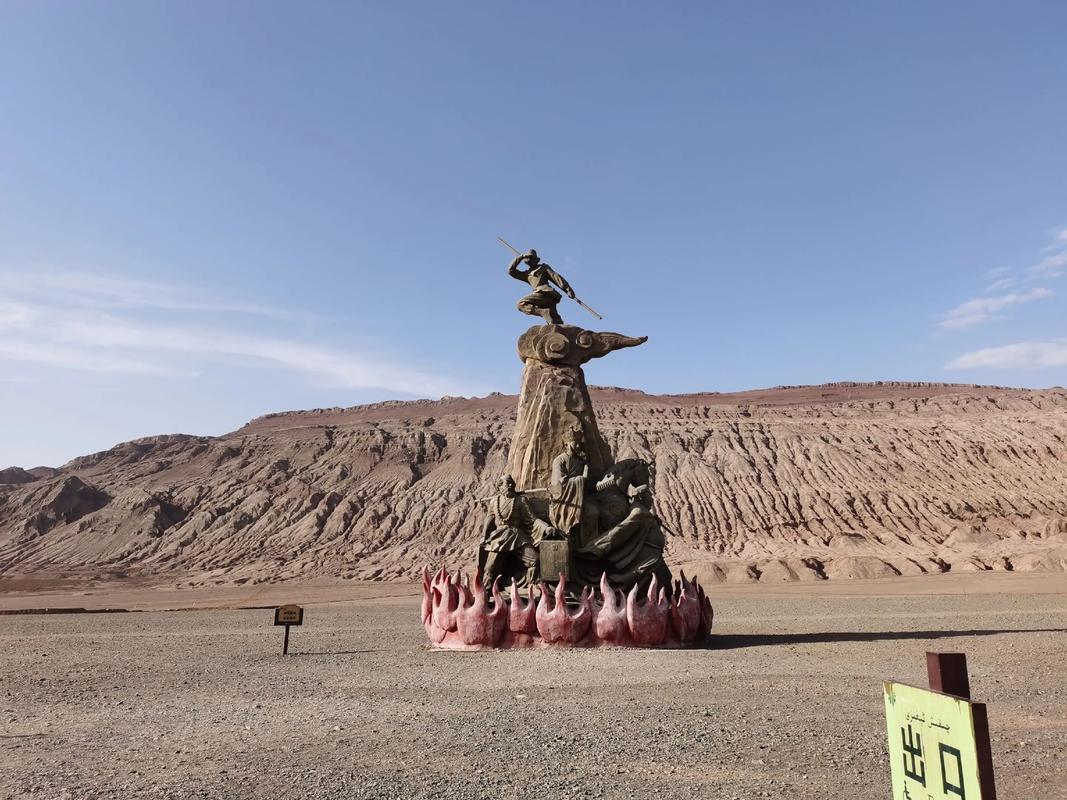
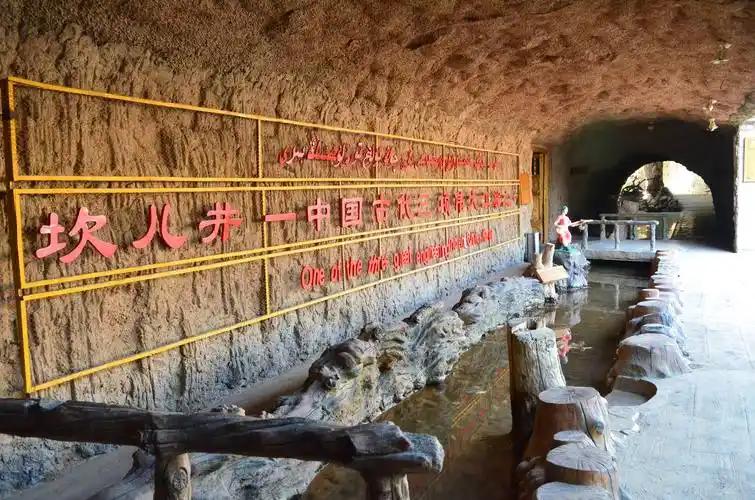
The famous sights get the headlines, and yes, you should see the Gaochang Ruins for the sheer scale of a dead Silk Road capital. But the city itself holds a full day. The Karez museum explains the underground irrigation tunnels that made this basin farmable, and standing in the cool of an actual channel after a hot morning is a small revelation. The Turpan Museum, free with ID, has genuinely good Silk Road mummies and manuscripts and, crucially, air-conditioning. The old town’s mud-brick lanes and the Emin minaret reward an early-evening wander. And the bazaar, less polished than Kashgar’s but more workaday, is where I bought the raisins I actually took home.
A sensible two-day plan
Here is the rhythm I would give a friend, tuned for summer heat.
Day 1: Arrive by mid-morning, drop bags in a grape-lane guesthouse, and eat cold noodles. Spend the hottest hours in the Turpan Museum and the Karez museum, both cool inside. As the light drops, walk the old town and the Emin minaret, then eat your way through the night market.
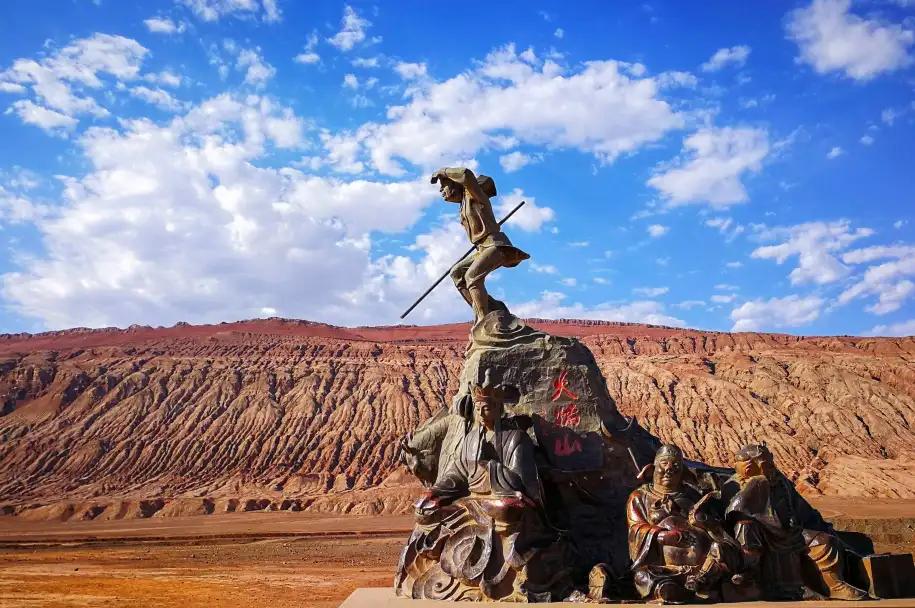
Day 2: Leave by 7:30 am for the edge sights while it is survivable. See the Flaming Mountains and Gaochang before 11 am, retreat indoors for lunch and a nap, then use the late afternoon for the grape lanes or a vineyard visit. If you have a third day, the dunes at the Shanshan Kumtagh Desert make a fine sunrise trip east of town. Coming or going from Urumqi, the wind farms at Dabancheng break up the drive.
Practical tips I learned the hard way
- Water math. I drank four to five litres a day in August and still felt short. Buy a big bottle each morning and refill.
- Sun, not just heat. The dry air fools you. I got a bad sunburn on a cloudy-looking day; wear a hat and long sleeves.
- Cash for stalls. Melon sellers and the smallest food carts sometimes wave off mobile pay for tiny amounts. Keep 100 CNY in notes.
- Afternoons are dead. Do not plan anything outdoors between roughly noon and 5 pm in summer. Everyone locals-you-included is inside.
- Buy fruit at the source. Raisins and dried apricots are cheaper and fresher in the town bazaar than at any highway stop.
If you are still working out how many days to give Turpan and how to schedule around the heat, our Turpan trip-planning guide handles transport, seasons and a two-day route.
Frequently asked questions
How many days do I need in Turpan? Two nights is the honest minimum to see the city and its edges without rushing. Three lets you slow down and add the desert.
Is Turpan doable as a day trip from Urumqi? You can, and many do, but you will only skim one or two ruins and miss the town entirely. Stay over if you can.
Is the summer heat dangerous? It is serious, not deadly if you are sensible. Adjust your timing, hydrate, and treat midday as rest. People with heart conditions should be cautious.
Can I visit independently without a tour? Yes. Trains, city buses and ride-hailing cover almost everything. Only the scattered edge sights are easier with a half-day car.
A note on trust
Prices, opening hours and train times reflect my visits in 2023 and 2025 and can change, especially in peak season. Nothing here is sponsored. Confirm current details locally before you rely on them, and always check the latest travel guidance for the region ahead of your trip.
About the author. Hugh Prentice is a Melbourne-based travel writer who specialises in hot-climate cities and has spent the past decade reporting from desert and oasis towns across Asia and the Mediterranean. He first visited Turpan in 2019 and has returned twice since, most recently in May 2025. He writes about the practical side of travelling well in extreme heat.