Published: July 25, 2026 | Author: Priya Raman, science and travel writer
My altimeter app refused to believe where I was standing. It kept recalibrating, then finally settled on a number I had never seen before: minus 154 metres. Aydingkol Lake Turpan is the lowest point in China and one of the lowest patches of dry land anywhere on Earth, usually ranked just behind the shores of the Dead Sea. There is no beach here, no boat dock, no ticket hall with turnstiles. What you get instead is a white-grey crust of salt stretching toward a heat-blurred horizon, a modest stone marker, and a silence so complete you can hear your own pulse. I have been out on that crust twice, once at sunrise in May 2023 and once on a cool October afternoon in 2024, and this guide covers everything I wish someone had told me before the first trip.
Why you can listen to me on this one
I write about geography and earth science for a living, and depressions below sea level are a small obsession of mine; I have measured my way around the Dead Sea, Death Valley and the Turpan Basin with the same cheap barometric app. Both of my Aydingkol visits were arranged from Turpan city with local drivers, not through a packaged tour, so the logistics below reflect what an independent traveller actually faces. Prices and road conditions are from May 2023 and October 2024. Things change quickly at the edges of the desert, so treat every figure as a snapshot, not a promise.
Aydingkol Lake Turpan at a glance
| Item | Detail |
|---|---|
| Elevation | About 154 m below sea level at the lake bed marker |
| Location | Turpan Depression, roughly 35–40 km south of Turpan city |
| Drive time | 50–70 minutes from downtown Turpan, last stretch on rough surface |
| Entry fee | Free on both my visits; drivers sometimes pay a small road toll |
| What remains of the lake | Salt crust, mud flats and a few shallow brine pools; open water is rare |
| Facilities | Almost none — no shops, sparse shade, no reliable toilets |
| Best months | April–May and September–October |
| Time needed | 2–3 hours including the drive from Turpan |
Standing on the floor of China
The name comes from Uyghur: Aydingkol means “moonlight lake”, and on my first morning I understood it without anyone explaining. We left Turpan at 6:40, before the light, and by the time we rolled off the tarmac the salt flats had turned the colour of skimmed milk. The crust glowed. It really does look like moonlight spilled on the ground, even at dawn.
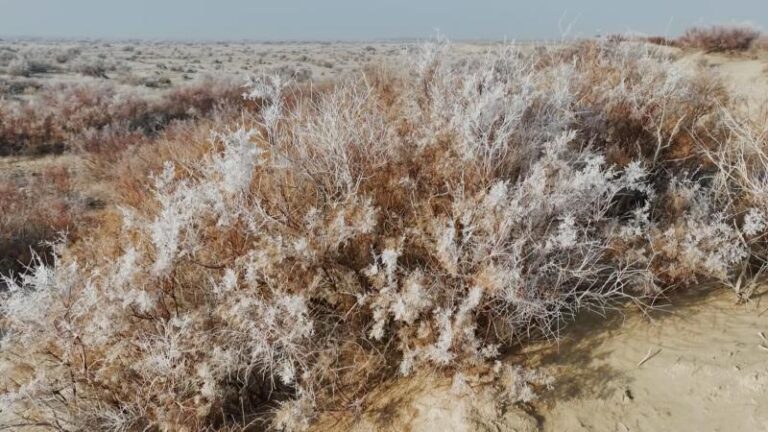
Up close the surface is stranger than any photo suggests. Salt forms plates the size of dinner tables, buckled at the edges where they push against each other, like a miniature model of tectonics. Walk on them and they crunch, then squeak. My driver, a Turpan man in his fifties named Ekber, stopped me after thirty metres with one firm word and pointed at the darker patches ahead. Under the white crust there is black mud, and in places it is soft enough to swallow a boot, or a car. A rusted axle sticking out of the flats fifty metres away made his point better than any sign could.
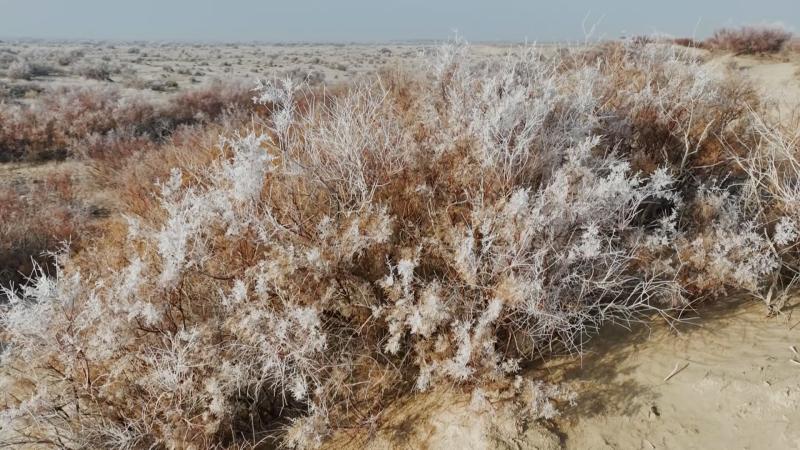
On my October visit the light was different, flatter and kinder, and a few shallow pools of brine had collected after a rare autumn shower. They were rust-red at the rim and mirror-silver in the middle. I tasted a fingertip of the water against Ekber’s advice. It was so bitter it made coffee seem sweet, closer to licking a battery than to seawater. The lake bed also hides mirabilite, a sulphate mineral that has been scraped and processed here for decades, which is why you may spot industrial workings on the northern fringe. They are not open to visitors and the workers wave you off politely if you wander close.
Getting there without a headache
There is no public bus to the lake bed. Your realistic options from Turpan city:
- Hired car with driver. This is what I did both times. A half-day round trip cost me 260 RMB in 2023 and 300 RMB in 2024, arranged through my guesthouse the evening before. Agree clearly that you want the lowest-point marker, not just a distant viewpoint.
- Taxi via ride-hailing apps. Getting out is easy; getting back is the gamble, because there is zero passing traffic at the flats. If you try this, pay the driver to wait.
- Self-drive. The road is signposted from the S301 and fine for a normal sedan until the last few kilometres, which are washboard gravel. Never, under any circumstances, drive onto the flats themselves. The crust that holds a person will not hold a car.
Turpan itself is well connected: high-speed trains from Urumqi reach Turpan North station in about an hour. If you are building a wider loop through the basin, my notes on the Turpan travel guide cover the city logistics, and the Jiaohe Ancient City guide pairs naturally with a lake-bed morning.
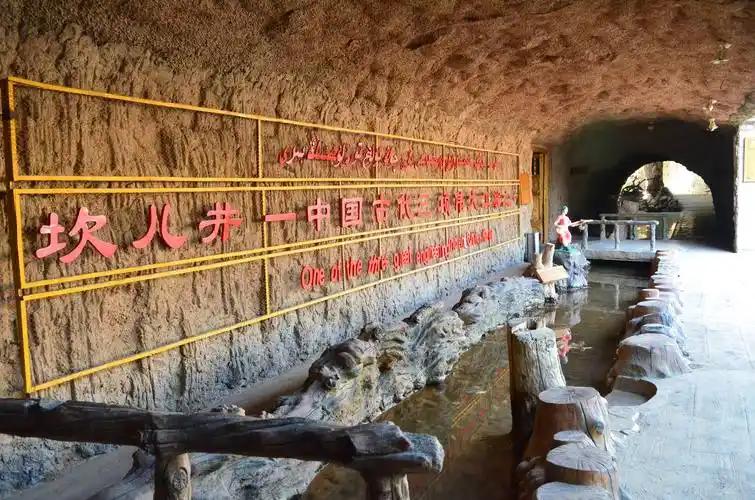
One detour worth taking on the way back: a karez site. The Turpan Depression only supports life because of these hand-dug underground channels that carry snowmelt from the mountains beneath the furnace of the desert floor. Seeing the karez after the dead salt flats is a neat one-two lesson in why the oasis exists at all.
When to go, and when to absolutely not
Turpan is the hottest place in China, and the lake bed is the hottest corner of Turpan. In July and August, air temperatures above 45°C are routine and the ground itself can exceed 70°C; my May sunrise trip already hit 34°C by 10 a.m. Midsummer visits at midday are genuinely dangerous, not merely uncomfortable. Heat aside, timing notes from my two trips:
- April–May: warm but workable, clear air, good crust patterns after winter. Go at dawn.
- September–October: my favourite. Softer light, 20–28°C afternoons, occasional brine pools. Late afternoon gives the “moonlight” glow its best hour.
- November–March: possible and crowd-free, but bitter wind rakes the flats and some access tracks get muddy.
For a broader picture of regional conditions month by month, the Xinjiang weather by month guide is the reference I point friends to.
Where to sleep
Nobody stays at the lake; you stay in Turpan. Three options I have used or inspected:
- Guesthouses near Grape Valley (100–200 RMB): vine-shaded courtyards, family kitchens, easy driver arrangements. This is where I stayed both times.
- Mid-range hotels downtown (250–400 RMB): reliable air conditioning, which matters here more than anywhere else in China.
- Turpan North station hotels: convenient for one-night visits sandwiched between trains, but you will need a longer drive to the lake.
What to eat before and after
The Turpan Basin grows arguably the best grapes and raisins in the country, and after two hours on a sterile salt flat, fruit tastes like a miracle. My post-lake routine: a cold bowl of yoghurt with honey at the bazaar, a plate of laghman noodles, and a fistful of seedless green raisins for the road. In October, ask for fresh figs; Ekber bought a bag from a roadside stand on the S301 and refused to let me pay, then refused again with more feeling. If you have time for a proper food crawl, do it in Turpan city rather than expecting anything near the lake, because there is nothing near the lake, not even a kiosk.
Practical tips that earn their keep
- Carry at least two litres of water per person even for a short visit. I drained mine both times.
- Sunglasses are not optional. The salt glare at midday is as harsh as fresh snow.
- Wear shoes you can rinse. Salt mud stains leather permanently, as one of my boots can testify.
- Stay on firm white crust, follow existing footprints, and take the dark wet patches seriously.
- Phone signal is patchy to absent on the flats. Download offline maps and tell your hotel where you are going.
- Bring cash for the driver; there is obviously no card machine at the lowest point in China.
- A wide-brimmed hat beats a cap. The light comes off the ground as much as from the sky.
A one-day Turpan depression itinerary
- 06:30 — Leave Turpan with a hired driver, watch the light arrive over the flats.
- 07:30–09:30 — Aydingkol lake bed: marker photos, a careful walk on the crust, thermos tea on the tailgate.
- 10:30 — Karez museum stop on the return road.
- 12:30 — Laghman and yoghurt lunch in Turpan city, then the hottest hours indoors.
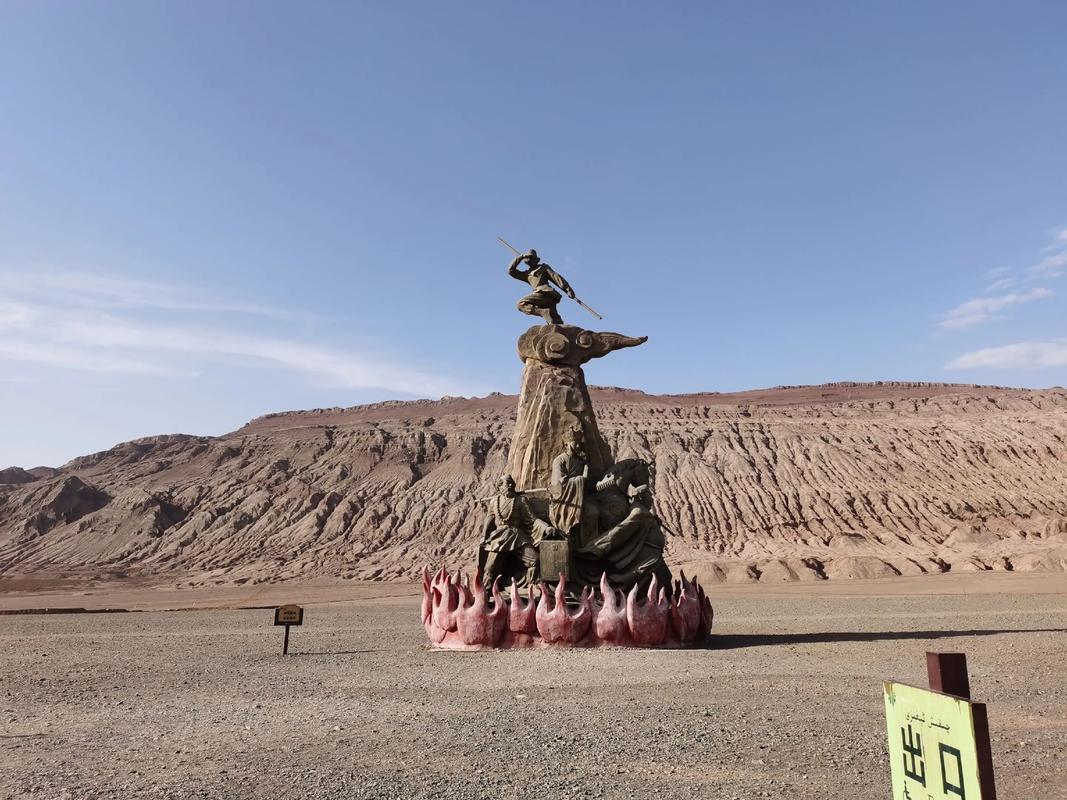
- 16:00 — The Flaming Mountains for late light, or the Emin Minaret if you prefer architecture to geology.
- 19:30 — Dinner in Grape Valley under the vines.
With a second day, add Jiaohe at dawn and the dunes at Kumtagh Desert in Shanshan, which make a fine high-contrast partner to the flats: sand that moves versus salt that never does.
FAQ
Is Aydingkol Lake actually a lake?
Barely. Most of the year it is a dry salt bed with occasional brine pools. Decades of upstream irrigation shrank the open water; do not come expecting a shoreline.
Is it worth the trip if I have only one day in Turpan?
If ruins interest you more than geology, spend your day at Jiaohe and the minaret instead. If the phrase “lowest point in China” gives you a small thrill, yes, go, and go early.
Can I visit without a guide?
Yes, no permit was required on either of my visits. A local driver is strongly recommended purely for logistics and safety, not paperwork.
How low is it compared with the Dead Sea?
The Dead Sea shore is around 430 m below sea level, so Aydingkol’s minus 154 m is a distant second in that league, but comfortably the lowest ground in China.
Is swimming possible?
No. The pools are shallow, hypersaline and often ringed by soft mud. This is a place to walk carefully and look, not to float.
Disclaimer: Details reflect the author’s visits in May 2023 and October 2024 plus follow-up checks with local drivers. Road access, fees and site conditions in the Turpan Depression change frequently; confirm current conditions locally before you go. Summer heat here is a real hazard — plan conservatively.
About the author: Priya Raman is a Chennai-based science and travel writer who covers deserts, depressions and other extreme landscapes. She has reported from below sea level on three continents, including Death Valley, the Dead Sea shore and the Turpan Basin, and returns to Xinjiang whenever an excuse presents itself.