Published: August 13, 2026 | Author: Karl Huang
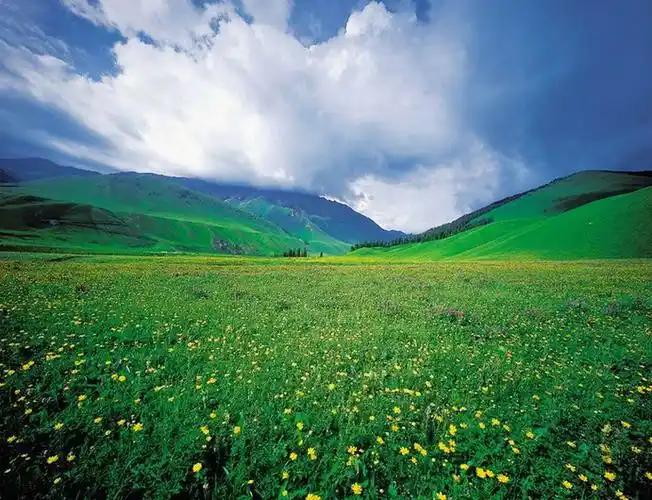
Most travellers blow through Shawan Xinjiang without stopping, treating the town as a fuel-and-noodle pause on the G30 between Urumqi and the Karamay oil fields. That is a mistake we made on our first northern loop, and one we have spent three return visits correcting. Shawan sits 185 kilometres from Urumqi, about two hours by car, at the northern foot of the Tianshan in Tacheng Prefecture. It is the accepted birthplace of big plate chicken, and it also guards some of the quietest alpine pasture in northern Xinjiang.
Why you can trust this guide
I have driven into Shawan four times across different seasons, once in a borrowed car with a failing air conditioner and once with a toddler asleep in the back seat. The details below come from those trips, from long talks with locals over tea, and from the small museum in town that takes big plate chicken far more seriously than any museum reasonably should. Where I quote a price or a schedule, treat it as a 2026 baseline and confirm before you set out.
Shawan at a glance
| Item | Detail |
|---|---|
| Location | Tacheng Prefecture, northern foot of the Tianshan, northern Xinjiang |
| Distance from Urumqi | 185 km, about 2 hours on the G30 Lianhuo Expressway |
| Famous for | Big plate chicken (大盘鸡), Lujiaowan grassland, Shawan hot springs |
| Best months | June to September for pastures; December to February for hot-spring soaking |
| Typical stay | 1 to 2 days as a road-trip stop |
Our first plate of big plate chicken
The origin story is now local gospel. In the early 1980s the old G312 ran straight through town, and long-haul drivers leaving Urumqi would roll in around lunch. A roadside cook started chopping a whole free-range chicken into big chunks, braising it with potatoes, green and red peppers, and dried chili, then ladling it onto a wide tin tray with a tangle of hand-pulled belt noodles underneath. The tray was the point. Drivers ate standing up, paid little, and told everyone down the road. Within a decade the dish had a name, a hometown, and eventually a place on Xinjiang’s provincial intangible heritage list.
On our second visit we finally went to the museum’s big-plate-chicken exhibition hall. I expected a gimmick and found something closer to small-town civic pride: old woks, yellowing newspaper clippings, and a looping video of the annual food festival where thousands of people share one giant plate. It is free, it takes twenty minutes, and it explains the dish better than any restaurant menu. The writer Liu Liangcheng grew up in a Shawan village and turned the slow rhythm of rural life here into the essay collection “A Village of One’s Own” (一个人的村庄), which many Chinese readers meet in school. Driving past the poplar-lined fields outside town, it is easy to see where those quiet observations came from.
There is a wider point worth making. The “big plate” (大盘) is a northern Xinjiang habit, not just one dish. Food arrives on shared platters built for a table of six, and strangers at a roadside stop end up trading bites and recommendations. We once shared a table with a long-haul trucker who insisted we try his belt noodles first, then drew us a map to a peach orchard outside town on a paper napkin. That kind of unplanned conversation is the real souvenir, and Shawan is exactly the place it happens.
Beyond the chicken: what to actually see
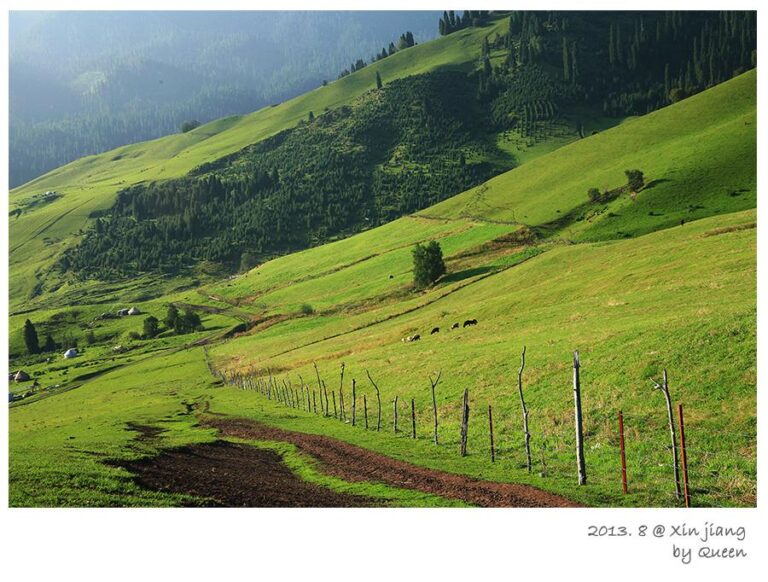
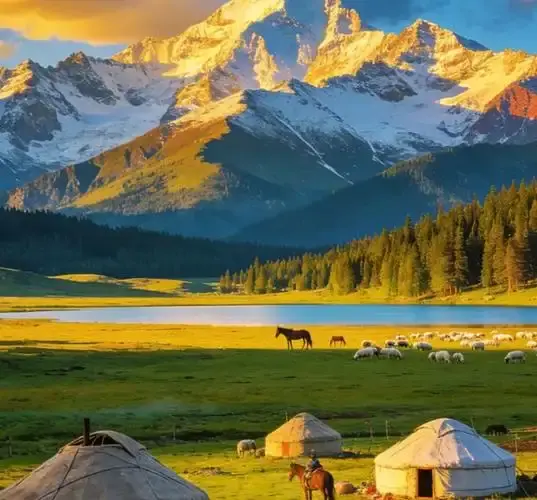
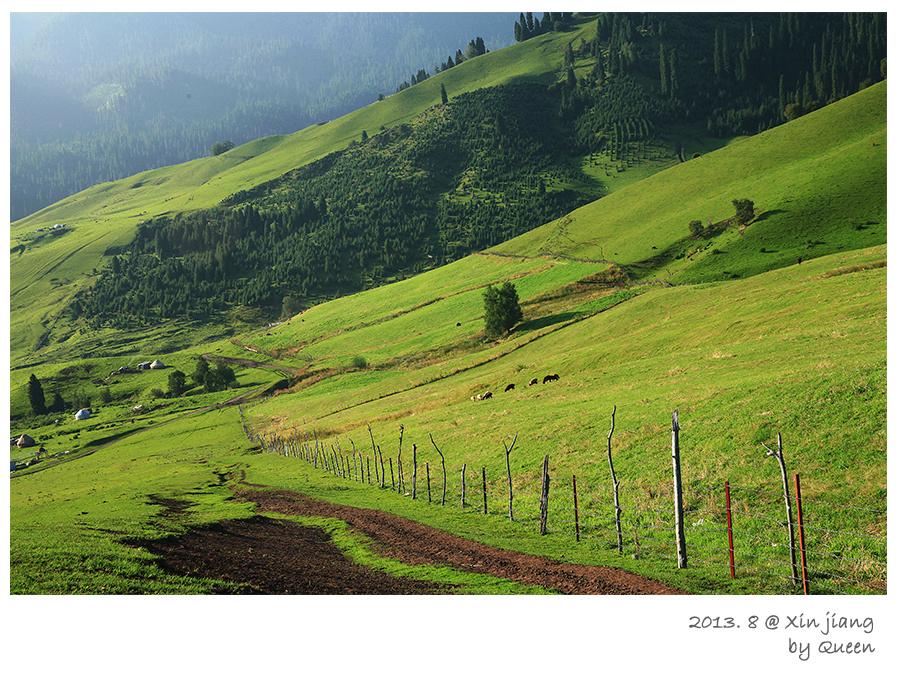
Shawan’s scenery is the part most guidebooks skip. Lujiaowan (鹿角港) sits southwest of the city, pressed against the Tianshan. The name means “antler bay,” after the red deer that once shed their antlers in the streams here. Today it is a 19,000-hectare sweep of alpine meadow, pine forest, and snow peaks, and Kazakh herders run simple guesthouses where you can eat fresh cream and watch the light move across the grass. We camped one night at around 2,000 metres and woke to fog burning off the ridge. Bring a real jacket even in July; the wind off the glacier is honest.
You can ride a stocky Tianshan pony along the meadow edge, visit a herder’s felt yurt for milk tea, or just walk until the road ends and the grass begins. The Shawan hot springs (沙湾温河) are older than the town’s fame. They rise in the Jingou River valley at roughly 1,556 metres, hold a steady 53°C, and carry more than thirty minerals. The resort area earned provincial tourism status in 2024. Soaking outdoors in February, with snow on the rocks and steam in your face, is the kind of thing that justifies the whole trip north.
Between the pasture and the springs, the smaller Dongdatang (东大塘) scenic area fills a half-day with wooden walkways, a waterfall, and far fewer crowds than Lujiaowan. We used it as a gentle warm-up walk on the afternoon we arrived, saving the high meadow for the next morning’s light. If your time is tight, pick Lujiaowan for the view and Dongdatang for the leg-stretch; both sit within an hour of the county seat by car.
Getting to Shawan Xinjiang
The easy way is to drive. The self-drive route across Xinjiang passes right through on the G30, and Shawan makes a natural lunch stop between Urumqi and Karamay. If you would rather not hold the wheel, flights and trains into Urumqi are the gateway, and frequent buses cover the remaining two hours. The Duku Highway begins near Dushanzi, barely half an hour west, so Shawan pairs well with that drive in summer. Neighbouring Shihezi is the next logical overnight.
Best time to visit
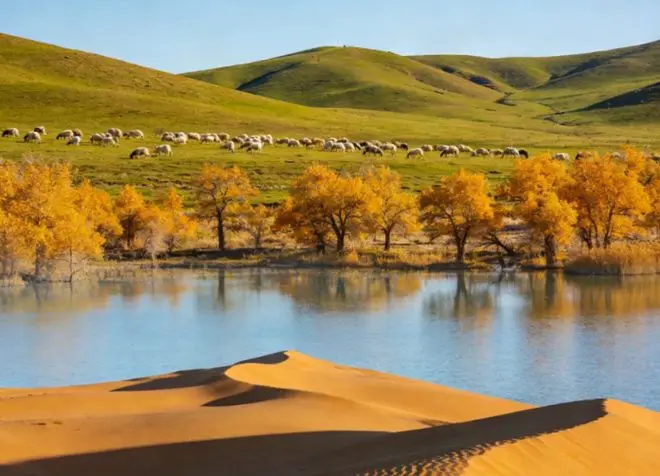
June through September is the sweet spot for Lujiaowan, when the meadow is green and the wildflowers hold. October turns the poplars gold but the high pasture shuts down. Winter is cold and quiet, yet perfect for the hot springs, and the chicken tastes better when there is snow on the ground. We have been in August (busy, green) and February (empty, steamy) and would return in either.
If you want specifics: late June brings the fullest grass and the first wildflowers, July and August are warmest but busiest, and September cools fast as the larches tint gold. From November the whole county goes quiet and only the springs stay open, which is precisely why the soaking feels private. The August food festival is the one date to plan around, but book rooms weeks ahead if you do.
Where to stay
Shawan county has a solid mid-range hotel stock, mostly Chinese chains with reliable heating and parking. For something memorable, book a yurt or timber guesthouse at Lujiaowan, or one of the hot-spring resorts if soaking is the point. Rooms fill on holiday weekends and during the August food festival, so book ahead in peak season. Budget for the hot-spring resorts to cost more than a standard county hotel, but the experience is the reason to come.
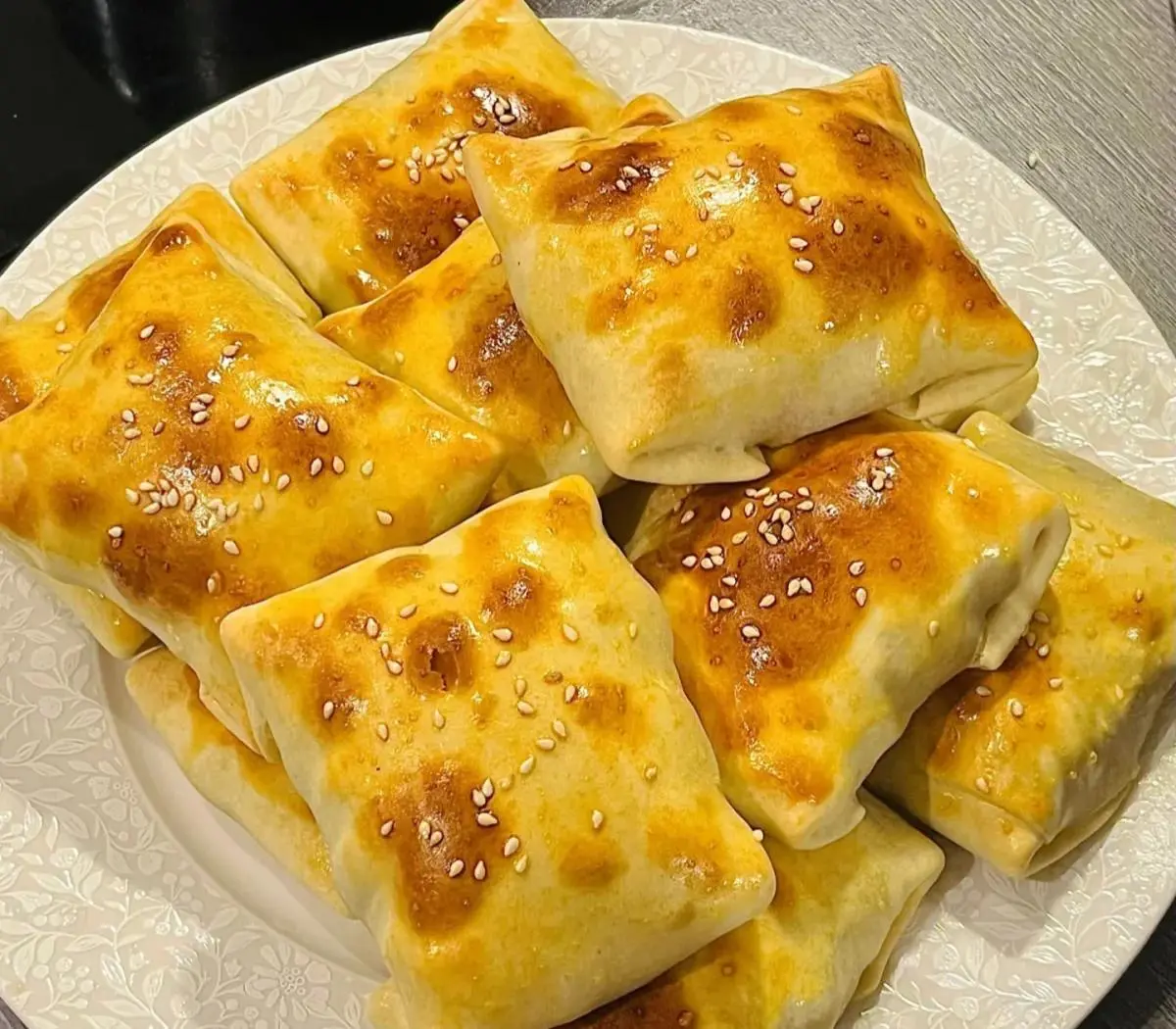
As for money, plan on roughly 60 to 120 yuan per person for a full plate of chicken with noodles, 200 to 400 yuan for a mid-range county hotel room, and 400 to 800 yuan for a hot-spring resort night depending on the pool package. The museum is free, and roadside samsa run a few yuan each. None of it will strain a road-trip budget, which is a large part of Shawan’s appeal as a spontaneous stop.
What to eat besides the chicken
Order big plate chicken everywhere and compare. Some kitchens lean spicy, some add mushrooms or lotus root, and the belt noodles (百带面) are the real test of a good version. Around it, expect samsa (炁包子), fresh naan, and grilled lamb. Portions are built for sharing, and a single plate between two hungry travellers is usually enough. Wash it down with black tea; the local habit is to keep the pot going through the meal.
Practical tips
- Carry some cash for small roadside stalls; a few do not take foreign cards.
- Download offline maps before leaving Urumqi; signal thins in the pasture.
- Ask for “Shawan-style” (沙湾做法) when ordering chicken to get the local baseline.
- Pair the stop with Duku or Shihezi so it is not a detour on its own.
- Hot-spring resorts provide towels, but bring sandals and a swim cap if you are particular.
Sample 2-day itinerary
Day 1: Drive from Urumqi after a late breakfast, arrive Shawan for lunch and a plate of chicken, visit the museum hall, then push to Lujiaowan for an afternoon walk and a yurt night.
Day 2: Sunrise at the meadow, late-morning hot-spring soak, lunch, and either continue west on the G30 toward Karamay or hook south for the Duku Highway if it is open (roughly June to September).
Frequently asked questions
Is Shawan worth visiting on its own?
As a standalone destination, probably not for most travellers. As a two-hour road-trip stop between Urumqi and the north, it is genuinely good value.
Can I visit Lujiaowan without a car?
It is hard. The pasture is about 70 km from the county seat with thin public transport. Join a tour or rent a car.
When is the food festival?
Shawan has run a big-plate-chicken culture festival in summer in past years. Dates shift, so check the county tourism account before planning around it.
Disclaimer
This guide reflects personal travel experience and publicly available information current to 2026. Prices, opening hours, road conditions, and festival dates change. Verify transport and accommodation directly before you travel, and respect local customs and protected areas. Nothing here is formal travel advice.
About the author
Karl Huang is a travel writer who has spent several seasons driving and hiking across Xinjiang, from the Pamirs to the Altai. He writes practical, first-hand guides for independent travellers and believes the best meals are found where the road bends.