Published: 24 August 2026 | Author: Karl Huang
Bohu county Bosten Lake is easy to miss. Most travellers who come for the water never set foot in the county that actually holds its shoreline. They drive in from Korla, snap the water at Dakou, and leave. We did the same on our first trip in 2019, and we missed the better story. Bohu county Bosten Lake is not just a viewpoint on a map. It is a working lakeside county where reed cutters, fish smokers, and lotus-boat pilots share the same small streets, and where the desert presses right up against one of China’s largest bodies of fresh water. This guide is built from two return trips to Bohu, one in late July for the lotus and one in early October for the birds, plus a good deal of sitting still and watching the reeds move.
Quick reference: Bohu county Bosten Lake at a glance
| Item | Detail |
|---|---|
| Where | Bayingolin Mongol Autonomous Prefecture, on the southern shore of Bosten Lake, about 70 km north of Korla |
| Lake size | Bosten Lake covers roughly 1,600 square kilometres, the largest inland freshwater lake in China |
| Reed wetland | Around 350 square kilometres of reed beds, one of the four largest reed areas in the country |
| Lotus sea | About 53 square kilometres of wild water lily, the biggest natural stand in China |
| Best months | July to August for lotus, late September to October for migratory birds |
| Nearest airport | Korla (KRL), roughly 1.5 to 2 hours by road to the lakeshore |
| Must eat | Lake fish cooked six ways, smoked fish, lotus root, fresh reed shoots |
What we found at the reedy edge
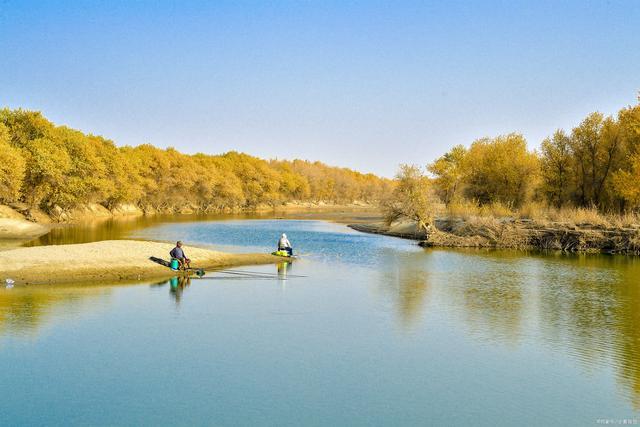
On the July trip the heat off the lake was heavy, but the reeds hid it. We walked the wooden boardwalk at Dakou just after sunrise, when the mist still sat on the water and a single kingfisher worked the narrow channels between the stalks. By nine the lotus had opened. Out on Lotus Lake a boatman named Ablet pushed us slowly through a carpet of white water lilies so thick the hull scraped petals. In October we came back with binoculars. The wind had turned cold, the lotus was gone, and the lake was loud with geese. A local birder told us the first swans usually show up around the first week of October, and within a fortnight the open water is crowded.
Bohu town itself is small and easy to read. One main road, a handful of noodle shops, a daily fish market by the bus station, and a long line of reed-weaving workshops where women split last year’s stalks into strips for fences and screens. Nobody here treats the lake as a postcard. It is the pantry, the paycheque, and the front yard all at once.
How to get to Bohu
Korla is the natural gateway. Flights into Korla Airport (KRL) connect through Urumqi and a few other hubs, and from the terminal it is a straight run north on the G218 to the lakeshore, about 70 kilometres and under two hours with a fuel stop. If you arrive by train, both Yanqi station and Korla station sit on the line; Yanqi is the closer of the two, roughly half an hour by car to the lake, while Korla is about an hour.
Coming from Urumqi by road, plan on 400-plus kilometres and close to five hours via the G30 Lianhuo Expressway south to Korla, then the G218 north. We have covered the longer haul in our Urumqi city guide, which is the usual starting point for a southern Xinjiang loop. Buses run from Korla’s long-distance station to Bohu county town several times a day, and local taxis or the scenic-area shuttle cover the last stretch to the gates.
Best time to visit Bohu
The calendar splits cleanly. Late July through August is lotus season: the white water lilies on Lotus Lake and at Ahongkou open wide, and the boardwalks are at their greenest. Late September into October is for birds. Tens of thousands of geese, ducks, and swans pause here on their way south, and Egret Isle (Bailuzhou) is the easiest place to watch them without a boat.
Spring is quiet and windy. Winter brings ice across much of the lake and very few services, though a hard freeze can be beautiful if you are already passing through. If your main interest is the autumn colour and bird movement, aim for the first three weeks of October.
Where to stay
Bohu county town has budget hotels and a couple of cleaner business hotels where we have slept fine for around 150 to 250 yuan a night. For a slower stay, the resort cluster at Dakou puts you next to the water with reed-view rooms, though prices climb in July and August. Most travellers, ourselves included on the first trip, base in Korla and make Bohu a day or overnight spur, which works well because Korla has the better restaurants and the airport.
Eating in Bohu: fish, lotus, and reed shoots
The signature meal is lake fish. The giant “West Sea First Pot” at Dakou is a 3-tonne cast-iron cauldron that simmers a communal fish stew during festivals, and the smaller restaurants serve “one fish, six ways”: head soup, braised flank, fried tail, steamed fillet, smoked pieces, and a crisp fried skin. We liked the smoked fish best, dried over reed charcoal and sold vacuum-packed at the market to take home.
Away from the fish, lotus root shows up stir-fried with peppers, and in spring the tender tips of the reeds are blanched and eaten cold with a little garlic. None of it is fancy, and that is the point. Sit where the locals sit, order the whole fish, and ask for the lotus root when it is in season.
The reed marshes and the lotus sea
This is the part most day-trippers skip, and it is the reason Bohu earns its own page rather than being folded into a general Bosten Lake write-up. The reed beds around the lake cover something like 350 square kilometres, making this one of the four great reed regions in China. The stalks are harvested every winter and shipped off to paper mills and weaving shops, but from July to October the living wall is impenetrable and alive with frogs and rails.
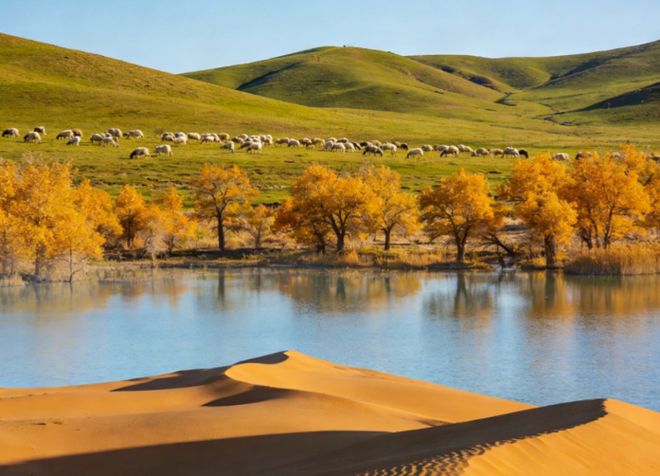
The lotus sea (Lianhai Shijie) at Ahongkou is the showpiece: roughly 53 square kilometres of wild water lily, the largest natural stand anywhere in the country. A low electric boat carries you into the middle of it, and on a still morning the only sounds are the motor and the occasional flap of a startled duck. Go early. By noon the light flattens and the tour groups arrive.
Birdwatching from the Bohu shore
Bosten Lake sits on the crossroads of three migratory flyways, and close to 200 bird species have been recorded here. We are not listing them all, but on a single October morning at Egret Isle we counted three species of goose, a troop of swans, and more egrets than we could keep track of. The broader Xinjiang birdwatching picture is worth reading before you come, because Bohu is only one of several wetland stops.
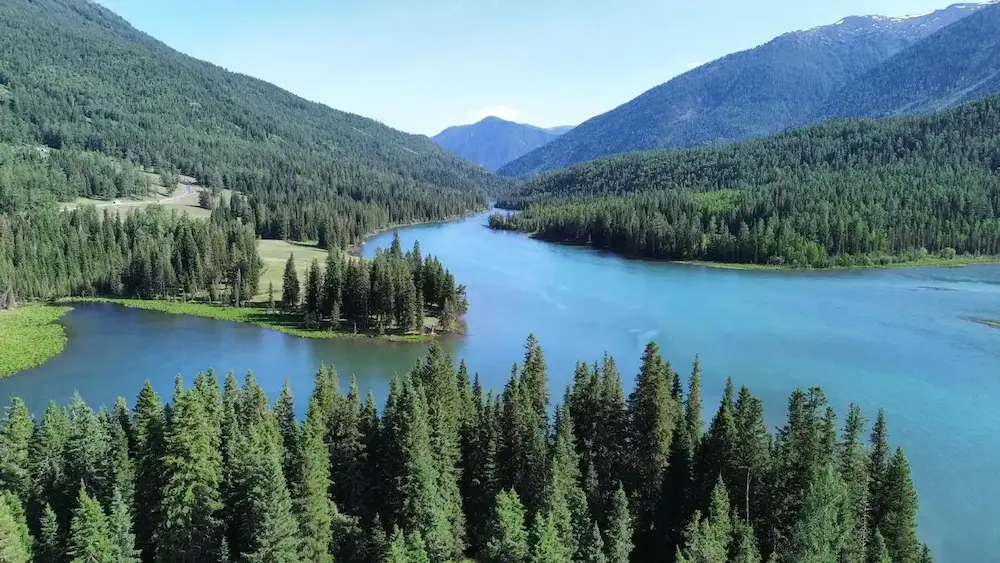
Bring a scope if you have one. The birds work the open water far from the shore, and without magnification you will only get the sound. The reed fringes themselves hold warblers and the occasional bittern, but they are shy and the light inside the stalks is poor.
Practical tips before you go
Mosquitoes near the water are serious from June to September, worse than anywhere else we met in Xinjiang, so carry repellent and a head net if you plan to stand still for birds. The sun on the open lake is harsh; a hat and sunscreen are not optional. Mobile payment works in Korla and the resort areas, but carry some cash for the small town noodle shops and the market. No special border permit is needed for Bohu itself, unlike the Pamir counties to the west.
Boat trips run on fixed schedules and stop in wind; check the weather and book through the scenic-area official account rather than touts at the gate. Life jackets are provided and should be worn, as the lotus channels can be deeper than they look.
A two-day Bohu itinerary
Day 1. Drive or bus from Korla to Dakou in the morning. Walk the reed boardwalk, see the West Sea First Pot, and eat the one-fish-six-ways lunch at a lakeside restaurant. In the afternoon ride the shuttle to the Lotus Sea at Ahongkou if it is summer, or to Egret Isle if it is autumn. Sleep in Bohu town or back in Korla.
Day 2. Early start for birdwatching at Egret Isle, then loop through the reed-weaving workshops in town and the morning fish market. If you have a car, continue north to Yanqi Hui County for its vineyards and the older Silk Road sites, which sits on the same lake’s northern shore and makes an easy half-day add-on.
FAQ
Is Bosten Lake the same as Bohu? Not quite. Bosten Lake is the water; Bohu is the county wrapped around its southern and eastern shore. The scenic area spans both Bohu and neighbouring Yanqi land.
Do I need a guide for the birds? No. Egret Isle has paths and hides you can use on your own. A guide helps if you want to reach the quieter reed channels by boat.
Can I swim? Swimming is not allowed in the marked scenic areas because of depth and boat traffic. The Golden Beach section on the northeast shore is the place for supervised water play.
How long is enough? One full day covers Dakou and the Lotus Sea. Add a second day if you want a proper dawn birdwatch or a slower pace with Yanqi.
Disclaimer
This article is based on the author’s personal visits in 2019, 2023, and 2025 and on publicly available park information at the time of writing. Opening hours, ticket prices (Dakou around 40 yuan, the Lotus Sea around 16 yuan, plus paid boat rides), and boat schedules change by season and by year. Confirm the current details through the official Bosten Lake scenic-area account before you travel, and check weather and road conditions, especially in spring wind and winter ice. The author is not a licensed birdwatching or safety expert; use the practical tips as a starting point, not a substitute for official guidance.
About the author
Karl Huang is a travel writer who has covered Xinjiang for visiting travellers since 2019, with a focus on the southern prefectures around the Tarim Basin and the big lakes of the north. He has driven, ridden, and walked across most of the region’s counties and prefers slow stays in small towns over quick photo stops. His work on this site is built from first-hand trips, verified park information, and conversations with local residents. He does not accept payment from the attractions he writes about, and he discloses where a claim comes from a second-hand source.