Published: August 25, 2026 | Author: Karl Huang
Why you can trust this guide
Most foreign travellers who reach Xinjiang stop at Kashgar or Kanas and never see the north. I have driven the Urumqi–Karamay–Tacheng loop three times, and on the second trip we finally turned off the main road into Emin county Xinjiang — a flat, wheat-colored expanse that almost never appears in guidebooks. Everything below comes from those drives, one night in Emin Town, and a long afternoon with a wheat farmer who made us taste his grapes. Where things change quickly (border rules, train times), I have flagged it so you can confirm before you travel.
Quick reference
| Where | Emin County (Dorbiljin), Tacheng Prefecture, far northern Xinjiang |
|---|---|
| Nearest airport | Tacheng Airport (TCG), about 40 km north of Emin Town |
| Train | Emin Station on the Karamay–Tacheng railway; Urumqi takes roughly 10–11 hours |
| Known for | Winter wheat, sunflowers, small vineyards, Kazakh culture, Yemili ruins |
| Best months | July to September |
| Border | Within ~90 km of Kazakhstan; carry ID and check permit needs |
| Local drink | Wusu beer, brewed in the same prefecture |
Our time in Emin: a plain that grows its own weather
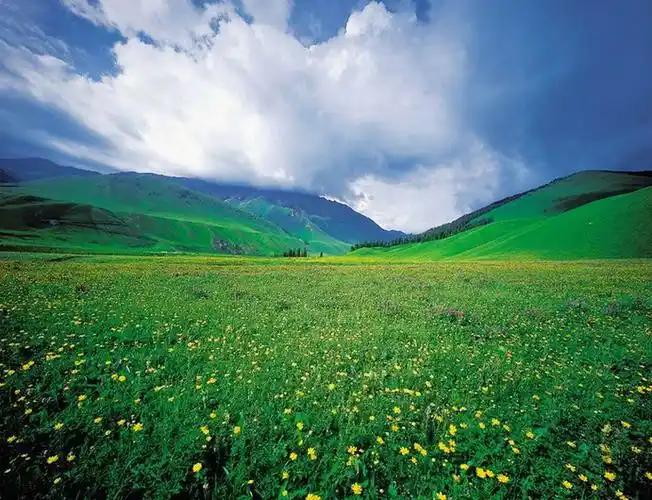
We arrived in late August, the moment the wheat turns from green to gold. The road from Tacheng drops onto the Emil River (Emin Gol) plain and suddenly the horizon opens for thirty kilometres in every direction. Our driver, a Kazakh man from a village west of town, pulled over so we could walk into a standing field. The ears were shoulder-high and the heat came off the soil in waves — that is the plain’s trick, a continental climate with long sunny days and cool nights that makes grain here dense and sweet.
One afternoon we drove out to the Yemili ruins, low earthen walls scattered across a dry hill northeast of town. There was no sign in English and no ticket booth, just a herder moving sheep through the old gateposts. Our driver said the site links to an ancient steppe capital; I cannot vouch for the exact history, so I treat it as a quiet walk rather than a museum. What stayed with me was the wind — constant, dry, carrying the smell of ripe grain from the fields below.
On the way back we stopped at a Kazakh yurt where a woman was churning butter. She waved us inside, poured kymyz (fermented mare’s milk, sharp and faintly fizzy) into enamel cups, and laughed when I winced at the sourness. That half hour taught me more about the plain than any brochure. The next morning we visited a family vineyard. I had expected desert; instead there were rows of grapevines staked with willow, and the owner poured a cloudy homemade wine that tasted of green apples. Emin is not a famous wine name like Turpan, but the microclimate is real, and the Xinjiang wine country that has bloomed further south shows what this climate can do with a little patience.
Back on the main road we passed kilometre after kilometre of sunflowers, their heads tracking the low sun — Emin grows them for oil, and in late summer the plain turns half gold, half yellow. We stopped at a roadside pile of melons and bought two for the price of a coffee; the driver’s wife later chilled them in the stream, and they were the sweetest I ate all season.
Getting to Emin county Xinjiang
The plain is remote but reachable. The Karamay–Tacheng railway put Emin on the map in 2020, and slow sleeper trains run from Urumqi, arriving in the small hours; bring earplugs and a reservation, because seats sell out on summer weekends. If you fly, Tacheng Airport has daily connections from Urumqi and is a 40-minute taxi or bus ride south to Emin Town. From Urumqi the distance is about 600 km by road, and several rental agencies in the city let you pick up a car for the loop.
Most drivers come via Karamay on the G3015, a smooth six-to-eight-hour run depending on stops. We did it in a rented 4×4 but saw plenty of sedans making the trip in summer. Long-distance buses leave Tacheng for Emin every hour or so and cost pocket change. If you would rather not drive, the public transport in Xinjiang guide explains the bus skeleton that still links the northern counties.
When to go
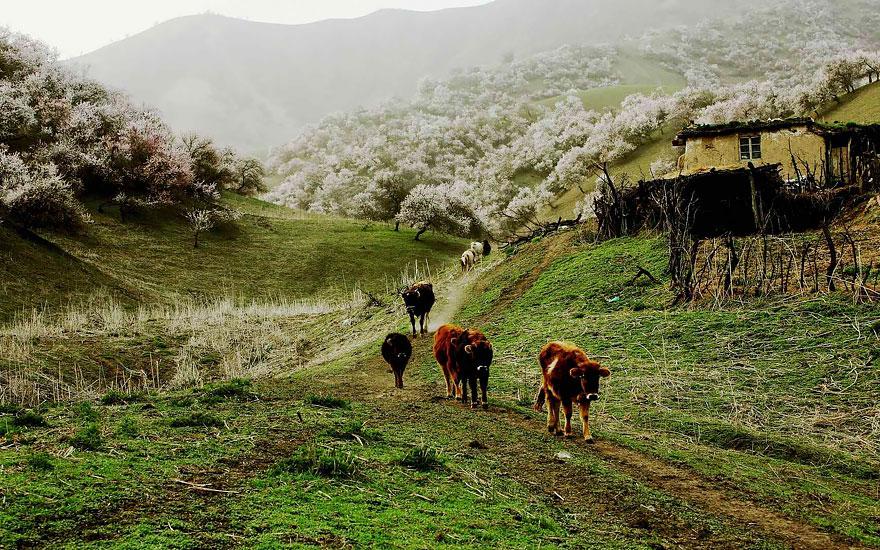
June brings deep-green wheat and poppies along the irrigation ditches. July is the hottest stretch and the wheat starts to ripen. August is harvest — machines work the fields at dawn and the air smells of cut straw. September is gold and quiet, with the best light for photography and the first cold nights. May has fruit blossoms and almost no tourists. Winter is harsh: temperatures fall well below minus twenty, roads ice over, and most guesthouses close. We would return in early September without hesitation, when the dust and heat lift and the light stays golden until past seven.
Where to stay
Emin Town has a handful of standard Chinese business hotels, clean and functional but without much character. For a wider choice of rooms and a livelier evening meal, base yourself in Tacheng city and make Emin a day trip. We stayed one night in Emin and found the front-desk English limited, so a translation app helped. Book ahead in August, when the harvest brings in workers and rooms tighten. Tipping is not expected anywhere on the plain.
What to eat
The plain eats what it grows. Expect hand-pulled laghman noodles, fresh naan from roadside tonurs, and mutton cooked plainly with onion and cumin. Roadside samsa — lamb and onion baked in a tonur — make a perfect breakfast. At the night market we found plov, rice steamed with carrot and raisin under a dome of mutton fat, scooped onto newspaper. The morning market behind the bus station is worth an early walk: stacks of round naan, buckets of thick yoghurt, and older women selling dried apricots and the small sweet grapes that never reach the cities. Kazakh households serve suutei tsai (salty milk tea), kurt (dried salty cheese balls), and baursak fried bread — we were given all three within ten minutes of sitting down in a yurt. In season, melons and grapes are cheap and excellent.
Drinks deserve their own paragraph. The prefecture’s best-known label is Wusu beer, and the drinking culture of northern Xinjiang runs deep here — expect to be offered a glass wherever you stop. The homemade grape and sea-buckthorn wine we tried at the vineyard was the highlight: sour, unfiltered, and nothing like a shop bottle.
Practical tips
- Carry your passport or Chinese ID at all times; Emin sits in a border prefecture and checkpoints are common.
- Check the border permit rules before travelling — Emin Town itself usually does not require one, but rules shift, so confirm for the exact villages you plan to visit.
- Bring cash. Small vineyards and roadside stalls often do not take foreign cards, and mobile pay needs a Chinese account.
- Pack a scarf for the wind and a second layer even in August; plain nights cool fast.
- Download offline maps. Signal fades quickly once you leave the town center.
- Learn a few Mandarin and Kazakh greetings; English is rare outside Tacheng city.
- Fill the fuel tank in Tacheng — petrol stations thin out on the plain.
A two-day sample itinerary
Day 1: Fly or train to Tacheng, transfer to Emin Town, drop bags, then drive the Emil River loop and the Yemili ruins before sunset. Dinner on laghman and mutton in town.
Day 2: Morning at a family vineyard for grape tasting and a walk through the wheat fields, afternoon browsing the local market for dried fruit and naan, then return to Tacheng by early evening. With a third day, push north toward the Karamay grasslands.
FAQ
Do I need a border permit for Emin? Emin Town generally does not require one, but it sits close to Kazakhstan and some outer villages may. Always check current rules before you go.
How many days do I need? One full day covers the town and ruins; two lets you slow down at the vineyards. Pair it with Tacheng for a comfortable three-day northern loop.
Is it safe? The plain is quiet and rural. Standard travel precautions apply — watch your belongings in busy markets and keep documents handy at checkpoints.
Is English spoken? Rarely. A translation app and some Mandarin phrases go a long way, especially outside Tacheng city.
Disclaimer
This guide reflects our personal visit and research at the time of writing. Transport schedules, border rules, opening hours and prices change without notice. Always confirm details with official sources or your accommodation before travelling, and respect local customs and regulations. This article is for trip planning only and is not an official advisory.
About the author
Karl Huang is a travel writer focused on Xinjiang and western China. He has spent several seasons driving the northern routes between Urumqi, Karamay and the Tacheng plain, documenting wheat country, Kazakh culture and the region’s small wine tradition. His work aims to give independent travellers practical, first-hand detail rather than brochure copy.