Published: 5 September 2026 | Author: Karl Huang, a Xinjiang-based travel writer who has driven the Urumqi-Kuytun stretch of the G30 more times than he can count and once timed a whole road trip around lunch in Shawan
Most foreign travellers meet Shawan County Xinjiang as a green sign whipping past on the G30 expressway, somewhere between the Urumqi ring road and the Kuytun interchange, 185 kilometres from the capital. We used to do the same, until a wrong turn for lunch in 2019 turned into a habit. The county belongs to Tacheng Prefecture but sits squarely in the farm belt of the northern Tianshan, where the Manas River drops out of the glaciers, fans out across the plain, and turns desert into some of the most productive farmland in the region. This guide covers the landscape, what a realistic stop looks like, and where the famous chicken fits. It draws on our own drives and train rides rather than recycled press releases.
Quick reference: Shawan County Xinjiang at a glance
| Question | Short answer |
|---|---|
| Distance from Urumqi | About 185 km west; around 1.5 hours by expressway, or 1.5 hours by intercity train |
| Status | Became county-level Shawan City in March 2021 (locals still say Shawan County) |
| Main river | Manas River, roughly 504 km long, fed by glaciers in the Ilian Khairkhan range |
| Signature dish | Big plate chicken, widely credited as a Shawan invention |
| Best months | May-June for green fields, September-October for harvest, July-August for peak river flow |
| Who it suits | Road-trippers crossing the north, food-motivated day-trippers, anyone curious about farm country |
The river that built the plain
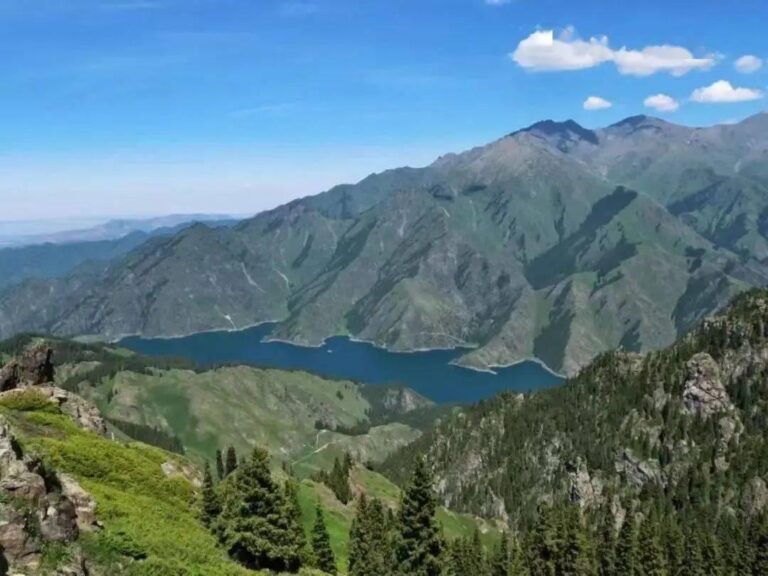
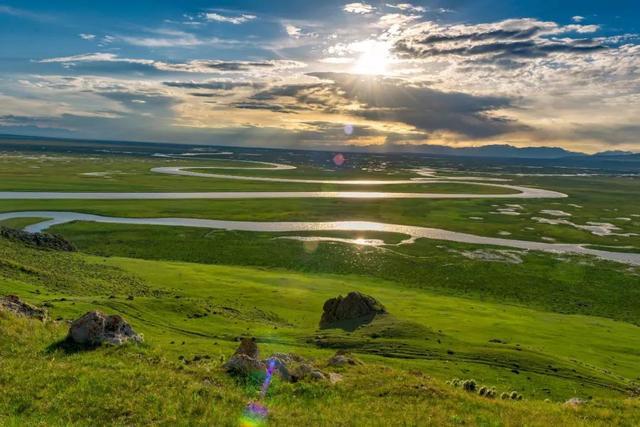
Geography explains almost everything about this county. The Manas River rises from Glacier No. 43 in the Ilian Khairkhan (Yilianhabierga) mountains on the Tianshan crest and runs roughly 504 kilometres north toward the dead-flat basin of Manas Lake. Local water authorities put its catchment at about 19,800 square kilometres and annual runoff at around 1.3 billion cubic metres, two-thirds of it arriving between June and August when the snowmelt runs hard. That summer pulse makes it the largest snowmelt stream on the southern rim of the Junggar Basin.
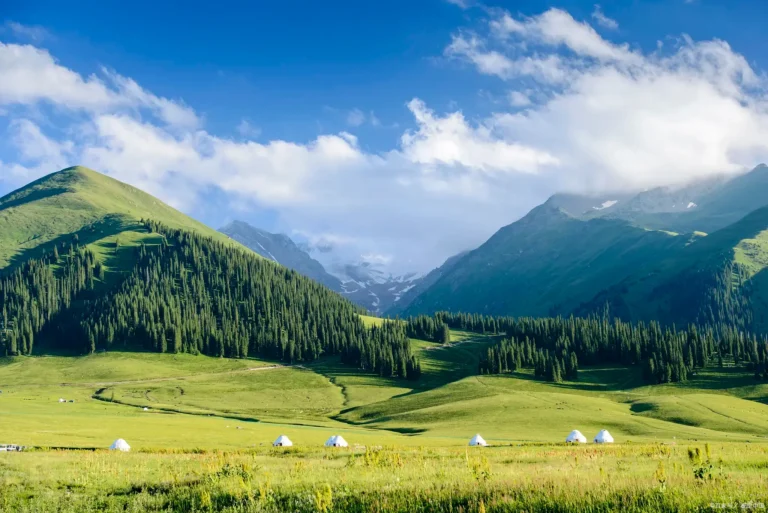
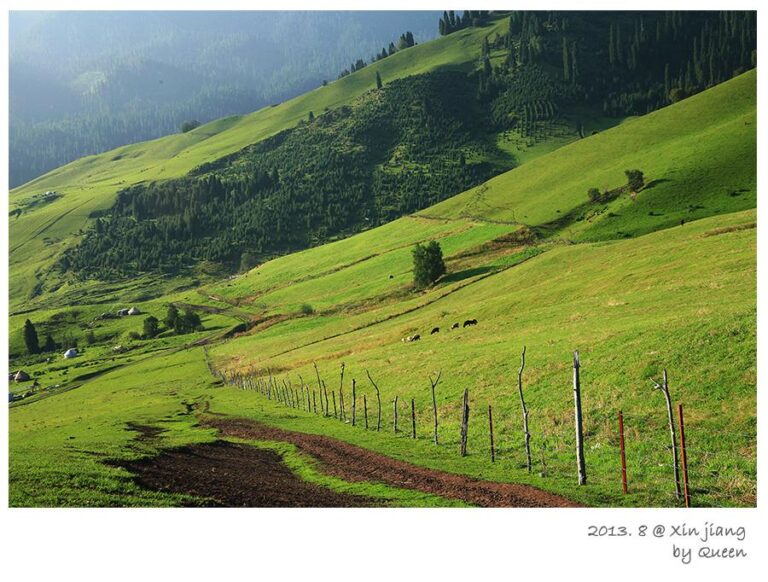
Where the river leaves the mountains it dumps its gravel and spreads into an alluvial fan, and that fan is the farmland. Shawan sits on the western side of the drainage, sharing the water with Manas County, the Bingtuan city of Shihezi, and settlements further north toward Karamay. Stand on any county road and you can read the gradient: orchards by the canals, grain on the heavier soils, and grey scrub where irrigation never reached, all a world away from the mountain drama an hour south.
Cotton, tomatoes and the farm calendar
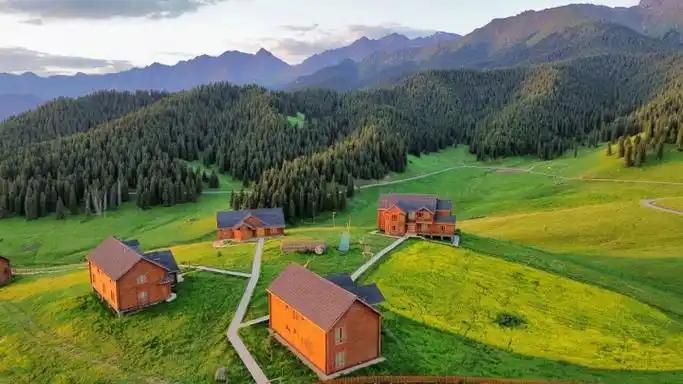
The plain is working country first and scenery second. Cotton is the flagship crop, and in late September the fields turn from khaki to white almost overnight as the bolls open; we have pulled over on the S201 to watch harvest machines strip a field in pass after pass. Processing tomatoes ripen in August and get hauled to factories in trailer trains that double the traffic on some junctions. Maize, sugar beet and wine grapes fill the rotation, and the county seat has more agricultural machinery dealers per block than cafes, which tells you where the money is.
For a visitor this calendar matters more than any monument list. Come in late September and you will share the roads with cotton lorries and smell crushed tomato pulp near the depots. Come in May and the same lanes are quiet, with young crops in straight lines and the Tianshan still carrying full snow. Both are good. We avoid December to February, when haze settles over the plain and field colours go flat.
Stopping in Shawan: what the town feels like
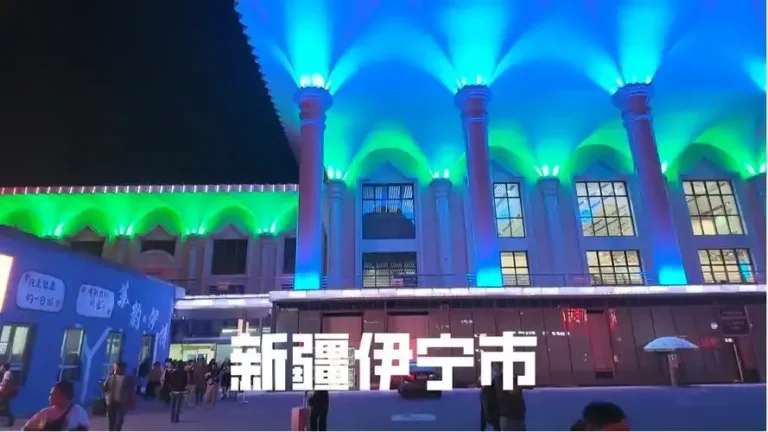
The county seat, historically called Sandaohezi after its three river channels, is a modest grid of six-lane streets, plywood-and-glass restaurants, and new towers going up at the edges. In January 2021 the State Council approved Shawan’s upgrade from county to county-level city, and the formal switch happened that March, so official signage now reads Shawan City even though nearly everyone, in Chinese and English alike, still says Shawan County. Nothing about the switch changes a visitor’s plan; it just means the train station and address books use the newer name.
Do not expect an old town. Qing-dynasty garrisons once farmed around Wulan Wusu and Anjihai, and the historic seat sat at Lao Shawan further north, but today’s centre is an irrigation-era creation: wide skies, cheap rooms, and the sense of standing inside the agricultural machine. On our last winter visit we walked from the station to the hotel in fifteen minutes past a fruit market selling oranges by the crate.
Eating the chicken the way locals order it
Shawan travel begins with the dish, so order it properly. Big plate chicken here is a whole bird chopped through the bone, braised with potatoes and the long, thick-skinned chillies grown at Anjihai town, then finished with a coil of belt noodles that soak up the sauce. Restaurants across the county source potatoes from Bortongu township in the foothills, and the difference shows: they stay intact instead of dissolving. Other towns contest Shawan’s claim as the birthplace, but the concentration of specialist kitchens here is real; we covered the origin debate in our guide to Shawan as the hometown of big plate chicken.
The ordering logic is by plate size, not by bird count. A small plate feeds two with rice; a medium feeds three to four; large plates are for a table of five or more, usually truck crews. Ask for the noodles added at the end, not the start, or they clump. Expect roughly 70 to 120 yuan a plate. For the wider story of the dish across the region, our piece on Xinjiang big plate chicken covers spice levels and city-by-city variations.
Getting there: train, car or bus
Self-drivers have the simplest run. The G30 expressway crosses the county east to west with signed exits at Shawan and Anjihai, and the old G312 national road shadows it for anyone who wants the slow lane. Distances feel short on paper but Xinjiang driving is all about the clock: budget a full morning from Urumqi with fuel and checkpoint pauses, and sort out your rental and paperwork with our Xinjiang road-trip planning guide first.
The train is the sleeper choice. Shawan City station sits on the northern Xinjiang corridor, and intercity C-series trains reach it from Urumqi in about 1 hour 31 minutes for 37 yuan second class, with a dozen-plus departures daily; slower K and T services cost 28.5 yuan and take around two hours. We rode one in winter and the carriages were full of students and soldiers heading west to Kuytun and Wusu. Buses also run, but the train drops you within walking distance of the restaurant streets, which is exactly where you want to be.
When the plain looks its best
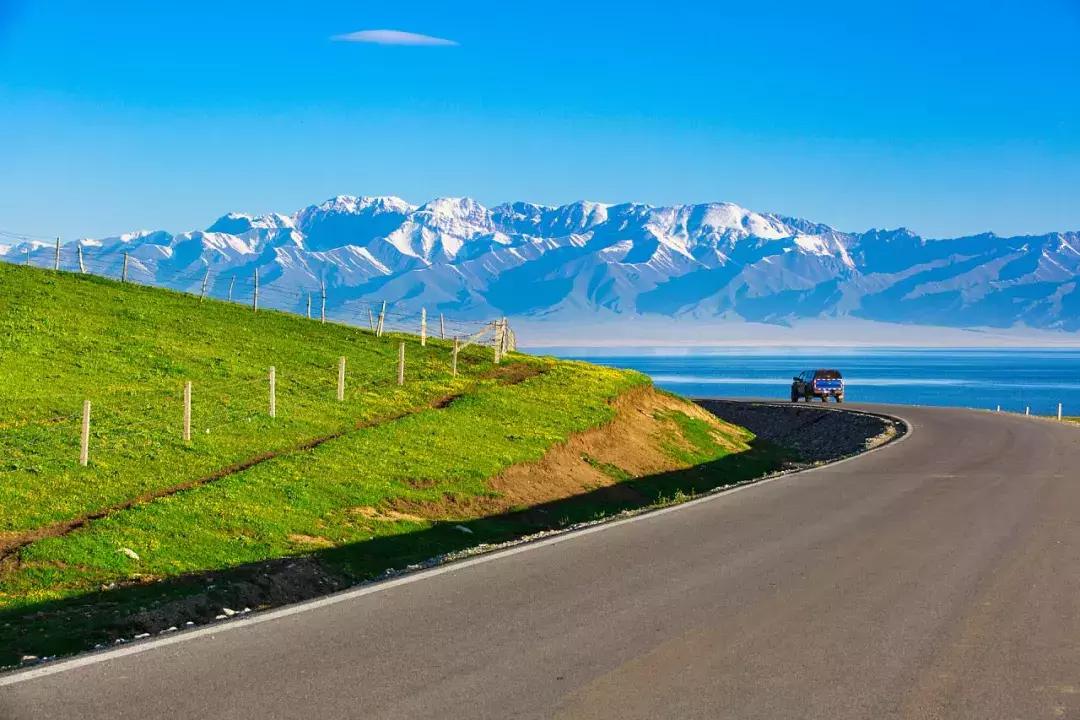
Two seasons earn a stop. May and June put fresh green on every field, and the mountain wall behind the plain still holds deep snow, so photographs get a two-tone backdrop for free. September and October are harvest drama: golden maize, open cotton, and roadside stalls selling melons by the trailer-load. July and August bring the fullest river and the longest evenings, though heat on the plain is serious and the light goes harsh by ten.
Winter has one narrow use case. If you are driving through anyway, a hot plate of chicken hits differently at minus fifteen, and the town is quieter than at festival time. Just watch the forecast: freezing fog on the G30 around Urumqi and Shawan can slow the expressway to a crawl, so plan daylight arrivals.
Where to sleep
Accommodation is plain and cheap: two-star hotels and business inns near the station and the main crossroads run 120 to 220 yuan, clean enough and none memorable, which suits a one-night farm-belt stop. Book on the usual Chinese apps or walk in; outside festival week there is no scarcity. If you want more character, base yourself in Shihezi twenty minutes east, or push on to Kuytun and its bigger hotel stock, and treat Shawan as a lunch stop rather than an overnight.
A half-day loop off the expressway
Here is how we actually spend a stop, and it fits between two long drives. Exit at Shawan, park near the restaurant blocks, and eat the chicken early, around 12:30, before truck crews take over. Give it ninety minutes. Then take the farm roads southwest toward Anjihai on the old G312, past irrigation canals and cotton plots; the going is slow, flat and photogenic. Refuel before rejoining the expressway, because pumps out on the plain thin out fast.
With a full day rather than a half, continue south from Anjihai into the foothills where the Anjihai River has carved one of northern Xinjiang’s most photogenic red gorges. That canyon has its own guide, Anjihai Grand Canyon, covering access and safety; the rim is unfenced and the wind on the edge is not a joke. Combine the two and you have a stop that beats any service plaza.
Pairing the stop with Shihezi and Kuytun
Shawan makes little sense alone; it makes a lot of sense as the middle of a triangle. East, Shihezi shows what Bingtuan planning did to the same plain, with tree-shaded avenues and a serious museum. West, Kuytun is the rail and highway crossroads where you choose between Karamay, the Ili valley, or the northern approach to the Duku Highway. North, the plain runs out toward Karamay’s oil fields and ghost landforms.
Across the river to the northeast, Manas County does the same farm-belt job with a wine and wetland angle, and the two make natural companions on an east-west drive. Its swan wintering grounds and Qing post road are described in our guide to Manas: wine, wetland and the old post road.
Practical notes for foreign visitors
Foreign passports rarely appear in Shawan, so set expectations kindly. Hotels that accept overseas guests exist but are fewer than in Urumqi; ring ahead or use an app that filters for your passport. Mobile payment works everywhere, though a couple of the oldest chicken institutions still preferred cash on our visits, so carry some. Mandarin carries the town; Uyghur and Kazakh are heard at the markets. Police checkpoints on the expressway are routine, keep your passport handy, and do not photograph them. Double-check entry and transit rules before leaving the big cities.
Frequently asked questions
Is Shawan worth stopping for if I do not eat chicken?
Honestly, the food is the headline. But the farm-belt scenery, the river geography, and the easy train access make it a fair half-day even for vegetarians, who can order the noodles and tomato dishes that appear on every menu here.
Can I visit Shawan County Xinjiang as a day trip by train?
Yes. Trains run from Urumqi in about ninety minutes for 37 yuan, arrive near the restaurant quarter, and there are evening returns. Start early, eat lunch, walk the market streets, and be back for dinner.
When is the big plate chicken festival held?
Dates have moved around over the years, often landing in summer, with a mass dining event as the centrepiece. Check local announcements close to your travel window rather than planning months ahead.
Disclaimer
This article reflects our own travels in Shawan and the Manas River plain, most recently in 2026, along with official county and prefecture sources. Prices, train times, festival dates and road conditions in Xinjiang change without notice; verify details locally before relying on them. We accept no liability for decisions made on the basis of this guide.
About the author
Karl Huang has lived in and written about Xinjiang since 2016, logging road trips across the northern and southern Tianshan and more meals of big plate chicken than his doctor would endorse. He focuses on practical, first-hand guidance for travellers crossing the region.