Published: 2026-09-07 | Author: Karl Huang, editor of Xinjiang Attractions, who has spent two Aprils, and many other weeks, traveling the Ili Valley.
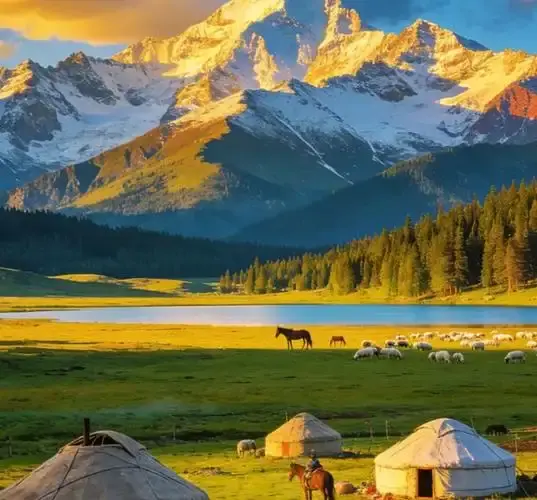
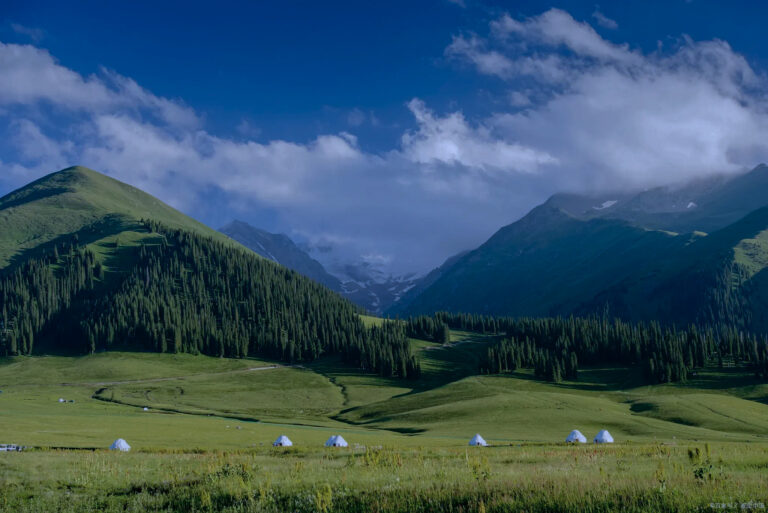
Most spring visitors drive straight at one target in the Ili Valley: the famous blossom slopes of Tuergen in Xinyuan. On my second April trip I took the exit instead toward Gongliu county Xinjiang, the quiet district south of the Ili River, and spent four days watching wild apricot petals drift through valleys I had to myself. This guide comes from those two Aprils on the ground, cross-checked against county government records and the local tourism bureau’s bloom calendars. If you want Ili’s blossom landscapes without the tour bus convoys, this county delivers them.
| Quick facts | Detail |
|---|---|
| Where | Central Ili Valley, Xinjiang, about 117 km by road from Yining |
| County town | Gongliu Town, county established 1932 |
| Size and people | 4,528 sq km; about 194,000 registered residents; 23 ethnic groups |
| Apricot bloom window | Roughly April 2 to 10 in low valleys; up to a full month across elevations |
| Key distances | Wild Walnut Gully 13 km, Chapqil reservoir 38 km, Kuerdening 88 km from the county town |
| Airports | Yining (YIN) about 2 hours; Nalati (NLT) on the east side |
| Costs | Chapqil free; Kuerdening charges entry plus a shuttle |
A county named for rivers, shaped like a butterfly
Kazakh herders called this land Tokkuztara, the nine branches, for the way water braids through it. The Chinese name has a different story: according to a handwritten county annal from the Republic era, officials fused characters from the Kunges and Tekes river names into “Gongliu,” meaning consolidation that endures. The county was formally founded in 1932 and today runs six towns and two townships.
On a map the shape is the memorable part: 162 kilometers east to west, pinching to roughly six at the waist, where the Tekes River ties itself across the middle before joining the Ili. Locals say the county looks like a butterfly about to lift off the valley floor, and the county seat’s lake and parks borrow the word in their names. Two thirds of the land is mountain, split between the Ishiklik and Nalati ranges under the 4,257-meter Kabamba peak.
Where the wild apricots actually bloom here
Gongliu’s tourism office calls apricot blossom the county’s core April spectacle, and unlike Xinyuan’s single famous slope, the bloom here is scattered across half a dozen valleys. In lower areas the flowers usually open between April 2 and 10, but because the valleys climb at different rates, the county offers blossoms for close to a month, into early May on high ground. The listed spots include Kuerdening, the Qiaxi forest park, the Yilege dai pastures, the 73rd Regiment orchard, the Mohe valleys, and the Wild Walnut Gully.
The famous site for comparison is the Tuergen Apricot Valley, which packs more than 30,000 mu of old wild apricots onto one enormous hillside, which is why tour groups flood it in the first week of April. Gongliu works differently. You might watch petals fall above a spruce-lined river in the morning and find a different blooming slope by afternoon; on weekdays in mid April we shared entire valleys with shepherd families and nothing else. Miss the peak week and the higher valleys give you a second chance.
Kuerdening: the spruce valley with a World Heritage plaque
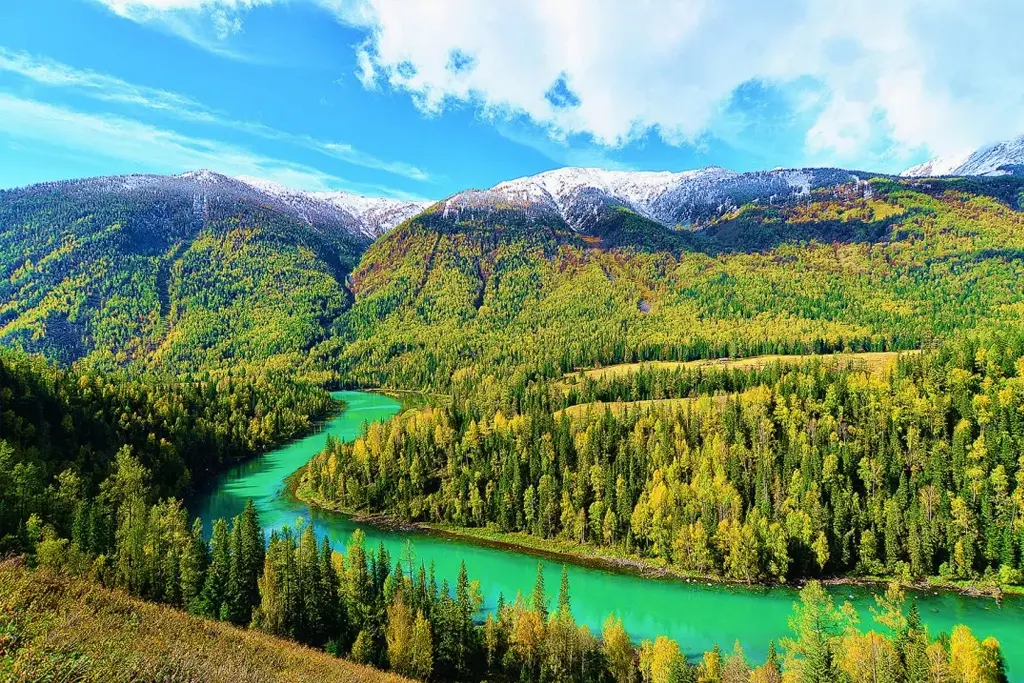
About 90 kilometers southeast of the county town, past the township of the same name, Kuerdening is the reason serious nature travelers put Gongliu on a map. The valley holds a national reserve for Schrenk spruce, a conifer that grows taller than almost any other on earth, with many trunks here passing 50 meters. Since 2013 it has formed part of the Xinjiang Tianshan World Heritage listing alongside the Kalajun Grassland across the river, and the reserve holds around 15 million cubic meters of standing timber.
April layering is what makes it special. Before the apricots even think about opening, the white crocus, locals’ first flower of Tianshan, pushes up through melting snow on south-facing slopes near the main viewing platforms from late March to mid April. By late April the wild fruit forest, around 30,000 mu, turns white and pink with apple blossom; drive in during that window and you often get spruce shade, blossom light, and leftover snow on the ridgeline in one frame.
The wild walnut gully you can walk in an afternoon
Thirteen kilometers from the county seat, on the northern slopes of the Ishiklik range, sits one of the strangest botanical addresses in Asia: a wild walnut forest that botanists describe as rare in the world and unique in China. The reserve covers 1,180 hectares with close to ten thousand mature wild walnut trees and more than 350 species of higher plants, a living gene bank for a tree whose domesticated cousins fill orchards everywhere else.
For a visitor it is the easiest half day in the county. A path loops through the grove, small signs label the trees, and a small exhibition hall explains the genetics without jargon. When we walked it in mid April the walnuts were leafing while wild apricots bloomed along the lower gully, both stories in one climb. A vendor at the gate sold roasted walnuts from the autumn harvest, a kilo for less than the coffee I had bought that morning in Yining.
Qiaxi and the rest of the April flower calendar
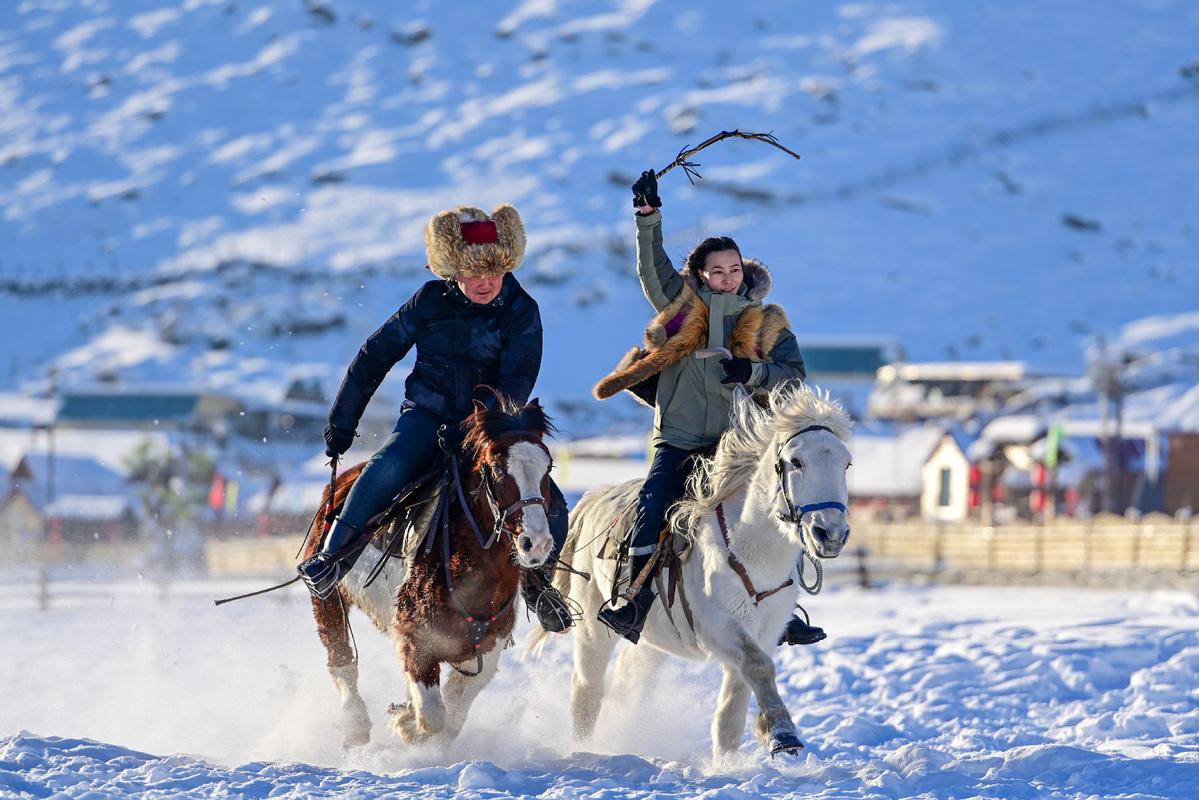
If apricots are the headliner, the supporting cast deserves a slot in your plans. Qiaxi, a national forest park holding the first grassland tourism site opened in Ili back in 1988, starts its show when a low yellow relative of the mustard family carpets the meadows from mid April. Weekend horse races run on the flats below the snow line, and the spring kite festival pulls a local crowd rather than a tour bus one.
Late in the month the sequence moves uphill. Apple blossom breaks around April 20 in the orchards of Agarsen town in the west, and near Quruk in Kuerdening township close to 20,000 mu of fritillary, a medicinal lily the county exports under its own geographic indication, open from about April 25. Every published date is a hint rather than a promise; let the elevations do the scheduling.
Chapqil: the reservoir locals call a sea
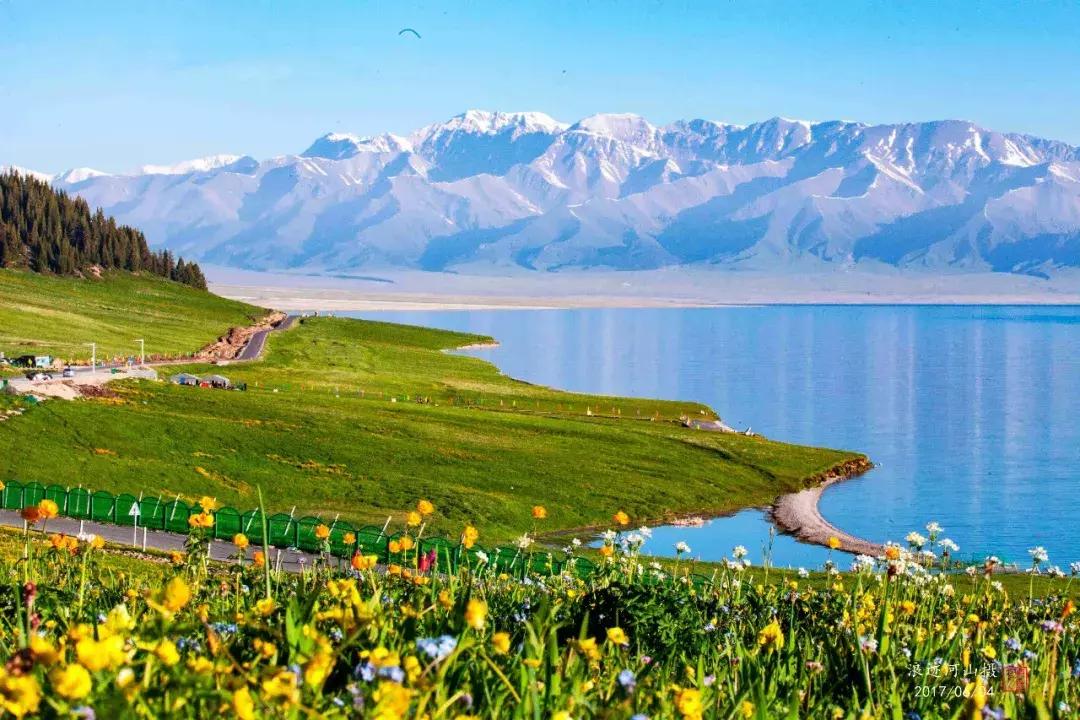
Southeast of town, about 38 kilometers out, the Tekes River is pinched by one of the largest dam projects in Xinjiang, and the water behind it looks nothing like irrigation infrastructure. Chapqil spreads across roughly 58 square kilometers between arid golden hills, holds about 1.69 billion cubic meters, and drives a 320-megawatt power station ranked second in the region. Entry is free, and a county road loops about 40 kilometers around the shoreline, blue water appearing and disappearing between ridges.
The surprise is fish. Cold-water farms raise whitefish and sturgeon in the deep water, and a farmhouse restaurant on the access road serves them fried or in broth for about 80 yuan a head. We paired the loop with a morning in the eight-trigram streets of Tekes Bagua City across the river, under an hour away, and finished at the dam crest as the reservoir went orange.
Getting to Gongliu county Xinjiang
No railway reaches the county, so the road does all the work. From Yining the drive runs about 117 kilometers: the S12 Yidun expressway covers most of it before the S242 drops into the valley, an hour and a half to two hours in normal traffic. Yining’s airport is the practical gateway at roughly two hours’ drive, though Nalati’s airport east of the county shortens the approach if you are looping from that side. Buses leave Yining through the day, then taxis or hired cars cover the last stretch.
Self-driving is the only sensible way to chase blossoms, because the spots scatter in five directions. Fuel up in the county town, keep your ID handy for routine checkpoints, and allow a full two hours for the 88 kilometers to Kuerdening; the road is paved but slow.
Where we slept, and what we ate
The county town is a working agricultural center, not a resort, which is exactly why it is affordable. Business hotels near the main square ran us 150 to 250 yuan a night with reliable heating, and the butterfly lake park is a ten minute evening walk. In Kuerdening township, homestays and small camps near the village of Airele now take spring guests, and sleeping in the valley means first light on the spruce without a predawn drive.
Meals follow Kazakh and Hui kitchens: milk tea with fried dough and hard breads in the morning, pulled noodles or samsa from the market street at noon. Carry home the county’s two geographic-indication products, tree-dried apricots, small sweet fruits that ripen and dry while still on the branch, registered in 2015, and the firm, tangy Gongliu apple, registered a year later. At Chapqil, order the whitefish.
Practical notes from two Aprils in the valley
Spring here is a moving argument between seasons. The county averages 7.4 degrees Celsius for the year with about 145 frost-free days, and the April swing routinely reaches 13 to 16 degrees. We twice started a morning in shirtsleeves among blossom and finished the same day watching horsemen cross a snow-covered field, so pack layers and a real jacket regardless of the forecast. Sun protection matters just as much; light off fresh snow is brutal.
A few things that saved us time. The county calls itself a natural oxygen bar and the air genuinely feels different after Urumqi, but distances are real, so plan one valley cluster per day. Download offline maps before the Chapqil loop, where signal drops out, and carry small cash for village shops. Bloom timing shifts with the year’s weather, so check the county tourism bureau’s WeChat announcements or call the scenic areas directly; a two day shift is usually the difference between bud and full flower.
A four-day April loop that chases the bloom uphill
Day one: drive in from Yining, settle in the county town, and walk the butterfly lake at dusk. Day two: the Wild Walnut Gully in the morning cool, then the Chapqil loop after lunch, ending at the dam crest for sunset. Day three: commit the whole day to Kuerdening, up the valley road early, crocus slopes and the spruce stand before noon, the wild fruit forest and a homestay dinner after. Day four: Qiaxi for the morning horse races or a meadow walk, then roll east toward Nalati for the next leg or return to Yining for a flight out.
With a fifth day, cross the river to the octagonal old town of Tekes and its high meadows, or push northeast along the Kash River as in our Nileke valley guide. Our slower version of this circuit, with two extra nights in the grasslands, is in the Gongliu and Xinyuan grasslands piece.
Gongliu questions we hear most
Can I see apricot blossoms here without a car? Partially. Buses reach the county town, and the Wild Walnut Gully is a short taxi ride away, but Kuerdening and Qiaxi really need a hired car or a day tour from Yining.
Is Kuerdening worth it if I already visited Tuergen? For us, yes. Tuergen is one immense blossom slope; Kuerdening is spruce forest, snowline, crocus, and fruit blossom stacked vertically, and it carries a World Heritage listing for the ecosystem as a whole.
What if I come in late April? That is a good outcome, not a failure. The lower valley apricots will be done, but apple blossom, fritillary fields, and the wild fruit forest take over, and crowds thin sharply after the first week.
Where this information can go stale
Road numbers, shuttle arrangements, ticket prices, and bloom dates in this guide reflect conditions during our visits and the county’s published materials through 2025. Xinjiang upgrades tourist infrastructure fast, and fees or access rules can change in a single season. Confirm details locally before you commit money, and treat all blossom dates as probability, not schedule.
About the author
Karl Huang has been writing about Xinjiang travel since 2019 and publishes Xinjiang Attractions, where every guide is built from repeated on-the-ground trips rather than secondhand summaries. He has crossed the Ili Valley in all four seasons and keeps returning each April to track how the blossom line moves through the county’s valleys.