Published: September 27, 2026 | Author: Karl Huang
Planning your Xinjiang train food strategy sounds trivial until you are eleven hours out of Urumqi at 9 p.m. with nothing but a warm bottle of water and a packet of soda crackers. We have taken close to a dozen long-distance trains across the region since 2022, from the Urumqi–Kashgar sleeper to the Fuxing high-speed runs toward Turpan and Korla, and the difference between a pleasant ride and a hungry one almost always comes down to what you brought on board and what you grabbed during the stop. This guide is built from those trips, not from a menu we copied off a website.
If you are still deciding how to move around, our Xinjiang high-speed rail guide covers routes and booking, and our train versus flight comparison explains when the sleeper actually beats the plane.
Xinjiang Train Food at a Glance
| Item | Bring from home | Buy at the platform | Skip |
|---|---|---|---|
| Main protein | Vacuum naan with sesame, cured beef jerky | Hot lamian at Urumqi / Korla halls | Shell-on eggs, saucy braises |
| Carbs | Whole naan, flatbread, oat bars | Steamed buns (mantou), samsa | Anything with loose gravy |
| Produce | Apples, oranges (whole) | Roasted seeds, dried apricots | Pre-cut fruit, opened yogurt |
| Drinks | 2 L water, brick tea bags | Bottled water, hot thermos fill | Tap water, ice cream |
| Hot meal | Instant noodle cup + Foldable bowl | Dining-car boxed set (halal) | Smelly tofu, durian (banned) |
Why Xinjiang Trains Deserve a Food Plan
The region is huge. A straight run from Urumqi to Kashgar is roughly 1,450 km and takes between 11 and 24 hours depending on the train, and the Korla–Hotan stretch through the Tarim Basin can stretch past a full day on the slower numbers. Unlike a flight, where you suffer one dry sandwich and land, a train is a small moving household for the better part of a day. We learned the hard way on our first Kashgar trip that the dining car is not open all night and the trolley runs on a schedule we did not expect.
There is also a cultural layer. Xinjiang rail catering is overwhelmingly halal, which is a relief for Muslim travellers but a surprise if you are hunting for a bacon roll. Knowing that ahead of time stops you from standing in a queue for something that is not there.
What We Packed (and You Should Too)
After the cracker incident we started treating the train like a picnic with bad Wi-Fi. The non-negotiables: two litres of water per person, a vacuum-sealed round of naan (it stays soft for two days), a brick of brick tea and a foldable silicone bowl for the free hot-water dispensers in every car. The dispensers are real and they are boiling, which solves the instant-noodle problem and lets you make tea without buying anything.
For protein we carry cured beef jerky from the Urumqi bazaars and a small vacuum pack of roasted chickpeas. These survive 30 hours in a warm car without a fridge. On the March 2025 Kashgar–Urumqi sleeper we shared naan and jerky with a family from Aksu in the corridor at 11 p.m.; they had brought fresh sangza (fried dough twists) and we traded. That is the part of train food no guide can give you, but the packing list makes it possible.
Buying at the Platform: The 20-Minute Window
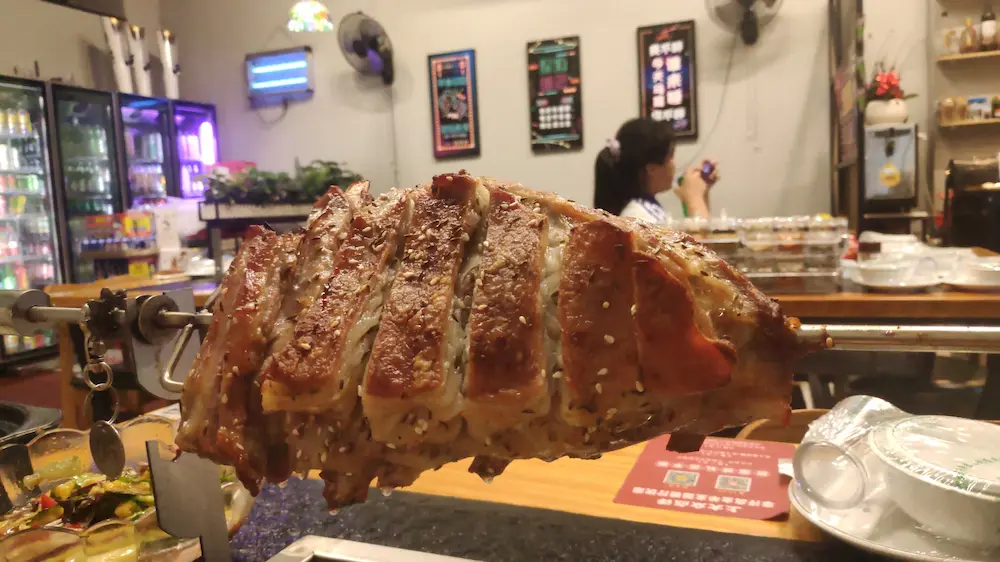
On the regular (non-high-speed) sleeper trains, stops at bigger stations last 8 to 20 minutes, and that is your real shopping window. The platform vendors at Urumqi, Turpan, Korla and Kashgar sell hot lamian in foam cups, steamed mantou, and samsa (the greasy, flaky baked buns) straight from roadside ovens. We time our approach by standing near the door two minutes before the announced stop, wallet ready, because the train will not wait if you wander to the far end of the platform.
The catch: platform food is hot now and cold in forty minutes. Eat it immediately or accept a lukewarm bun. Do not buy anything that needs a fridge unless you are within an hour of eating it.
The Dining Car and the Trolley
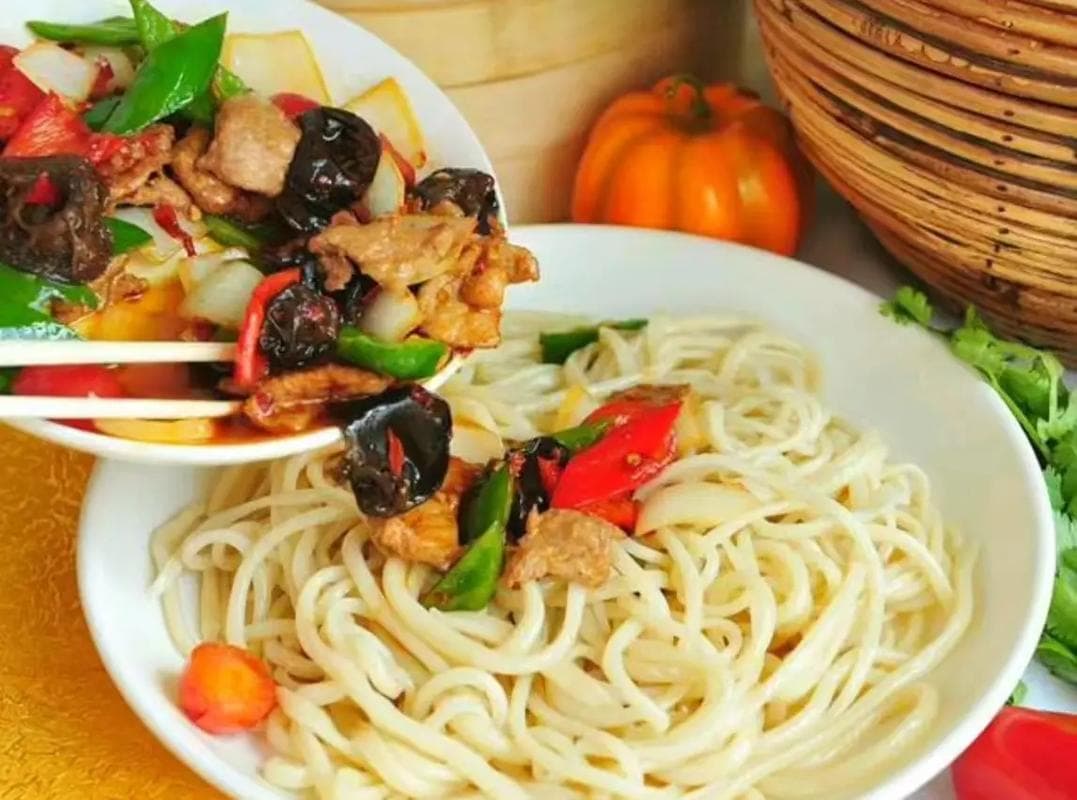
On the classic Z and T sleeper trains there is a proper dining car (canche) with booths and a short menu of halal stir-fries and noodle soups, usually open from around 7 a.m. to 9 p.m. Prices run higher than the platform but the food is cooked on board and safe. On the Fuxing high-speed trains there is no sit-down car; instead a trolley circulates every couple of hours selling boxed meals (gaotie hefan), snacks and drinks. The boxes are halal and edible, though nobody would call them memorable.
A trick worth knowing: the China Railway 12306 app lets you pre-order a meal to your seat on many HSR services, including halal options, and it arrives warmer than the trolley version. We have used it on the Urumqi–Turpan run and it worked. For background on the routes those meals ride, see our 15 dishes you must try in Xinjiang.
Halal, Vegetarian and Allergen Realities
Every dining car and trolley we have used was halal-certified, and pork simply does not appear. For Muslim travellers this is the easy part. Vegetarians have a harder time: the boxed meals almost always contain meat, and the platform buns are usually meat-filled. We pack extra eggs, cheese and fruit for our vegetarian friends, because hoping to find a meat-free hot meal on a moving train in this region is a losing bet. Our halal food guide and our vegetarian and vegan guide go deeper on what to expect off the train.
Allergen labelling on the boxed meals is minimal, so if you have a serious nut or gluten issue, bring your own food and read the ingredient line on any sealed snack twice.
Foods That Travel Badly (What to Skip)
Some things are tempting and wrong. Pre-cut fruit from a platform tray goes off in the heat and we have watched a traveller regret it by Hami. Open yogurt and anything creamy spoils without refrigeration. Loose-gravy dishes leak onto your lap the moment the track dips. Smelly snacks — fermented tofu, and definitely durian — are banned in the cars anyway and will earn you dirty looks. Shell-on eggs are messy and the shells have nowhere polite to go. We skip all of these and have never missed them.
Staying Safe: Water, Heat and Shelf Life
The free hot-water dispensers are boiling, so they are safe for tea and noodles, but do not fill a bottle from the tap in the washroom and call it drinking water. We carry two litres each from the station shop and top up with bought bottles at stops. In summer the cars get warm and a packed lunch left on the fold-down table for five hours is not dinner; the rule we use is simple — if it needed a fridge at home, it does not ride the train for a day.
A Real Meal on the Kashgar–Urumqi Sleeper
To make this concrete, here is what we actually ate on the southbound Kashgar–Urumqi Z-train in late February 2025. Breakfast was the dining car’s tomato-and-egg noodle at 7:30, bought with wechat at the counter. Lunch was naan and jerky at our seats because the dining car was full of a tour group. Dinner was a platform lamian at Korla during the 15-minute stop, eaten standing in the doorway. The next morning we made brick tea from the dispenser and finished the apples. Total spent on board: about 45 yuan a head. We arrived in Urumqi fed, which is more than we can say for the cracker year.
Sample Packing List by Trip Length
For a trip under six hours: one litre of water, a naan, an apple, jerky. For six to twelve hours: add a noodle cup, tea bags, a second naan, dried apricots. For anything over twelve hours: two litres of water, the full list above, plus a vacuum pack of roast chickpeas and a spare brick of tea, because the dining car closes at night and the trolley is thin after 9 p.m. The longer the ride, the more your own bag matters.
Frequently Asked Questions
Can I bring my own food onto Xinjiang trains?
Yes. There is no restriction on carrying sealed snacks, fruit, naan or a noodle cup. The only banned items are strong-smelling foods like durian and anything that would bother other passengers in a closed car.
Is the train food halal?
On the services we have taken, both the dining car and the HSR trolley meals are halal-certified. Pork is not served. Vegetarian hot options are scarce, so plan ahead.
Are there dining cars on the high-speed trains?
The Fuxing HSR trains use a moving trolley rather than a sit-down car. You can also pre-order a halal boxed meal to your seat through the 12306 app on supported routes.
Can I get hot water on the train?
Every car has a free boiling-water dispenser. Bring a cup or a foldable bowl and you can make tea or instant noodles at any time, including after the dining car closes.
Disclaimer
This article reflects our own travel on Xinjiang trains between 2022 and 2025 and is meant as practical advice, not a guarantee of current menus, prices or schedules. Catering, station vendors and 12306 meal pre-order availability change, and foreign travellers should confirm ticket and document rules with China Railway 12306 before departure. We are not affiliated with China Railway. Check food-safety guidance for your own health needs.
About the Author
Karl Huang is a Xinjiang-based travel writer who has ridden regional trains from Urumqi to Kashgar, Korla and the Ili line. He focuses on first-hand, practical guidance for foreign visitors, and his work on this site is built from trips taken across the region rather than desk research.