Published: October 12, 2026 | Author: Karl Huang
Most travelers blow through Manas County on the G30 without a second thought, chasing Urumqi to the east or the Ili grasslands farther west. We did exactly that on our first drive across Xinjiang, until a friend in Shihezi pressed a small dark-green pendant into my hand and said, “This came off the mountain behind my hometown.” That mountain is the northern Tianshan, and the stone is Manas County jade, the bilberry jade locals are proud of. I have spent the last few years writing about stones across this region, and Manas keeps pulling me back because it is the one place where the jade story is still alive in the open, not sealed behind glass.
This is a practical guide, not a brochure. The dates, titles, and numbers below come from Manas County government publications and Chinanews reporting on the Bilberry Garden. The opinions about crowds and whether a visit is worth your time are ours, and you can ignore them.
Manas County jade at a glance
| Item | Detail |
|---|---|
| Location | Northern foot of the Tianshan, Changji Hui Autonomous Prefecture, about 140 km west of Urumqi, directly south of Shihezi |
| Stone | Manas bilberry jade (玛纳斯碧玉), a green nephrite and one of the world’s three major green-jade sources |
| Jade title | “China Bilberry Jade Capital” (中国碧玉之都), awarded in 2011 |
| Main site | Zhonghua Biyu Yuan (中华碧玉园), a Han-Tang style jade complex opened in 2014, rated 4A in December 2024 |
| Mining history | Traced to the Western Han; Tang-dynasty tribute mines at 3,800 m; over ten Qing-dynasty workings |
| Best time | May to October for the town and markets; February to March for the frozen Tianshan backdrop |
| Getting there | Own car or hired driver from Urumqi (about 1.5 to 2 hours) or a short hop from Shihezi |
The table sums up the essentials, but the reason Manas matters is the stone itself. Let me walk through what we found on two separate trips.
Why Manas County is Xinjiang’s jade town
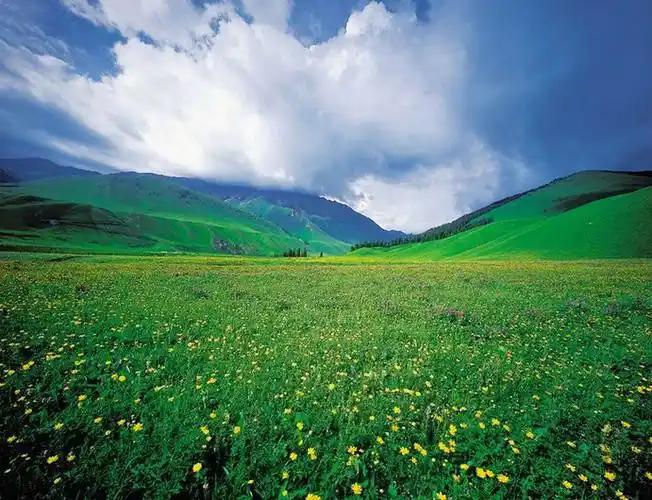
Manas County spreads across the northern Tianshan foothills, a band of farmland and ranch country that runs right up against the mountains. For most of the last century that position made it a quiet agricultural stop. The jade changed its fortune. Manas green jade is nephrite, the same mineral family as the famous white mutton-fat jade of Hotan, but colored green by iron and chromium. Geologists and local miners count it among the world’s three major sources of this green stone, alongside deposits in Russia and Canada.
What sets Manas apart is that the jade trade still happens in the street, not just in museums. When we visited, the county seat had jade shops on nearly every commercial block, and most people we met could tell you the difference between a good green and a dull one without thinking about it. The Manas River, the largest stream north of the Tianshan, cuts down from those peaks and feeds the wetlands and Manas Lake to the north, so the county has always lived between mountain and steppe. That everyday familiarity with stone is rare, and it is the real draw.
The long history of Manas green jade
The record goes back a long way. Jade has been taken from the Manas area since at least the Western Han period. During the Tang dynasty, miners worked a site called Shaertayi high on the Tianshan at around 3,800 meters, and at the time it was the only place in China producing this green jade, which was sent to the court as tribute. The Qing era saw the trade peak, with more than ten active workings scattered through the southern mountains.
Modern recognition came slowly but firmly. In 2009 the county adopted the slogan “Golden phoenix of the Tianshan, bilberry jade of Manas.” Two years later, in 2011, Manas was named the “China Bilberry Jade Capital.” In 2015 the county signed a ten-year framework agreement with the Palace Museum in Beijing to reproduce six Qing-dynasty jade treasures at a 1:1 scale using Manas stone; the Palace holds more than 1,400 green-jade pieces in its collection. A national-level appraisal master now works here, and the county has built a recognized pool of carvers and appraisers.
What bilberry jade looks and feels like
If you have only seen white Hetian jade, the green will surprise you. Manas bilberry jade ranges from a deep spinach green to a brighter leaf tone, and most pieces carry small dark specks, tiny manganese or iron inclusions that look like sesame seeds up close. In good light the stone has a soft, oily sheen rather than a glassy shine. We handled a few bracelets in one shop and the weight felt dense and cool, the way proper nephrite should.
The rarest variety is the sky-blue bilberry jade, found in the northern Tianshan jade belt in 2009. Old texts describe the best grade as “indigo being the most superior,” and on the market a sky-blue piece can fetch many times the price of an ordinary green one. We saw one small sky-blue pendant in a glass case and the dealer would not name a price out loud, which told us everything. For a different color entirely, the black jade of Karakax County shows what the same mineral family can do in another part of Xinjiang.
Where to see and buy jade in Manas
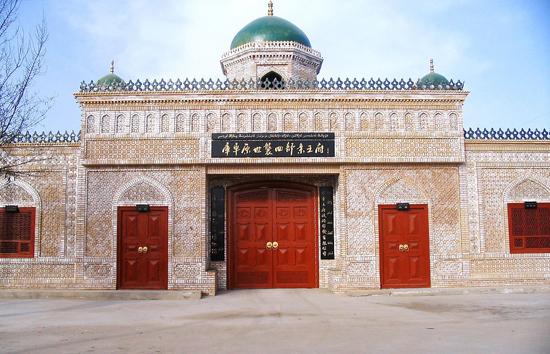
The center of gravity is Zhonghua Biyu Yuan, the China Bilberry Jade Garden, a Han-Tang style complex that opened in 2014 and was rated a national 4A tourist attraction in December 2024. Inside you will find the Manas Bilberry Jade Culture Exhibition Hall, a cultural corridor, and a food street, with more than 700 registered merchants trading in jade, wood carving, and related crafts. The exhibition hall is the place to start: it lays out the mining history and shows the six Palace Museum replicas up close.
For buying, the ground-floor shops around the garden are where locals actually trade. We watched a buyer and seller haggle over a raw chunk for twenty minutes, with a small flashlight used to check the color inside the stone. If you want to learn rather than spend, the annual Bilberry Jade Cultural Tourism Festival fills the garden with carvers and demonstrators and is the easiest time to talk to masters. If you want the wider picture on buying across the region, our complete Xinjiang jade buyer’s guide covers grades, fakes, and price ranges.
Getting to Manas from Urumqi and Shihezi
Manas is easy to reach. From Urumqi it is roughly 140 km west on the G30 Expressway, a drive of about one and a half to two hours depending on traffic. Shihezi sits just north of the county seat, so if you are already in that XPCC city, Manas is a short trip south, well under an hour. There is no passenger train that stops usefully for the jade garden, so most visitors come by rental car, hired driver, or as a day stop on a longer northern Xinjiang loop.
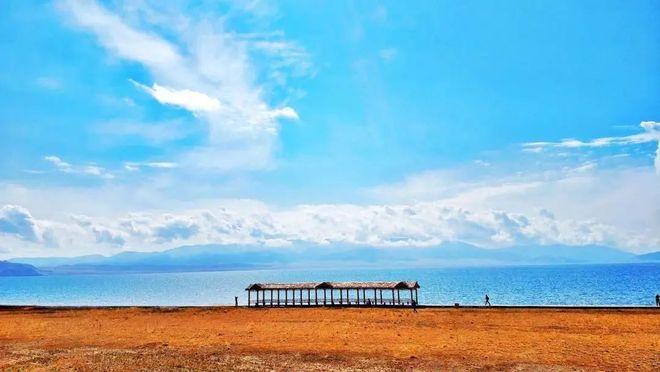
If you are building a route, pair Manas with the Manas River wetland to the north or with Shihezi’s own parks. The Manas River is the largest stream north of the Tianshan and runs out toward Manas Lake in the desert, so the county sits between green foothills and open steppe, which makes for an easy half-day of scenery even if jade is not your interest.
Best season for a jade trip
The garden and shops run year round, so timing is about comfort more than access. From May to October the town is warm and the drive from Urumqi is clear; this is when we would send a first-time visitor. Late summer and early autumn also line up with harvest-season produce in the markets, and the Bilberry Jade Cultural Tourism Festival usually lands in that window, which is the most comfortable time to walk the garden.
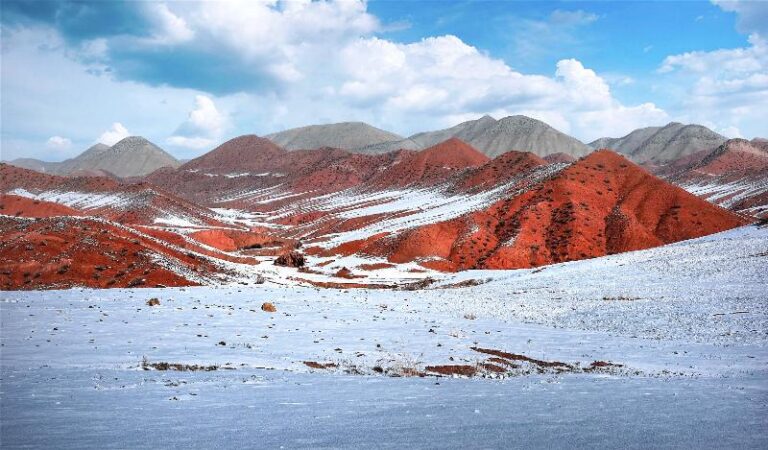
Winter has its own appeal if you like quiet. In February and March the Tianshan behind the county wears snow, and the contrast of a frozen white range against the warm-lit jade shops is a photograph we still pull up. Just pack for real cold and check road conditions before leaving Urumqi.
Where to base yourself for the night
Most people day-trip from Urumqi or Shihezi and that works fine. If you want to stay, the county seat has standard mid-range hotels within walking distance of the garden, and Shihezi, fifteen minutes north, has a wider range of rooms and better restaurants. We slept in Shihezi and drove down the next morning, which gave us a relaxed start and a proper dinner out.
What to eat around the Bilberry Garden
Manas sits in farmland, so the food is honest northern Xinjiang cooking. Around the garden you will find laghman noodles, grilled lamb, and the kind of stuffed flatbread that disappears faster than it cools. The county is also part of the local wine country, and a glass of northern Tianshan red pairs well with a slow evening. We ate at a small place off the main street where the owner brought out pickled vegetables unprompted, the sign of a kitchen cooking for regulars rather than tourists.

Things worth knowing before you go
A few practical notes from our trips. Carry cash for small jade stalls, since some older dealers prefer it and card readers are not universal. Learn the bare minimum about color and inclusions before you buy, or go with someone who knows stones; the market is friendly but not a place to guess. Photography inside the exhibition hall is sometimes restricted, so ask before you shoot. Give the stone a real look in daylight, not just under a shop’s warm lamp, because artificial light flatters everything. The 4A rating also means cleaner restrooms and clearer signs than you might expect in a county town.
A one-day jade route through Manas
If you have a single day, here is the loop we would run. Leave Urumqi after an early breakfast and reach the garden by mid-morning. Spend an hour in the exhibition hall, then wander the ground-floor shops and the food street for lunch. In the afternoon walk the cultural corridor and, if the season is right, drive north toward the Manas River wetland for an hour of open sky. Be back in Shihezi or Urumqi for dinner. It is a low-stress day that still leaves you holding a story, and maybe a stone.
Frequently asked questions
Is Manas jade the same as Hotan jade? They are both nephrite, but Hotan is famous for white and seed-green stone while Manas is known for its green bilberry jade. The feel is similar; the color is the obvious difference.
Can I visit a real mine? The historic workings are high in the southern mountains and are not set up for casual tourists. The garden and exhibition hall are where the story is told, and they are open and accessible.
Is the Bilberry Garden worth it if I don’t buy jade? Yes. The Han-Tang architecture, the cultural corridor, and the replicas make it a pleasant stop even for browsers, and the food street is genuinely local.
How far is Manas from Urumqi? About 140 km, roughly one and a half to two hours by car on the G30.
Disclaimer
This article is based on the author’s personal visits and on publicly available information from Manas County government sources and Chinanews. Opening hours, merchant counts, and festival dates change, so confirm current details before you travel. We are not jade appraisers and nothing here is buying advice; prices and quality vary widely, and any purchase is your own decision. Links to other pages are for background only.
About the author
Karl Huang is a travel writer focused on Xinjiang and western China. He has driven more than 20,000 km across the region researching its towns, roads, and crafts, and contributes practical, first-hand guides to Xinjiang Attractions. He prefers slow days, local food, and asking too many questions in jade shops.