Published: 23 August 2026 | Author: Karl Huang
Why you can trust this write-up
The Hongshan Park view of Urumqi is one I keep coming back to, because it is the easiest real look at the city you can get without leaving town. I first climbed it on a work trip in 2019, dragged up by a local friend who wanted to show me “the postcard,” and I have gone back on almost every visit since. What follows is built from those visits plus a few frank conversations with Urumqi residents about when the hill is worth the climb. I have noted where the experience depends on the weather, because on a bad-air day the famous panorama shrinks to a few blocks.
What Hongshan actually is
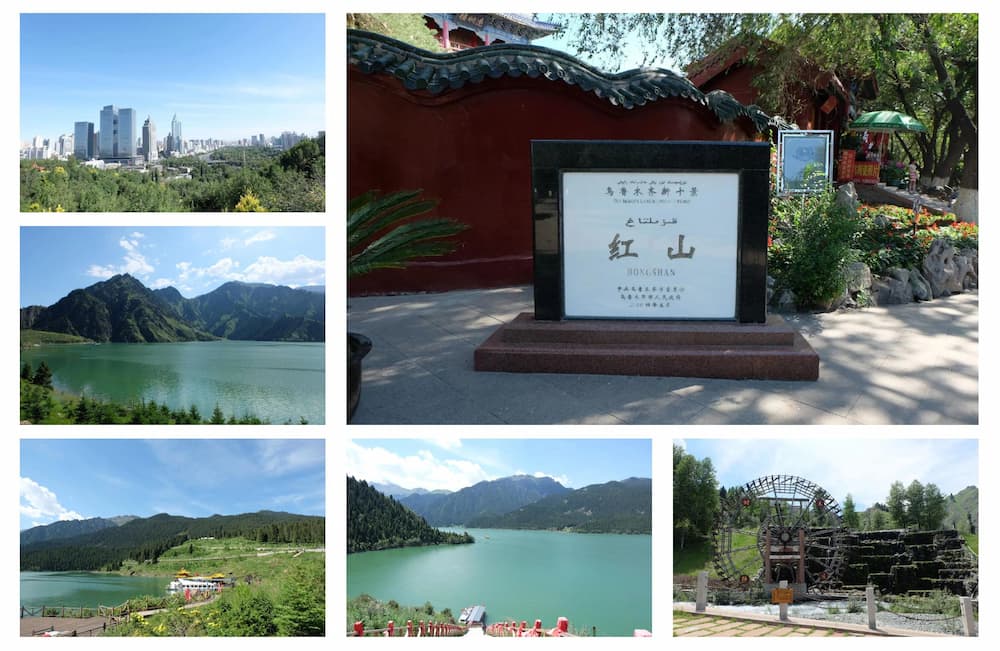
Hongshan (红山) translates as “Red Mountain.” The name is plain description: the hill is a chunk of red sandstone that breaks the flat northern bank of the Urumqi River, right where the old town meets the modern centre. It is not a mountain in the Xinjiang sense. The rock rises about 90 metres above the street, and the summit sits near 910 metres above sea level. What makes it matter is the Hongshan Pagoda, a nine-tier brick tower planted on the highest point in 1788, during the Qianlong years of the Qing dynasty. Locals will tell you the legend unprompted: a red dragon was said to live in the hill and stir up floods, so the pagoda was built to pin it down. Whether or not you buy the story, the tower has become the symbol printed on half the postcards in the city.
Quick reference: Hongshan Park at a glance
| Detail | What to expect |
|---|---|
| Entry fee | Free. No ticket booth at the gates we used. |
| Opening | Daylight hours, roughly 8:00 in the morning to 22:00 in season. |
| Location | North bank of the Urumqi River, a short ride from People’s Square. |
| Summit | About 910 metres above sea level, 90 metres above the street. |
| Climb | Some 500 stone steps, or a sloping service road. |
| Top sight | Hongshan Pagoda, built in 1788, nine tiers. |
| Time needed | One to one and a half hours at an easy pace. |
| Best light | Morning, especially the day after rain. |
Our morning on the red hill
On the visit I am thinking of, we arrived a little before nine. The lower gate was already open and there was no charge. The path starts gently, then tightens into a stairway cut into the red rock, switchback after switchback. Halfway up there is a small viewing terrace where older residents were doing slow tai chi, and a vendor selling bottled water and roasted sunflower seeds. We kept climbing. The air was clear that morning, the kind of clarity you only get in Urumqi after a night of wind, and when we reached the pagoda platform the whole city opened below us. To the north and east, the grid of Urumqi ran out to the horizon. To the south, the Tianshan showed a thin white line of snow on the high peaks.
What surprised me was how close the mountain felt. From street level in the city you forget the range is there; up on the hill it is right across the river, close enough to read the ridges. We stayed maybe twenty minutes, took the standard photos, and walked back down the road instead of the steps. At the foot we found a naan bakery already warm, bought two flat loaves still soft from the oven, and called it breakfast.
Getting to Hongshan Park
The park sits inside the city, so the hard part is never the distance, it is the traffic. A Didi or taxi from anywhere central takes ten to twenty minutes depending on the hour. We usually ride from the People’s Square area. If you are travelling Xinjiang without a car, the park is an easy bus or metro ride from the train station, and Urumqi is the hub of the region’s high-speed rail network, so most visitors pass through anyway. Walking from the International Bazaar takes about forty minutes along the river, which is pleasant if the weather is mild and rough in midsummer heat.
Best time for the Hongshan Park view of Urumqi
The single most important factor is the air. Urumqi sits in a basin, and on still summer afternoons a layer of dust and haze can cut the view to a few hundred metres. Mornings are almost always better. The day after a wind or a rain shower is best of all, when the Tianshan stands out sharp and white. Autumn, from late September into October, gave me the clearest skies of any season. I would avoid the noon climb in July and August. Sunset draws a crowd and the city lights are pleasant, but bring a layer because the hill cools fast once the sun drops behind the range.
Where to stay
Because the park is central, almost any hotel in the city works. The two areas I recommend are around People’s Square, which puts you on the north side of the river within walking distance, and the district near the International Bazaar to the south, which trades quiet for food. Our Urumqi city guide covers both in more detail, including which blocks fill up during the summer rush. Book early if you are travelling in July or August, when the city’s rooms tighten.
Food within walking distance
Hongshan is close enough to the bazaar district that most visitors combine the two. The International Bazaar food street is the obvious stop: lamb kebabs over coals, ban mian noodles pulled to order, zhua fan rice with carrot and raisin, and fresh naan from the round ovens. There is also a night market that runs later and louder. Carry some cash or a local payment app, because the smallest stalls do not always take foreign cards. Our guide to money and payments in Xinjiang explains which apps actually work for a short-term visitor. Near the park’s lower gate we found a couple of hole-in-the-wall noodle shops favoured by office workers at lunch, cheaper and quieter than the bazaar.

Practical tips before you go
Wear proper shoes. The steps are cut into rock and can be slick after rain. Carry water in summer; there are vendors but not on every level. The pagoda itself is sometimes closed for maintenance, and even when open you view it from the surrounding platform rather than climbing inside. Remember this is a city park, not wilderness: you will hear traffic and see apartment blocks, and that is part of the point. For photographs, the open terrace just below the pagoda gives the cleanest sightline north. If you go for sunset, bring a light and leave before full dark, since the walk down is unlit in places.
Extending the day: Tianchi and the mountains
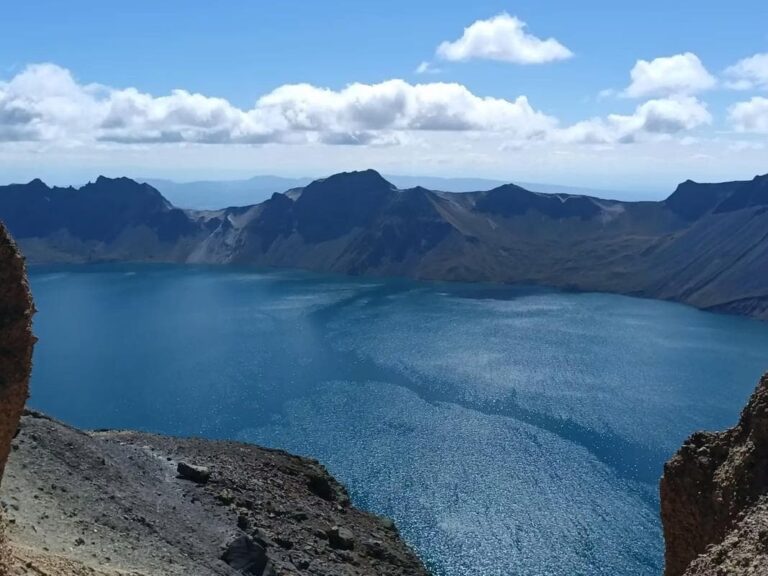
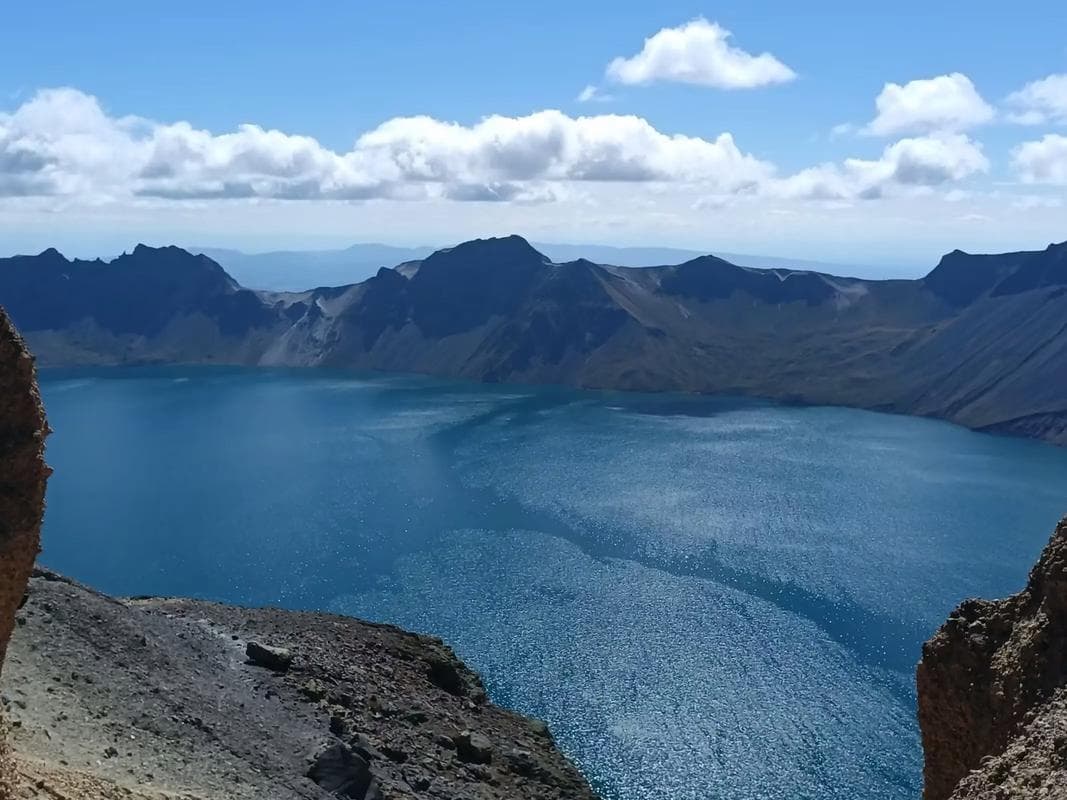
If the hill whets your appetite for the Tianshan, the classic next step is Heavenly Lake, known locally as Tianchi, about two hours east of the city by road. It is a different world from the red hill: glacial water, spruce forest, and a cable car up to higher meadows. Our piece on Xiaotianchi and the Heavenly Lake area lays out the timing and the common mistakes. Closer in, the Nanshan pastures south of the city make an easy half-day if you want green instead of skyline.
A simple half-day itinerary
Start at 8:30 and walk in through the lower gate. Climb at an easy pace, spend twenty minutes on the platform, and be back at the bottom by 10:00. From there take a Didi south to the International Bazaar, wander the food street, and sit down for a late noodles or rice lunch around noon. If energy and weather allow, add the Xinjiang Regional Museum in the afternoon. That is a full, low-stress day built almost entirely on public transport and foot, with the Hongshan Park view of Urumqi as the opening act.
Frequently asked questions
Is Hongshan Park free?
Yes. On every visit the entry has been free, and we saw no ticket control at the gates.
How long does a visit take?
Plan one to one and a half hours, including the climb, photos, and the walk down.
Can you see the Tianshan mountains from the top?
On a clear morning, yes. The snow line sits to the south across the river. On a hazy afternoon you may see only the near city.
Is it suitable for strollers or wheelchairs?
Partly. There is a sloping road to the summit, but it is steep and the steps are the main route. A stroller is manageable on the road with effort; a wheelchair will find the grade difficult.
When is the pagoda open?
The tower is often viewable from the platform year round, but interior access is occasional and depends on maintenance. Treat the exterior and the viewpoint as the main draw.
Disclaimer
This guide reflects personal visits and conversations up to 2026. Opening hours, access to the pagoda, vendor availability, and transport options can change, and the view quality depends entirely on weather. Confirm details locally before you travel, and respect the site and other visitors. Nothing here is official advice from the park or the city.