Published: October 5, 2026 | Author: Karl Huang, Xinjiang travel writer
Our first evening in Wenquan did not look like a hot spring resort. It looked like a small border
town with a bog and a road, and it was raining. A man boiled eggs in a pot by the gate of the
wetland park and sold them from a basket for a few yuan, and behind him the ground was steaming
through the frost. That is the place. Wenquan hot springs are not a cluster of private pools with
loungers. They are 147 springs that come to the surface on their own across the valley, and the
town that grew on top of them decided to give most of the good ones away.
This page is about the water itself: which springs carry names, what the free pools do and do not
permit, why the river beside them keeps an open channel through December, and what a soak feels
like when the air is minus twenty. It is not a repeat of the county overview, and it is not the
usual listing. Those pages are linked at the end. Everything here we walked, soaked and timed
ourselves, and where a claim comes from a local notice board or a traveller report rather than
from us, we say which.
Wenquan hot springs at a glance
| Item | What to expect |
|---|---|
| Springs in the county | 147 self-flowing, three named: Bogdar, Otokesair, Arxat |
| Water temperature | Roughly 42 to 62 degrees Celsius, year-round |
| Entry to the wetland park | Free; the outdoor pools are free to use |
| Best months to soak | December to March for cold air, June to August for crowds |
| Getting in | About 110 km from Yining, roughly 60 to 80 km from Sayram Lake |
| What to bring | Towel, sandals, ID document; no swimming or pets |
147 springs, and only three that carry a name
Counting is the first surprise. Wenquan County in Bortala Mongol Autonomous Prefecture is the
only county in China named after a geothermal resource, and its own records put 147 self-flowing
springs across the valley floor. Self-flowing is the operative phrase. These are not springs that
need a pump or a tanker. Water arrives under its own pressure somewhere in the plain and keeps
arriving.
Only three carry names, and locals point to them with the steadiness that they point to a bus
stop. The Bogdar Holy Spring in the county town, the Otokesair Sky Spring out west, and the Arxat
Immortal Spring in the mountains. Water from the three runs between roughly 42 and 62 degrees
Celsius all year, hot enough to touch with a gloved hand and far too hot to sit in for long.
The dissolved load is why people keep going back. Local analysis puts calcium, magnesium and
sulphur in the water, with metasilicic acid, hydrogen sulphide and lithium also reported. You can
smell the sulphur on a warm day, faintly, like a struck match that went out. You can feel the
residue afterwards, a grey film that rinses off slowly. Nobody in the valley treats that film as
dirt. It is the reason the pools are used.
The free pools at the wetland gate, and the rules that come with them
The Bortala River National Wetland Park sits at the edge of town and entry costs nothing. Inside
it there is boardwalk, reed bed, open water, swans and herons, and outdoor pools built into the wet
ground. In 2024 the county rebuilt that pool area with Hubei aid money, roughly 16 million yuan, and
opened it in October as a free public park rather than a paid scenic area. The nineteen pools were
shaped like Tianshan snow lotus flowers, which looks strange in photographs and entirely sensible
to a body at the end of a long drive.
What we did not expect was how tightly it is run for a free facility. A notice at the gate lists
the prohibitions in plain terms: no swimming, no diving, no running in the pools, no pets, no
smoking or alcohol, and no entry for anyone with high blood pressure, heart disease or open skin
complaints. Water is filtered through sand, passed through ultraviolet and sampled on a schedule.
Those are the operator’s words on the board, and a free pool with a routine beats a private one
without.
There is also a novelty well beside the boardwalk that locals call the shout spring. Stand on the
platform, shout at a nozzle, and a column of water rises in response to the noise. It is silly,
children love it, and adults ignore themselves while photographing it. It sets the tone of the
place better than the pools do: this is a town facility built for residents first, and the fact
that you can use it at all is the good luck.
Residents soak twice a day, once in the morning and once after work, and the area is busiest at
those two hours rather than at any hour a tour operator would pick. We went at eight on a Saturday
and shared a pool with four people; we went at two on a Wednesday and had the whole outer basin to
ourselves. Both are correct. Neither is what a guidebook would have chosen for us.
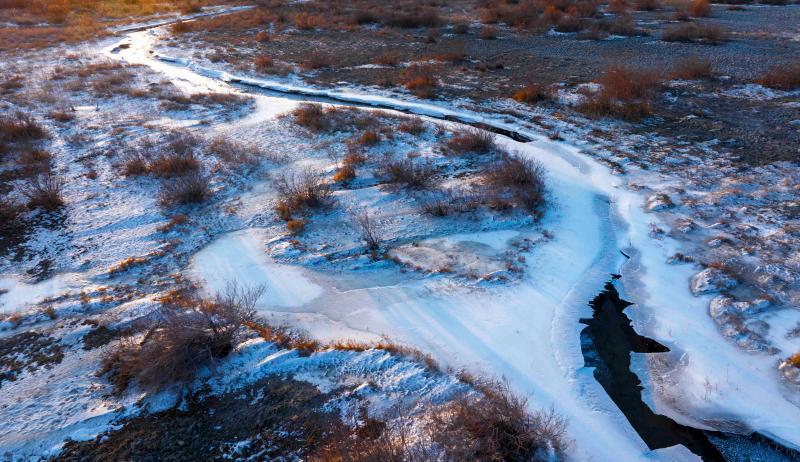
A river that refuses to freeze: Wenquan hot springs in December
Go in winter if you can. This is the case we would argue for.
Set the scene honestly: the county sits in a valley with mountains on three sides, the climate is
dry and hard, and the wetland freezes from December to March. Summer daytime runs around 20 to 25
degrees. The pools are outdoor. Standing beside one, you watch your breath go sideways while the
surface of the water stays smooth and moves slightly.
That contrast is the whole point. A hot pool in summer is pleasant. A hot pool in December,
surrounded by snow and the sound of a river you can hear but not see, is the thing people drive
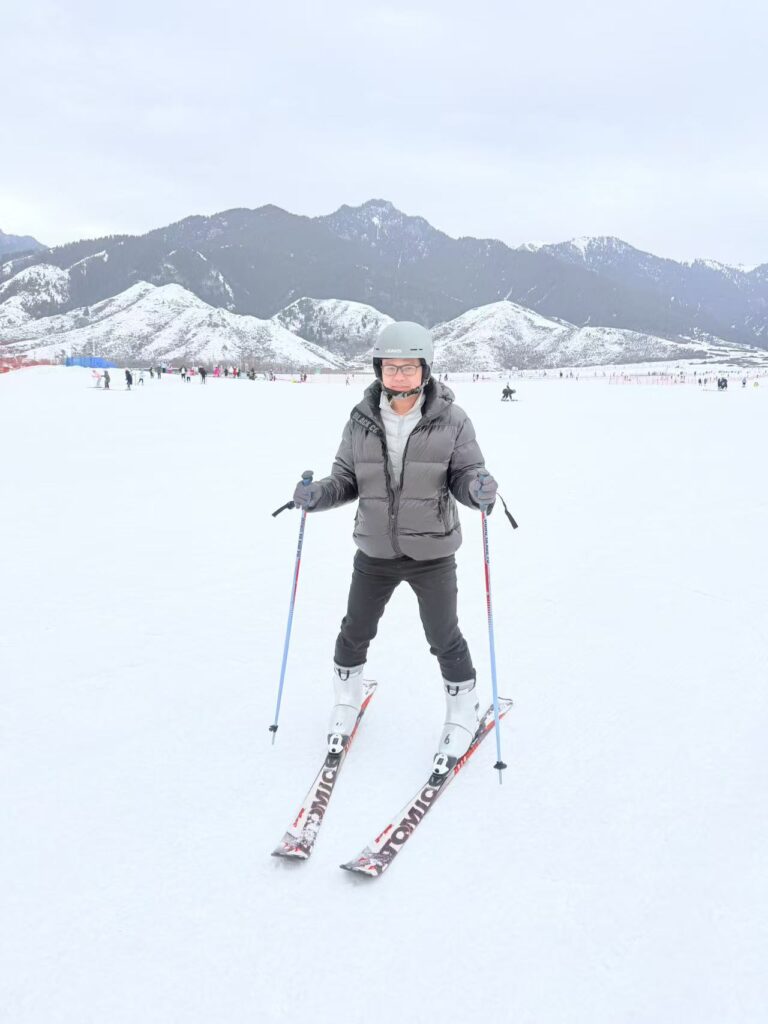
eighty kilometres for. Operators pair it with cross-country skiing in the same season, which
almost nowhere else in Xinjiang offers at this scale: ski in the morning, sit in the water at
four.
Practical caution, and this section is short on purpose. Between cold air and hot water the body
gets a shock it did not ask for. Locals advised us not to stay in longer than about a quarter of an
hour per round, to get out between rounds rather than stay in, and to move slowly when standing
up. Nobody monitored us, and the notice board did not need to.
What hot-spring water in the tap actually means here
The county pushed the water indoors as well: into hotels, guesthouses and the medical centre. Fill
the tap in the right room here and you get mineral water directly, warmed and treated, at any hour.
It sounds like advertising until you have had a nine-hour transit day and a shower that comes out at
the temperature of a spring rather than a boiler.
Two honest notes. The water is for washing, not for drinking from the tap. And a mineral smell
in a bathroom is not a fault; if the water runs slightly warm in a building with no boiler, that
is the spring, not the plumbing.
The cold-water fish, the spring-boiled egg and the stone pot
The valley’s other industry is fish, and it is not ornamental. A cold-water fish breeding base
outside the county town is open to the public at no charge; you pay a small sum for feed, and the
ponds hold high-white salmon, golden trout and taimen, including the large taimen that gave
Kanas its lake monster. Food follows the same pattern. High-white salmon is served raw and
translucent in summer, golden trout grilled at almost any time, and hot-spring-boiled eggs are a
standard breakfast, eggs set in warm mineral water until the white turns chalky and the yolk
stays liquid.
The stone pot is worth ordering once. Meat is sealed with hot stones and cooked in its own juices,
which sounds like a gimmick and tastes like the opposite. Pair it with local dairy from the Chahar
herders and you have the county’s two tables in one meal.
Sand, steam and the Mongolian hospital
One more use of the water that has no equivalent in a guidebook. The county’s Mongolian medicine
hospital runs thermal treatment on the same resource: patients are buried to the waist in warmed
sand, steam in herb baths, and go through massage, moxibustion and cupping in the same building.
It runs more than thirty distinct thermal and herbal items.
Be clear about what this is. It is a medical institution, not a spa, and it is not set up for
visitors on a holiday afternoon; treatment is prescribed by its own staff. We watched from the
corridor and backed out. If you arrive with a specific complaint and some command of the language,
the front desk is where to ask.
Getting to the water: Sayram Lake, Guozigou and the return ticket
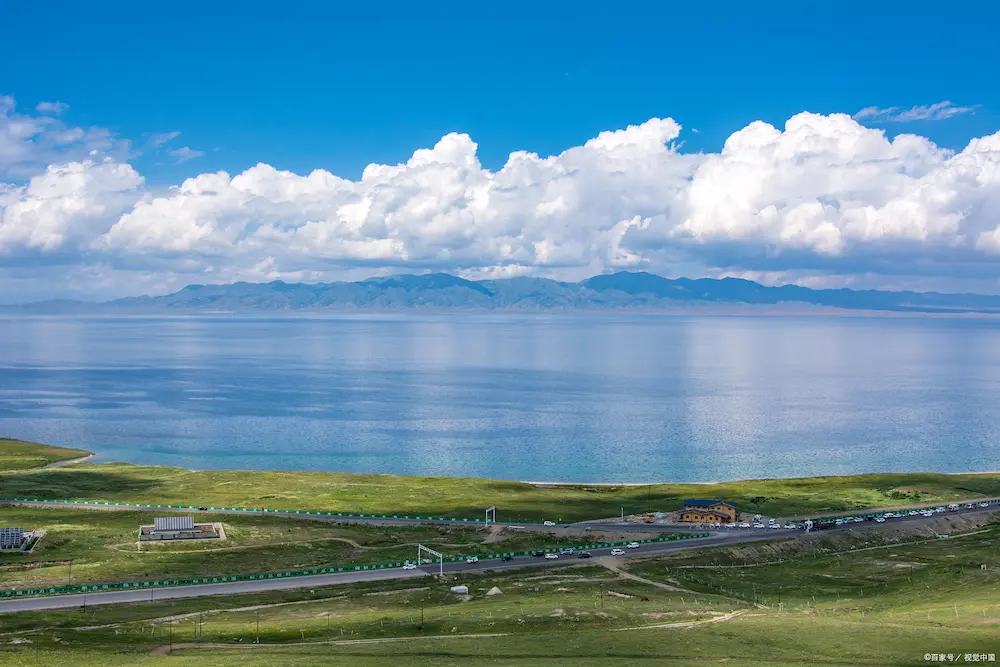
Wenquan is easiest as a stop rather than a destination. From Yining you take the Guozigou Bridge
corridor and the valley road north: roughly 110 kilometres, most of it mountain, on a two-lane
road with trucks. From Sayram Lake the county town is about an hour east, somewhere between 60 and
80 kilometres depending on which gate you leave from.
One traveller report we could not verify from an official source, so treat it as a rumour: some
hot spring hotels issue an invoice on request that can be exchanged for a free self-drive entry
ticket to Sayram Lake, which normally costs around 145 yuan per person. Ask reception before you
pay. If it works, it is the best value in the region.
Bring your ID document. Wenquan is a border county and checks are routine. Do not plan on
reaching it after dark in winter; the valley road ices early.
One afternoon on the pools, hour by hour
07:30. Park opens, foot baths at the gate already warm and empty. Locals come before work and
stay twenty minutes.
10:00. Boardwalk, swans on the open water, the shout spring working for a school group.
12:30. Lunch in town: spring eggs, noodles, cold-water fish if the season allows.
16:00. The pools. Sun still on the water, air dropping fast. One round, fifteen minutes, out,
walk to the second basin, warm again.
19:00. Dinner, then the hotel tap if you stay overnight.
What we could not confirm
The 147-spring count and the 42 to 62 degree range come from local and official reporting, not
our own measurement. The 16 million yuan figure and the October 2024 opening come from local
broadcasting. The invoice trick is a traveller account our contact could not confirm. The Bogdar
spring’s three eyes, one for the eyes and one for the stomach, are marked on signs; we sampled none
of the water.
Disclaimer
Temperatures, opening dates, pool rules and prices at Wenquan change with the season and with the
maintenance schedule of a facility that is free to enter. Nothing here is a medical claim; the sand
and steam treatments are offered by a local institution and are not recommendations. People with
high blood pressure, heart conditions or skin complaints are excluded from the pools by the
operator’s own rules, and that applies to you too. Check the road before committing to a winter
drive.
About the author
Karl Huang writes about Xinjiang for visiting travellers, with a focus on small northern counties
and the working hot springs between them. He has bathed at the Wenquan wetland pools across three
seasons and misjudged the place completely on the first visit, which is why this page exists.
Related reading:
the Wenquan county overview,
Bole and Bortala, the prefecture beside Sayram Lake,
the Sayram Lake guide,
the winter swans of the Ili valley, and
hot springs across Xinjiang.
References:
Wenquan County, Wikipedia ·
Sayram Lake, Wikipedia ·
Bortala Mongol Autonomous Prefecture, Wikipedia