Published: July 22, 2026 | Author: Liam Foster
Why you can trust this Xinjiang rafting guide
Most travel writing treats Xinjiang as a place to stare at through a car window. I came to paddle it. Between 2021 and 2024 I spent four separate trips on the water here: a slow float on the Irtysh above Beitun, a wind-whipped dawn on Sayram Lake with a rented sea kayak, and two separate attempts to get a canoe onto Kanas Lake that taught me more about permits than about paddle strokes. This guide is built from those runs and from the outfitters and park rangers I argued with along the way. My aim is plain: tell you where you can actually put a boat in the water in Xinjiang, and where you probably cannot.
If you are searching for Xinjiang rafting, the first thing to understand is that this region is not a whitewater destination in the way Sichuan or Yunnan are. What it offers instead is something rarer: clean, cold, glacier-fed water in landscapes that see almost no paddlers. The honest short version is that flatwater kayaking and SUP on the big alpine lakes is well within reach, while true river rafting exists but stays small-scale, seasonal, and concentrated in the north.
Xinjiang rafting and kayaking: the quick facts
| Spot | Type | Season | Difficulty |
|---|---|---|---|
| Sayram Lake (Bortala) | Kayak / SUP touring | Jun–Sep | Easy, but windy |
| Kanas Lake & River (Altay) | Canoe / restricted paddle | Jun–Oct | Easy–Moderate |
| Irtysh (Ertix) River (Altay) | Scenic raft float | Jun–Aug | Grade I–III |
| Kunes / Gongnaisi (Ili) | Gentle river paddle | Jun–Sep | Grade I–II |
There is a north–south split worth knowing before you plan. Almost everything paddleable sits in northern Xinjiang — the Altay mountains and the Ili valley, where snowmelt actually feeds year-round rivers and the alpine lakes sit high and cold. Southern Xinjiang, the Tarim basin, is a different story: its rivers are mostly seasonal, and the Taklamakan has none you would want to be on. So if rafting is your reason to come, fly north.
What it feels like on the water
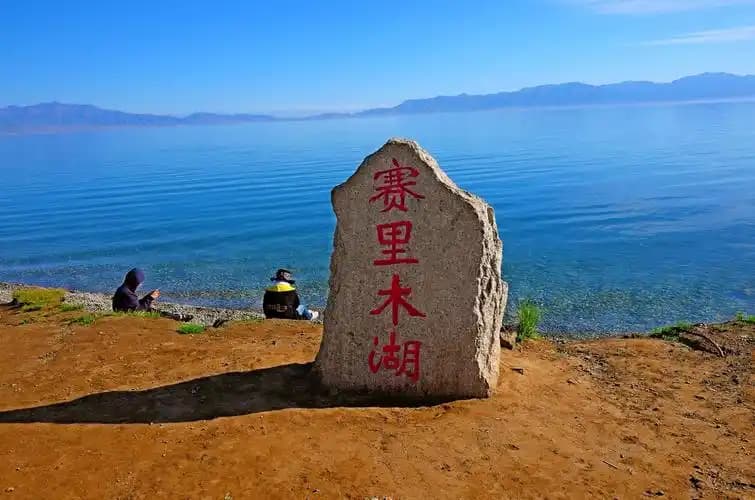
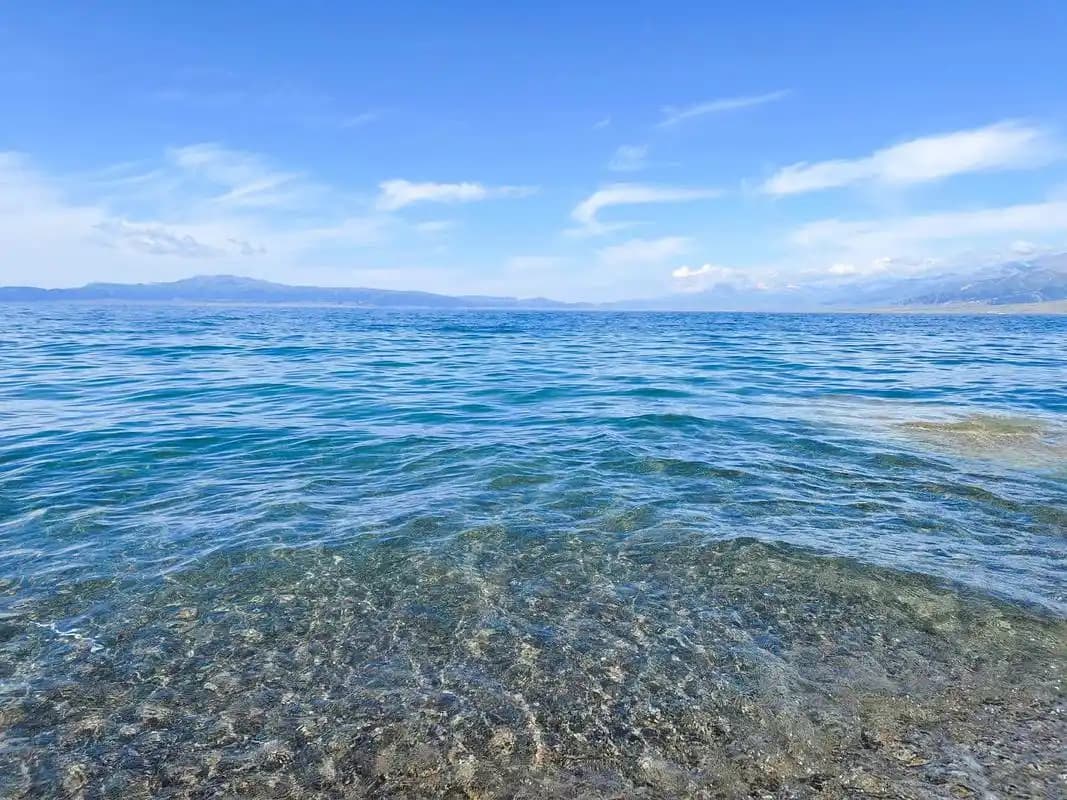
I will start with Sayram, because it is the easiest place to get a paddle in your hands. We rented a sit-on-top kayak at the east gate one July morning at 7 a.m., before the wind the locals call the lake’s breath came up. The surface was glass. Paddling out toward the far shore with the snow line of the Alatau behind me, I could hear nothing but the drip off my blade. By 11 a.m. the lake had whitecaps and the rental guy was waving everyone in. That rhythm — calm dawn, chaotic afternoon — is the single most important habit to plan around on every Xinjiang lake.
The Irtysh was a different animal. This is the only river in China that drains to the Arctic, and it carries that northern weight: wide, grey-green, and cold enough that my outfitter handed me a drysuit before we launched near Beitun. Our float ran maybe grade II, a few standing waves and one sweep that spun us, but the sheer volume of water made it feel bigger than it was. My partner that trip, a Kazakh friend named Nuray who grew up along the bank, treated the whole thing as a Sunday outing. I did not.
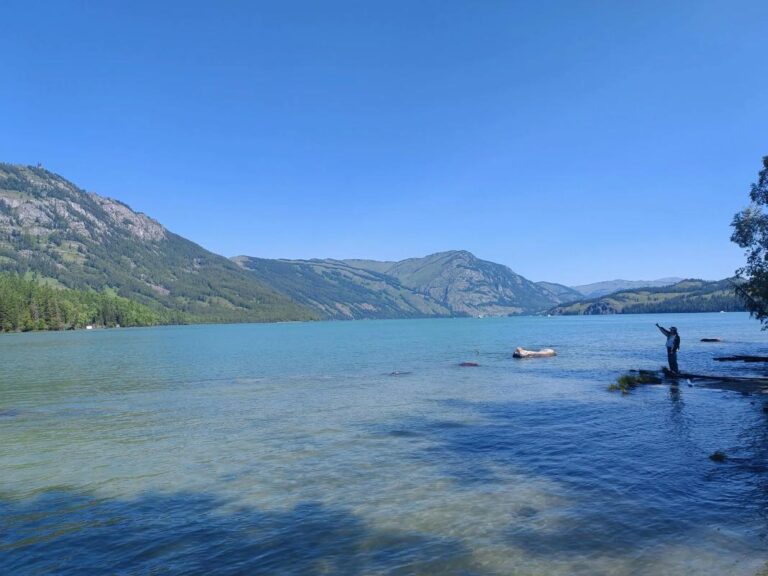
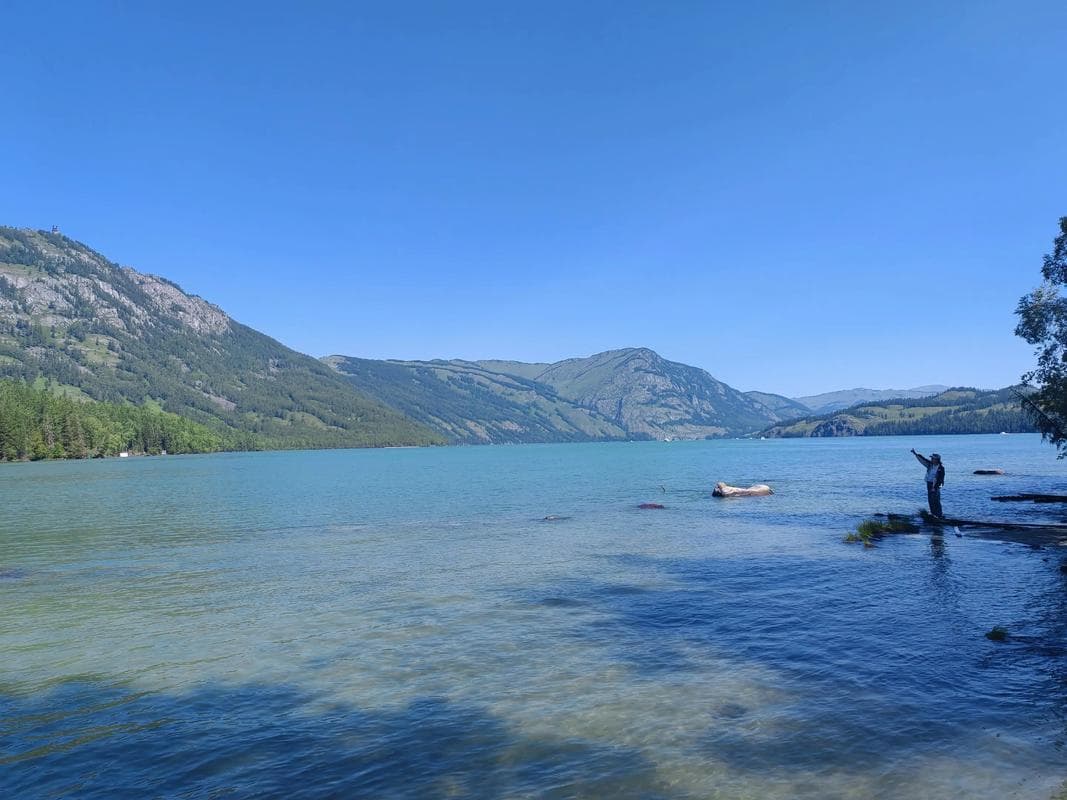
Kanas is where my confidence ran out. On my second trip I carried a packraft up from the village expecting to paddle the main lake. The geopark ranger at the dock explained, patiently, that motorboats are the only craft licensed on the lake and that independent paddling needs written approval from the park office in Burqin. I ended up paddling the Kanas River just below the lake outlet instead, which was lovely and legal, but it taught me to ask first.
How to reach the put-ins
For Sayram, take the high-speed train to Bole (博乐) and then a taxi or the park shuttle to the lake’s east gate, about an hour away. Driving the G30 expressway and skirting the water on the ring road is also straightforward if you have a car. For the Irtysh and Kanas, fly into Altay Airport (AAT) from Urumqi, or take the train to Beitun and transfer; from there it is a 1.5 to 2 hour drive north to the river sections and roughly 4 to 5 hours west to Kanas. The high-speed rail network now reaches most of these gateways, which makes a paddle trip far less of a logistics ordeal than it was a few years ago.
Best time to paddle
Late June through early September is the window for lakes. Sayram freezes from roughly November to April, and even in May shore ice lingers. River flows peak with snowmelt in late spring, which means the highest and coldest water in May and June — exciting for experienced paddlers, dangerous for everyone else. I prefer July and August: steadier flows, relatively warmer water around 10 to 15°C on the lakes, and outfitters actually open. After early October, expect cold, wind, and most rentals shut for the season.
Where to stay
At Sayram, yurts run by herder families sit within a short walk of the shore, roughly ¥150 to ¥250 a night in summer. Book through the park or your driver, and bring a real sleeping bag because the nights drop into single digits. Bole and Wenquan have proper hotels if you would rather a bed. Around Kanas, the wooden lodges in Hemu and the Kanas village itself run ¥200 to ¥400 and sell out in autumn, so reserve weeks ahead. In the Altay–Irtysh corridor, Beitun and Fuyun have standard city hotels in the ¥200 to ¥350 range. If you want the full Altay City and Koktokay context before you go, both have their own guides.
What to eat between paddles
The food near these waters is some of the heartiest in the region. At Sayram and across Bortala, expect Mongol-style hotpot, boiled lamb, and salty milk tea with aaruul (dried curd) on the side. In Altay, try horse-meat sausage and the local river fish, and do not skip the milk tea your outfitter’s family presses on you — it is the fastest cure for cold hands I know. Up at Kanas, the Kazakh guesthouses serve laghman and freshly baked naan that tastes better than it should after a day on the water. The general travel tips cover money and etiquette if you want to read up before you go.
Gear you actually need
People imagine the hard part is the rapids. On Xinjiang water the hard part is the temperature. A wetsuit or drysuit is non-negotiable on every glacial river and on the lakes before August; I carry a 3 mm suit and was still glad of it. Beyond that: a PDF (life jacket), neoprene booties for the rocky put-ins, a windproof layer, and a dry bag for the phone and the camera. Rentals at Sayram are sit-on-tops with a paddle and a vest, nothing more. Serious paddlers should bring their own boat — disassembly it for the flight or train and you can check it — because the local rental scene is basic and seasonal.
Practical tips before you launch
- Wear thermal and flotation gear on every glacial river and lake. The water is dangerously cold even in August.
- Paddle lakes at dawn. After 10 or 11 a.m. the wind on Sayram and Kanas can flip a sit-on-top.
- Kanas is a protected geopark. Independent boating on the main lake needs written park approval; the Kanas River and side streams are more forgiving but still check first.
- Bring your own kit if you are serious. Rentals exist only at Sayram in summer and are basic.
- Tell someone your put-in and take-out. Cell coverage is patchy along the Irtysh and absent on the Kanas backwaters.
- Respect the swan reserves. The Bayanbulak wetlands and similar protected stretches are for looking, not launching.
Two sample trips
3-day Altay Irtysh rafting
Day 1: Fly to Altay, transfer to Beitun, walk the riverside and meet your outfitter. Day 2: Full raft day on the Fuyun–Beitun section with a licensed guide and a drysuit provided. Day 3: Drive to Kanas, evening paddle on the Kanas River, overnight in a wooden lodge.
2-day Sayram kayak weekend
Day 1: High-speed train to Bole, transfer to the lake, afternoon yurt stay and a sunset walk. Day 2: Sunrise kayak session before the wind, then return. Pair it with the full Sayram Lake guide for things to do on shore, and the Kanas Lake guide if you want to extend north.
Frequently asked questions
Is Xinjiang rafting safe for beginners?
The commercial trips that exist are grade I–II scenic floats with guides, which are fine for first-timers. The real risk is the cold water, not the rapids, so listen when they tell you to wear the suit.
Can I bring my own kayak or canoe?
Yes. Take it apart for the flight or train and you can check it. Open lakes and most rivers are fair game. The Kanas main lake needs approval, and a few Irtysh access points near the frontier fall under border management, so ask first.
Do I need a special permit?
Normal tourism does not. But the Kanas geopark controls boating, and some border-zone stretches of the Irtysh want a permit. Confirm with your outfitter rather than showing up and hoping.
When is the water warmest?
It is not, really. Lake surfaces reach maybe 10 to 15°C in mid-summer, and rivers stay colder. A wetsuit turns a shivering slog into a good day.
Are there outfitters and rentals?
Sayram has SUP and kayak rentals at the east gate in summer. A handful of rafting outfitters operate around Beitun and Fuyun on the Irtysh. They are small-scale, so call ahead and do not assume you can walk up and go.
Can I paddle in southern Xinjiang?
Not really. The Tarim basin’s rivers are seasonal and the desert has none worth boating. If paddling is your priority, keep your plans in the Altay and Ili regions.
Disclaimer
This article shares personal travel experience and is not professional paddling instruction. Water levels, park regulations, outfitter availability, and access rules change without notice. Cold-water immersion is a genuine hazard. Always paddle with a licensed operator or an experienced group, wear proper thermal and flotation gear, and confirm current rules with the relevant park or county before you launch. The author and publisher are not liable for any incident arising from the use of this information.
About the author
Liam Foster is a travel writer who has spent four trips between 2021 and 2024 paddling and portaging across Xinjiang’s northern rivers and alpine lakes, from the Irtysh above Beitun to the wind-line of Sayram. He writes about reaching the region’s quieter corners under his own steam, and contributes to the Xinjiang photography guide for anyone hoping to shoot the same water at first light. He has also written on Koktokay, the Altai river valley that feeds the Irtysh headwaters.