Published: July 27, 2026 | Author: Camille Roussel | Last fact-check: July 2026
Most people who search for a canyon in Xinjiang end up at Kuqa or Dushanzi, and honestly, the marketing departments of those two places have earned it. This Wensu Grand Canyon guide is about the one that gets skipped. It sits in Wensu County, about 110 kilometers northeast of Aksu city, inside the buffer zone of the Tomur Peak World Heritage area, and the thing that makes it different is simple: you can drive your own car along the canyon floor. Not a boardwalk, not a shuttle window. Your wheels, on the gravel, between red walls. I have been twice, once in May 2023 by shared taxi and again in October 2025 with a rented car, and this page contains what I paid, what went wrong, and what I would repeat.
Why you can trust this guide
I write about mountain landscapes for a living. Before that I spent six seasons as a climbing instructor near Lyon, which taught me to read rock and to distrust brochures in equal measure. Nobody paid for my tickets, my driver, or my noodles in Aksu. Where I am unsure about a price or a rule, I say so instead of guessing, because entrance policies in this region change without much notice.
Quick reference: Wensu Grand Canyon at a glance
| Item | Details (as of my October 2025 visit) |
|---|---|
| Location | Wensu County, Aksu Prefecture, southern Xinjiang |
| Distance from Aksu city | About 110 km, 1.5 to 2 hours by road |
| Entrance fee | 45 CNY per person, plus a vehicle entry fee (I paid 60 CNY for the car) |
| Canyon length open to visitors | Roughly 20 to 25 km of driveable track |
| Rock type | Red sandstone and mudstone towers with salt karst formations |
| Best light | Two hours before sunset; mornings are flat |
| Mobile signal | None past the gate. Tell someone your plan. |
| Nearest base | Aksu city (full services) or Wensu county town (basic) |
What it was actually like
On my first visit the shared taxi dropped me at the gate at eleven in the morning, which turned out to be a mistake. Midday sun flattens the walls into a dull brick color and the heat bounces off the gravel. I walked the first three kilometers, got passed by a family from Chengdu in a dusty SUV who waved, and understood immediately that this place was designed for wheels. The scale is the problem on foot. Each bend opens onto another kilometer of towers and there are dozens of bends.
So in 2025 I came back with a car and did it properly. We entered at four in the afternoon in early October. The lower canyon starts as a wide wash, maybe two hundred meters across, then the walls close in and the salt karst begins: white and grey veins running through red rock, dissolved into ribs and hollows that look almost organic. My travel partner, who has seen the American Southwest, kept saying it reminded her of Utah with nobody in it. On a Tuesday in October we saw perhaps eight other vehicles in three hours.
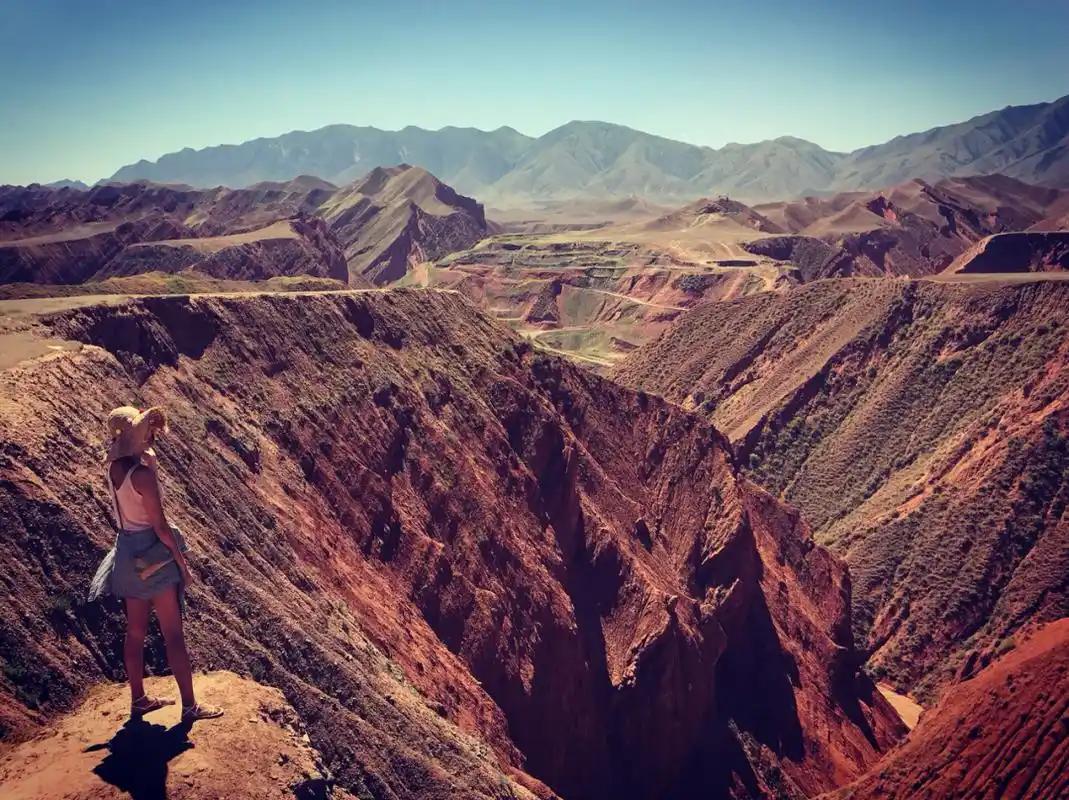
One warning I mean seriously. The track follows a dry riverbed, and dry riverbeds in the Tianshan are only dry until they are not. Staff at the gate check the weather and will close the canyon if rain is expected in the mountains, but you should also use your own judgment. If clouds build over the peaks to the north, leave. Flash floods here move faster than a car can turn around in soft gravel.
Getting to Wensu Grand Canyon
Aksu is the practical gateway, and if you have not read my colleague’s Aksu travel guide, start there because flights and trains are covered in detail. From Aksu city you have three options:
Rented car. The best option by a wide margin, because the canyon itself is a driving experience. The road from Aksu is paved until the final approach. Count 1.5 to 2 hours each way. If you are building a bigger loop, the self-drive Xinjiang planning guide explains rental paperwork for foreign visitors, which is not trivial.
Chartered taxi. I paid 450 CNY in 2023 for a full day, negotiated at the taxi rank near the Aksu bus station the evening before. The driver waited three hours at the gate. Agree on waiting time before you leave, not after.
Tour from Aksu. Local one-day tours run in summer, usually combining the canyon with an orchard stop. Fine if your time is short, but you surrender control of the light, and light is most of what you came for.
There is no useful public bus to the gate. Wensu county town has buses from Aksu, but you would still need a taxi for the last stretch, so the math rarely works.
Best time to visit
September and October are the sweet spot. Summer works but bring more water than you think you need; I measured 39 degrees in the lower canyon in a May heat wave, and July is worse. Winter visits are possible and the low sun angle is actually beautiful on the red rock, but check that the gate is open before driving out, because staffing gets thin. Spring brings the highest flash flood risk as snowmelt comes off the Tomur massif. For a month-by-month breakdown of the whole region, the Xinjiang weather by month guide is the reference I point everyone to.
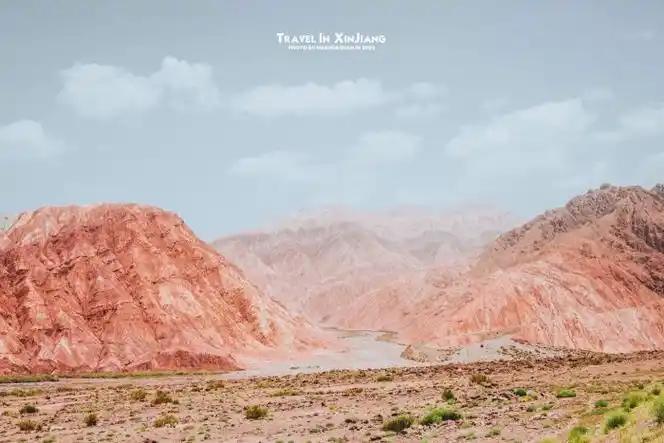
Whatever the season, aim to be inside the canyon for the last two hours of daylight. The walls go from brick to ember. Gate staff told me the last entry is generally two to three hours before closing; confirm the day’s closing time when you buy tickets, because it shifts with the season.
Where to stay
Sleep in Aksu, not at the canyon. There is no accommodation at the gate and Wensu county town has only basic guesthouses, several of which could not register foreign passports when I asked in 2023. In Aksu I have used a mid-range chain hotel near the People’s Park twice, around 200 to 240 CNY for a twin with breakfast, and registration for foreigners was routine both times. Book the night before if you arrive on a late train; reception desks in Aksu get sleepy after midnight.
What to eat
Pack lunch for the canyon because there is nothing inside except a small shop at the gate selling instant noodles and water at gate prices. Aksu itself feeds you well. My standing order: laghman pulled noodles (20 to 25 CNY), lamb skewers grilled over coal (5 CNY each at the night market near the bazaar), and in autumn the thing Aksu is genuinely famous for, rock-sugar-heart apples, sold from truck beds for a few yuan per kilo. On my October trip we bought two kilos for the drive and finished them before the canyon gate. No regrets.
Practical tips from two visits
Carry your passport; there was a routine checkpoint on the road in 2023, though not in 2025. Fill the fuel tank in Aksu, as stations past Wensu town are sparse. Download offline maps before leaving the city because signal dies at the gate. Bring four liters of water per person in summer, half that in October. Payment at the gate was card-machine and QR only when the machine worked; when it did not, cash saved us, so carry a few hundred yuan. The gravel track is fine for a normal sedan driven gently, but I would not take a low sports suspension in there. And leave drones in the bag unless you have checked current rules; this is a border prefecture and enforcement is real.
How it compares to the other canyons
Fair question, since Xinjiang has several. The Kuqa Grand Canyon is a slot canyon you explore on foot, narrower and more dramatic per meter, but busier. Dushanzi in the north is a rim experience: you look down from platforms rather than travel inside. Kalpin’s fold mountains are rawer and free but need more self-sufficiency. Wensu is the only one where the journey through the rock is itself the activity, and for me that puts it first among the four, though I accept this is a driver’s opinion. If you are still deciding between regions entirely, the north versus south Xinjiang comparison frames the trade-offs.
A realistic one-day itinerary from Aksu
08:30 breakfast in Aksu, buy lunch supplies and fruit. 09:30 depart. 11:30 arrive Wensu county town, top up fuel, tea break. 13:00 reach the gate, buy tickets, confirm closing time. 13:30 to 15:00 drive the lower canyon slowly with photo stops. 15:00 to 17:00 continue to the upper turnaround, walk a side gully or two on foot. 17:00 to 18:30 drive back out in the good light, which is when you will take every photo you keep. 20:30 back in Aksu for night-market skewers. If you have a second day, pair it with Kuqa by continuing east instead of returning.
FAQ
Can I visit without my own car? Yes, by chartered taxi from Aksu, around 450 to 550 CNY for the day. The driver enters the canyon with you, so you still get the drive-through experience.
Is the entrance fee fixed? Treat my 45 CNY plus 60 CNY vehicle figure as a 2025 snapshot. Prices here get revised, sometimes seasonally.
Is it suitable for children or older travelers? More than most Xinjiang sights, because you can experience nearly everything from a seat. Short walks are optional.
How much time do I need inside? Three hours minimum. Five is comfortable with photo stops.
Do foreigners need a permit? I did not need anything beyond my passport on either visit, but rules in border prefectures shift. Ask your hotel in Aksu the day before.
Disclaimer
Prices, opening hours, road conditions, and entry rules described here reflect my visits in May 2023 and October 2025 and may have changed since. Always verify current conditions locally, especially weather closures, before driving out. This article contains no sponsored content.
About the author: Camille Roussel is a landscape and travel writer based in Lyon, France, and a former climbing instructor. She has made four trips through the Tianshan region since 2021, traveling independently and at her own expense. Her work focuses on road-accessible mountain landscapes and honest cost reporting.