Published: July 27, 2026 | Author: Margaret Halloran, retired occupational therapist (Bristol, UK)
I spent thirty years as an occupational therapist assessing homes and public buildings for wheelchair access, and in May 2025 I put that professional eye to work on our own holiday. My husband Colin has used a manual wheelchair since his stroke in 2021. He can stand and shuffle a few metres with a cane, but anything beyond that means wheels. This Xinjiang accessibility guide is the write-up I wish had existed before we booked: what genuinely works for travellers with limited mobility, what half-works, and what we skipped after honest research. Xinjiang is not an easy destination for wheelchair users. It is, however, far more possible than we expected, provided you plan around a hired driver and accept that some famous sights stay off the list.
Quick reference: Xinjiang accessibility at a glance
| Question | Short answer |
|---|---|
| Overall difficulty | Hard but doable with a driver; not a spontaneous destination |
| Best base cities | Urumqi and Turpan (flattest, best hotels) |
| Realistic sights | Grand Bazaar, Xinjiang Museum, Karez wells, Sayram Lake viewpoints |
| Sights we ruled out | Jiaohe ruins, Kanas hiking trails, Tianchi upper boardwalks |
| Accessible hotel rooms | International chains in Urumqi only; book weeks ahead |
| Toilets | Squat toilets dominate; accessible stalls in airports, malls, big stations |
| Transport | Private van with driver is the only practical option outside cities |
| Trip cost (10 days, 2 people) | About 21,000 RMB including driver |
Our trip, honestly told
We flew into Urumqi on 12 May 2025 and spent ten days covering Urumqi, Turpan and Sayram Lake with a hired seven-seat van. The airport was the smoothest part of the entire trip. Diwopu airport provided wheelchair assistance from the aircraft door, the lifts were wide, and the accessible toilet in the arrivals hall was clean and actually unlocked, which regular travellers to Asia will recognise as a small victory.
The city itself was a mixed report card. Kerb cuts exist on the main roads around the Grand Bazaar and Hongshan Park, but they often end abruptly, and scooter riders park across them without a second thought. Colin managed perhaps 70 percent of central Urumqi pavements unassisted. The remaining 30 percent needed me pushing hard or flagging a passerby, and I will say this: not once did we wait more than thirty seconds for help. A fruit seller near Erdaoqiao left his stall unattended to lift Colin’s front wheels over a broken kerb, then refused the apricots I tried to buy as a thank-you.
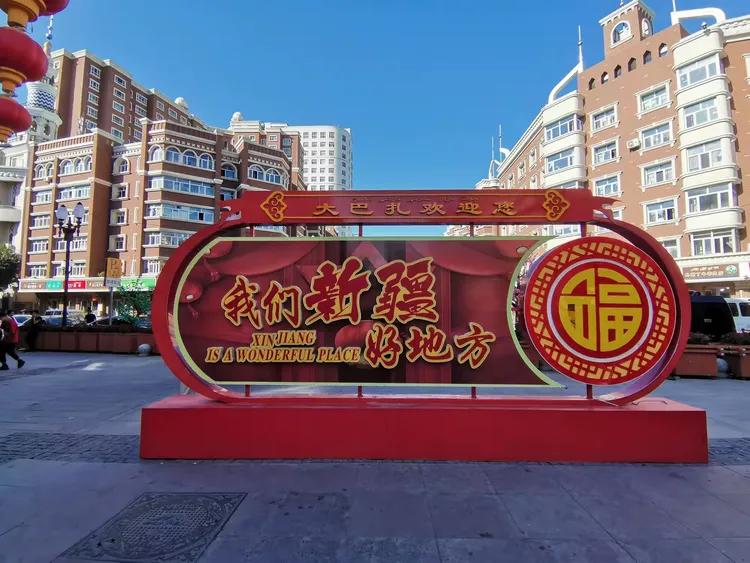
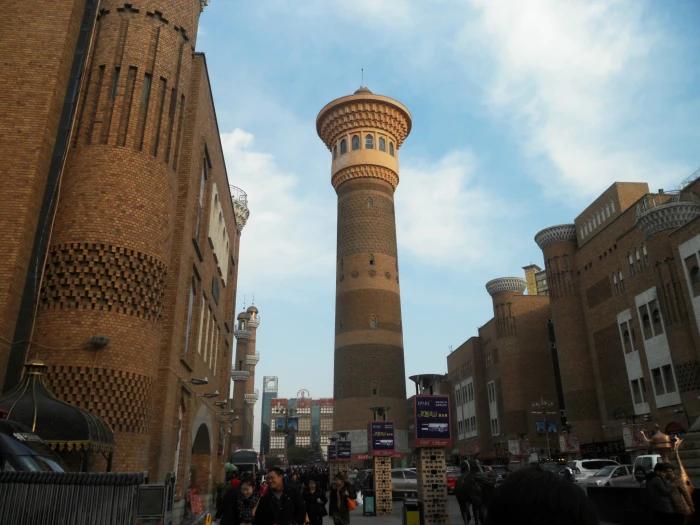
The International Grand Bazaar earned full marks. The main plaza is flat granite paving, the central building has lifts to every floor, and staff waved us through a side gate to skip the stepped main entrance. The Xinjiang Museum was equally good: ramped entrance, lifts, wheelchairs available free at the cloakroom, and the famous Loulan mummies displayed at a height Colin could see from his chair.
Getting there and getting around
Fly into Urumqi rather than arriving by rail if you can. Chinese airlines handled Colin’s chair carefully on both legs, and gate-to-kerb assistance worked without fuss once we requested it at booking. Trains are workable but harder: stations like Urumqi and Turpan North have lifts and staff assistance (ask at the ticket window for the service desk, or arrange it when buying tickets), yet the gap between platform and carriage varies, and sleeper compartments are simply not wheelchair friendly. If you are weighing rail against air for the long legs, our notes in the train versus flight comparison apply doubly when mobility is limited: fly the long distances, drive the short ones.
Within and between cities, forget public buses. Steps at the door, no securement points, crowded aisles. We hired a van and driver through our Urumqi hotel for 900 RMB per day including fuel. Our driver, Mr. Ma, turned out to be the single best accessibility aid of the trip. By day three he had learned to park with the sliding door beside the flattest patch of ground, and he carried a wooden plank in the boot that became our improvised ramp at two restaurants. Agree the daily rate in writing, and show the driver your itinerary before committing, so there are no surprises about luggage space for the wheelchair.
When to go
We chose mid May deliberately and would repeat that choice. Summer heat is a genuine hazard for anyone who cannot move quickly to shade; Turpan hit 34 degrees during our visit and it regularly passes 40 in July. Winter brings ice, and an icy kerb cut is worse than no kerb cut at all. May, early June and September offer moderate temperatures and firm, dry ground. September also adds harvest fruit in Turpan, which locals told us is the sweetest time of year.
Where we stayed
Genuine accessible rooms, meaning roll-in shower, grab rails and a door wide enough for a chair, exist almost exclusively in international chain hotels in Urumqi. We booked the Hilton Urumqi, requested the accessible room in writing three weeks ahead, and got exactly what was promised, at around 650 RMB a night. In Turpan no hotel could offer a true accessible room. We settled for a ground-floor room at a newer four-star property (about 380 RMB), and the manager had two staff members carry a plastic chair into the shower before we had finished asking. The phrase to use when enquiring is wuzhang’ai fangjian, meaning barrier-free room. Send the request by message through your booking app and keep the reply; the front desk honoured the written promise even when the booking system had lost the note. For general planning on where foreigners can stay, our visa and permits guide covers the hotel registration rules that apply to everyone.
Eating out on wheels
Restaurant access follows a simple pattern: newer shopping-mall restaurants are excellent, street-level family places are hit and miss. Malls in Urumqi gave us lifts, wide aisles and accessible toilets, and the food courts serve proper laghman and kebabs, not just chain food. At street level, a single step at the door is the standard obstacle. That plank in Mr. Ma’s boot solved it twice; three strong waiters solved it every other time. Colin’s favourite meal of the trip was a whole roast fish in a Turpan courtyard restaurant where the owner rearranged three tables so the wheelchair could sit at the head like a guest of honour. Nobody stared, nobody fussed. The table settings assume sharing, which suits a seated diner perfectly because dishes come to you.
Practical tips we learned the hard way
- Bring a full puncture kit and spare inner tubes. Bazaar paving is kind, but construction zones scatter screws everywhere. We used our kit once.
- Accessible toilets exist in airports, high-speed rail stations and big malls, and almost nowhere else. Plan toilet stops around those buildings. Our honest toilet guide is required reading before you commit.
- Download a translation app that works offline. My spoken request for a lift confused hotel staff; the written characters for elevator never failed.
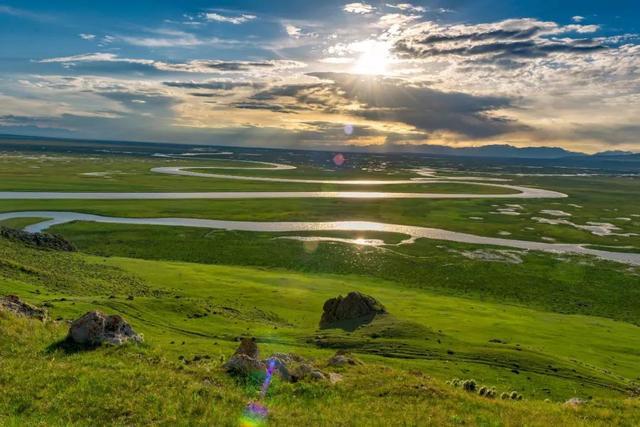
- Scenic areas run mandatory shuttle buses with steep steps. Ask at the ticket office whether a private car pass is available for disabled visitors. At Sayram Lake we paid a small fee and drove our own van to two lakeside viewpoints. That single question saved the whole excursion.
- Carry your disability documentation. Chinese scenic areas often discount or waive entry for disabled visitors and one companion, and Colin’s UK Blue Badge photocopy was accepted twice without argument.
- Distances are enormous. Whatever a map suggests, add hours. The seniors’ comfortable-pace guide pairs well with this one; the slow itinerary logic is identical.
What a realistic 10-day route looks like
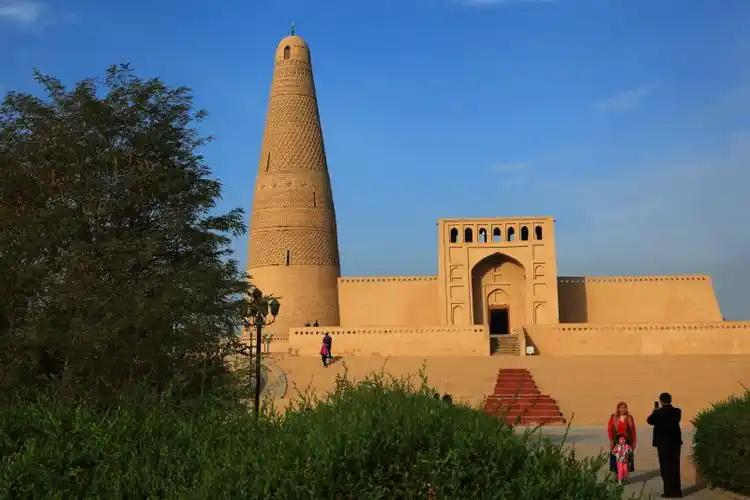
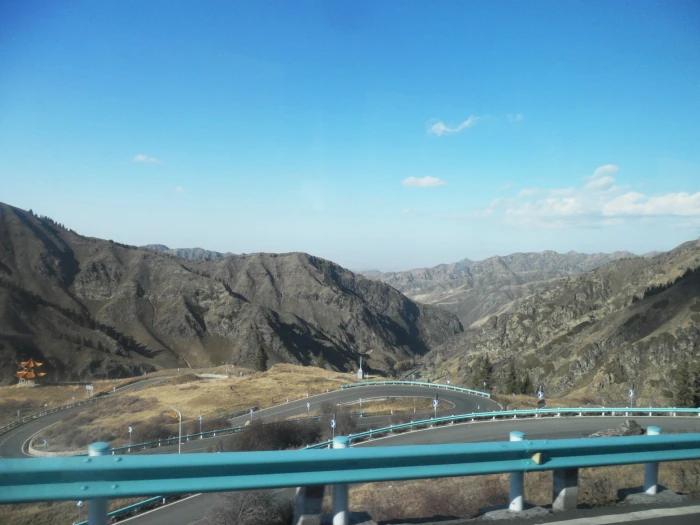
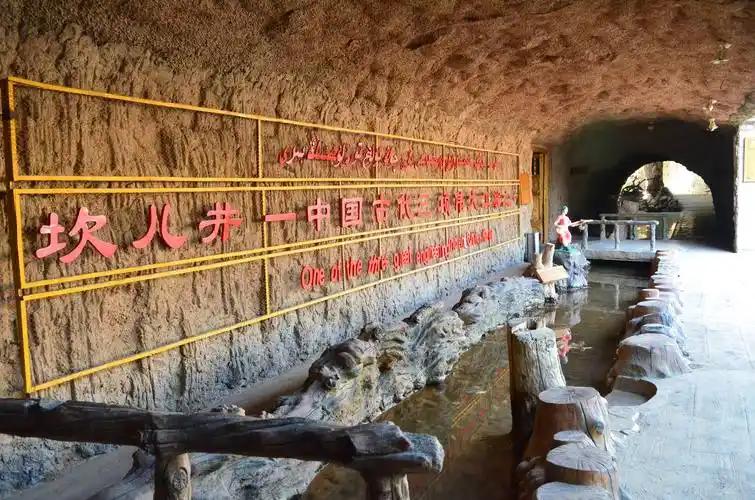
Days 1 to 4, Urumqi: arrival and rest day, Xinjiang Museum, Grand Bazaar, Hongshan Park perimeter paths. Days 5 to 7, Turpan: two-hour drive, Karez well museum (ramped main route, smooth concrete underground gallery), Emin Minaret courtyard (viewable from flat ground; the tower itself has stairs), grape valley lanes. Days 8 to 10, Sayram Lake and return: one long driving day each way with the lake day between, viewpoints by private car pass. We ruled out Jiaohe ruins after our driver described the loose gravel paths, and I am glad we did not waste an afternoon proving him right. Kanas we never seriously considered; every account we read involved shuttle transfers and long boardwalk climbs.
FAQ
Can a full-time wheelchair user visit Xinjiang independently?
Independently as in without a companion, I would say no. With a companion and a hired driver, yes, on a route built around Urumqi and Turpan.
Are electric wheelchairs practical there?
Batteries fly under airline dangerous-goods rules, so check your carrier’s limits. Charging was never a problem in hotels. Rough ground drains batteries faster than city use, so plan conservative daily ranges.
Is wheelchair rental available locally?
Hospitals and some large hotels can arrange basic manual chairs, but quality is unpredictable. Bring your own equipment and a repair kit.
Do scenic areas offer disability discounts?
Many waive or halve entry fees for disabled visitors and sometimes a companion. Carry documentation and always ask.
Which apps helped most?
Offline translation, Amap for finding lifts inside malls, and a ride-hailing app for the rare city trips without our driver. Our tested apps guide covers the full toolkit.
Disclaimer
This article describes personal experiences from a May 2025 trip. Accessibility provisions, prices and policies in Xinjiang change frequently and vary between individual venues. Verify current conditions directly with hotels, airlines and scenic area offices before travelling, and consult your doctor about the demands of long-distance travel. We paid for every element of this trip ourselves and have no commercial relationship with any business named.
About the author: Margaret Halloran spent 30 years as an occupational therapist in the NHS, specialising in mobility assessments and home adaptations. Since retiring she and her husband Colin, a manual wheelchair user, have travelled through twelve countries testing what “accessible tourism” really means on the ground. They paid their own way in Xinjiang and accepted no sponsorship for this review.