Published: July 30, 2026 | Author: Colin Haywood, reviewed and edited by the Xinjiang Attractions editorial team
I spent nineteen years behind hotel reception desks in Manchester, the last seven of them as a quality auditor who got paid to find what housekeeping missed. So when my wife Pam and I booked sixteen days in western China in September 2025, I did what I always do on holiday and she always dreads: I inspected every place we slept. This guide to Xinjiang hotels covers eleven properties we actually paid for, from an 80 RMB hostel bunk in Turpan to a 920 RMB corner room on the 15th floor in Urumqi. I will tell you which price band buys what, which hotels turned us away at the door, and the one question you must ask before booking anything.
Quick reference: Xinjiang hotels at a glance
| Price band | Typical cost per night | What you get | Foreigner-friendly? |
|---|---|---|---|
| Hostel dorm | 60 to 100 RMB | Bunk, shared bathroom, luggage room | Usually, in tourist cities |
| Budget chain (Hanting, 7 Days) | 150 to 250 RMB | Clean box room, thin walls | Often NOT, check first |
| Midscale chain (Atour, Ji Hotel) | 300 to 480 RMB | Good mattress, laundry, breakfast | Most branches yes |
| Boutique courtyard inn | 250 to 450 RMB | Character, patchy plumbing | Yes in Kashgar and Turpan |
| Upscale (Hilton, Sheraton, Wanda) | 550 to 950 RMB | Full service, English spoken | Always |
| Peak season markup (July, August) | +30% to +60% | Same rooms, higher rates | Book 3+ weeks ahead |
What nineteen years behind a front desk taught me about Xinjiang accommodation
Old habits are hard to kill. In every room I check the fire escape plan on the door, press the mattress at the edge where it wears out first, and run a finger along the top of the wardrobe. Pam times me. My record in Urumqi was four minutes before I declared the Atour on Zhongshan Road “better kept than half the four-stars I audited in Leeds.”
That is the headline finding, honestly. Chinese midscale chains in Xinjiang are far better than their price suggests. Our 380 RMB Atour room had a firmer mattress, quieter air conditioning and faster wifi than the 920 RMB international five-star we tried two nights later for comparison. What the five-star bought us was an English-speaking concierge, a proper gym, and a breakfast buffet with real coffee. Whether that is worth 540 RMB extra per night depends on how much you miss espresso. I did, by day nine. Pam called it a character flaw.
The registration problem nobody warns you about
Here is the single most important fact in this article: not every hotel in China is licensed to register foreign guests, and Xinjiang enforces this strictly. Twice we arrived at budget chains that showed availability online, and twice the receptionist apologised and sent us away. Once in Korla at 10 pm, which was not fun. The staff were polite about it both times, but no amount of politeness produces a bed.
How to avoid our mistake. First, book through an international platform like Trip.com, which mostly filters out hotels that cannot take foreign passports. Mostly is doing some work in that sentence, so second, message or call the hotel and ask directly: “Can you register foreign guests?” Third, when in doubt, go midscale or up. We were never refused at Atour, Ji Hotel, or anything with an international brand on the door. Check-in takes longer than at home, roughly ten to twenty minutes the first time, because your passport gets scanned and logged for the local police system. That is normal procedure, not suspicion. Budget an extra fifteen minutes and keep your passport handy, as I explain in more detail in our Xinjiang travel insurance and safety preparation guide.
Where to stay in Xinjiang, city by city
Urumqi: the full range
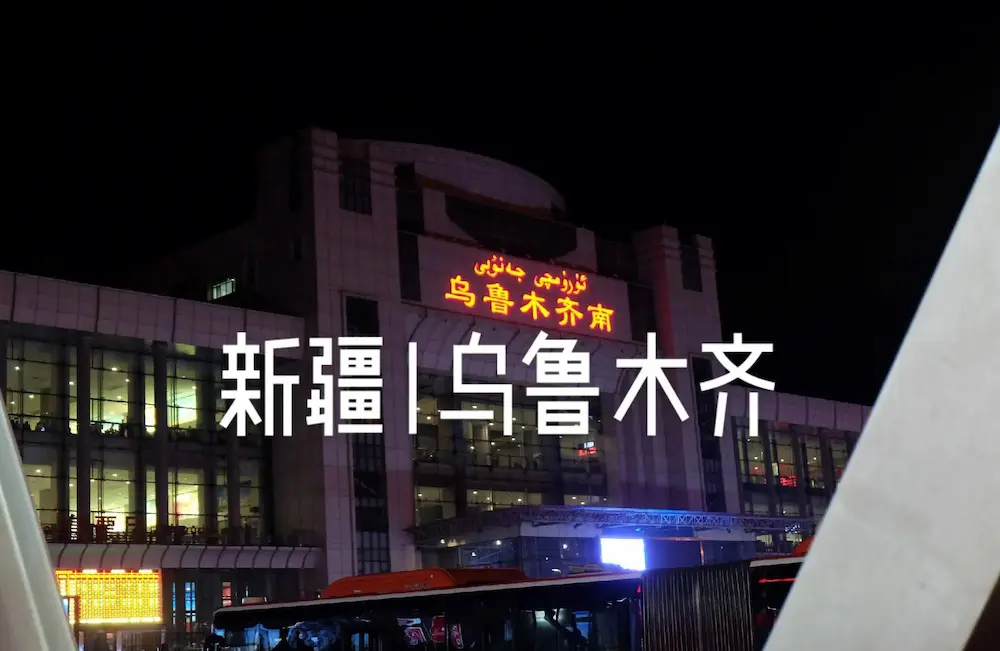
Urumqi is the only city in the region with genuine luxury choice. The Hilton, Sheraton and Wanda Vista all sit between 550 and 950 RMB depending on season. Our Wanda corner room had a view of the Tianshan foothills that made Pam forgive the price. For most travellers I would point at the midscale chains near People’s Square or South Lake instead: 300 to 450 RMB, walking distance to food streets, and metro Line 1 nearby. Skip anything within two blocks of a KTV lounge unless you enjoy muffled ballads until 2 am. I checked reviews for the word “KTV” before booking, a trick that served us well.
Kashgar: courtyard inns worth the plumbing roulette
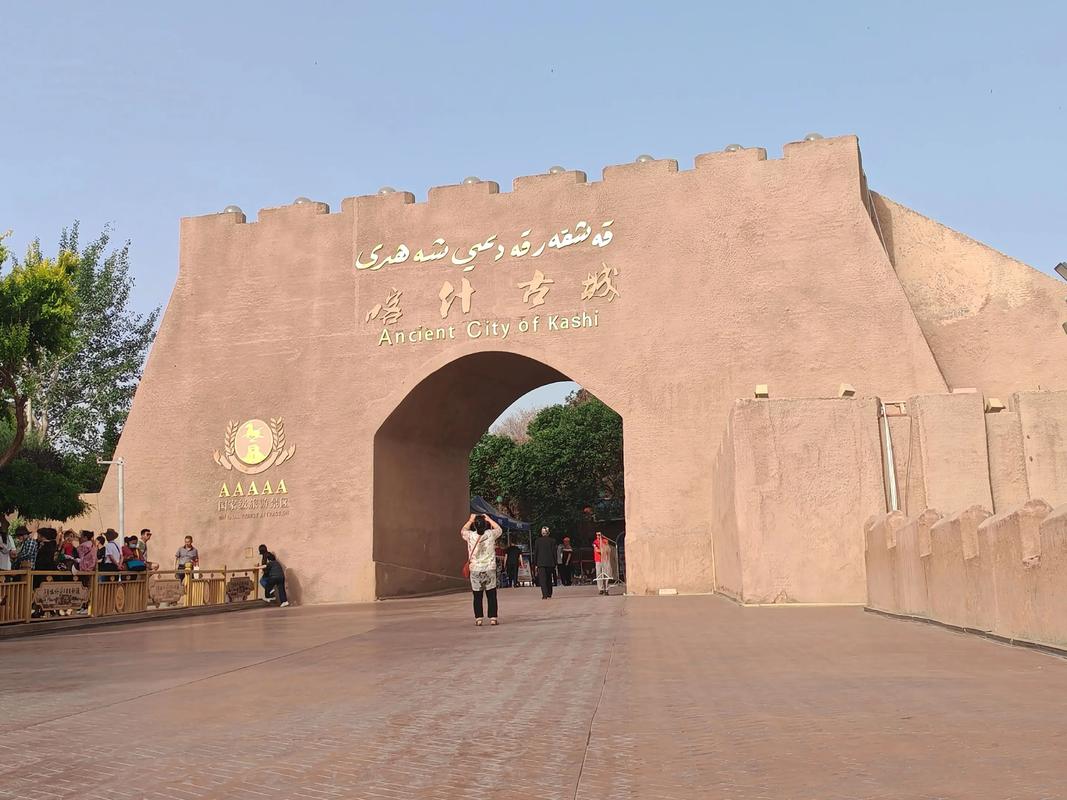
In Kashgar the interesting sleeps are the boutique courtyard inns inside and around the old town, converted Uyghur houses with carved wooden pillars and rooftop terraces. We paid 360 RMB at one near the Id Kah area. The courtyard was lovely, the shower pressure was a rumour. I have stayed in worse for triple the money in the Cotswolds. If reliable hot water outranks atmosphere for you, the Radisson and several Chinese four-stars sit ten minutes away by taxi at 400 to 600 RMB. Either way, spend at least two nights; the old town at 7 am before the tour groups is the best free show in China.
Turpan and the smaller towns
Turpan surprised us. An 80 RMB hostel bunk for me (research purposes, Pam refused) and a 320 RMB vine-shaded guesthouse for the two of us the next night, both spotless. Grape Valley properties add charm but also add distance from restaurants. In smaller towns like Kuqa or Yining, expect one or two acceptable midscale options at 250 to 380 RMB and set your expectations to “clean and functional” rather than “memorable”. Our Turpan city guide lists the neighbourhoods worth targeting.
Booking: timing and tactics
September was ideal for us: rates down roughly a third from August peaks and rooms available three days out. In July and August, and during Chinese public holidays, Xinjiang hotels genuinely sell out in tourist hubs, so book three weeks ahead minimum and read our public holidays and crowds guide before picking dates. Winter rates drop 40 to 50 percent, though many courtyard inns close.
One quirk worth knowing: the price on international platforms sometimes runs 10 to 15 percent above what Chinese apps show for the same room. That is the cost of an interface in English and a cancellation policy you can actually read. I paid it without complaint after comparing fine print. If you travel solo, some hotels quote the same price for single occupancy, which stings; our solo travel guide has workarounds.
Breakfast, and why I skipped it half the time
Hotel breakfast in Xinjiang splits into two schools. International brands do the full buffet with eggs to order and passable coffee. Chinese chains do congee, boiled eggs, pickles and steamed buns, perfectly decent and included in the rate. But the third option beats both: walk out the door. Fresh naan from a street oven costs 4 RMB, a bowl of hand-pulled laghman runs 20 to 25 RMB, and milk tea at a corner shop is 8 RMB. In Kashgar our inn’s owner simply pointed us to his cousin’s bakery. The full arithmetic of eating this way is in our Xinjiang travel cost breakdown.
Practical tips from eleven check-ins
- Carry your passport to every check-in. A photo of it will not do; they need the physical document to scan.
- Ask for a room above the third floor and away from the lift. Xinjiang tour groups depart loudly at 7 am.
- Hot water can take two full minutes to arrive in older buildings. Run the tap before declaring it broken, as I nearly did in Kuqa.
- Most rooms have kettles but no coffee. Bring your own sachets or accept your fate.
- Air conditioning in the north often switches to heating mode only in October, whatever the weather does. Pack a layer.
- Keep the hotel’s business card with its Chinese address for taxi drivers. This saved us four times.
- If a driver books your rooms on a road trip, confirm foreigner registration yourself anyway; see our driving distances and road conditions guide for how those overnight stops work.
A sample 10-day accommodation plan
Days 1 to 3: Urumqi, midscale chain near People’s Square, 380 RMB. Day 4: Turpan guesthouse, 320 RMB. Days 5 to 7: Kashgar courtyard inn, 360 RMB. Day 8: back to Urumqi, one cheap airport-area night, 240 RMB. Days 9 to 10: a night in a felt yurt at Sayram or Nalati if the season allows, 130 to 200 RMB per person, which is a different experience entirely and one we cover in our Xinjiang yurt stays guide. Total accommodation for two people: roughly 3,200 RMB. For a family-based alternative to hotels altogether, a Kazakh homestay runs cheaper still.
FAQ
Do Xinjiang hotels accept foreign credit cards?
International five-stars, yes. Everywhere else, assume no. Alipay or WeChat Pay linked to your home card worked for us at every property, and we kept 500 RMB cash as backup, which we used twice.
Is it safe to leave luggage with hotels?
We did it five times, including a full day in Urumqi after checkout, without issue. Midscale chains and above have proper luggage rooms with tags.
Can I book Xinjiang hotels on arrival without a reservation?
Outside July, August and public holidays, usually yes in cities. We would still book the first night in advance, because arriving at 11 pm and hunting for a hotel licensed for foreigners is a game you only need to lose once.
Are there hostels for backpackers?
Yes in Urumqi, Turpan and Kashgar, at 60 to 100 RMB per bunk. Quality varies more than in eastern China. Read recent reviews and check that the hostel registers foreigners, since a few only take Chinese ID holders.
Do hotel staff speak English?
At international brands, enough. At Chinese chains, rarely, but translation apps solved every situation we hit. Front-desk staff were uniformly patient with our miming, which is more than I can say for myself during my auditing years.
Disclaimer
We paid for all eleven stays ourselves and have no affiliation with any hotel, chain or booking platform mentioned. Prices are what we paid in September 2025 or verified in early 2026, and they move with seasons and demand. Foreigner registration policies can change at individual properties without notice, so always confirm directly before booking. This article reflects personal experience and does not constitute professional travel advice.
About the author
Colin Haywood, 58, spent nineteen years in hotel operations in Manchester, including seven as a quality auditor for a UK hospitality group. He now travels with his wife Pam and inspects mattress edges out of habit. He visited Xinjiang in September 2025, sleeping in eleven different properties across five cities. This article was fact-checked and edited by the Xinjiang Attractions editorial team.