Published: August 7, 2026 | Author: Nina Ostrowska, Beijing-based road-trip writer | Drove the route in 2022, 2024 and again in July 2026 on a converted Chinese driving licence
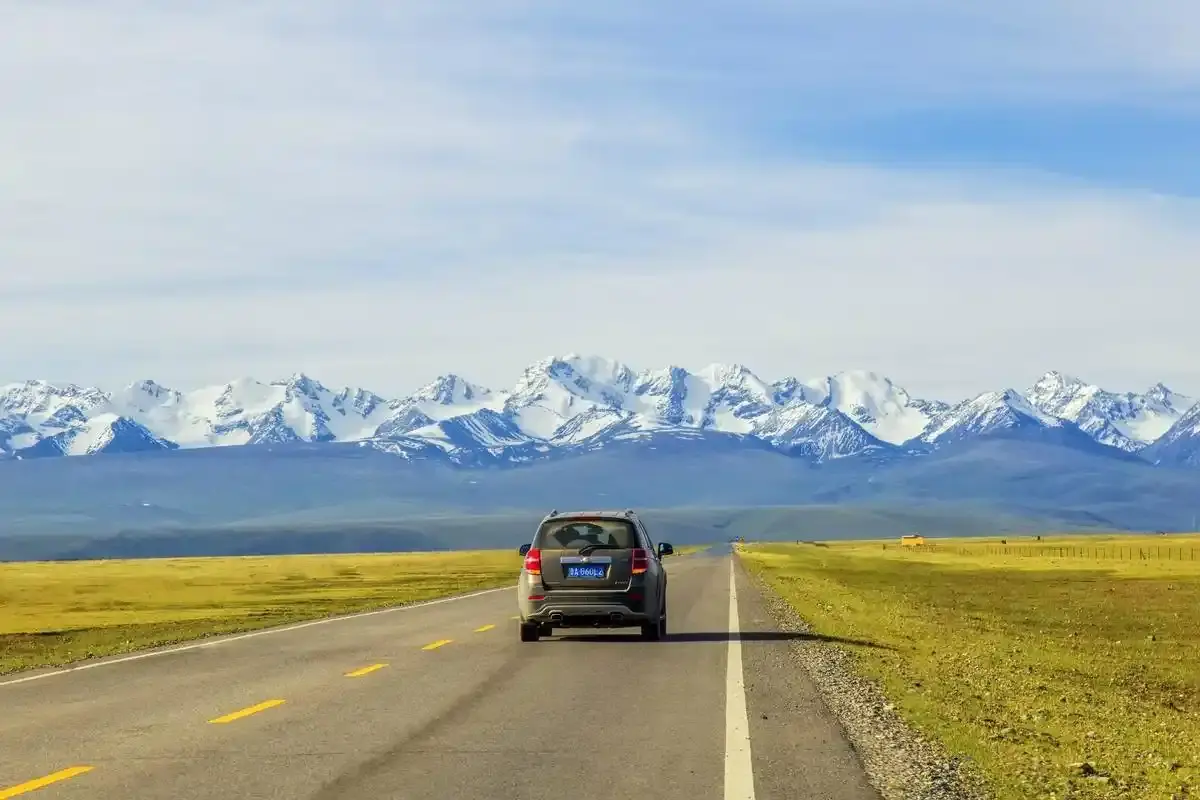
The Duku Highway is 561 kilometres of two-lane road that cuts through the Tianshan rather than going around it, running from Dushanzi in the north down to Kuqa in the south. It is the drive most people picture when they imagine a Xinjiang road trip. It is also, as of this summer, the drive with more paperwork attached than at any point in its forty-year history, and most English-language advice still circulating was written before that paperwork existed.
I went back in July to see how the new system works from the driver’s seat rather than from a press release. What follows is the route split into the stretches that change how you drive, the booking process in the order you have to do it, and numbers I logged myself.
Duku Highway: the numbers that matter
| Route | G217, Dushanzi (Karamay) to Kuqa (Aksu Prefecture) |
| Length | 561 km, 10 to 12 hours of pure driving before any stops |
| Season | Roughly 1 June to mid-October; the 2026 season opened on 1 June |
| Highest point | Haxilegen tunnel, about 3,400 m |
| Road toll | None. The highway itself is free to use |
| Booking | Northern 185 km needs a free reservation, in force since 25 June 2026 |
| Daily window | Vehicles admitted 08:00 to 19:00 on the controlled section |
| Barred vehicles | Coaches over 7 seats, goods vehicles over 5 tonnes, trailers, hazmat |
| Fuel spacing | Up to 150 km between pumps that are actually working |
| If it is shut | Detour via G30 plus G3016 in the north, or G3012 and G218 in the south |
The 2026 rule change that catches visitors out
Since 25 June 2026, the northern 185 kilometres of the road has been under reservation-only control. The controlled stretch runs from Wusuyi at K587+100 to the G217 and G218 junction at the Nalati entrance, K773. There are three gates onto it: Wusuyi, Qiaoerma and Nalati.
The first fifteen days were a grace period when officers turned people around and explained the system. That ended on 10 July. Since then, entering without a valid reservation, through a gate you did not book, or outside your window, is enforced as disobeying a prohibition sign: a 200 yuan fine and one licence point.
The reason is construction rather than crowd control for its own sake. Three large projects run along this corridor at once: an expressway that will one day parallel the old road and cut the end-to-end drive to about four hours, the Yining to Aksu railway, and a safety rebuild of the highway itself. Site traffic and holiday traffic sharing one two-lane mountain road produced the jams that Chinese social media nicknamed the road that makes you cry. The published policy is blunt about the trade-off: travel by day, roadworks by night.
One detail changes trip planning more than anything else here: the middle and southern sections, from the Nalati junction down to Kuqa, are not covered. No booking, no gate, no time slot. If your plan only touches the southern half, none of this applies to you.
How to book the northern section
Reservations open one to seven days ahead, same day included, and everything is free. Any service charging to book on your behalf is a scam, as the traffic authorities keep pointing out.
- Where. The 游新疆一码游 mini-programme, or the booking platform reached through the 新疆路网, 平安天山 and 新疆交警 official accounts.
- What you choose. One gate and one of five windows: 08:00 to 10:00, 10:00 to 12:00, 12:00 to 14:00, 14:00 to 16:00, or 16:00 to 19:00.
- Limits. One booking per vehicle per day; you cannot hold two windows. One account covers up to three vehicles per date.
- Running late. The booking record screen grants one hour of grace, once per reservation. Use it rather than turning up late and arguing.
- No-shows. Three unused, uncancelled bookings in a season and you lose booking rights for the year. Closures caused by weather do not count against you.
Daily capacity is roughly 5,000 cars. When I booked in mid-July the 08:00 to 10:00 slot at Wusuyi was still free two days out, while the 10:00 to 12:00 window for the same Saturday had gone by the previous evening. The interfaces are Chinese only and expect a mainland number and plate, which is the real obstacle for overseas visitors rather than the rules themselves.
What the booking rules mean for tours and hired drivers
Coaches over seven seats are barred from the controlled section outright. That is a hard exclusion rather than a queueing inconvenience, and a conventional big-bus tour therefore cannot run the classic north-to-south line at all. Operators either switch to seven-seaters for the day or send the coach around on the detour. Ask which, before you pay.
Most overseas visitors travel with a hired car and a local driver, since a foreign or international licence is not valid in China; our Xinjiang self-drive planning guide covers that arrangement. Here the reservation is tied to the driver’s plate, so what you confirm the day before is not whether they know about the system but whether they have booked the window matching your departure. A vague reassurance is worth nothing at a camera-monitored gate.
The practical consequence: your slot fixes your departure, so build the morning around it rather than the reverse.
The road in five stretches
Dushanzi to the canyon rim, kilometre 0 to 30. A flat industrial run out of an oil town, a strange overture to what follows. The zero-kilometre marker sits minutes from the rim of Dushanzi Grand Canyon, and this is the last painless place to fill the tank.
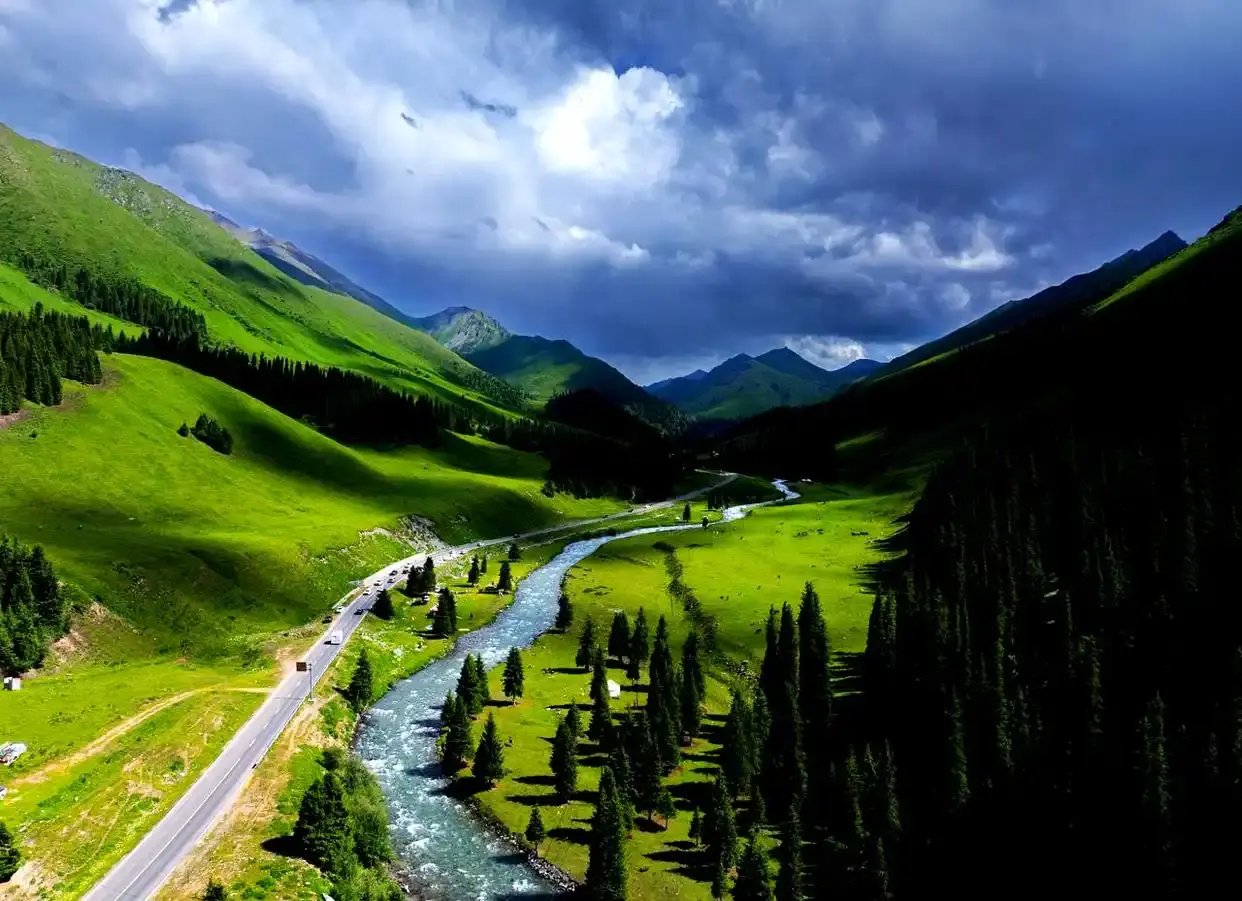
The climb to Haxilegen, kilometre 30 to 160. The road follows the Kuitun river into a narrowing gorge, then switchbacks up to the tunnel at around 3,400 metres. There was old snow beside the carriageway when I passed in mid-July. This is where the temperature falls off a cliff and where underpowered rental cars feel their age.
Qiaoerma, around kilometre 180. A junction settlement where the S315 peels west toward Nileke and the Ili valley. The cemetery here commemorates the 168 soldiers who died building this road between 1974 and 1983. Twenty minutes there changes how the rest of the day reads. Most itineraries treat it as a toilet stop, a mistake.
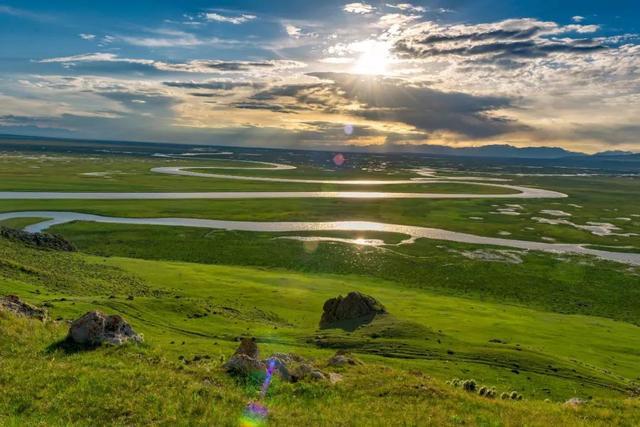
Yuximolegai pass into the basin, kilometre 200 to 380. A second high pass, then the gradient eases and the road spills into grassland. This is where people detour to Bayanbulak and the Kaidu river bends, and where a one-day plan quietly falls apart.
The southern gorge to Kuqa, kilometre 380 to 561. Two alpine lakes, Dalongchi and Xiaolongchi, then the geology turns red and dry as you drop toward the Tarim basin. Kuqa is a working southern town with Qiuci-era history rather than a resort, and that contrast with where you started is the point of the drive.
Which end to start from
North to south is the default, and the booking system assumes it since all three gates sit at the northern end. Starting from Kuqa still works: you enter at the Nalati gate and need the same reservation, just later in the day.
I now start in the south, for reasons unrelated to scenery rankings. Kuqa is far easier to reach by train than Dushanzi, so the trip begins without a long positioning drive, and afternoon light hits the northern slopes rather than flattening them. The argument the other way is real: going north to south you lose two thousand metres of altitude instead of gaining it, which is kinder to a nervous passenger and a small engine.
One long day, or two
On paper it is a single day: ten to twelve hours of driving. In three attempts I have never done it in under thirteen hours door to door, and that was with a first slot at the gate, brief stops and no serious hold-ups.
Two days is the honest recommendation, splitting at Bayinbuluke town or Nalati. If you split it, clear the controlled northern section on day one: that stretch must be exited by 19:00, and a late start puts you in exactly the wrong place.
When it opens and when it shuts
The road opens around the first of June once the snow clearance teams finish, which is what happened in 2026. It closes with the first substantial autumn snowfall, usually somewhere in October, and that date is never announced in advance because nobody knows it. Individual sections also shut for a day or two after summer storms.
The only source worth trusting is that day’s 新疆路网 bulletin. Do not build a non-refundable itinerary around a date in the first week of June or the second half of October. For what happens when a mountain road drops out, our Xinjiang driving distances and road conditions guide covers the alternatives and what they cost in hours.
Fuel, altitude and what actually stops traffic
Fill up in Dushanzi or Kuqa and treat everything between as unreliable. Stations here want the vehicle registration and usually have you pay before pumping, and the gap between working pumps can reach 150 kilometres. Food is thin: Qiaoerma and Bayinbuluke town have canteens serving noodles and lamb, and between them you eat what you brought. Signal disappears around both passes, so download offline maps first.
At 3,400 metres the tunnel is not high enough to be dangerous for most people, but you climb from roughly 500 metres in a few hours, which is enough for a headache. From my July 2024 log: 24°C at the northern gate, 4°C with sleet at the top, 31°C in Kuqa by evening. Keep a fleece within arm’s reach rather than in the boot, a lesson I learned the slow way.
What halts you in high summer is rarely weather. It is single-lane working, rockfall clearance, and the occasional lorry that has misjudged a hairpin and needs half the queue to reverse. Add two hours to whatever the mapping app says.
Sleeping on the road, and doing it without a car
Both ends have ordinary business hotels at ordinary prices. In the middle, Bayinbuluke town and Nalati offer basic guesthouses and yurt stays that fill up through July. Nothing usable sits near the passes, so do not plan to stop high.
No public bus runs the full route. Realistic options without your own vehicle are chartering a car and driver from Urumqi or Kuqa, joining a small-group tour using seven-seaters or smaller, or cycling it, which sits outside the vehicle booking rules although riders should still check at the gates. Scheduled coaches take the detour routes.
Two plans that work
Two days, south to north. Day one, Kuqa to Bayinbuluke, about 240 kilometres, afternoon at the river bends, early night. Day two, Bayinbuluke to the Nalati gate for a mid-morning window, then Qiaoerma, the Haxilegen tunnel and down into Dushanzi by early evening.
One day, north to south, only if you have no choice. Book the 08:00 to 10:00 window at Wusuyi. Leave Dushanzi 07:30, canyon rim 08:00, through the gate by 08:40, Qiaoerma 11:30, Bayinbuluke 14:30, Kuqa around 20:00. Skip the grassland detour or you finish on mountain hairpins in the dark, which nobody who knows this road recommends.
Frequently asked questions
Do I need a permit? No border permit is required for this road. You need the free reservation, and only for the controlled 185 kilometres in the north.
Can I drive it on my own foreign licence? No. A foreign or international permit is not recognised in China. You either hold a mainland licence or you hire a car with a driver.
Is the southern half worth doing alone? Yes, and it is the easy answer if the booking defeats you. Kuqa up to Nalati has no restrictions and includes the alpine lakes and the red gorge.
How dangerous is it? Two lanes, real drop-offs, stretches without barriers. At sensible speeds in daylight it is manageable for a confident driver. At night or in rain it is not.
Disclaimer
This reflects my own drives in 2022, 2024 and July 2026, plus the reservation rules published by the Xinjiang authorities for the 2026 season. Opening dates, booking arrangements, enforcement and vehicle restrictions all change, sometimes mid-season and at short notice, and the scheme is tied to construction progress rather than a fixed end date. Verify current requirements through official channels before travelling, follow instructions given by officers at the gates, and treat none of this as a guarantee the road will be open on your dates. I have no commercial relationship with any operator or rental company.
About the author
Nina Ostrowska writes about long-distance driving in western China and has held a converted mainland driving licence since 2019. She has driven the G217 three times in different seasons and keeps a written log of fuel stops and elevation changes on every trip.