Published: August 22, 2026 | Author: Karl Huang
Most foreign visitors to Xinjiang hurry between Kashgar and Turpan and never see the stretch of the Tarim River’s north bank where two small Aksu-prefecture counties sit. Shaya and Xinhe (沙雅 and 新和) turned out to be two of the most rewarding unscheduled stops on a month-long drive through southern Xinjiang, and I want to explain why without dressing them up as something they are not.
I have driven the region’s highways and back roads for years while building this site, and I keep returning to these two towns because they show a side the headline scenic areas miss: working oasis farms, a living Uyghur craft tradition, and a poplar forest that follows the Tarim farther than any road runs. Everything below comes from those trips, cross-checked against the Aksu tourist board’s own route descriptions, so you can judge whether they belong on your itinerary.
Shaya and Xinhe at a Glance
| County | What it is known for | Best for | Nearest hub | Best months |
|---|---|---|---|---|
| Shaya (沙雅县) | Original Tarim River poplar forests, the 139 Poplar Secret self-drive road, Tarim River wetland | Autumn photography, slow desert driving | Aksu city (~70 km) | Late Sept – mid Oct |
| Xinhe (新和县) | Jiayi Village handmade instruments, Desert Flower Sea park, Tongguzibashi ancient city | Culture, crafts, families | Aksu city (~110 km) | Apr – Oct |
What We Found on the North Bank
We rolled into Shaya in the first week of October, later than we planned, and that turned out to be the right call. The poplars along the Tarim were at the exact moment of turning — not uniform gold but a mix of green, yellow, and the deep orange that photographs badly and looks extraordinary in person. The county town itself is unremarkable, a grid of low buildings and night-market smoke, but the landscape ten minutes out is the point.
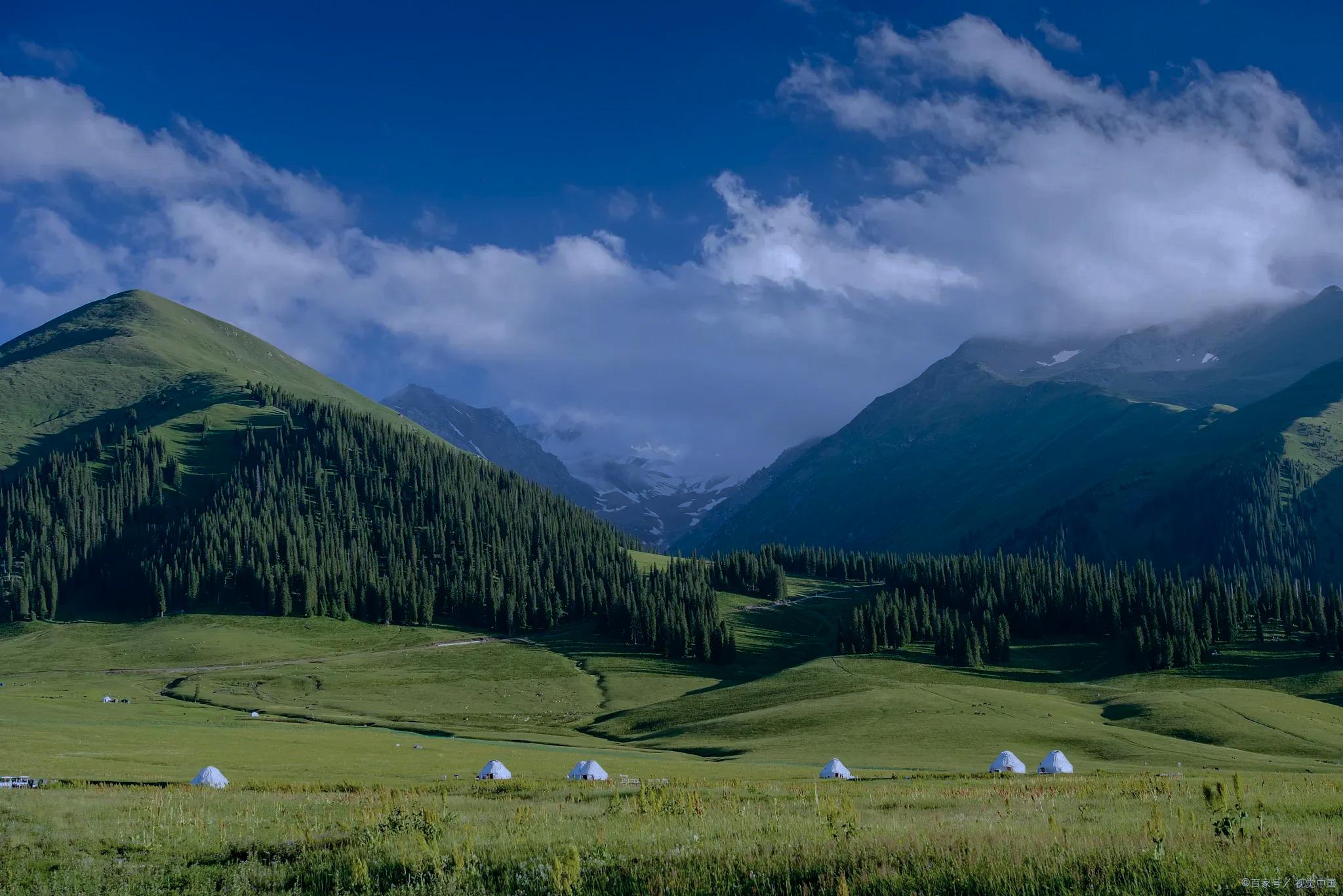
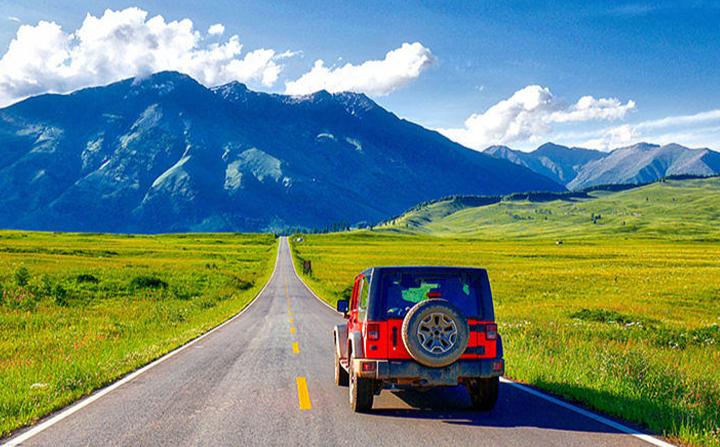
The signature drive is the 139 Poplar Secret Road (139胡杨秘境自驾公路), a 139-kilometre route that follows the river past Star Lake and Moon Bay, crosses the Tarim on three bridges, and threads nine different poplar-desert scenes together. We did about half of it before the light went, then turned back. Nobody was selling tickets at the informal entrances we used, but the official Shayanzhou and Tarim River wetland scenic areas do have gates, parking, and basic facilities if you want a managed experience.
Just past the living forest, the 139 road runs through what locals call the “Devil’s Forest” — thousands of dead poplars standing grey and limbless where the river once reached. The Tarim has shifted its course over the decades, and these trees died standing. It is a strange, quiet place, better for photographs than the crowded golden loops, and we spent longer there than anywhere else on the drive.
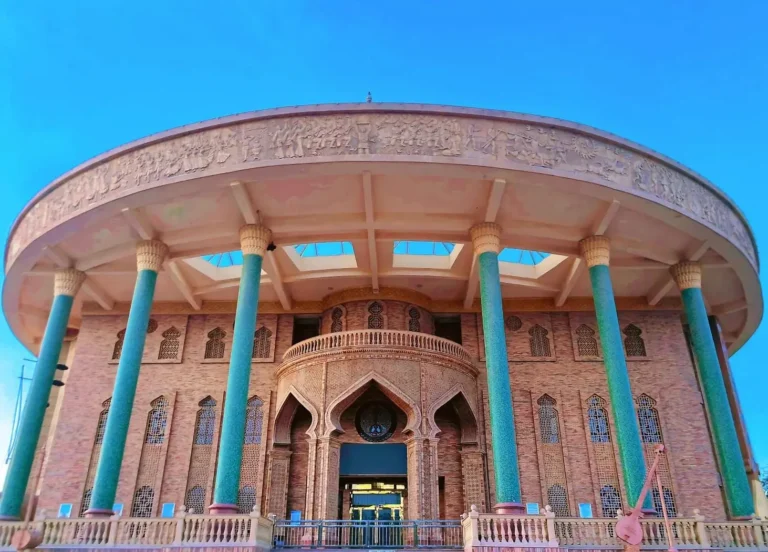
Xinhe, an hour and a half east, could not feel more different. Where Shaya is about trees and water, Xinhe is about people. The village of Jiayi (加依村) has been making Uyghur folk instruments by hand for generations and now carries the official title of China’s first village for the craft. We watched a maker hollow a dried mulberry log into a dutar, the two-stringed lute, and he let my colleague try the plane. The noise of a dozen workshops tuning at once is the sound I remember best.
Xinhe’s other claim is older. A few kilometres out stands the Tongguzibashi ancient city (通古孜巴什古城), a large earthen fortress whose walls still rise several metres, dated to the Tang period when this was frontier territory of the Anxi Protectorate. There is no ticket office and no English signage, just crumbling mud brick and open sky. Time a visit for the autumn Han-Tang culture festival and the county puts on wrestling, horse events, and music that pull that history into the present.
How to Get to Shaya Xinhe
Both counties sit in Aksu Prefecture. The practical gateway is Aksu Airport (AKU), which has daily flights from Urumqi and a growing set of regional connections; from the terminal it is roughly 70 km to Shaya and 110 km to Xinhe by car. If you are already on a southern-Xinjiang loop, Shaya is about 120 km west of Kuqa, and Xinhe sits 40 km west of Kuqa — an easy add-on if you are driving the Kuqa Grand Canyon or the southern end of the Duku Highway.
A rental car from Aksu or Kuqa is the only realistic way to see both, because public transport drops you in the county seats and stops there. Fuel up before leaving the city: the 139 road has long gaps without a station. We drove a normal sedan and managed the graded sections fine in dry October weather, but after rain a higher-clearance vehicle would have been welcome.
Best Time to Visit
For Shaya, the window is narrow and worth planning around: late September to mid-October, when the poplars turn. Go a week early and it is still green; a week late and the leaves are on the ground. Xinhe is more forgiving and works from April through October, with the regional apricot blossom in spring and the Han-Tang culture festival in autumn. Both counties sit on the desert edge, so summer daytime temperatures push past 35°C and April–May can bring dust storms. We would not choose July or August for comfort.
Where to Stay
Neither town has resort-level lodging, and that is part of the appeal. Shaya and Xinhe both have clean county-town hotels in the 200–400 RMB range; the Aral and Kuqa corridors have more international-standard options if you want consistency. Inside the 139 road there is essentially no accommodation, so plan to sleep in Shaya and drive the loop by day. During China’s National Day golden week (early October) rooms fill and prices climb — book two weeks ahead if your dates are fixed.
What to Eat
Food in both counties is straightforward Uyghur home cooking, all halal. In Shaya we ate river fish from the Tarim, hand-pulled laghman, and the local melons that the north bank is quietly famous for; during the poplar festival the Shayanzhou area sets up outdoor grills with kebabs and naan. Xinhe leans into its jujube and melon harvest and its night-market staples of 拌面 (banmian) and 烤包子 (baked buns). None of it is fancy, and all of it is cheap — two people rarely spent more than 80 RMB on a full meal.
Practical Tips
- Fill the tank in Aksu or Kuqa before the 139 road; stations are sparse inside the loop.
- Carry some cash. Mobile pay works in the towns but small roadside vendors and instrument makers in Jiayi often prefer notes.
- Sun protection is not optional. The desert-edge UV burned us in an afternoon despite a breeze.
- Treat Jiayi as a working workshop, not a museum. Ask before photographing a maker, and buying an instrument is the easiest way to say thank you.
- Road status on the 139 route changes with the season and after weather; confirm the open sections at the Shaya tourist office before you set out.
A Two-Day Sample Itinerary
Day 1 — Shaya. Drive Aksu to Shaya (about 1.5 hours). Spend the late morning at the Tarim River wetland and Shayanzhou scenic area, then start the 139 Poplar Secret Road in the afternoon for the best light along the river. Sleep in Shaya.
Day 2 — Xinhe. Drive Shaya to Xinhe (about 1.5–2 hours). Morning at Jiayi Village watching and trying instrument-making, lunch at the Xinhe night-market strip, then the Desert Flower Sea park for the afternoon before heading east to Kuqa or back west to Aksu. If you have a third day, the Kizil Grottoes near Baicheng and the Tarim Desert Highway both extend this loop naturally.
Frequently Asked Questions
Can I visit Shaya and Xinhe without a tour?
Yes. With a rental car from Aksu or Kuqa you can do both independently; the county seats are the only places public buses reliably reach.
Is the 139 Poplar Secret Road open all year?
The scenic road is best in September–October. Off-season some sections close or become impassable after rain or snow, so check locally before driving far in.
How much time should I budget?
One full day for each county, or a relaxed two days to cover both with the drives in between.
Do foreign travellers need a special permit?
These counties are in open Aksu Prefecture and do not require a border permit. Standard Xinjiang entry rules apply, and you should confirm current requirements with your embassy or the local public-security office before travel.
Disclaimer
Opening hours, road status, festival dates, and entry rules change without notice. Fuel availability, accommodation quality, and weather conditions varied on our own visits. Verify everything with official Aksu tourist-board sources and your nearest Chinese embassy before you travel. This article is informational and is not formal legal or travel advice.
About the Author
Karl Huang is a travel writer focused on Xinjiang’s less-visited counties. He has driven across the Tarim Basin and Tianshan corridors for several years while researching this site, and prefers slow, unscheduled stops over headline attractions. He can be reached through the contact page for corrections or updated road conditions.