Published: 23 August 2026 | Author: Karl Huang
I first tasted Hotan rose jam on a damp June morning in 2019, standing on a plastic stool inside the Hotan Sunday Bazaar while a vendor scooped a dark ruby paste from a dented steel bowl onto a wedge of still-warm naan. The smell arrived before the taste: not quite perfume, closer to crushed petals left in the sun. That jar cost me fifteen yuan and rode in my daypack all the way to Kashgar. I have gone back for it four times since, and I have come to see that what looks like a simple sweet is actually one of the more interesting small trades in southern Xinjiang.
Why you can trust this guide
I am not a botanist and I am not paid by any rose cooperative. What follows comes from buying, eating, and asking about Hotan rose products across five trips between 2019 and 2025, plus a couple of long chats with sellers who were happy to explain the process. Where I state something about the plant or the harvest, I have checked it against regional agricultural introductions and the labels on the jars themselves. Prices shift from year to year, so treat every number below as a ballpark, not a quote.
Hotan rose jam and rose tea at a glance
| Item | What you need to know |
|---|---|
| Local rose | The 和田玫瑰 (Hotan rose), a small-petaled damask-type rose grown in Hotan Prefecture, especially Moyu and Yutian counties |
| Harvest window | Late May to mid-June, with the main rose festival in Hotan usually held in early June |
| Forms you will see | Rose jam (玫瑰酱), dried rose buds for tea (玫瑰花茶), rose nectar, and rose essential oil |
| Where to buy | Hotan Sunday Bazaar, stalls near the jade market, village sellers in Moyu and Yutian |
| Typical price | About ¥20–45 for a 200–300g sealed jar of jam; rose buds sold by the 50g packet |
| Best with | Fresh naan, plain yogurt, or a cup of black tea |
What the Hotan rose actually is
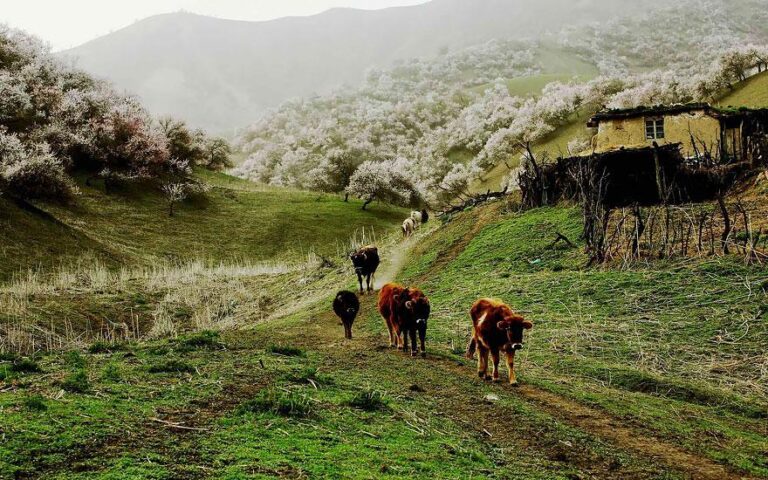
The plant locals call the Hotan rose is a cold-tolerant, damask-style rose that grows on the southern edge of the Taklamakan. Hotan sits around 37 degrees north, roughly the same latitude band as the Mediterranean rose regions of Bulgaria and Turkey, and the dry desert air plus the sharp drop in temperature after dark seem to concentrate the scent in the petals. The flowers are smaller and a deeper pink than the fat garden roses most visitors know. During the few weeks of bloom, whole village courtyards in Moyu and Yutian turn pink, and the smell carries for blocks.
How the jam is made
The method has not changed much in generations. Fresh petals are picked in the early morning, washed, and layered with white sugar and a little honey in a clean crock. The mixture is left to ferment and age for weeks, sometimes longer, until the sugar draws the colour and scent out of the petals and you are left with a thick, dark paste. Good jam keeps a clear rose note without tasting soapy. The soapy ones are usually made with too few petals or too much artificial essence, and you learn to spot them after the first jar.
Rose tea is the simpler side of the trade. Buds are dried whole and steeped in hot water, sometimes with a single red date or a few goji berries. It is naturally caffeine-free, which is why you will see it served in the afternoon rather than as a morning wake-up.
Getting to Hotan
Hotan is a long way south, but it is no longer the remote post it was twenty years ago. There is a domestic airport with daily flights from Urumqi that take about two hours, and the railway line from Urumqi now reaches the city, with a sleeper train running roughly eleven to twelve hours. Buses connect Hotan with Kashgar (about five to six hours) and with the towns along the southern Tarim ring road. If you are driving yourself, budget a full day from Kashgar and fill the tank before the last town, because the stretches between oases are empty.
Best time to go for roses
If the rose is your reason, plan for late May through mid-June. The Hotan rose festival is normally held in early June, when the fields are at peak bloom and the bazaars stock the freshest jam of the year. Come in July or August and you will still find jars year-round, but you will miss the petals themselves and the festival stalls. For general travel, spring and autumn are kinder than the summer heat, which can sit above 35°C in June and July.
Where to stay
Hotan city has a normal range of mid-price chain hotels, the same brands you see in any Chinese prefecture capital, plus a few older state-run places near the bus station. Nothing fancy, but clean, air-conditioned, and walkable from the bazaar district. If you want to see the rose villages, base yourself in Hotan and take a morning car to Moyu or Yutian, each under two hours by road, rather than trying to find rooms out in the counties.
Where to buy without getting fooled
The local food markets and the Sunday Bazaar are where the real stuff changes hands. Look for sealed jars with a production date and a maker’s name on the label; the open bowls at festival stalls are fine to taste but do not travel. A vendor who can tell you which village the petals came from is usually the one worth buying from. Rose oil is the expensive item and the easiest to fake, so unless you know the seller, skip the oil and take the jam home instead.

Eating it: more than just jam
The obvious use is rose jam on naan, but it shows up in more places than you would expect. Bakeries in Hotan sell a rose-stuffed naan (玫瑰馕) that is lightly sweet rather than sugary. Stir a spoon into plain yogurt and you get a dessert that costs almost nothing. In summer some shops churn rose into ice cream. And if you want the savoury contrast, order a plate of Big Plate Chicken first, then finish with rose tea. The spice and the flower make a better pairing than you would guess. For the wider picture of the region’s noodle and street food, our guide to Xinjiang’s other noodle dishes covers the savoury side.
Practical tips before you buy
Bring small cash as well as a phone, because while the big bazaar stalls take Alipay and WeChat Pay, the village sellers often prefer notes. Jars weigh more than they look, so if you are flying out of Hotan with three or four, pack them in the middle of your bag wrapped in clothes. Rose tea travels better than jam: the dried buds take almost no space and survive a stuffed suitcase. If you want a proper drink rather than a sweet, the same region produces fruit juices and traditional drinks worth trying alongside the tea.
A sample rose-season day in Hotan
Start at the Sunday Bazaar when it opens, around sunrise, and work the food rows before the heat builds. Buy a jar, taste a few others, then hire a car to Moyu to walk a rose courtyard in bloom. Most families will let you look if you ask politely and buy something. Back in the city by late afternoon, sit in a teahouse with a pot of rose buds and watch the light come off the desert. End at the jade market in the early evening, where the same vendors who sold you jam in the morning sometimes run a second stall.
Frequently asked questions
Is Hotan rose jam the same as rose jam from elsewhere?
Not quite. The Hotan rose is its own local variety, smaller-petaled and more fragrant per gram than many cultivated garden roses, and the jam is made with sugar and honey rather than pectin. If a jar tastes strongly of perfume or soap, it is probably padded with essence rather than real petals.
Can I bring rose jam home?
In most cases yes, but rules differ by country, and jam is a food product. Check your own customs limits before you fly, and keep the receipt. Dried rose buds are usually simpler to carry than a sealed jar of paste.
Is it very sweet?
Yes, it is a sweet preserve, but a good one is balanced: floral first, sugar second. If it tastes like straight sugar, the petal ratio was low.
Does rose tea have caffeine?
No. It is made from rose buds alone, so it is naturally caffeine-free and sits easy in the afternoon or evening.
When is the rose festival?
Usually early June in Hotan, timed to the peak bloom. Dates move with the weather, so confirm the exact week through the local tourism office or your hotel before you build a trip around it.
Disclaimer
This article is a travel and food write-up, not medical or legal advice. Rose products are enjoyed here as food and drink, and I make no health claims about them. Prices, festival dates, flight and train schedules, and border or permit rules change, and some southern Xinjiang areas have access restrictions that vary by season and nationality. Always confirm current conditions with official sources and your embassy before you travel. Links to other sites are for background only.
About the author
Karl Huang is a travel writer who has spent three summers and two winters moving through Xinjiang by train, bus, and rented car, with a particular soft spot for the southern Tarim towns. He writes practical, first-hand guides for visitors who want to eat and travel well without a tour group. He has bought more jars of Hotan rose jam than he cares to count, and finished most of them.