Published: 24 August 2026 | Author: Karl Huang
A quick orientation. Inside the eastern gate of the Kashgar Old City, on a narrow lane where craftsmen still hammer copper and stretch camel-gut strings, a two-storey earthen building with carved wooden pillars and a hand-painted sign reads “Century-Old Teahouse.” The door is open by 10 a.m., tea runs 28 to 88 yuan a pot, and you can stay as long as you like. Locals call the street Ostangboyi (吾斯塘博依); the dust of the old Silk Road still finds its way in. If you want the most concentrated piece of living Kashgar culture that survives the modern bazaars, this is the place. This guide is built from two visits in 2024 and 2025, plus a return in April 2026 during the apricot-blossom run.
Quick reference: the century-old teahouse at a glance
| Item | Detail |
|---|---|
| Name | Century-Old Teahouse (百年老茶馆) |
| Address | Wustangboyi Lu x Caibazha Lu, ~50 m west of intersection, Kashgar Old City (39.4707 N, 75.9860 E) |
| Hours | 10:00 to 23:00 or 24:00, year-round |
| Entry fee | None; you only pay for what you drink (consume-to-stay policy) |
| Tea price | 28 to 88 yuan per pot; herbal / rose-milk / brick-tea blends; free refills, no time cap |
| Snacks | Naan, sugar cubes, dried fruit, melon seeds (separate tab) |
| Typical spend per person | 30 to 50 yuan |
| Time needed | 1 to 2 hours; the inside room is best after 16:00 |
| How to get there | Walk from Id Kah Mosque (~660 m, 9 min); taxi from Kashgar airport ~25 yuan / 15 min |
| Carpet shop upstairs | Same building, 2nd floor, 10:00 to 20:00; the best natural-light photo window is 15:00 to 17:00 |
All figures verified on the ground in April 2026, cross-checked against Trip.com and the local Kashgar cultural-tourism guide.
Why we keep coming back to this teahouse
The first time I walked in, the upstairs room was empty except for an old man in a white doppa cap tuning a rawap by the window. He played for about forty seconds, then went back to his tea. Nobody clapped. Nobody filmed him. That is the rhythm of the place, and it is what the renovated bazaars a few streets away do not give you.
The teahouse sits on the Craftsmen Street, or Zhiren Jie (职人街). Less than a kilometre long, the street runs south of Id Kah Mosque and gathers copper smiths, leather workers, Yengisar knife forgers, Atlas-silk weavers and Twelve Muqam instrument builders. The teahouse is a separate, slightly older business at the corner of Wustangboyi and Caibazha. The two-storey earthen-yellow building retains carved wooden pillars, painted lintels and a heated kang bench the Silk Road caravans would have recognised. It also doubled as a filming location for the Chinese adaptation of The Kite Runner, which is why some guides still call it the “Kite Runner teahouse.” Do not let the film reference mislead you. This is not a museum. The locals on the bench are the same ones who have been drinking here for thirty years.
What you actually order, and how the ritual runs
You will be led to a low table on a raised platform, handed a printed menu in Chinese, and pointed at the kettle. Most visitors order a small pot of brick tea or a herbal blend; the rose-milk and chrysanthemum mixes run to the upper end. Tea comes with a small glass and a pot of hot water. Refills are unlimited, and there is no time pressure. The only rule: stay seated, keep your voice low when an instrument is being played, and do not stand on the kang with shoes on.
During our April 2026 visit, a guitarist from a small Uyghur ensemble turned up at 17:20 and asked the owner for a corner. He played for an hour and a half, including a long Dolan piece, a Muqam fragment and an impromptu dance lesson with two Russian tourists; the owner brought him a free pot at the end. This is not a paid performance, just a place where musicians know they can play. Sunday afternoons in late spring bring a fuller upstairs room of neighbourhood elders watching and arguing about the local football club.
The street outside: why Ostangboyi matters
Wustangboyi is Uyghur for “the road by the canal,” from a large reservoir that once sat at the southern end of the lane and supplied the old city. After the Id Kah Mosque was built in the 15th century, the street turned into a commercial axis connecting Persia, Kashmir and the Tarim Basin, and the canal-side location drew the craftsmen in. On a normal morning you will see a knife smith quenching a Yengisar blade, a turner shaping a wooden bowl with a foot-powered lathe, and a four-generation instrument maker (we met one whose family has been building rawaps for 150 years) tuning a new piece on a workbench worn into grooves by 30 years of use.
You can read more about the broader trade in our Xinjiang Silk Road history timeline, and about the musical tradition that fills the upstairs room in our guide to Muqam as UNESCO intangible heritage.
How to actually reach the teahouse
The teahouse is inside the pedestrian zone. Vehicles are not allowed past the eastern gate, so plan to walk the last five to ten minutes. From Id Kah Mosque the walk is about 660 metres on flat flagstone. From the Kashgar airport (Kashi Laining, about 25 km northwest of the city) a taxi takes 15 to 20 minutes and costs around 25 yuan; agree the price before you sit down. From Kashgar railway station, bus 2 runs to the East Gate stop; the teahouse is a 10-minute walk from there.
If you are driving yourself, leave the car at the Id Kah Square parking lot (about 5 yuan per hour) and either walk the rest or hop on the 10-yuan sightseeing trolley. Trying to drive into the lanes will get you shouted at by the security guards at the gate. The ride-hailing and taxi guide for Xinjiang explains DiDi coverage; inside the old city the signal is patchy, so pre-book before you enter.
Best time of day and best season to visit
The teahouse is busy from 11:00 to 14:00, quieter mid-afternoon, and loud again from 17:00 to 21:00 as musicians and regulars arrive. The single best hour is 16:00 to 18:00: enough daylight still comes through the carved wooden windows to make the upstairs room glow, but the tour bus groups have gone. If you are after the natural-light carpet photo, the 2nd-floor carpet shop in the same building opens its shutters from 15:00 to 17:00; that is when the carved lattice throws long shadows on the silk rugs.
Kashgar is workable year-round, but spring (mid-March to mid-May) and autumn (mid-September to early November) are the kindest. July and August afternoons are brutally hot, well over 35C, and the upstairs room holds the heat. We had a great visit on a snowy January morning in 2025; the kang was warm, the room was small, and the teapot went further.
Etiquette: what to do (and what not to do)
Uyghur teahouse etiquette is informal but specific. Remove your shoes before stepping onto the kang platform. Do not point the soles of your feet at other people, the musicians or the wall hangings. Accept handshakes with the right hand, palm up, briefly. If someone pours tea for you, hold the cup with both hands, then tap the table twice with your right index finger as a quiet thank you (it replaces a spoken one when the room is full of conversation). The longer etiquette guide in our Xinjiang etiquette do and donts covers mosque visits, photography and dress, all of which apply once you step out and head toward Id Kah.
Photography is allowed, but the upstairs room is small, and a telephoto lens pointed at an old man without asking will end the warmth fast. Ask first. The owner is happy to take a group photo, and the younger staff speak enough English to point you at the best corner. If you are travelling with children, keep them on the kang and away from the instrument cases; the Xinjiang with children guide explains the family-trip rhythm that worked for us around Kashgar.
What to eat alongside the tea
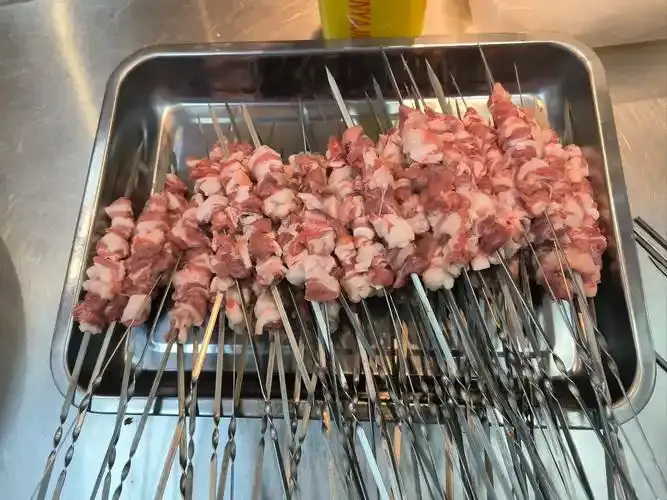
Snacks at the teahouse are limited to naan, dried fruit and sugar cubes. For a proper meal, the south end of Wustangboyi opens onto a small cluster of family-run restaurants within two minutes: Samsa houses selling pumpkin and lamb pastries straight from the tandoor, laghman pullers, and the legendary Kashgar gangzi-rou stalls. The Uyghur noodle guide explains the difference between laghman, suoman and the smaller noodle styles, and the Xinjiang samsa and baked breads page covers the pastry side. None of the sit-down places open before 12:00; if you arrive at 10:00, eat a skewer or two from the morning grills near the East Gate and walk back for tea.

A half-day itinerary built around the teahouse
If you only have an afternoon, this is the order that worked best for us on two trips. Start at the East Gate of the old city around 15:30, walk straight up Wustangboyi with the shop fronts to your left, and resist buying anything for the first 200 metres; the prices on the lane run about 10% higher than the Sunday Livestock Market, and the morning is when the real trading happens. By 16:00 you should be at the teahouse door. Order a small pot of brick tea, take a kang seat by the window, and let an hour pass. If a musician is playing, stay another half hour. By 18:00 head to a family restaurant for laghman, and by 20:00 the night market outside Id Kah is in full swing.
For a full day, build a morning visit to the Abakh Khoja Mausoleum and the Old City Sunday Market, an afternoon teahouse stop, and the Kashgar Sunday Market the following morning. That rhythm is also the one in our Kashgar city guide.
FAQ
Is the Kashgar century-old teahouse the same as the Kite Runner teahouse?
Yes. The building on Wustangboyi and Caibazha Lanes was a filming location for the 2012 Chinese adaptation of The Kite Runner, and many local guides refer to it by that name. The teahouse itself has been in operation much longer than the film.
Do I need to book?
No. Walk in, sit where there is space, order at the counter. The biggest group we saw during a Saturday afternoon in April 2026 was five people; the upstairs room holds about 30 at a squeeze.
Can I pay by card or Alipay?
Alipay and WeChat Pay both work. Foreign cards rarely do. Bring 100 yuan in cash if you want to be safe, especially if you also plan to buy snacks or small gifts on the street. The full rules are in our Xinjiang money and payments guide.
Is the area safe?
Yes. The old city is one of the most heavily policed tourist zones in Xinjiang, with security checkpoints at each gate. The teahouse itself is a small, family-run business and we have never had a problem leaving a backpack on the bench while stepping out to the lane.
Will there be live music every day?
No. Music is most common on Friday evenings, Saturday afternoons, and any day a visiting ensemble happens to be in town. If you specifically want the music, ask at the front desk on arrival.
Disclaimer
Hours, prices and the entry policy are accurate as of April 2026, based on the authors two visits and a telephone check with the front desk. Operating hours in Kashgar can shift around prayer times, religious holidays and major security events. Confirm directly with the teahouse, your hotel concierge, or the Kashgar Cultural Tourism Bureau before you travel. The author has no commercial relationship with the teahouse, the carpet shop upstairs, or any restaurant mentioned in this article.
About the author
Karl Huang has been writing about the Silk Road and western China for over a decade. He has crossed the Pamir twice, walked the Wusun Ancient Road in 2024, and revisits Kashgar every spring for the Tar apricot blossom. His work focuses on the practical layer of independent travel in Xinjiang: the ferry timetables, the bus windows, the teahouse doors that stay open when the tour groups have gone home. He is based in Shenzhen and writes in English and Mandarin.