Published: 24 August 2026 | Author: Karl Huang
Most people on a Xinjiang rail trip see Shihezi as a blur through the window: apartment blocks, cotton fields, and then gone. We did the same thing twice before we finally stepped onto the platform and started a Shihezi walking tour that changed our mind. What we found was a city that feels smaller than its population, greener than its latitude, and far more readable on foot than on a map. This guide is built from that walk. It is not a complete Shihezi travel guide; it is a single route you can do in one day, with your own legs doing the explaining.
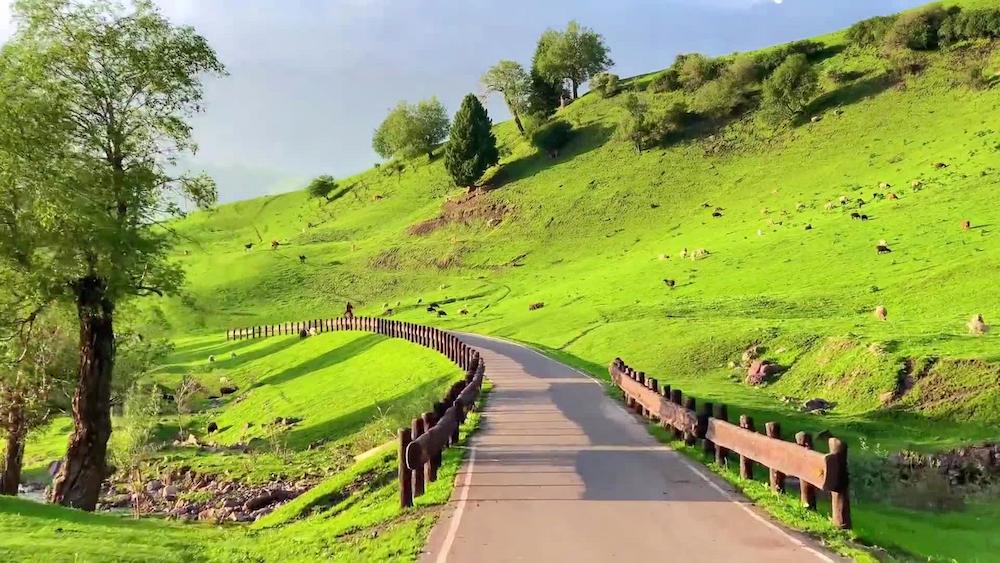
Shihezi walking tour at a glance
| Primary keyword | Shihezi walking tour |
| Distance on foot | About 8 km (5 mi) |
| Time needed | 6 to 8 hours with stops |
| Start / finish | Shihezi railway station / West Park |
| Best season | April to October |
| Top stops | First Plough statue, Reclamation Museum, Ai Qing Poetry Hall, Xingfu Road, West Park |
| Budget per person | CNY 80 to 150 excluding meals |
| Must-know | Reclamation Museum is free but closed Mondays; bring your passport |
Why we got off the highway
We were heading back to Urumqi after a week in the Ili Valley. The C-train timetable left us with three hours in Shihezi before the next departure. I looked at the map and saw a straight line of streets running east-west, a cluster of museums near the centre, and a large park on the western edge. It looked walkable. It was.
Shihezi sits roughly 140 kilometres northwest of Urumqi on the northern edge of the Tianshan range, at about 450 metres above sea level. The city was planned in the early 1950s by the Xinjiang Production and Construction Corps, specifically the 8th Division, on land that had been alkaline desert and sparse poplar. Today it is home to around 590,000 people and carries one of Xinjiang’s highest urban green-coverage rates. That is why locals call it the Gobi Pearl, and why the name Garden City actually makes sense when you are walking under the plane trees.
The walk: five stops on foot
1. Century Square and the First Plough
We started at the square in front of Shihezi railway station. From there it is a flat 15-minute walk east along Beiyi Road to Century Square. The square is the city’s civic front room. Locals fly kites, dance in groups, and let children run between the flower beds. At the north end stands the First Plough statue, a bronze monument to the soldiers who turned this ground with ploughs instead of rifles. It is not subtle, but it is honest. The faces on the relief panels are gaunt, and the inscription is brief. We sat on the bench for ten minutes and watched three generations of a family take photos in front of it.
2. The Reclamation Museum
A five-minute walk north along Beisan Road brings you to the Xinjiang Production and Construction Corps Reclamation Museum at 59 Beisan Road. The building itself is the old Corps headquarters, a 1950s Soviet-influenced structure with a heavy timber staircase. Entry is free, but the museum now requires a reservation through its WeChat public account. It is closed on Mondays. Hours are generally 10:30 to 18:00, with the last entry at 17:30.
The exhibition moves from army camps to irrigation canals, from canvas tents to brick factories. The room that stayed with us was the diorama of a dugout shelter, the kind soldiers lived in during the first winters. The temperature in Shihezi can drop below -20 degrees Celsius in January. Seeing the mud walls and straw roofs made the plane trees outside feel less decorative and more like a promise kept.
3. Ai Qing Poetry Hall
We walked south to 21 Beier Road, a 25-minute stroll through streets lined with low residential blocks and small restaurants. The Ai Qing Poetry Hall occupies a quiet courtyard. Ai Qing spent sixteen years in Shihezi after being sent there in 1959, and the museum is built around his manuscripts, letters, and the famous line in which he called Shihezi the youngest city. The building is modest, almost domestic, which suits the subject. Entry is free and the same opening pattern applies: closed Monday, open roughly 10:00 to 18:30 on other days.

4. Xingfu Road after dark
Xingfu Road, or Happiness Road, is the city’s main walking street. By day it is shops, mobile-phone stores, and bakeries. By evening it becomes a food strip. We arrived at 19:30, just as the kebab smokers were lit. The lamb is local, the bread is fresh, and the liangpi stalls do a brisk trade. A bowl of liangpi, a skewer of lamb, and a bottle of yogurt drink came to about CNY 25. Do not expect English menus. Point, smile, and hold up fingers.
5. West Park
We finished at West Park, a 20-minute walk west from Xingfu Road along Xiyi Road. The park has a lake, tree-lined paths, and a small zoo that families still use. Entry is free. By the time we arrived the sun had dropped low enough to turn the poplars golden. We sat on the rail of the lake bridge and watched an older man walk his caged bird through the gateway. It was a calm ending to a day that had started with a bronze plough and ended with birdsong.
How to reach Shihezi
The easiest way is the C-series intercity train from Urumqi. The ride takes roughly one hour and costs about CNY 29 for a second-class seat or CNY 51 for first class. Trains leave from both Urumqi and Urumqi South stations throughout the day. Some continue west to Kuitun, Wusu, and Yining, so you can build Shihezi into a longer Xinjiang rail itinerary.
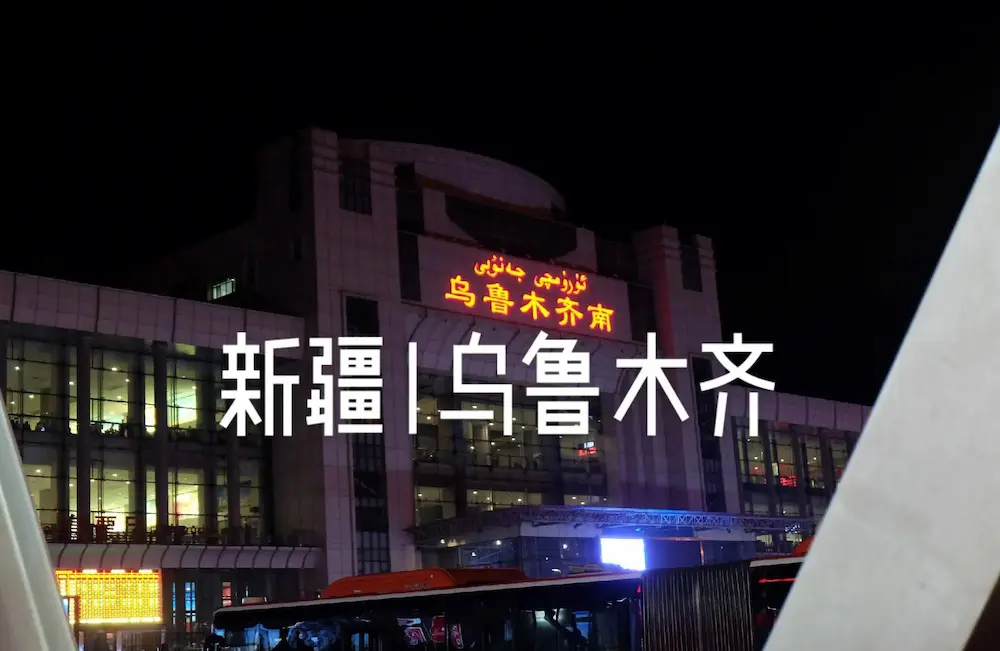
From Shihezi railway station, the walk to Century Square takes 15 to 20 minutes. Taxis are cheap, with a starting fare of CNY 6, but the route is flat and the sidewalks are wide. If you are coming by car from Urumqi on the G30 expressway, the drive is about 90 minutes. Parking near the museum is limited; use the underground lot at Century Square instead.
Best time for a Shihezi walking tour
Spring and autumn are the most comfortable. April and May bring green leaves and flowering crabapples along the main streets. September and October offer clear skies and the start of the cotton harvest. Summer is hot and dry, often above 35 degrees Celsius, so start early. Winter is quiet and cold; the museums are still open, but the evening market shrinks dramatically. For broader seasonal planning, see our Xinjiang autumn guide.
Where to stay
You can see the walk in a day from Urumqi, but if you want the evening market, stay overnight. Mid-range hotels near Xingfu Road or the museum cost roughly CNY 200 to 400 per night. International chains are not present, so expect local brands with clean rooms and inconsistent Wi-Fi. We stayed in a small hotel two blocks west of the railway station for CNY 180; the bed was firm, the shower was hot, and the staff spoke no English but wrote down our train time without being asked.
What to eat along the route
Shihezi is not a food destination, but it is a good place to eat ordinary Xinjiang food well. Look for liangpi, the cold wheat noodles dressed with vinegar, garlic, and chili oil. The local version tends to be wider and less sweet than the Shaanxi style. Dapanji, the chicken-and-potato stew, originated in Shawan County just to the west, so it appears on almost every menu. Fresh flatbread, lamb skewers, and yogurt are reliable staples. For a quick lunch near the museum, try a small noodle house on Beisan Road; for dinner, Xingfu Road is the place.
Practical tips
- Bring cash. Many small restaurants and market stalls do not accept cards or foreign payment apps.
- Carry your passport. The museum requires ID for entry.
- Wear comfortable shoes. The walk is flat, but the total distance is still close to eight kilometres.
- Book museum tickets in advance through the WeChat public account. English interfaces are not available, so ask your hotel to help.
- Start the museum portion in the morning to avoid the 17:30 last-entry cutoff.
- There is no need for a guide if you read a little Chinese; the museum labels are in Chinese and Uyghur, with limited English.
A one-day walking itinerary
Morning: Take the 08:30 C-train from Urumqi. Arrive in Shihezi around 09:40. Walk to Century Square, then continue to the Reclamation Museum. Allow two hours for the museum.
Lunch: Noodle or dapanji on Beisan Road or Xingfu Road.
Afternoon: Walk south to the Ai Qing Poetry Hall, then explore the surrounding neighbourhood. Rest in a teahouse.
Evening: Return to Xingfu Road for dinner and a slow walk through the night market. End at West Park.
Return: Catch the 21:00 C-train back to Urumqi, or stay overnight and head west to Manas or Hutubi the next day.
FAQ
Is Shihezi worth visiting?
Yes, if you are interested in modern Xinjiang history, urban greening, or simply want a break from the long-distance travel rhythm. It is not a dramatic landscape destination; it is a city with a story.
Can I do Shihezi as a day trip from Urumqi?
Yes. The C-train takes about one hour each way, and the walking route covers the main downtown sights comfortably in six to eight hours.
Do I need a car?
No. This route is designed for walking and short taxi hops if your feet get tired. Public buses also run along the main east-west roads.
What is Shihezi famous for?
It is famous for being a planned oasis city built by the Xinjiang Production and Construction Corps. It is also known for cotton, fruit, and one of China’s higher urban green-space ratios.
Is the Reclamation Museum free?
Entry is free, but advance reservation is required. Closed Mondays.
Disclaimer
Prices, opening hours, and reservation rules change. The train fares and museum hours here were correct at the time of writing based on the official railway timetable and museum notices. Double-check before you travel, especially if your visit falls on a public holiday.
About the author
Karl Huang is a Xinjiang travel writer based in China. He travels the region by train, bus, and shared car, and writes route-focused guides for independent travellers who want practical detail rather than polished brochure language. This article is based on a personal walking trip through Shihezi.