Published: 10 October 2026 | Author: Karl Huang
Most travellers who reach the far western end of the Ili Valley come for the lavender fields or the Khorgos border market, and never realise they are standing at the head of one of Central Asia’s great bird highways. The Ili River delta is the stretch where the river that rises in China’s Tien Shan finally runs out of energy and spreads into Kazakhstan’s Lake Balkhash. The wetlands along that last stretch feed, shelter and funnel hundreds of thousands of migratory birds every spring and autumn. I have stood on both sides of this border line — on the Chinese bank near Huocheng, and years earlier on a Kazakh friend’s flat-bottomed boat far out on the open delta — and the difference between the two is the whole point of this article.
This is not a biologist’s field report. I am a travel writer who happens to carry binoculars, and I only write a place up after I have actually walked it. The numbers below come from the Huocheng wetland park’s own survey sheets and from Kazakhstan’s ecology ministry, not from memory. Where I am guessing, I say so plainly.
| Item | Detail |
|---|---|
| River length | About 1,439 km from the Tien Shan to Lake Balkhash |
| China-side wetland | Huocheng Ili River Valley National Wetland Park — 10,953 ha, 95.4% wetland |
| Kazakh-side delta | Roughly 8,000 km² where the Ili meets Balkhash, 600+ km north of Almaty |
| Birds on the Kazakh delta | Around 350 species recorded in 50 years of surveys |
| Headline species | Dalmatian pelican (vulnerable), great white pelican, spoonbill, cranes, oriental darter |
| Best windows | Apr–May & Sep–Oct migration; Jun–Aug breeding; winter for open-water wildfowl |
| China-side entry | Free, open all year, reached from Huocheng or Yining |
| Reaching the Kazakh delta | Kazakhstan visa + Khorgos crossing + a multi-day drive from Almaty |
Standing on the Border Bank
We reached the Huocheng wetland boardwalk one cold March morning, before the tour buses that never come anyway. The Ili here is wide and slow, split into a dozen grey channels behind a wall of reed and tamarisk. A line of little egrets lifted off the far reed bed as we stepped onto the first plank, and a grey heron took its time climbing away from a shallow pool. Nobody charged us, because there is no gate — the park runs as a public riverside green space, not a ticketed reserve.
What struck me was the silence. The border is only a few kilometres west, and you can feel it: no villages on the opposite bank, just the same reed country continuing into Kazakhstan. That continuity is why the birding is good. The birds do not care about the line on the map; the same flocks that feed here in April are standing in open water near Balkhash a week later.
How the Delta Actually Works
The Ili is one of the few big Central Asian rivers that does not vanish into a desert. It leaves China near Khorgos, crosses into Kazakhstan, and after roughly 1,439 km of total length it dumps into Lake Balkhash, a vast, half-fresh half-salty lake. At the mouth it fans out into the delta: a mosaic of channels, oxbow lakes, reed swamps and willow-poplar gallery forest covering something like 8,000 square kilometres.
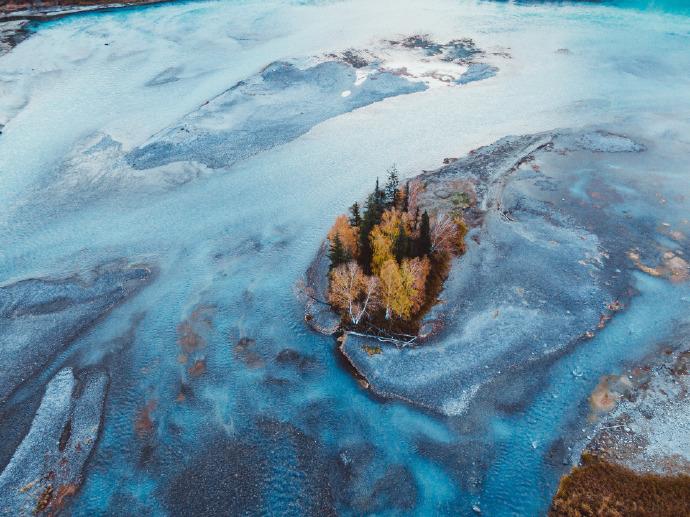
On the Chinese side there is no true “delta” — the river is still a single lowland river when it crosses the border. What China has is the Huocheng county wetland along the last stretch of the Ili, protected as a national wetland park since 2019 and listed as an autonomous-region important wetland in 2023. It holds about 95% wetland cover across nearly 11,000 hectares, with a permanent no-grazing zone of some 5,000 mu to let the reed beds recover.
The park’s own counts list 149 kinds of higher plants and 130 kinds of vertebrates, including 13 protected bird species and the Ili River’s native ship sturgeon, a level-two protected fish. Those are modest numbers next to the Kazakh delta’s 350, but the Chinese bank is the easy, legal, free place to sample the same flyway.
Getting There — the China Side
Fly or take the train to Yining, the Ili Valley’s main city, then hire a car or take a county bus south to Huocheng. The wetland park sits at the county’s southern edge, west toward the border and east to the old Huiyuan garrison town. We paid a driver about 80 yuan each way from Yining and asked to be dropped at the riverside path rather than the lavender entrance, which everyone points you to in summer.
From Xinyuan or Nilke further up the valley you can loop down the Ili on the G218, but it is a long day. The boardwalks near Huocheng are flat, open and wheelchair-friendly in dry weather, which is more than can be said for most Xinjiang birding spots.
If you want a second, different wetland the same week, the Manas River wetland near Shihezi and the Bosten Lake reed beds are both documented elsewhere on this site and sit on the same Central Asian flyway.
Crossing Over — the Kazakh Delta
To stand on the real delta you cross at Khorgos with a Kazakhstan tourist visa, then face a 600-kilometre drive north from Almaty. Nobody day-trips this. Most foreign birders base themselves in Balkhash town or join a tour operator’s delta camp, and even then it is a multi-day commitment with a local guide.
I will be honest about the part I have not done recently: the Kazakh side needs current visa and road advice I cannot give from memory, so check with the Kazakh consulate and a Almaty-based operator before you go. What I can pass on is the timing that regular visitors use — late April to early May for the spring push, and late September to mid-October for the autumn one, when the Dalmatian pelican breeding colony on the delta is the headline sight.
When to Go
Spring and autumn are the obvious answers, and they are correct. The Ili valley’s winters are hard but that is exactly when the open water matters: when the shallows freeze, whatever wildfowl are around crowd the few unfrozen channels, and a scope from the Chinese bank shows rafts of ducks and geese you would never see in summer.
Summer is for the breeding birds — herons, egrets and the few pelicans that stray east — but the mosquitoes along the reed beds in June are brutal, and the lavender crowds in Huocheng peak at the same time. If birding is the only goal, skip July and August.
Where to Stay
On the China side, sleep in Yining and make the wetland a half-day trip, or stay in a Huocheng guesthouse and walk the river at first light. We liked the cheap, clean county hotels near the old Huiyuan walls; nothing fancy, but the dawn walk to the water was two kilometres flat. On the Kazakh side, Balkhash town has the only real lodging worth naming, plus the seasonal tour camps.
What to Eat
Huocheng and Yining feed you well. We ate laghman noodles and grilled river fish at a riverside stall, then bought warm nan from a cart on the way back. The Ili Valley’s grapes and melons in late summer are the best I have had in China. On the Kazakh side, Balkhash’s own fish — the local zander and carp — turns up grilled at every roadside stop, and the portions assume you have been outside all day, which you have.
Practical Tips for Birders
- Bring a scope, not just binoculars. The channels are wide and the birds are shy; a 20–60x spotter changes the day.
- The Chinese bank is free and unstaffed — go at first light (07:00 in summer, after 08:00 in winter) before wind picks up.
- Do not walk into the reed beds. The 5,000 mu no-grazing zone is there to recover habitat, and the channels are deeper than they look.
- For the Kazakh delta, book the guide and the visa before you leave home; the distance makes same-week fixes impossible.
- Carry water and repellent year-round. The mosquitoes are a spring-autumn problem; the sun on open water is a year-round one.
A Three-Day Plan
Day 1 — Fly into Yining, pick up a car, drive south to Huocheng and walk the riverside boardwalk at dusk. Sleep in the county.
Day 2 — Dawn walk on the wetland, then loop east to the Huiyuan garrison town and back via the lavender fields (summer only). Evening in Yining.
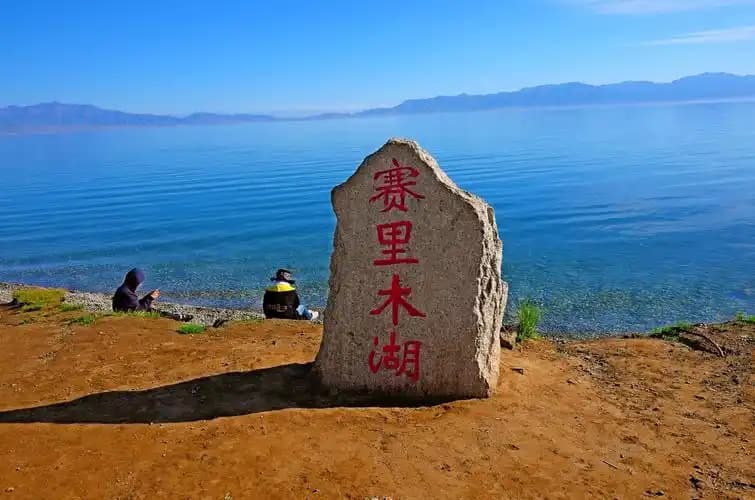
Day 3 — Early start for Sayram Lake’s open water if you want a second habitat, or head to Khorgos to begin the Kazakh-side crossing if your visa is sorted.
For a wider picture of the region’s birds, read our birdwatching in Xinjiang overview, which covers the flyway from Bosten to the Altai.
Frequently Asked Questions
Can I see the delta without leaving China?
You can see the Chinese bank of the Ili and its wetland birds for free near Huocheng, but the true delta — the 8,000 km² fan at Lake Balkhash — is in Kazakhstan and needs a visa and a long drive.
Is the Huocheng wetland park open in winter?
Yes, it is a public riverside space open all year. The boardwalks can be icy, so wear proper shoes, but winter is the best time to scope wintering wildfowl on open water.
Do I need a guide on the China side?
No. The boardwalks are signed and flat. A guide only becomes necessary once you cross into Kazakhstan and head for the delta itself.
What is the one bird worth the trip?
On the Kazakh delta, the Dalmatian pelican breeding colony is one of the largest in Central Asia. On the Chinese bank, watch for the grey herons and egrets that use the same flyway in spring.
Disclaimer
Bird numbers, opening arrangements and border rules change. The Kazakh-side delta requires a current visa and road conditions I have not re-checked this season, so confirm both with the relevant embassy and a local operator before you travel. This article is a travel account, not a substitute for official advice, and I take no responsibility for missed crossings or closed tracks.
About the author
Karl Huang is a China-based travel writer focused on Xinjiang’s less-traffic routes. He has crossed the Ili Valley by road, rail and river, and prefers writing only about places he has stood on. His reporting draws on park surveys and official sources, not second-hand blogs.