Published: 12 October 2026 | Author: Karl Huang
Most travellers hear “devil city” and think of Karamay, where Xinjiang’s most visited yardang park sits on the northern loop with its ticket queues and little sightseeing train. Eastern Xinjiang keeps a second one, quieter and cheaper, on the dry plain west of Hami. The Hami Five Forts Yardang, which locals simply call the Hami Ghost City, is a field of wind-carved walls, turrets and animal-shaped blocks beside Wubao town, and it pairs naturally with a day or two in Hami itself. We have been out there twice, in May and again in late September, and on both afternoons we shared the shuttle with fewer than a dozen other visitors. This page covers how the park works, what the shuttle stops at, what archaeologists found in the ground nearby, and how to time the visit.
Quick Reference: The Five Forts Yardang at a Glance
| Item | Detail |
|---|---|
| Location | Wubao Town, Yizhou District, Hami; old lakebed plain west of the city |
| Distance from Hami | About 80 km, roughly 90 minutes by road |
| Tickets | 40 yuan peak season (1 April to 31 October); 25 yuan off season |
| Park shuttle | 30 yuan, required in practice; the field is too large to walk |
| Opening hours | 09:00 to 19:00, stretching with summer evenings |
| Time needed | Half a day including the drive |
| Best light | The last two hours before sunset |
Figures come from the park’s posted schedule and from our own ticket stubs; both shift at the edges from year to year, so treat the table as a shape rather than a contract. The shuttle pass, though, is not optional in any practical sense.
What the Hami Five Forts Yardang Actually Is
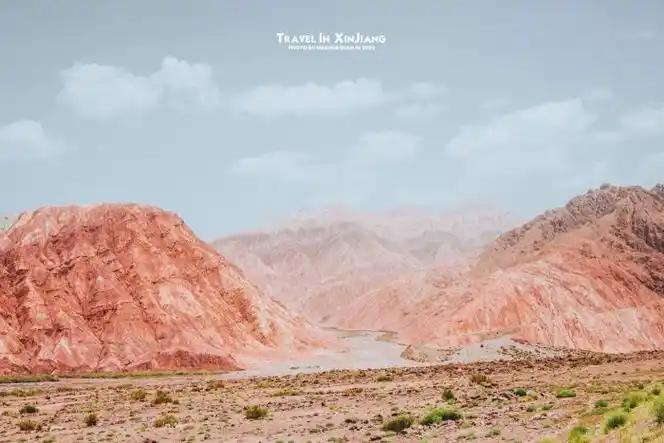
Wubao is a township name that literally reads “five forts”, and the label has drifted onto the rock field beside it, because that is what the yardangs resemble: a fortress city reduced to gateways, towers and ramparts, dropped onto gravel. The material is sediment laid down in the Hami basin over a very long stretch of time, then scoured by a wind that rarely changes direction. Soft layers retreat while harder caps hold, and the result is a skyline of squat walls spread across a plain with almost nothing green in it. The shuttle’s first proper stop is the Giant Turtle, a low dome that genuinely reads as a reptile from the lane, and the second is the Two-Headed Horse, which works best as a silhouette with the sun behind it.
Two clarifications prevent most trip-report confusion. First, Hami has two yardang areas. The Five Forts park is the one with a gate, tickets and a shuttle; the Dahaidao traverse to the south is a self-drive route along an old desert road, with no fence and no shuttle, and the two are regularly mixed up. Second, yardangs are carved rather than built, so nothing in the field is a ruin in the archaeological sense. The castle-shaped block near the far end of the loop, though, happens to stand beside the real thing.
The Other Devil City: Wubao Beside Karamay’s Urho
Urho’s World Devil City in Karamay is the one on the posters: a 5A park with a track train, camel photo props and tour buses arriving all afternoon from the Kanas road. At the time of writing its admission alone is 42 yuan and the train package 62, against 40 for Wubao’s full peak ticket, and the difference in crowds is immediate. Wubao’s case is the opposite one: a shuttle shared with a handful of people, open sightlines in every direction, and a low western sun that strikes the rock with nothing in the way. What Urho has and Wubao lacks is infrastructure, meaning shaded platforms, more stops and a longer circuit. If your route runs through northern Xinjiang, take Urho. If you are based in Hami or crossing the region east to west, Wubao delivers the same landform with a fraction of the company.
Bronze Age Farmers at the Edge of the Rocks
The plain around Wubao is not empty history. Two kilometres northwest of the town, on ground at about 525 metres, archaeologists opened a cemetery that radiocarbon dating puts at roughly 3,200 years old, the same centuries as the Shang dynasty in the central plains. Three digging seasons, in 1978, 1986 and 1991, cleared 113 shallow tombs, most holding a single body laid on its side with the knees drawn up, covered by planks of desert poplar. The dry ground kept what damp soil destroys: felt hats, leather boots, woollen coats, and bodies that still had hair on them. Among the burials were mummies of visibly European origin, including two well-preserved women whose photographs drew international attention.
The small finds carry as much weight as the bodies. The graves held wheat of west Asian descent alongside millet from the Chinese side, which makes Wubao one of the early checkpoints in the crop exchange between two agricultural worlds, and a baked millet cake that remains the oldest processed grain food found anywhere in Xinjiang. A triangular-patterned wool fragment from the site is the oldest coloured wool textile yet discovered in China. The state listed the cemetery in the sixth batch of national heritage sites in 2006, and many of the finds now sit in the Hami Museum, which makes a natural stop the day before or after the rocks. The park adds a relic of its own: the Aisikexiaer castle, a genuine earthen fortress on the shuttle route, plus a scatter of petrified wood that you should photograph and leave where it lies. Older petrified forests exist elsewhere in the region, as our piece on Qitai’s silicified wood and dinosaur geopark describes, but the rule about leaving things alone is identical.
Getting to the Wubao Yardang Field
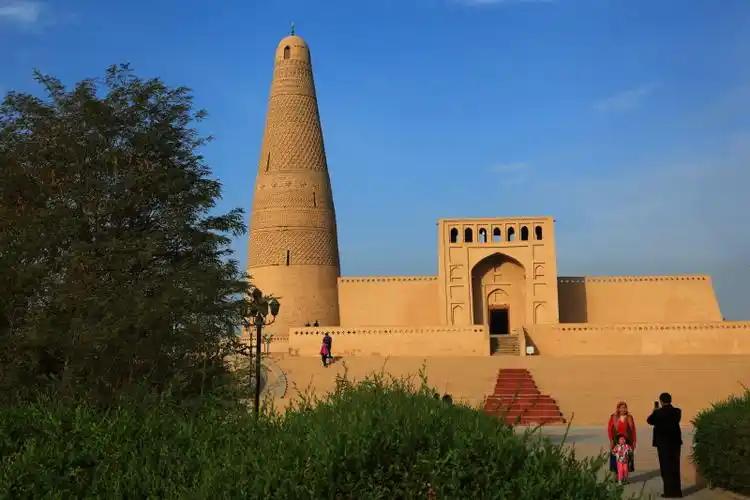
There is no public bus to the park, so the real choice is between driving yourself and hiring a car. From Hami the route runs about eighty kilometres, nearly all of it good asphalt, and takes around ninety minutes. Fill the tank in the city before setting out, because petrol stations thin out fast beyond the last suburbs. Most visitors arriving from Urumqi come in through Turpan, and the Emin Minaret there is worth a half-day stop before the final run east.
Hiring is straightforward. A car with driver for the outing runs about 300 yuan from Hami, while shared arrangements, made through hotels or the local grapevine, land nearer 80 to 120 yuan a head for the return. Whichever way you go, plan the day as city sights in the morning and rocks in the late afternoon; that order works with the light rather than against it.
When to Go, and for Which Light
Season first. April to early June, and September into late October, give workable temperatures. July and August push midday air towards 40 degrees with ground readings far above that, which is why local advice puts the entry window after half past four. Winter visits run at the off-season rate, the cold is genuine, and a yardang field under a dusting of snow is a rare sight worth the trouble if you are equipped for it.
Within a day the pattern is fixed: go late. Listed hours run from 9:00 to 19:00, and the closing time stretches with the summer season, so confirm the day’s last shuttle when you buy tickets. In midsummer the sun drops well after nine by Beijing time; by October it is closer to eight. The final hour is when the rock turns from pale brown to deep orange, and the sunset platform at the end of the shuttle loop exists for exactly that. On our first visit we ignored all of this, arrived at eleven, walked one stop in flat glare, and retreated to the car within twenty minutes. The second visit, timed for the evening, felt like a different park.
Where to Stay
There is no accommodation at the park, and Wubao town offers only basic guesthouses suited to an early start rather than a comfortable evening. Nearly everyone bases in Hami city, which has the full range from business chains to older hotels near the old quarter, covered in our guide to Hami, the melon city at the eastern gate. Basing in the city also puts the museum and the evening food streets within easy reach.
Eating After Dark in Hami
The park has no shops, kiosks or drinking water, so eat before you leave the city and carry more than seems necessary. Back in Hami, the evening belongs to the ordinary staples done well: roast lamb, samsa pulled hot from tandoor ovens, lamb pilaf, and dapanji if the group can finish one. The city’s own claim is the melon, and the local jiageda variety, sold cheaply off street carts in season, runs sweeter than the exported fruit most people know. In autumn, watch for Barkol steamed dumplings, a specialty from the grassland county to the north.
Practical Tips Before You Drive Out
- Water: two litres per person as a floor; nothing is sold inside the gate.
- Sun kit: hat, high-factor sunscreen and sunglasses, plus a light scarf against wind and grit.
- Shoes: high-top trainers or boots. Sand gets into everything, and sandals end the walk early.
- Phone: shuts down from heat on summer afternoons; carry a power bank and keep it shaded.
- Navigation: stay in the shuttle lanes. The plain has almost no landmarks, phone signal is unreliable, and visitors who wander have needed help finding their way back.
- Fossils: the petrified wood is protected. Picking it up is prohibited, and this rule is checked.
- Drones: the open sky makes for good footage, but evening gusts across the plain are strong enough to take a small aircraft away.
- Timing: be back at the gate before full dark. The road to Hami is unlit and the wind rises after sunset.
A Half-Day Plan That Works
Enter at half past four, buy the ticket and shuttle pass together, and ride straight to the Aisikexiaer castle while the light is still high enough to photograph the structure itself. Work back through the Two-Headed Horse and the Giant Turtle as the shadows lengthen, then finish on the sunset platform for the last hour. With a 19:00 close in the shoulder seasons, that leaves time for a slow drive back and dinner in the city by nine.
If Hami is the start of something longer rather than a destination in itself, the same roads continue north into the five-day Hami, Barkol and Yiwu loop, which folds the yardangs into a much larger eastern circuit.
Questions People Ask About Hami’s Devil City
Is Wubao worth it if I have already seen Urho? Yes, if you are in the east anyway. The landform belongs to the same family, but the setting differs: no crowds, no train track, and a sun angle that keeps working on the rock later into the evening.
Can I visit without joining a tour? Yes. There is no bus, so hire a car or take a shared arrangement from Hami. Independent entry with tickets bought at the gate is completely normal.
Is it manageable with children? The shuttle removes most of the walking, so yes, within limits. Heat is the real constraint in summer; keep the visit to the late window and carry hats and water.
Which month is best? May and September balance comfortable temperatures against long evenings. October has its own reward elsewhere in the prefecture, when the poplar belt turns gold, as our guide to Yiwu County, Hami’s green corner in the east describes.
What should I combine it with? The Hami Museum, for the Bronze Age finds from the Wubao cemetery, and the old quarter for food. For a second desert-edge site with standing architecture, the Tang-dynasty beacon tower near Kuqa is the region’s best-preserved example, though it sits far to the west and deserves its own day.
Disclaimer
Ticket prices, shuttle arrangements and opening hours at the park change without much notice, and summer schedules in particular stretch with the sunset. Details here reflect our visits and the park’s posted information as of 2026; confirm at the gate before planning an evening around the last shuttle. We have no commercial relationship with any site, hotel or operator mentioned on this page.
About the Author
Karl Huang has travelled in Xinjiang since 2018, mostly by train and long-distance bus, and writes about the practical side of the region for visitors. He has crossed the Hami area several times and visited the Wubao yardang field twice, once in spring and again in autumn.