Published: 31 October 2026 | Author: Karl Huang
People ask us the same question before a Xinjiang trip: when do I actually get the fruit? Not the vacuum-packed raisins you see at the airport, but the real thing, heavy in your hand and warm from the sun. The answer is a moving target, and that is exactly why a Xinjiang fruit calendar is worth drawing. The region runs on a continental clock: winters that bite, summers that roast, and a day-night temperature swing that pushes sugar into everything from apricots to melons. We have eaten our way across three seasons here, from a February strawberry greenhouse near Urumqi to a November jujube orchard south of the Taklamakan, and this guide is what we wish we had known before the first trip.
| Season | What ripens | Where to find it | Rough window |
|---|---|---|---|
| Spring | Apricots, cherries, strawberries | Toksun, Ili, Urumqi greenhouses | April to May |
| Early summer | Hami melon, watermelon | Hami, Turpan, Shanshan | June to August |
| Late summer | Grapes, figs | Turpan, Atush | August to September |
| Autumn | Pears, apples, pomegranates | Korla, Aksu, Hotan | September to October |
| Late autumn | Jujubes | Ruoqiang, southern Tarim | October to November |
| Year-round | Walnuts, apricot kernels | Wensu, Hotan (cold storage) | Stored supply |
What a Xinjiang Fruit Calendar Actually Gives a Traveller
Most visitors treat fruit as a side note. We treated it as the reason to pick a month, and it changed the trip. A July drive through Hami is a different journey from an October drive through Aksu, and the difference is largely what is piled on the roadside tables. The calendar below is built for eating in place, not for shipping home. For the dried and packaged side of the story, our dried fruit buyer’s guide covers what survives the flight.
Why Xinjiang Fruit Tastes Different in Its Own Season
The short version is climate. Xinjiang is dry, sunny, and extreme. Daytime heat builds sugar; the cold nights that follow stop the plant from burning it back. Local growers talk about this as if it were a recipe, and the old saying about wearing a padded jacket in the morning and a shirt at noon is not exaggeration in July. The result is fruit with a concentration you do not get in humid climates, and it is why a melon bought in its home county in August tastes nothing like the same variety shipped halfway across the country in December. We learned this the hard way by comparing a Hami melon eaten in Hami with one bought in a southern city two months later. The first was almost alarming in sweetness; the second was a polite vegetable.
Spring’s First Sweetness: Apricots, Cherries and Strawberries (April to May)
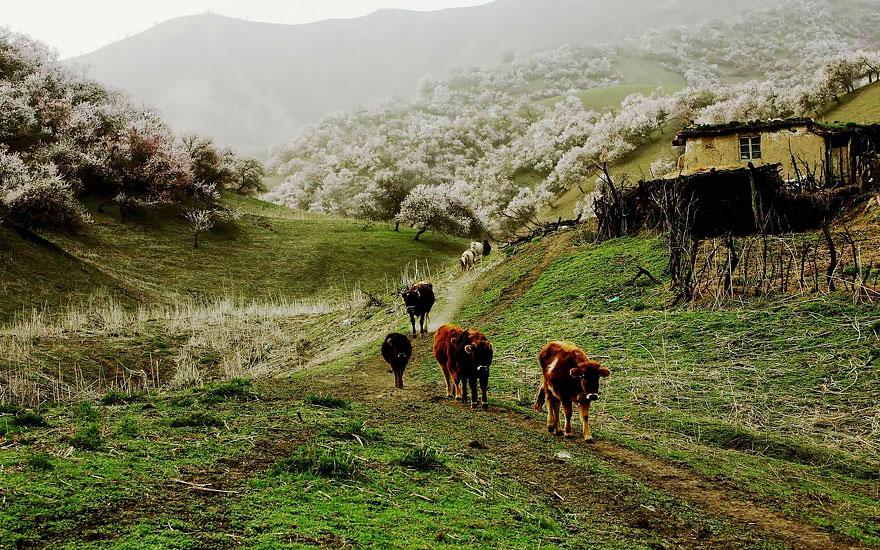
Xinjiang’s spring opens in the warm pockets. The Turpan depression, sitting below sea level, shakes off winter first, and Toksun County calls its apricot blossom the region’s earliest. By late April the trees in the Ili valleys to the north join in, and the orchards around Gongliu and Tuergen turn white and pink for a couple of weeks. Cherries follow in late May, heaviest in the Ili Kazakh prefecture. Strawberries are a greenhouse crop near Urumqi and are available from early spring, but they are the exception that proves the rule: everything else waits for the real heat.
We timed one trip to the Ili apricot bloom and found the fruit itself was still a week from picking when the blossoms fell. If you want the blossom, go in April; if you want the fruit in your hand, wait for May. The Toksun apricot season guide has the wind and the timing down to the week.
Summer’s Flood: Melons and Watermelons, and the Hami Legend (June to August)
This is the season that built Xinjiang’s reputation abroad. Hami melon (哈密瓜) has been a tribute fruit for roughly two thousand years, and the name now covers a family of netted, orange-fleshed melons grown across the eastern basin. Watermelons arrive alongside them and are sold by the half, chilled in a roadside trough of well water. The peak runs June through August, and in July the towns of Hami and Shanshan seem to run on melon alone. We stopped at a stall outside Hami where the owner cut a melon open on the tailgate of his truck, and the smell carried across the parking strip before we had paid.
The honest tip: buy where it is grown. A Hami melon in Hami costs a fraction of the same fruit elsewhere, and the variety on the road is wider than any market back home will stock. Our Hami melon and watermelon guide lists the towns worth a detour.
The Grape Window You Can Taste in Turpan (August to September)
Turpan grows more grape varieties than most countries, and the seedless white ones (无核白) are the backbone of both the fresh trade and the raisin sheds that line the villages. The fresh window is short and intense: August into early September, when the bunches are cut at dawn to beat the heat. We walked a trellis row in Grape Valley one morning and were handed a cluster still cool from the night; it dissolved into sugar with none of the tough skin you get from a long shipment. The same grapes, dried on the mud-brick racks you see across the basin, become the raisins the region is famous for. For the harvest details, the Turpan grape harvest guide goes deeper on which batches ripen when.
Late Autumn’s Keepers: Korla Pears and Aksu Apples (September to October)
As the melons fade, the trees of the north take over. Korla fragrant pear (库尔勒香梨) is small, thin-skinned, and aromatic in a way that does not survive long transport, which is why eating one in Korla in September feels like a different fruit from the wrapped version elsewhere. Aksu, further west, grows apples that develop a sugar core (糖心) in the cold autumn nights, and October is the month the orchards open. We filled a bag at a roadside stand between Korla and Aksu for less than the price of a coffee and ate them for three days.
The Southern Tarim’s Sweet Tail: Pomegranates, Figs and Jujubes (September to November)
Down in the Tarim basin the season runs later and sweeter. Pomegranates from Hotan and Yecheng split open in September with a crunch of seeds you eat by the spoonful. Atush, west of Kashgar, is the fig capital; the fruit is so soft it barely travels, so the only way to know it is to eat it there in August and September. Then come the jujubes. Ruoqiang jujubes (若羌红枣), small and intensely sweet, are picked from October into November and are the last fresh item before winter shuts the southern orchards. The Ruoqiang jujube guide explains why this corner produces the dense version you see dried everywhere.
Walnuts, Apricot Kernels and the Cold-Storage Shoulder (Year-Round)
Not everything is seasonal in the strict sense. Walnuts from Wensu and Hotan, and apricot kernels from the north, sit in cold storage and turn up in bazaars all year. They are the backbone of the nut trade rather than the fresh-fruit calendar, but they matter to a traveller because they are the things worth carrying home when the fresh window has closed. The quality is genuinely better bought at the source, and the price is a fraction of the packaged versions.
How the Calendar Actually Moves: Elevation, Latitude and Weather
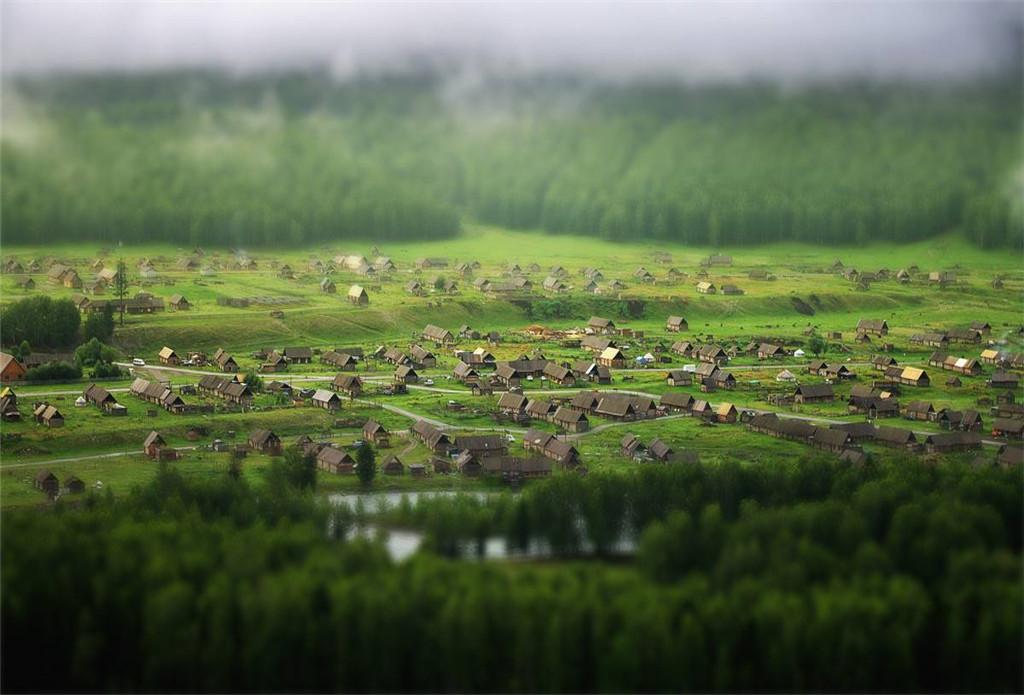
The single most useful thing to understand is that Xinjiang is not one season. The Turpan basin ripens weeks ahead of the Ili valleys because it is lower and warmer. The mountains of the north hold spring back until May while the south is already harvesting. A cold May pushes everything back a week; a hot June pulls it forward. We stopped trusting fixed dates after one year when a late frost delayed the Ili cherries by ten days. The map below is a guide to the order of things, not a timetable.
Eating in Season on the Road: Bazaars, Roadside Stalls and the Price-per-Kilo Rule
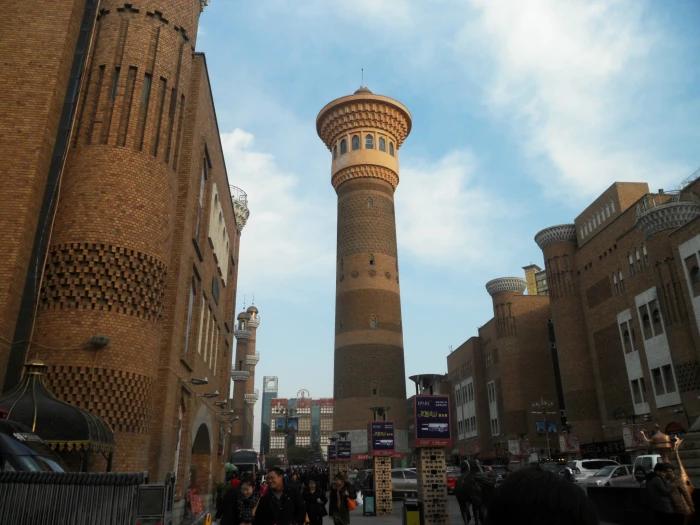
The best fruit we ate was rarely in a restaurant. It was at the Urumqi International Bazaar, where the dried-fruit halls give way to crates of fresh melon in summer; at the old-city bazaars of Kashgar, where pomegranates and figs pile up in autumn; and at unmarked stalls every few kilometres on the southern highways, where a farmer sells the back of his pickup. The rule we followed: ask the price per kilo, taste before you buy when offered, and buy the ugly local variety over the pretty shipped one. The best time to visit guide maps the crowding so you can pair fruit with quieter weeks.
A Traveller’s Month-by-Month Tasting Plan
If you want one trip to catch the most, aim for late August. That is the overlap: melons still in the east, grapes at their peak in Turpan, figs starting in the west, and pears just beginning in Korla. A second good window is mid October, when apples and pears are at full swing and jujubes are opening in the south. Spring travellers should target May for apricots and cherries and accept that the heavy hitters are months away. We have done both, and the August trip is the one we tell friends to take first.
Packing Fruit Home Without Losing It (a Short Note)
Fresh fruit is fragile and, for international travellers, regulated. Soft fruit like figs and grapes will not survive a long flight, and many countries restrict fresh produce at the border. The dried versions travel far better, which is why the bazaar nut and raisin trade exists in the first place. We keep fresh eating to the trip itself and buy dried to carry. The rules change by destination, so check before you pack a melon.
Questions Travellers Ask About Xinjiang’s Fruit Seasons
Can I find fruit outside the peak months? Yes, in bazaars, because cold storage and the region’s size mean something is usually available. But the taste and price only make sense in season.
Which fruit is worth a special trip? Grapes in Turpan in late August and Hami melon in July are the two we would build a route around.
Is it safe to eat fruit washed at a stall? We peeled or washed with bottled water and had no trouble. Skins you eat whole, like grapes, we rinsed and dried.
Do prices differ by region? Sharply. The same melon costs a fraction of its city price in its home county.
A Straight Word About Dates and Accuracy
The windows above come from our own travels between 2023 and 2026, cross-checked against regional agriculture bureau notices and China Daily features on Xinjiang produce. Weather moves the dates, sometimes by two weeks, and festivals and harvest fairs shift year to year. We are not affiliated with any orchard, market, or tour operator, and nothing here was paid for. Treat this as a planning frame, confirm the current year’s timing locally, and eat the ugly local fruit.
Who Wrote This Xinjiang Fruit Calendar
Karl Huang has driven and eaten across Xinjiang through three growing seasons, from February greenhouses near Urumqi to November jujube orchards south of the Taklamakan. This calendar combines those visits with figures verified against official and state-media sources. Corrections and fresh tips are welcome.