Published: November 1, 2026 | Author: Xinjiang Attractions Editorial Team
Xinjiang nang is the flatbread you meet before you meet anything else. It is the first thing handed to you at a guesthouse, the thing a stranger breaks and offers when you stop to ask directions, and the food that rides in the footwell of nearly every car driving the long roads between Kashgar, Hotan and Urumqi. If you plan to travel here on your own, learning the loaf is more useful than memorising any itinerary. This guide comes from our own driving trips across the region, not from a guidebook, and it explains why this bread has outlasted every empire that crossed the Silk Road.
The flatbread that outlasts the road
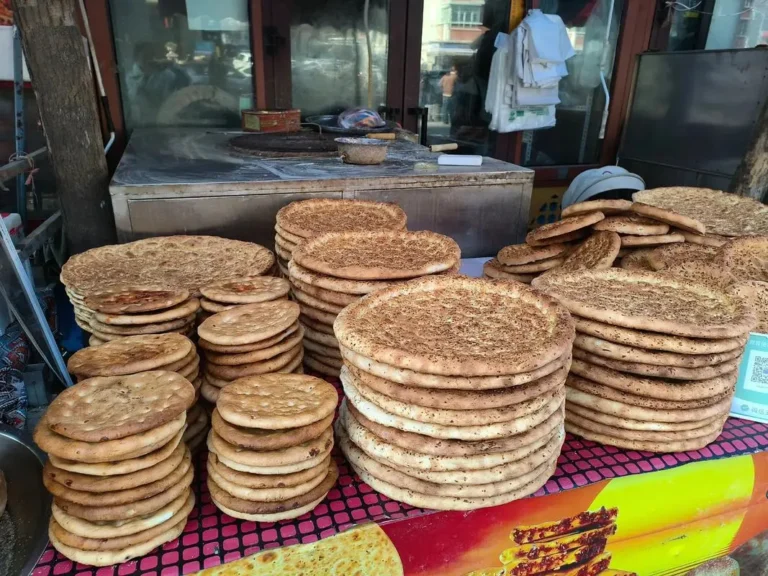
Nang (馕) is a round disc of wheat dough, usually stamped with a pattern, brushed with water or onion juice, and slapped onto the inside wall of a hot clay oven called a tandur. It bakes in two or three minutes. The edge comes out crisp, the middle chewy, and because the dough is lean, with little or no fat, it keeps for days without a fridge. That last fact is the whole reason nang matters to a traveller. In a place where the next restaurant can be a hundred kilometres away, a bag of bread in the car is a kind of insurance.
We have driven the southern loop with three or four loaves riding along for a week, and they were still edible at the end. Not soft, not fresh, but honest food.
Why Xinjiang nang became the traveller’s bread
Xinjiang’s climate does most of the work. The air is dry almost everywhere, and dry air is what bread wants if it is going to last. Add the geography: this is a region of enormous gaps between towns, where caravans once needed food that would not spoil on a ten-day crossing. Flatbread that bakes hard and travels light was the obvious answer, and it still is.
The making itself was inscribed on China’s National Intangible Cultural Heritage list in 2021 (project VIII-160), which tells you how central it is to the region’s identity. Archaeologists have found naan fragments in the Astana Tombs near Turpan dated to the Tang dynasty, more than a thousand years old, and they look like what comes out of the oven this morning.
| At a glance | Detail |
|---|---|
| Best for | Road-trip food, breakfast, the everyday staple |
| Typical price | Plain 3-6 yuan; meat-filled 10-18 yuan |
| Keeps for | 3-4 days summer (paper bag); hard but fine in winter |
| Where to buy | Neighbourhood nanfang bakery; big bazaars |
| Best time to buy | Before 09:00, straight from the oven |
What “nang” means on a Xinjiang menu
Say the word and a baker will point at a rack of round loaves, but not all rounds are the same. The plain sesame naan (芝麻馕) is the everyday staple, mild and sturdy. Onion naan (皮牙子馕) folds chopped onion into the dough for a savoury bite and is, in our opinion, the best one to carry on a drive. Oil naan (油馕) is richer and softer, closer to shortbread. Meat naan (肉馕) hides spiced lamb inside and eats like a meal on its own. There are said to be more than 300 varieties across the region. For a full tour of the types and the ovens, see our dedicated Xinjiang naan guide.
A plain round loaf typically costs 3 to 6 yuan; a meat-filled one runs 10 to 18 yuan. It is among the cheapest food you can buy.
The tonur shop on every corner
Nearly every neighbourhood in Xinjiang has a nanfang (馕房), a small bakery built around one clay oven. The good ones start before sunrise, and by eight the racks outside are stacked with cooling loaves. We time our departures around the morning bake, because a loaf bought warm at 8 a.m. is a different object from the day-old stack wrapped in plastic at a supermarket.
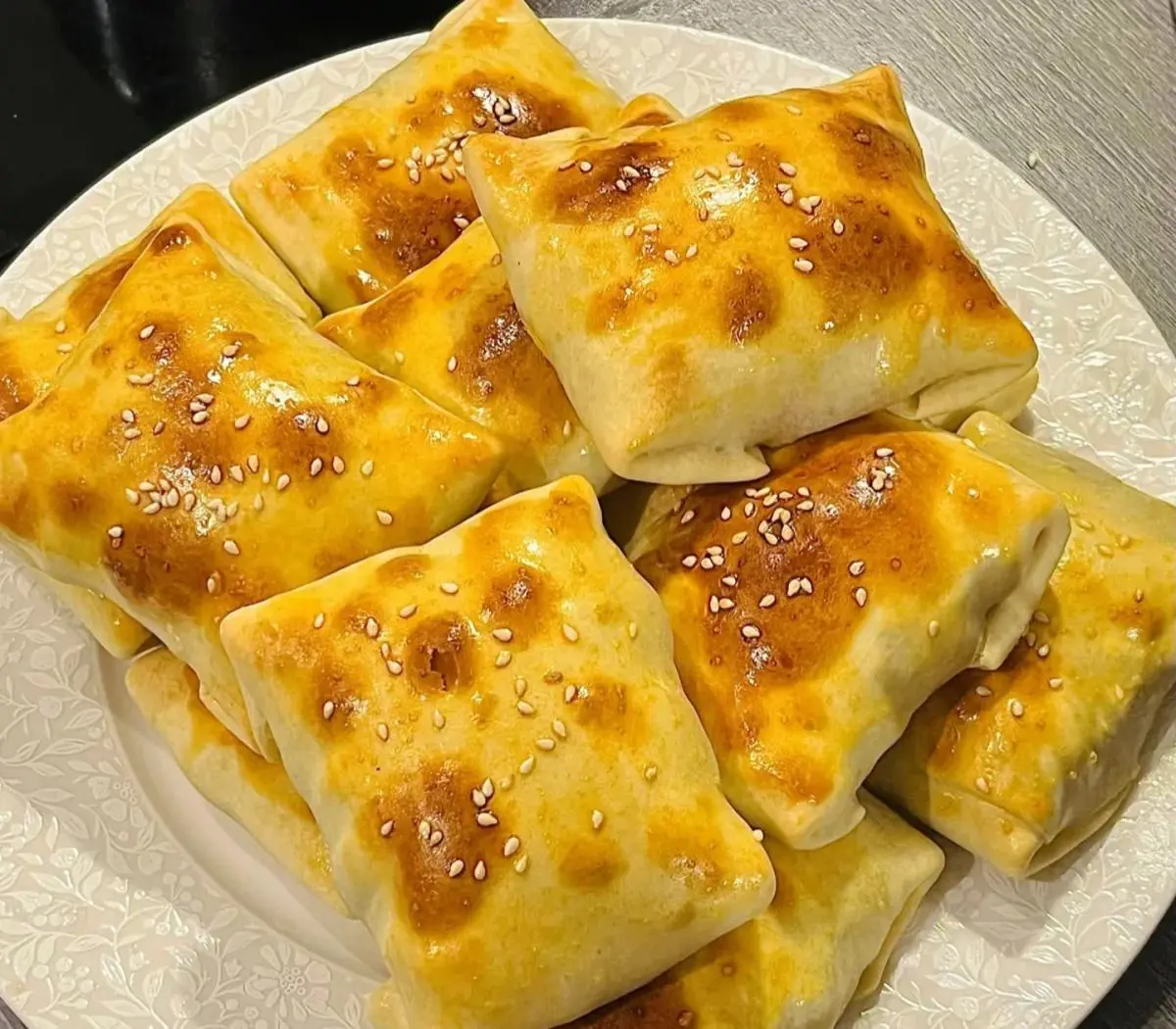
In the big bazaars you can stand and watch the baker hook a loaf off the wall and hand it over still hot. The same oven also bakes samsa and other baked breads worth knowing. Point at the size you want and say “gang kao de” if you want one just out of the oven. Most bakers have little English, but a gesture and a smile have never failed us.
Buying nang on a road trip: what we actually did
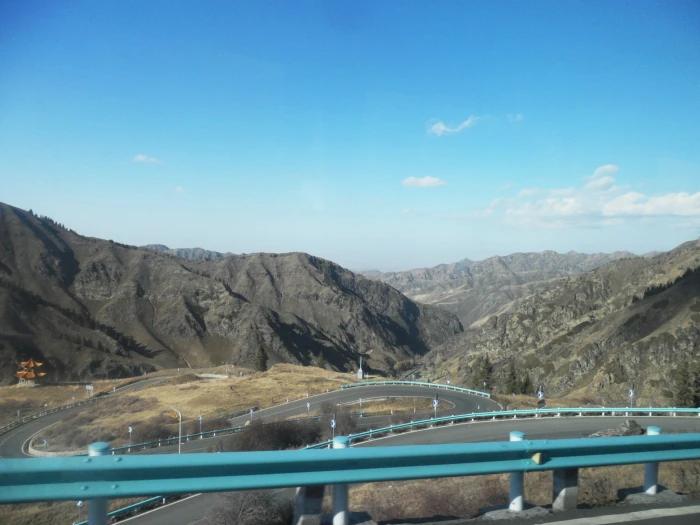
On our last southern loop we bought a bag of onion naan in Kuqa, then again in Aksu, then stopped needing to because the first bag lasted. Each morning we tore a piece with the thermos of hot water the hotel left us, and at rest areas we used it to scoop the broth from a noodle stop. The bread needed no cooler and made no mess, which is the standard road food should meet.
One habit worth copying: buy the night before a long driving day. Bakeries close or sell out by early afternoon, and the desert highway does not care what time you get hungry.
How many days a round loaf really lasts
In summer a plain naan is best the day it is baked and still fine for three or four days in a cloth or paper bag. In winter it goes hard rather than bad, and hard naan revives well: sprinkle it with water and warm it in a pan, or break it into a soup. What you must not do is seal a warm loaf in plastic. The trapped steam softens the crust within an hour.
Packing nang for the long desert drives
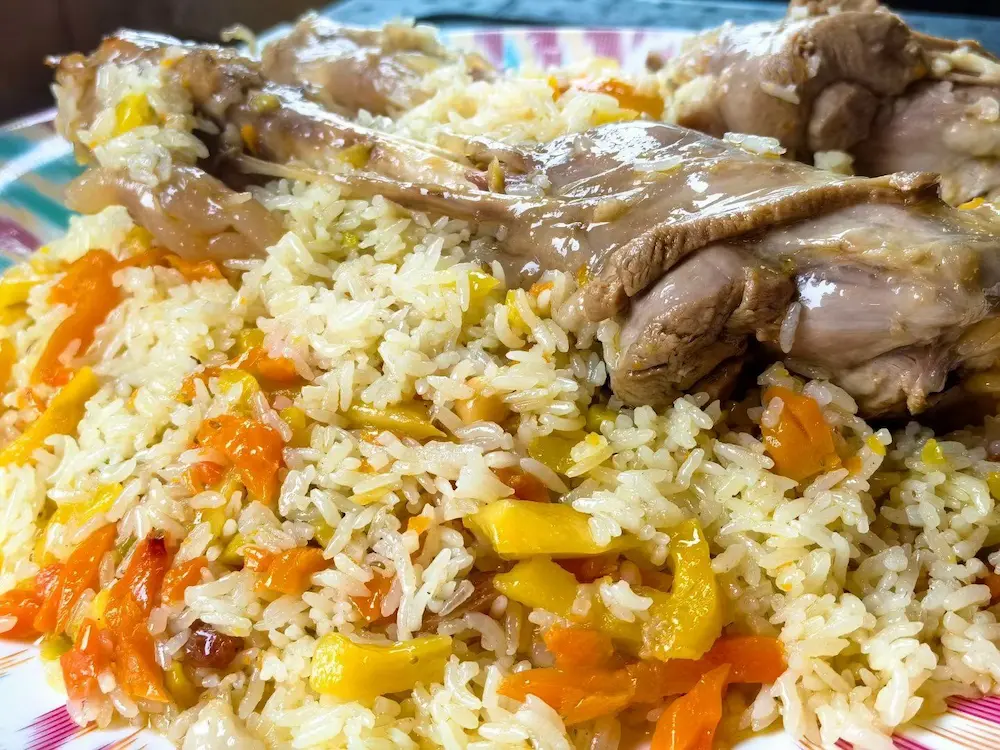
We keep ours in a paper bag on the back seat, never the boot where it would cook. Three or four loaves feeds two people for most of a week alongside the kebabs and polo you pass. The bread also doubles as breakfast: tear, dip in the hotel’s hot water, and you have eaten before the engine is warm.
The etiquette of the shared loaf
In Xinjiang, bread is treated with a respect that surprises first-time visitors. You accept a piece offered to you, tear it with your hands rather than cutting it, and you do not waste it or put it face-down on the ground. There is an old local line that you can go three days without meat but not one day without naan, which tells you where bread sits in the hierarchy of a meal. None of this is complicated, but observing it goes a long way with the people who hand you that first piece.
Nang and the Silk Road: a very old travel food
None of this is new. The same lean, oven-baked disc that rides in our car today fed the caravans that linked Chang’an to Samarkand, and the technique spread along those same routes into every culture around the Taklamakan. When you break a naan on a quiet stretch of the G3012, you are eating the one food that has been doing this journey longer than any of the roads themselves. If you want to see the oven used for something wilder, the nang pit roast is worth a look.
A day measured in loaves: a road-trip rhythm
If it helps to see it as a plan, here is roughly how a driving day uses the bread:
07:30 — Buy warm naan at the neighbourhood oven before the town wakes. 09:00 — Tear a piece with hot water at the hotel. 13:00 — Use it to soak up a noodle or Xinjiang polo stop. 18:00 — Wrap a skewer in it at a roadside grill. 21:00 — The last piece, dipped in the evening milk tea. One loaf, five small moments, and you never once stood hungry between towns.
Questions travellers ask us about nang on the road
Can I take naan home as a souvenir?
Yes, and people do. A hard loaf travels well in checked luggage and makes a better gift than most trinkets. Just let it cool completely and wrap it in cloth, not plastic.
Is the bread halal?
It is. Bakeries across Xinjiang follow halal practice, and the loaf itself is plain wheat, oil and seeds.
What if I only find stale naan?
Buy it anyway and revive it. Warm with a little water and it comes back, and stale naan crushed into soup is a dish in its own right.
Do I need to speak Uyghur to buy it?
No. Pointing at the rack and holding up fingers for the count has worked for us in every town from Yining to Hotan. If the pointing ever fails, our piece on ordering food without speaking Chinese covers the rest.
What we got wrong so you don’t have to
We once sealed a bag of warm naan in plastic after a bazaar stop and opened it an hour later to find the crust turned to leather. Another time we bought at 3 p.m. and got the picked-over bottom of the rack. Both mistakes are easy to avoid: buy early, keep it in paper, and never trap the steam. The bread is forgiving; the packaging is not.
Disclaimer: This guide is based on our team’s own driving trips in Xinjiang. Prices, bakery hours and road conditions change, and the varieties available differ town to town. Verify critical details locally before you rely on them, and treat any opening hours or costs here as a starting point rather than a guarantee.
Sources: China Intangible Cultural Heritage Centre — Traditional Flour Food Making Techniques (Nang), listed 2021 (VIII-160), ihchina.cn. People’s Daily Online — “Intangible heritage aroma in Xinjiang”, 2025, en.people.cn. Tianshan Net — “Tracing the flavors of Xinjiang through its intangible cultural heritage dishes”, 2026, english.ts.cn.