Published: September 8, 2026 | Author: Karl Huang | Category: Xinjiang Cities
Most travelers meet Luntai Xinjiang at seventy kilometers an hour on the way south, as the last county seat before the Tarim Desert Highway drops into the Taklamakan. They buy fuel, maybe a crate of apricots, and keep going. I did exactly that in 2019, and again in 2022, before finally giving the place two nights this June. It deserved them sooner. The county holds the most useful museum on the northern rim of the Tarim, it grows the white apricots you have probably eaten, and its railway is the cheapest way I know to cross this stretch of southern Xinjiang. The highway drive and the poplar park each have their own guide here, so I will point to them rather than repeat them.
Two Luntais: the one you visit and the one in the poems
Start with the name, because it clears up half the history books. The Han dynasty Luntai, a small city-state that the Records of the Grand Historian calls Luntou, stood here on the southern side of the Tianshan. Its king shut the gates on Li Guangli’s army in 102 BC, the general flattened it, and the Han kept the oasis, running farming garrisons from the following year. In 60 BC the court seated the Protectorate of the Western Regions, the office that governed the whole basin, at Wulei, a city in or near this county. The Uyghur name Bugur is usually glossed as eagle. A Qing county called Bugur was created in 1902 and took the older Chinese name a few years later, which is how a Han-era word landed on a modern map.
The other Luntai is a different town entirely. When the Tang organized Ting Prefecture north of the mountains in 640, it named one county Luntai purely to borrow the old prestige, and that garrison stood near present-day Urumqi at the Wulabo ruins. The poet Cen Shen was posted there, so every famous line about snow at Luntai’s east gate describes a landscape six hundred kilometers away. Locals know the distinction perfectly well. The road to the new museum runs along Shenjue Road, named for the era in 60 BC when the protectorate was founded, and the county has bet its tourism money on being the real one.
Luntai Xinjiang at a glance
These are the numbers I re-check against official releases before every trip:
| Item | Detail |
|---|---|
| Location | Northern rim of the Tarim Basin between Korla and Kuqa, under Bayingolin Mongol Autonomous Prefecture |
| Size and people | 14,185 sq km; four towns and seven townships; roughly 120,000 registered residents |
| Economy | Oil and gas from the Lunnan field cluster, cotton and grain, and China’s best-known white-apricot industry |
| Key dates | Protectorate seated 60 BC; Bugur county 1902; desert highway open 1995; museum 2025; airport 2026 |
| Rail | Luntai station on the southern Xinjiang line; Kuqa about 55 minutes, Korla about 100 minutes by slow train |
| Air | Bayingolin Luntai Airport (LTJ), opened 12 June 2026, about 29 km from the county seat by road |
| Best weeks | Early June for the apricot harvest, mid-October for poplars, any month for the museum |
What the county seat looks like from the train window
I rolled in at 16:36 on a June afternoon on the slow train from Urumqi, seven and a half hours from the capital for 93 yuan. The station sits a short taxi ride from a town built on a grid for shift workers: wide junctions, petroleum-company compounds, poplar windbreaks along every canal. East of town the skyline belongs to gas processing, and at night you can pick out the flare stacks from the bridge over the Dina river. Two or three older streets near the bazaar keep a slower rhythm of barbers, kebab men and hardware shops, and that contrast is the honest first impression. Nobody here performs for tourists, which after some southern Silk Road stops is a relief.
The museum that finally explains this place
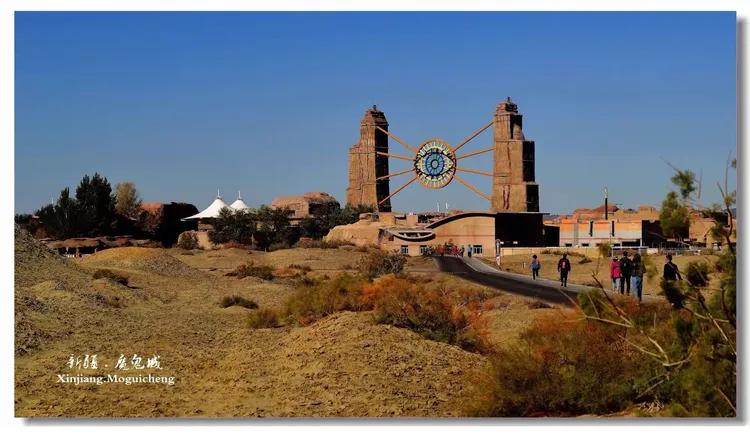
The reason to stop is the Western Regions Protectorate Museum, opened on 18 May 2025 in a 9,950-square-meter building near the eastern edge of town. Entry is free with a reservation on its WeChat mini program, it closes on Mondays, and the winter session runs 10:00 to 19:30 with last entry at 19:00, so plan around the Monday. Inside are 463 sets of artifacts arranged along a thousand-meter exhibition line in five sections, from the founding of the protectorate through the Qing. The two local excavations anchor the story. Kuiyukexiehaier, twenty kilometers southeast, is the earliest city in Xinjiang confirmed by scientific excavation, occupied from about 400 BC, and Zhuoerkute next door is a triple-walled compound of 330,000 square meters whose main period matches the protectorate exactly, which makes it the leading candidate for the lost seat at Wulei. Sunken dioramas rebuild both digs, and a VR room raises the three concentric walls around you. Labels are in Chinese and Uyghur with only scattered English, so bring a translation app. Give it two hours; I took longer.
Mile zero: why the desert highway starts at Lunnan
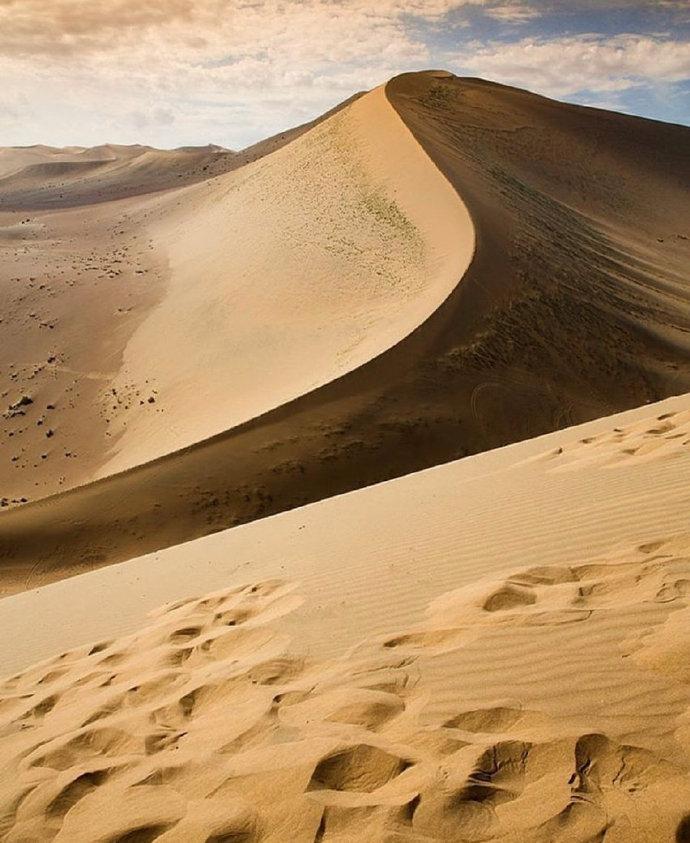
Drive forty-some kilometers southwest and you reach Lunnan, an oil town inside the county where the Tarim Desert Highway begins its 522-kilometer run to Minfeng. The road went up between 1993 and 1995 so that drilling rigs would stop taking week-long detours around the basin, and 446 kilometers of it cross shifting dunes, held in place by a shelterbelt fed by 108 water-well houses, each staffed by a couple who now pump with solar power. Lunnan is also where the first compressor station of the West-East Gas Pipeline sits: gas first flowed east on 1 September 2004, the line reaches Shanghai 4,200 kilometers away, and the station complex has run for more than 7,600 days, pushing over 380 billion cubic meters so far. You cannot tour the station, but the sense of a county that quietly feeds Shanghai its cooking gas is part of the place. For the drive itself, the fuel rules and the two-day plan, use my Tarim Desert Highway guide, which covers what this page deliberately skips.
Getting there: trains, a new airport, and the long road
The railway is the sleeper bargain. About a dozen trains a day call at Luntai on the southern Xinjiang line, and the slow-seat fare is 15.5 yuan to Kuqa in under an hour or 28.5 yuan to Korla in a hundred minutes, both cheaper than any bus and more reliable in a sandstorm. Book on 12306 as you would anywhere in China. By road, the G3012 expressway puts Kuqa about 110 kilometers west and Korla roughly 190 kilometers east. The real change is overhead: Bayingolin Luntai Airport received its certificate in June 2026 and opened on the twelfth, the twenty-ninth civil airport in Xinjiang, with China Express flying a C909 on a Kashgar, Luntai and Yining triangle for fares that started around 300 yuan. The terminal is small, 3,060 square meters, check-in closes half an hour before departure, and more routes, including a direct Urumqi service, are in the pipeline. Landing here rather than Korla saves half a day for anyone whose goal is the southern rim.
Picking the week: apricots, poplars, and the quiet months
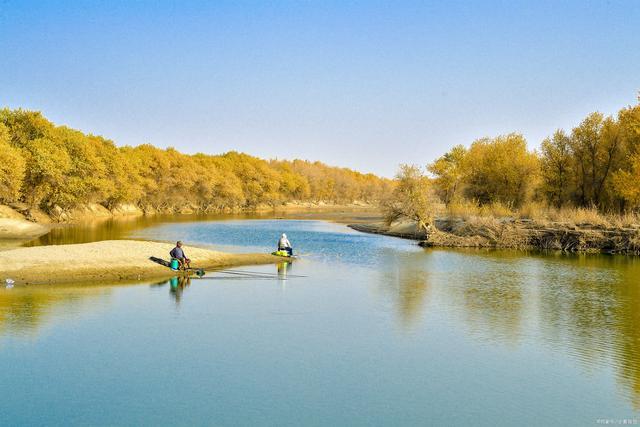
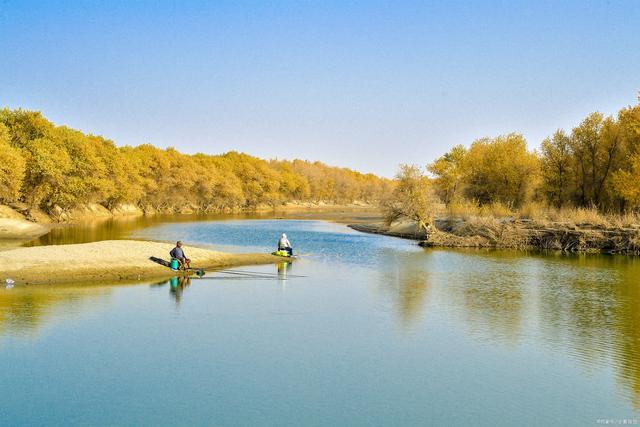
June belongs to the fruit. Luntai has grown apricots for some fourteen hundred years, its white apricot carries national geographical-indication status, and about 5,400 hectares of orchards now yield roughly twenty thousand tonnes a season. The fruit is called white honey on a tree by everyone who sells it, and having eaten nine in a row over a crate scale near Yangxia I am not going to argue. Picking starts in earnest in early June; the 2026 harvest festival opened on the sixth at Yangxia’s apricot plaza, and cold-chain couriers promise eastern tables the fruit within forty-eight hours. Mid-October is the second window, when the 43.6-square-mile riverine poplar reserve turns gold; that park has its own page, and if you are building an autumn route my poplar foliage calendar lines the weeks up. July and August are hot, dry and festival-free, which suits people who want the museum and the road to themselves. Winter is flat and cold, but the trains and the museum’s winter hours keep running.
Beds in an oil town
Accommodation is functional rather than charming, and honest expectations help. The main drag carries branches of the big Chinese budget chains, plus a layer of petroleum guesthouses that serve rotating crews, which means the rooms are plain, the water is hot and the front desk has seen stranger guests than you. June harvest weeks and October poplar weekends are the two times you should book ahead; I watched the better chain hotel fill by nine on a June Saturday while a wedding took the rest. Prices sit below Korla levels, around 180 to 280 yuan for rooms that would cost double in a scenic town. There is no hostel and no international brand, and if you arrive by car, most places have courtyard parking, which matters when the car is coated in dust from the highway shoulder.
Eating between the oil camps and the orchards
County-town cooking here leans on the standard Xinjiang repertoire done well. Laghman noodles pulled to order and dressed with pepper and lamb are the reliable lunch, pilaf shows up at midday and sells out, and from about nine the skewer smoke takes over the streets near the bazaar. Samsa out of the tandoor make the best road food for the drive south. In season the apricots invade everything, sold by the kilo off pickup tailgates, pressed into juice, dried on rooftops, and stacked in crates at the grading stations along the highway north of Lunnan. Buy a kilo, eat them that day, and buy a second kilo dried for the train; fresh white apricots do not travel, which is half their charm.

Small practicalities
Carry your passport; police checks on the G3012 and at the county edge are routine and quick. Cash still helps at orchard stalls and the smaller tandoor counters, though QR payment works nearly everywhere else. The Monday closure catches people every week, and the mini-program reservation needs a Chinese phone number; without one, go early and ask at the desk. Fuel up before turning off the expressway; the desert highway’s first reliable charging and petrol point is Lunnan. Sun protection is not optional this far south, and neither is a scarf for dust days. If a sandstorm rolls in, the trains still run and the airport usually stays open, but the highway can close; check before committing to the drive south.
A workable one-day loop
Take a morning train in from Kuqa or Korla, drop bags at the county seat, and be at the museum when it opens at ten. Lunch on laghman two blocks from the bazaar, then charter a car for the afternoon: out to Lunnan, a walk on the highway shoulder where the shelterbelt begins, and back through the poplar edge country as the light goes long. Eat skewers, catch the evening train onward. With two days, add the poplar park and the Han beacon towers on the second morning, then push to Kuqa for its old town and canyon country. That second-day pair is where my poplar forest guide and the survey of Han-dynasty beacon towers pick up the story this page leaves off, and Kuqa deserves its own overnight.
Questions travelers actually ask
Is Luntai worth a stop or just a fuel break? A stop. The museum alone justifies half a day, and in June the orchards turn it into a full one.
Can I see the desert highway without my own car? Not by public transport; charter a car from the county seat to Lunnan and the first section, which costs less than you would expect for an afternoon.
When exactly are the white apricots ready? The main picking season opens in the first week of June and the fresh fruit moves by early July; blossom comes in late March if you prefer orchard photography.
How do I reserve the museum? Through its WeChat mini program, or by calling ahead on 0996-8732060 if you lack a Chinese number; it is free either way.
How this page was checked
County figures come from prefecture and county government releases, the airport details from the regional civil aviation administration and its opening notice, the highway history from state news coverage, and the museum facts from its own public notices. Impressions are from visits in 2019, 2022 and June 2026. Prices and timetables move; treat every number as a snapshot from its stated date, not a quote.
About the author
Karl Huang has traveled in Xinjiang every year since 2016 and writes this site’s Xinjiang Cities series. He keeps a list of places whose reputation in poems outruns their postcards, and Luntai is the rare entry where the archaeology outruns both.