Published: November 8, 2026 | Author: Karl Huang
Most travellers planning Payzawat travel never make it the extra 70 kilometres east of Kashgar. They should. We spent three days there in late September, and the place sharpened a few ideas I had carried about southern Xinjiang: that the famous melons are a marketing story, and that the small counties off the main road have little to show. Payzawat (its Uyghur name is 排孜阿瓦提, Payzawat) corrected both assumptions. This guide is built from that trip plus the county records and news reporting I read afterwards, and it skips the fluff in favour of what you can actually see, eat, and time.
For Payzawat travel, the single fact worth holding onto is this: the town’s identity is tied to one fruit. The local melon, 伽师瓜 (Jiashi gua), has been grown here for at least 1,500 years, was sent as tribute to the Qing court in the 1750s, and is still the reason the name travels further than the place does.
Quick reference
| Item | Detail |
|---|---|
| Where | Kashgar Prefecture, western Tarim Basin, ~70 km northeast of Kashgar city |
| Famous for | 伽师瓜 (Jiashi melon), sour plums, and now China’s largest new-plum crop |
| Best window | July to September for fresh melons; October for autumn colours at Xike’er |
| Getting in | G314 highway, Southern Xinjiang Railway, or a hired car from Kashgar (~1 hour) |
| Base | Kashgar city for most; Payzawat town for early markets |
Why Payzawat Travel Begins Where Melons Like to Grow
The county lies on the alluvial plain south of the Tianshan, where the Kizil River spreads out before it loses itself in the Tarim system. That flat, well-watered ground, plus 3,000 hours of annual sunshine and a day-to-night temperature swing that can reach 16°C, is exactly what a sweet melon wants. The county government’s own profile (xjjsx.gov.cn) notes the sugar content of a ripe 伽师瓜 runs between 13% and 15%. We drove in past fields that looked bare in early morning light, then filled with traders by noon.
If you want the wider regional picture before you commit, our Kashgar travel guide lays out how Payzawat fits into a southern loop.
The Melon That Gave the Town Its Name
Here is the detail I did not expect. The Uyghur name 排孜阿瓦提 is said to come from a legend about an emperor who tasted a local melon, declared it “排孜! 排孜!” (very good!), then blessed the land as 阿瓦提 (prosperous). Whether or not the story is true, it shows how long the fruit has defined the place. County records trace cultivation to the Northern and Southern Dynasties, more than 1,500 years back, and the Qing-era tribute status is documented in the local gazetteer. The county government site (xjjsx.gov.cn) lists the melon as a “Western Regions treasure” and “the best melon under heaven.”
In 2001 the Ministry of Agriculture named Payzawat “China’s Jiashi Melon Home” (中国伽师瓜之乡), and in 2005 the melon received national geographical-indication protection. I am wary of superlatives, so I will say only what we tasted: a late-September 伽师瓜 was denser and less watery than the Hami melons I know from the east, with a nearly custard finish. If you want to compare the two side by side, our piece on Hami melon and Xinjiang watermelon explains the regional differences.
The town has also become China’s largest producer of 新梅 (new plum, a European plum variety), with local reporting putting roughly three of every five Chinese new plums on Payzawat’s trees. That shift is visible in the 新梅镇 (Xinmei Town) landmark and the processing parks on the edge of town, but the melon remains the symbol.
Walking the Rebuilt Streets of Payzawat
On the night of 19 January 2020, a magnitude 6.4 earthquake struck here, centred on Xike’er Kule town. Official and news reporting (People’s Daily app) says it damaged homes across ten townships and left more than 2,000 people without shelter. The hardest-hit settlement sat on an active fault and could not be rebuilt in place, so the community was relocated, with Guangdong-Foshan aid funding new housing within about 100 days.
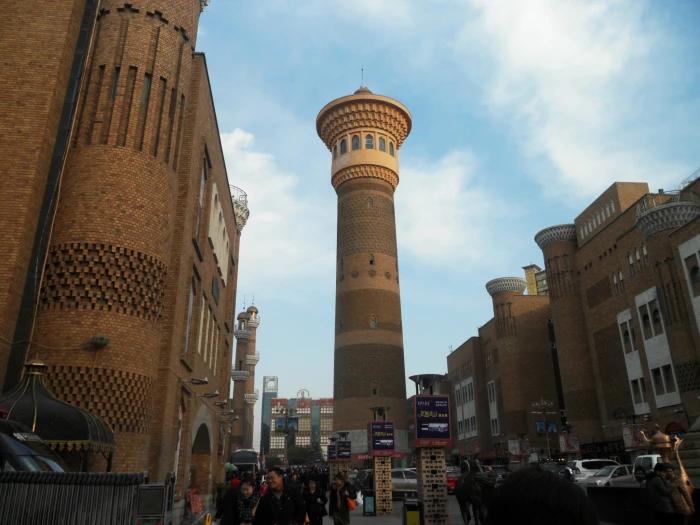
We walked the county seat in 2026 and found a clean, ordinary small-city grid, not a disaster zone. The reconstruction is the reason the streets feel newer than Kashgar’s old town. I mention this not for drama but because it shapes your visit: the town you see is recent, and the weekly market, not the architecture, is the real draw.
Xike’er: The Colorful Mountains and the Lake
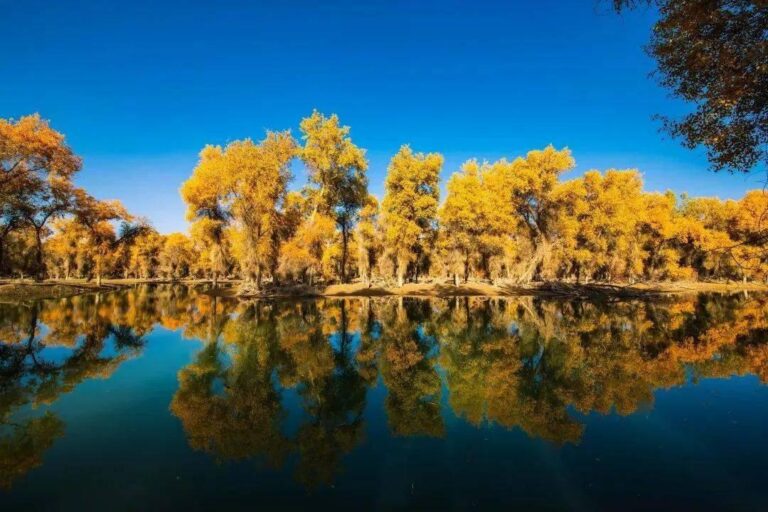
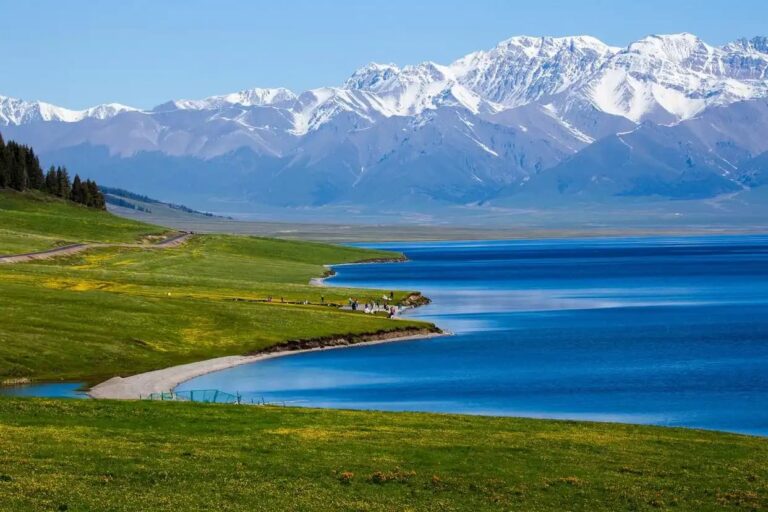
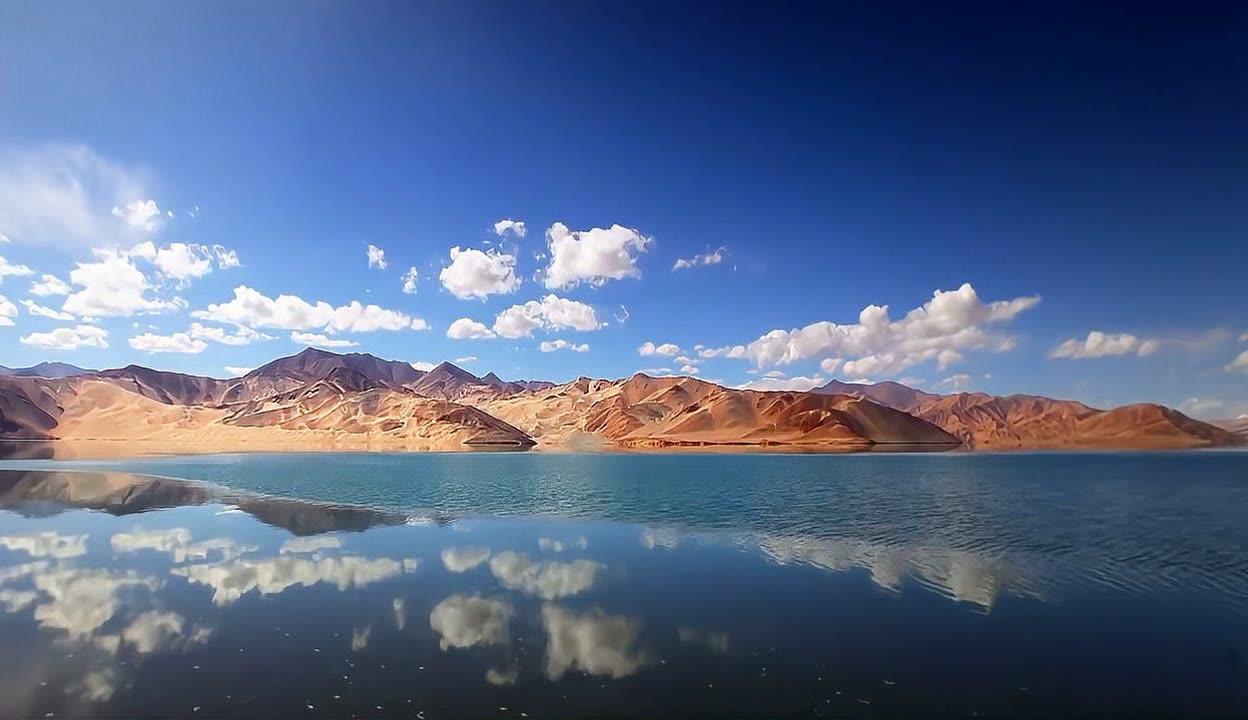
The one sight worth the detour is out at Xike’er town, about 35 km east of the county seat and right on the G314. A range of folded, mineral-stained hills called the 七彩山 (Colorful Mountains) rises beside a clear lake, 西克尔湖 (Xike’er Lake), that mirrors the strata. Locals call it “where the rainbow landed.” A nearby fault-line canyon, the 天门神秘大峡谷 (Tianmen Mysterious Grand Canyon), runs roughly 30 km and is geologically significant enough that travel writers describe it as a global geopark site.
We reached Xike’er on a clear morning and had the lakeshore almost to ourselves. The colours are strongest with low sun, so aim for dawn or late afternoon. Note that the canyon floods after rain; check locally before going in.
The Road from Kashgar to Payzawat
Most visitors come as a day trip from Kashgar, 70 km west on the G314. A hired car or driver takes about an hour each way; the Southern Xinjiang Railway also stops at Payzawat, and long-distance buses run from Kashgar’s station. If you are building a longer route, our month-by-month climate guide helps you pick a window when the roads and the fruit both cooperate.
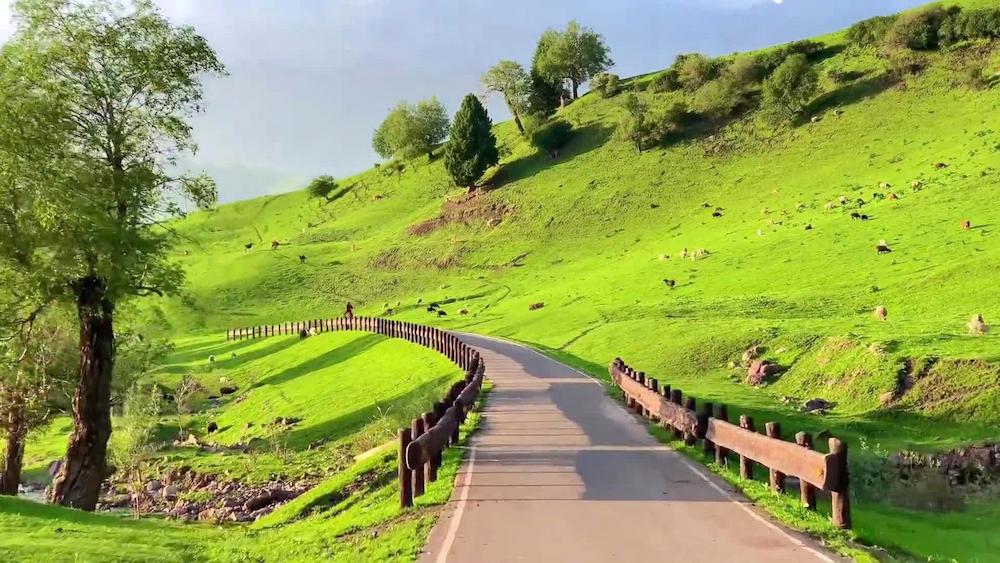
We came by car and treated the drive as part of the trip: the plain opens up, the Tianshan stays faintly visible to the north, and the melon stalls start about 10 km out of town.
When the Melons Are Actually Ripe
Timing matters more than most guides admit. Fresh 伽师瓜 is at its peak from July through September, with the sweetest fruit in late August and September. Miss that and you will find stored melons that are paler in flavour. The autumn colours at Xike’er peak in October, so a late-September visit lets you catch both the tail of the melon season and the start of the fall palette. For a full seasonal map of what is in season across the region, see our Xinjiang fruit calendar.
Where to Lay Your Head
Stay in Kashgar. The city has the range of hotels, the airport, and the old town dining that Payzawat’s smaller lodgings cannot match, and the 70 km is an easy morning run. If you want the pre-dawn market atmosphere, a night in Payzawat town is workable, but expect basic rooms. We based ourselves in Kashgar and left by 8 a.m., which got us to the melon wholesale market as it opened.
Eating Your Way Through a Melon Town
The obvious move is to buy a melon and eat it where you stand. At the bazaar, vendors will cut a sample so you can taste before you buy, and a whole 伽师瓜 costs little. Beyond the fruit, Payzawat eats like the rest of the south: 烤包子 (grilled buns), 拌面 (belt noodles), 手抓饭 (pilaf), and the local 西克尔大盘鱼 (a shared fish plate from Xike’er Lake). We ate pilaf at a corner spot near the market and finished with slices of melon the vendor insisted was from his own field. I could not confirm the claim, but it was the best I had on the trip.
Notes for a Calm Visit
A few practical points from the trip. Carry cash for the bazaar; card readers are patchy at stall level. The market is busiest Sunday and Monday mornings. Signage is mostly in Chinese and Uyghur, so a translation app helps. Foreign visitors should keep their passport and, if driving the southern loop, the relevant permits handled by a local operator. The Kizil Grottoes, a few hours north, make a strong add-on if you are interested in the Buddhist heritage that once reached this part of Shule.
A Half-Day Loop Out of Kashgar
This is the route we actually drove. Leave Kashgar at 8 a.m. and reach Payzawat’s morning melon market by 9. Spend an hour tasting and buying. Drive east to Xike’er (about 35 km) for the Colorful Mountains and the lake, allowing two hours with photos. Eat pilaf in town, then return to Kashgar by mid-afternoon, with time left for the Kashgar old town in the evening. It is a relaxed day, not a packed one, and that is the point.
Questions People Ask Before They Go
Is Payzawat worth visiting on its own? As a standalone destination, probably not for most. As a half-day add-on to Kashgar, especially in melon season, it is a genuine pleasure and far less crowded than the headline sites.
Can I see the colorful mountains without a car? The G314 passes Xike’er, but public options are thin once you leave Kashgar. A hired car or driver is the realistic way, and operators are easy to arrange through Kashgar hotels.
Are the melons safe to eat raw? Yes. Wash the rind, and have the vendor cut it with a clean knife, which they do routinely at the market.
What about the earthquake damage? The county seat is rebuilt and safe. The old Xike’er settlement was relocated; the scenic area itself was not the damaged zone.
A Straight Word on What Payzawat Is and Isn’t
To be clear about limits: Payzawat is not a heritage town with a walled old quarter like Kashgar, and it is not a mountain resort. Its appeal is specific, the melon, the weekly market, and the Xike’er geology, and those are best enjoyed as a day out rather than a multi-day stay. I have described the 2005 geographical-indication status and the 2020 quake from published county and news sources, but opening hours, train times, and market days change, so confirm the current details with your hotel or the county tourism line before you go. This article is a travel account, not an official notice.
About the Writer
Karl Huang is a Xinjiang-based travel writer who has driven most of the region’s southern counties over the past decade. He prefers small-town markets to headline attractions and writes from first-hand visits supplemented by official and news sources. He has no commercial relationship with any Payzawat business mentioned here.