Published: July 21, 2026 | Author: Liam Foster
Why you can trust this Hami travel guide
Most people roll through Hami on a train and never get off, because it sits on the main line between Urumqi and the Gansu corridor and looks, from the window, like more Gobi. That is a mistake, and I say so as someone who has now made the trip twice. My first visit was a sticky August in 2022, when I came specifically to eat the Hami melon at its source. I went back in October 2024 to walk the wind-carved desert east of the city and to see the basin under cooler light. Both times I traveled with Abliz, a Hami driver whose family has farmed melons outside town for three generations. Everything below comes from those two trips, plus the small details he made me write down so I would stop getting lost.
If you are piecing together a Hami travel guide of your own, the short version is this: Hami is the eastern gate of Xinjiang, where the Tian Shan mountains run out into the desert. It is famous above all for one thing, the sweet muskmelon the whole world now calls a “Hami melon,” but an old Islamic kings’ mausoleum, a Bronze Age museum, and a devil city an hour out of town make it worth at least two full days.
Hami at a glance
| Best for | Melon tasting, Gobi desert scenery, Silk Road history |
|---|---|
| Region | Eastern Xinjiang, bordering Gansu province |
| Get there | High-speed rail from Urumqi (about 3 hrs) or Hami Airport (HMI) |
| Peak season | Late July to early September (melon harvest) |
| Entry to main sights | Melon Garden free; Wang Mausoleum about 35 yuan; Wubao Devil City about 40 yuan |
| Plan for | 2 full days as a stop between Urumqi and the Gansu corridor |
What it is actually like
The thing nobody tells you about Hami melon is how different the varieties are. At the Melon Garden (哈密瓜园), a short drive south of the center, Abliz pulled over and we walked rows of vines heavy with fruit. The staff cut open six types for us to taste: some crisp and pale green inside, others soft and orange, one almost floral. I bought a whole melon for eight yuan and ate half of it standing in the shade because it was 38°C and the thing was cold from the soil. That sugar is not luck. Hami sits in a rain-shadow basin where days hit 35°C and nights drop to around 15°C, and the swing concentrates the sweetness in the fruit. The melon was a tribute sent to the Qing court, which is a big part of why the name “Hami” stuck to it worldwide. Locals still talk about the old Hami Melon Festival in late July, when the fields are cut and the city sets out tasting tents.
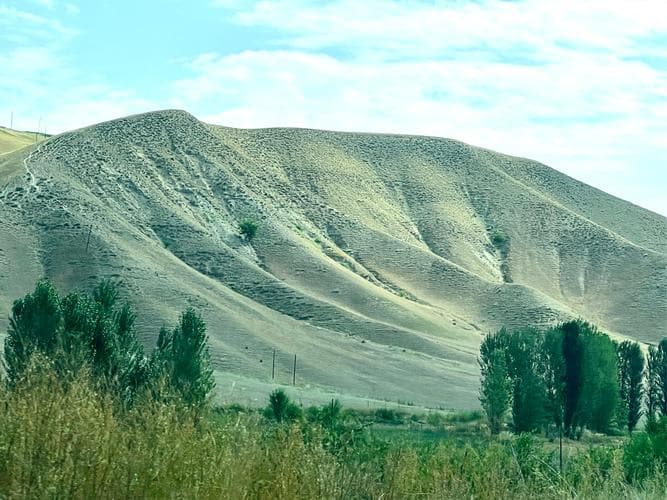
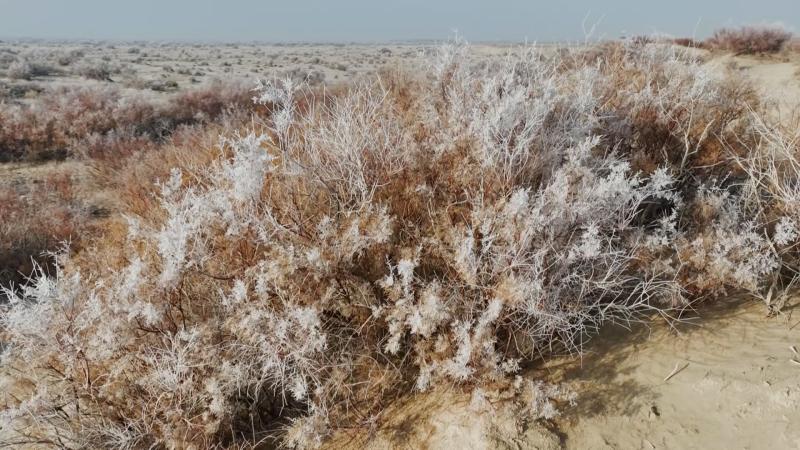
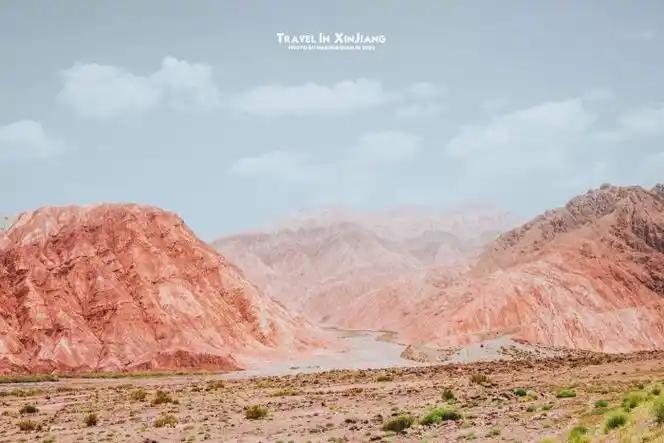
On the October trip the heat was gone and the light was better for photography. We drove about 90 kilometers east to the Wubao Devil City (五堡魔鬼城), a spread of red-brown yardang ridges worn into strange shapes by wind that has nowhere else to go. There is no shade and almost no one else, just a dirt loop road and formations you can climb. Abliz warned me the wind builds after noon, and he was right; by 2 p.m. the sand was in my teeth. Go early, carry water, and do not wander far from the road. It is the same kind of landscape as the famous Ghost City near Karamay, only quieter and closer to the railway.
The mausoleum and the museum
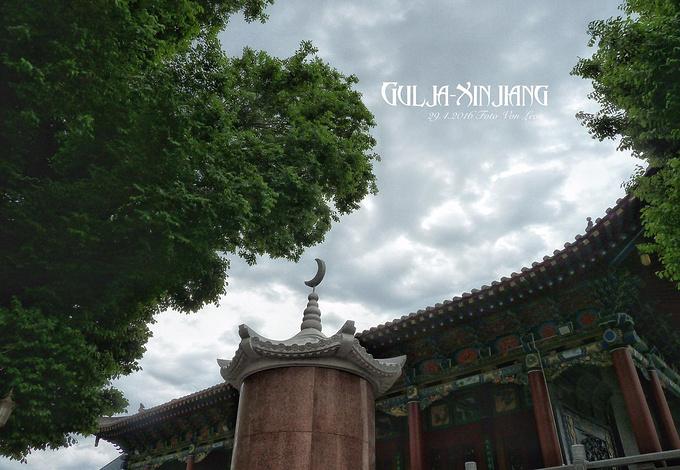
In the city itself, the Hami Wang Mausoleum (哈密回王墓) is the one sight you should not skip. It is the tomb complex of the Hami kings, local rulers who held the area under the Qing and built in a style that mixes Islamic domes with Chinese rooflines. The main hall carries a wooden dome said to be the largest of its kind in Xinjiang, and the tiled minarets catch the low sun in a way that photographs well even on a phone. Entry was 35 yuan when I went, and the grounds are calm compared with the big mosques further west. Next door, the Hami Museum is small but ties the region together: it covers the Bronze Age people who lived in these oases long before the Silk Road, and the trade that later ran through them. Note that the well-known “Hami Beauty” mummy found near here is kept in Urumqi, not Hami. Our Urumqi museum guide explains how to see it on a separate trip.
How to get to Hami
Hami is one of the easiest places in Xinjiang to reach from the east. The Lanzhou–Urumqi high-speed line stops here, so you can take a bullet train from Urumqi in roughly three hours (second class runs about 160 yuan) or come all the way from Lanzhou in a long but comfortable day. If you are building a wider route, our Xinjiang high-speed rail guide maps the full network and shows exactly where the Hami stop fits.
Hami also has a small airport (code HMI) with flights from Urumqi and a few central Chinese cities, and the G30 expressway runs straight through if you are self-driving. The city center is flat and easy to walk, but the good sights sit outside it, so you will want a car or a driver for at least one day. Hami was a key post on the northern Silk Road, and the Silk Road history guide gives the wider context for why this dusty crossroads mattered.
Best time to visit
For melon, come in late July through August. That is when the fields are cut and the roadside stalls pile fruit waist-high. Prices bottom out and quality peaks. If you would rather avoid 40°C heat and want the desert and mausoleum without sweating through your shirt, October is better: cool, clear, and kind to the yardang formations. Spring brings apricot blossoms in the surrounding oasis towns. Deep winter is harsh and most fruit is gone, though the Gobi under snow has a quiet of its own. The Hami wind farm on the edge of the basin turns all year, and on a clear night the dark sky makes genuine stargazing possible if you camp out past the devil city.
Where to stay
Sleep in Hami city. There is a cluster of mid-range chain hotels near the train station and the main boulevard, and a few older state-run places closer to the old town that cost less and feel more local. I stayed both times near the center so I could walk to the night market for dinner. Nothing in Hami is far; from a city hotel you are 20 minutes from the Wang Mausoleum and under two hours from the devil city by car. Book ahead in August, when domestic travelers fill rooms during the melon peak.
What to eat
Start and end with the melon. In season a whole one costs a few yuan and the hotels and stations will cut and wrap it for you. Beyond that, Hami eats like the rest of southern Xinjiang: hand-pulled laghman noodles, grilled mutton skewers, and flat naan from the corner ovens. The lamb here is grass-fed and mild, and a plate of it with onions and a wedge of melon after is a better meal than any restaurant will sell you. At the night market I paid 18 yuan for a bowl of laghman and watched the cook pull the noodles by hand against the counter. Dried melon slices and roasted melon seeds make easy souvenirs that survive the trip home. For the wider picture on food and etiquette across the region, the 20 things to know before you go covers the basics that apply here too.
Practical tips
Hami is windy. The city sits beside one of China’s largest wind farms, and a gust can flatten a cheap umbrella, so pack a proper jacket even in summer. The sun is strong and the air is dry; carry water and sunscreen, especially out at the devil city where there is none. Small melon stalls often take cash only, so keep some bills. The melon garden and mausoleum are easy by taxi; the Wubao Devil City needs a driver because there is no public transport and the last stretch is rough. If you want the yardang landscape explained and timed for light, our Ghost City guide is the same geology, closer to Karamay, and the notes carry over.
Sample 2-day itinerary
Day 1: Arrive on a morning HSR train. Drop bags at the hotel, then taxi to the Melon Garden for tasting and a late breakfast of melon. Lunch on laghman near the night market. Spend the afternoon at the Hami Wang Mausoleum and the Hami Museum. Dinner at the night market, then an early night.
Day 2: Leave by 8 a.m. with a driver for the Wubao Devil City, 90 km east. Walk the yardang loop in the cool morning, then drive back via the eastern Tian Shan foothills. Afternoon free for the bazaar and dried-fruit shopping before your train out. If you have a third day, the Barkol grassland and lake lie north of the city and are worth it in summer.
Frequently asked questions
Is Hami worth visiting, or should I just pass through?
Worth a two-day stop if you like desert scenery and fruit, or if you are driving the Silk Road corridor east toward Gansu. If your time only covers the headline parks like Kanas, skip it.
Can I see the Hami Beauty mummy in Hami?
No. The well-known Bronze Age mummy found near Hami is housed in the Xinjiang Museum in Urumqi. The Hami Museum covers the same era with smaller finds.
Is the Wubao Devil City the same as the famous Ghost City?
It is the same kind of wind-carved yardang landscape, just the Hami version, and far less crowded.
Do I need a permit for Hami?
No. Hami city and its open attractions are normal tourist areas. Only the restricted border zones elsewhere in Xinjiang require permits.
Photography notes
The Gobi and the yardang ridges are the draw. Morning and the last hour before sunset give the best color on the red rock, and the dark, dry sky makes Hami real stargazing territory if you stay out past the devil city. Our Xinjiang photography guide has timing and gear advice that applies directly here.
Disclaimer
This article is based on personal visits in 2022 and 2024 and is meant as a planning aid, not a live timetable. Train times, ticket prices, opening hours, and even which melon varieties are in season change from year to year. Confirm details with the attraction or your hotel before you travel, and check current entry rules with official sources. I was not paid by any hotel, stall, or operator mentioned here.
About the author
Liam Foster is a travel writer who has spent eight seasons moving around Xinjiang by train, bus, and the occasional borrowed pickup. He writes practical, first-hand guides for independent travelers and prefers a roadside melon stall to a hotel buffet. He last visited Hami in October 2024.