Published: July 22, 2026 | Author: Sophie Bennett
For anyone planning a Xinjiang first time trip, the hardest part is not the distance. It is the sheer mismatch between what you imagined and what actually shows up when you step off the plane in Urumqi. China’s northwest is roughly the size of Western Europe, yet most first-time visitors arrive with a single mental image: desert, maybe some mountains. What you really get is a place where a 90-minute drive can take you from a high-rise city of four million people to a pasture where a Kazakh family still moves sheep by horse. This guide is built from our own trips through both the north and south, and it tells you what to expect before you go so the surprises stay pleasant.
I am not a tour company and I do not sell packages. I am a travel writer who has made five separate trips to the region between 2019 and 2025, twice with a local guide and three times solo with a rental car. Everything below comes from things that either worked or bit me on those trips. Where I cite an official rule, I name the source.
Quick Reference: Xinjiang First Time at a Glance
| Planning item | What you need to know |
|---|---|
| Main gateway | Urumqi Diwopu International Airport (URC). Direct flights from Beijing, Shanghai, Xi’an, Chengdu and Guangzhou. |
| Visa | A standard China tourist (L) visa. No special Xinjiang visa, but some border zones need a separate permit. |
| Best window | North: May to October. South (Kashgar, Hotan): April to October, with September and October the calmest. |
| Money | Chinese yuan (RMB). Alipay and WeChat Pay cover almost everything in cities; carry some cash for remote bazaars. |
| Language | Mandarin is official. Uyghur, Kazakh and Kyrgyz are common locally. A translation app helps more than phrase books. |
| Distances | Urumqi to Kashgar is about 1,470 km. Flying saves days; the train is comfortable but slow. |
| Permits | Pamir Plateau (Tashkurgan) and parts of the Karakoram Highway need a border permit, arranged in Kashgar. |
What Our First Trip Actually Looked Like
When we landed in Urumqi on a Tuesday in late May 2019, I expected a frontier town. Instead the airport expressway ran past apartment blocks that would not look out of place in any Chinese provincial capital. That gap between expectation and reality defined the whole trip. The food was the first pleasant shock: within two hours of checking in we were at a corner chuanr stall where the owner pressed a cold Wusu beer into my hand before I had ordered. The second shock was scale. We drove out to Tianchi Lake the next morning and the “short trip” the desk clerk promised turned into a full day once the cable-car lines and the walk around the lake were done.
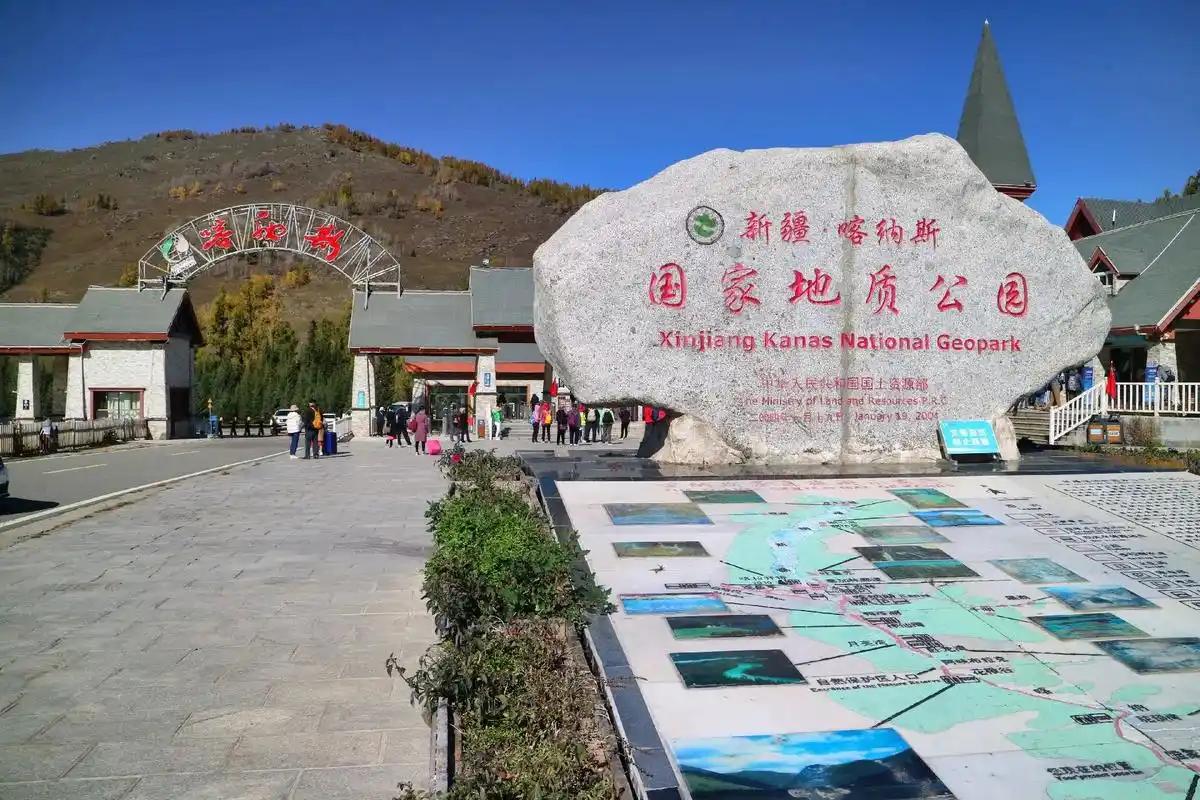
The single most useful thing I learned on that first visit was to stop measuring Xinjiang in days and start measuring it in regions. North Xinjiang (the Ili valleys, Kanas, Sayram Lake) is green, cool and lake-heavy. South Xinjiang (Kashgar, the Taklamakan edge, Kuqa) is oasis, desert and old Silk Road architecture. Trying to see both in under a week leaves you on highways more than at sights. If this is your first time in Xinjiang and you only have a week, pick one half.
Getting Around
Flying is the honest choice for long hops. Urumqi connects to Kashgar, Hotan, Yining, Aksu and Altay several times a day, and a one-way Urumqi–Kashgar flight is around two hours against roughly 16 hours of driving. For shorter regional moves, the high-speed rail is genuinely good: the line from Urumqi through Turpan to Korla is smooth, punctual and cheap, and it spares you the long desert stretches. Our high-speed rail guide lays out the current routes and booking steps.
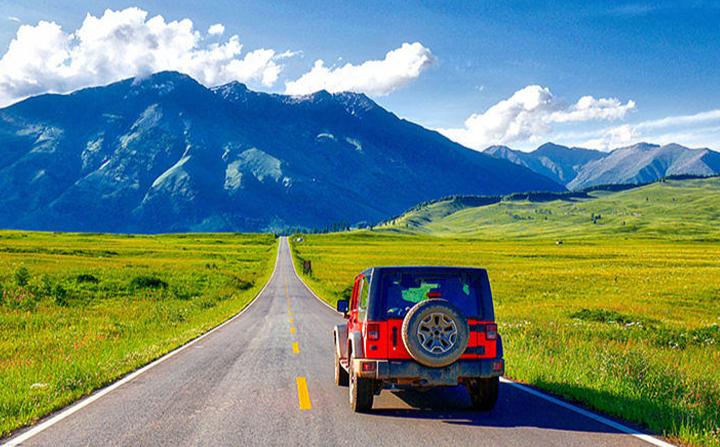
If you want the famous scenery, you will end up driving. The Duku Highway, which cuts 561 km from Dushanzi to Kuqa across the Tianshan, was closed on our 2019 trip because of snow and only opened in early June. On our 2023 run we drove it southbound and hit a wall of plowed snow at the pass even in late May. Check the open season (usually early June to late September) before you build a plan around it. Rental cars are easy to get in Urumqi with an international driving permit plus a notarized Chinese translation, but many first-timers are happier with a driver for the long mountain days.
Best Time to Go
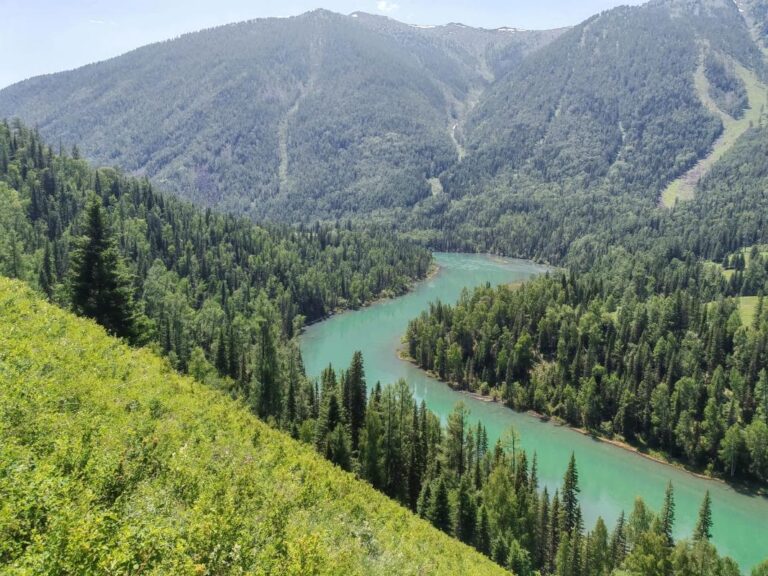
The region is huge, so “best time” depends on where you point the car. For the north, June through September gives you green grasslands and open alpine roads; late September to mid-October is the famous Kanas autumn, when the larch turns gold and the photo crowds arrive with it. For the south, spring (April to May) and autumn (September to October) beat the summer heat, when Kashgar can sit above 35°C and the sand gets unpleasant by midday.
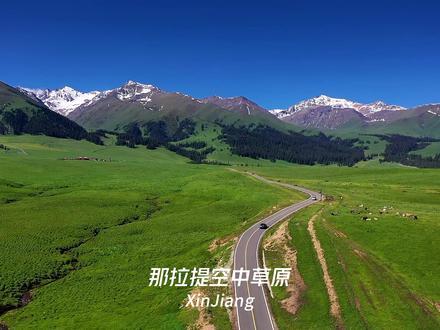
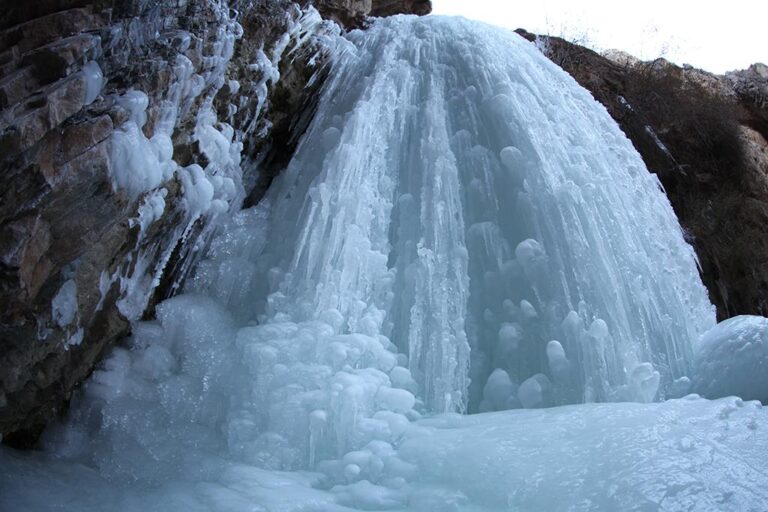
One thing guidebooks understate: winter is not off-limits, it is just different. We spent ten days in January 2025 around Altay for the snow and the ice lantern festivals, and outside the ski towns it was quiet and very cheap. Pack for real cold if you go then.
Where to Stay
In Urumqi, Kashgar, Yining and Turpan you will find the full range, from international chain hotels near the airport to clean mid-range places in the old town. In Kashgar, staying inside or next to the old town (the area around Id Kah Mosque) changes the whole feel of the trip, because the best walking happens at dawn before the tour buses roll in. Out in the grasslands and at Kanas, accommodation ranges from proper lodges to yurts run by herding families. A yurt night near Nalati is a real experience, butmanage your expectations on the bathroom. Our travel tips roundup covers the booking quirks that catch first-timers, including the fact that Kanas village lodging sells out months ahead in October.
What to Eat
You will not go hungry, and you will not eat only kebabs. The everyday diet is built on polo (pilaf with carrot and lamb), laghman (hand-pulled noodles), samsa from the bakery ovens, and flatbread called naan that you buy still warm from street ovens. Morning starts with milk tea in the north and brick tea in the south. Most places are halal, so pork is rare and you should not ask for it near a mosque.
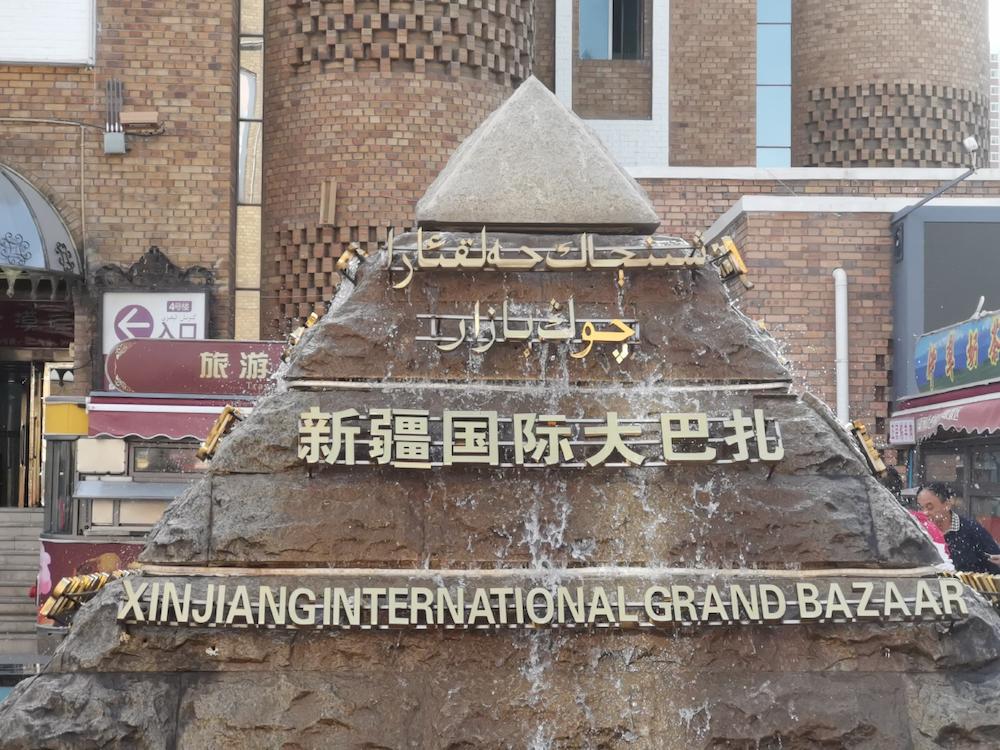
The fastest way to understand a town is its market. Our food markets guide lists the ones where locals actually shop rather than the staged tourist rows. In Urumqi the International Bazaar is worth one walk for the atmosphere, but the everyday eating happens in the side streets behind it.
Practical Tips That Save the Trip
- Payments: Set up Alipay or WeChat Pay before you fly. In 2025 both accept foreign cards through a tourist version, and you will struggle without one in city restaurants.
- Connectivity: A local SIM (China Mobile or Unicom) is easy to buy at the airport with your passport. Download offline maps, because signal drops on mountain roads.
- Permits: If the Pamir or the Khunjerab crossing is on your list, sort the border permit in Kashgar first. It is not available at the gate.
- Safety: The region is heavily policed and generally safe for visitors. Our safety guide explains the checkpoints and ID scans you will meet so they do not surprise you.
- Packing: Bring layers even in summer. Our season-by-season packing list is built for the temperature swings that catch most newcomers.
A Simple 7-Day North Loop for First-Timers
If this is your first visit and you want the postcard scenery without a marathon drive, the north loop is the safer bet:
- Day 1: Arrive Urumqi, ease in with the bazaar and the regional museum.
- Day 2: Tianchi Lake day trip, back to Urumqi.
- Day 3: Fly or train to Yining, then on to Sayram Lake for the late light.
- Day 4: Drive the Guozi Valley to Nalati grassland, overnight in the valley.
- Day 5: Nalati to Kanas via the Duku Highway if open, else the longer northern route.
- Day 6: Full day around Kanas Lake and Hemu village.
- Day 7: Fly back from Altay or Burqin to Urumqi and depart.
For a tighter version or a south-leaning plan, our 7-day itinerary has the timings worked out to the hour.
FAQ
Do I need a special visa just for Xinjiang?
No. A standard China tourist visa covers the region. Only specific border zones (Pamir, Karakoram Highway) need an extra local permit.
Is English spoken?
Barely outside hotels and bigger tour offices. Translation apps work well for menus and signs. Learning “hello” (yakhshi mu) and “thank you” (rahmet) in Uyghur opens more doors than you would expect.
Can I travel independently or do I need a guide?
You can travel independently. A guide earns their cost mainly in the south, where permit runs, language and route planning eat a solo traveler’s time.
How much should I budget?
A mid-range independent trip runs roughly 600 to 900 RMB per person per day including lodging, food and internal transport, not counting international flights. Remote areas and peak autumn at Kanas run higher.
Will I have trouble with the altitude?
Most visited spots sit below 2,000 m, so altitude is rarely an issue. The Pamir Plateau above Tashkurgan reaches 3,000 m plus, where some people feel the thin air for a day or two.
Disclaimer
This article reflects the author’s personal travel experience and was accurate to the best of our knowledge as of July 2026. Visa rules, permit requirements, road opening dates and prices change. Always confirm current conditions with the Xinjiang Uyghur Autonomous Region tourism authorities, the Chinese embassy in your country, and your carrier before you book. We are not responsible for changes to regulations or for any costs arising from relying on this guide.
About the Author
Sophie Bennett is a travel writer focused on overland and rail travel across Asia. She has made five independent trips through Xinjiang between 2019 and 2025, covering both the northern lake country and the southern Silk Road, and has driven the Duku Highway, ridden the Urumqi–Korla high-speed line, and slept in yurts above Nalati. Her work centers on practical, first-hand reporting rather than brochure copy, and she updates her Xinjiang notes each season from reader feedback and her own returns.