Published: August 22, 2026 | Author: Karl Huang, Xinjiang Attractions
The first time I collected a campervan in Urumqi, I spent forty minutes in the depot yard learning which valve was the grey water valve, and the following nine days learning that the valve was the easy part. A Xinjiang campervan rental is not the same product you book in New Zealand or Utah. Driving days are longer, the campground network is thin and unevenly maintained, and several headline scenic areas will not let a six-metre vehicle through the gate. What follows comes from three RV trips between 2023 and this summer: a nine-day northern loop, a shorter Ili valley run, and one April attempt I abandoned after two nights. I also re-checked gate policies with scenic-area service numbers before publishing, because those rules change more often than guidebooks admit.
Quick reference: Xinjiang campervan rental at a glance
| C-class rental (4–6 berth) | ¥800–1,580/day low and shoulder season; ¥1,200–1,800 in July–August |
| B-class rental (2–4 berth) | ¥600–1,200/day, easier to park, no separate shower in most units |
| Security deposit | ¥10,000 is standard; some local operators ask ¥20,000–30,000 |
| Licence needed | Chinese C1/C2 covers self-propelled RVs up to 6m and 6 seats. Foreign visitors need a temporary Chinese licence; an IDP is not valid in mainland China |
| Campground pitch | ¥120–300/night with water and power hookup; around ¥80/vehicle at Duku-area sites |
| Fuel and tolls | About ¥8.5/litre; expressway ¥0.35–0.48/km; national roads and the Duku Highway are toll-free |
| One-way drop-off | ¥2,000–4,000, or free inside some operators’ Urumqi–Yining–Kashgar–Aksu–Korla networks |
| Size limits that matter | Sayram Lake: under 7m. Nalati: integrated RVs ≤7m, trailers refused. Kanas core: no private vehicles at all |
| Best window | Mid-June to mid-September; Sayram Lake camping only opens mid-June to mid-August |
| Sensible minimum | 8–10 days for a northern loop. Book 1–2 months ahead for July and August |
What the rental market actually looks like
Urumqi is the hub. The larger local fleets keep several hundred units on the yard, mostly SAIC Maxus and Iveco C-class conversions two years old or newer, plus a few B-class vans for couples. Several operators now run branch counters in Yining, Kashgar, Korla and Aksu, and some waive the one-way fee inside their own network, which changes route planning completely: you can drive Urumqi to Yining and fly out from there instead of backtracking 550 km.
Two questions decide whether a quote is honest. Does the daily rate include vehicle damage cover and third-party liability, or is insurance billed at roughly ¥200/day on top? And is there a mileage cap? A northern loop runs 2,500–3,500 km, so a 200 km/day cap turns a cheap headline rate into an expensive one. I now ask for the excess-mileage figure in writing before paying anything. My 2026 contract also carried a ¥200 cleaning fee and a separate traffic-violation hold, released about a month after return.
If this is your first drive in the region, read our guide to renting a car in Xinjiang first. Most of the counter logistics are identical, and a normal SUV is the better call for anyone nervous about a 5.9-metre wheelbase on mountain switchbacks.
Paperwork, and the part foreign visitors get wrong
An International Driving Permit does not work in mainland China. Visitors need a temporary Chinese driving licence, which is an administrative process rather than an exam: passport, valid visa covering the rental period, home licence with certified translation, a short briefing, a small fee. Agencies that specialise in foreign RV clients want documents 7–10 days ahead and handle it as a package with insurance and temporary registration. Leave that lead time. I watched a Dutch couple in the Urumqi depot in July 2026 learn this at the counter; they hired a driver at ¥400–500/day instead, which was not the trip they had booked.
Budget for a credit card with headroom too. Deposits are usually pre-authorised rather than charged, but ¥10,000 to ¥20,000 sitting on a card for a month is real.
What our nine days actually felt like
We left Urumqi late on a Saturday in early July with the fridge half stocked and no plan beyond Sayram Lake. Day one taught the lesson that shapes every RV trip here: three hours of driving in an RV feels like five in a car. Wind on the G30 near Kuitun pushed the box body around and I settled at about 85 km/h. We switched to 300 km days instead of 500, and the trip improved at once.
The night I keep going back to was the second, parked at the Dianjiangtai pitch on the Sayram shore, facing east because a Chengdu driver two spaces over told me to. At 6:20 the lake went from grey to hard deep blue in about ten minutes, and I made coffee in a fleece with the door open. That is the real argument for a campervan here: not hotel savings, which are marginal, but being parked where you want at first light without a 5 a.m. drive.
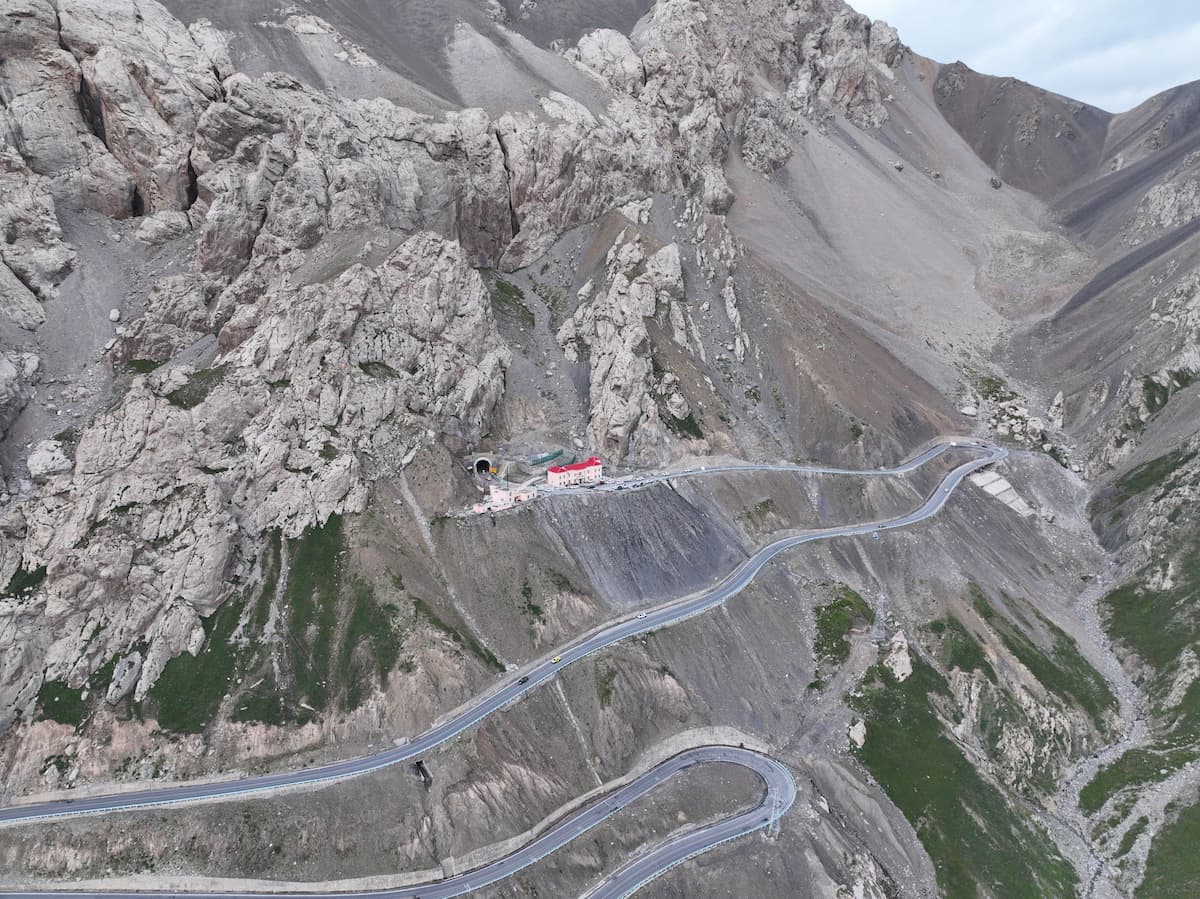
The hardest driving day was the middle section of the Duku Highway. All 561 km of it are toll-free and open to RVs under seven metres, and there are pull-offs roughly every 50 km, but overnight parking in those pull-offs is not allowed. We dumped and refilled at the Bayanbulak town RV site for about ¥80 and slept there instead of trying our luck at 3,000 metres. Two of us had headaches above Hashilegen anyway. Since 2026 the Duku also runs an electronic reservation system with bookings opened a few days ahead, so check it before you commit to a date.
Where an RV can go, and where it cannot
This is the section I wish someone had written for me. Gate policies vary by scenic area and they are not intuitive.
Sayram Lake is the friendliest of the big ones. RVs under seven metres can buy the self-drive lake circuit, roughly 90 km of shore road, at ¥145 per person including admission and valid 48 hours. Stop in marked car parks, not on the grass. Designated camping runs mid-June to mid-August only, pitches booked through the official Sayram Lake WeChat channel, tents around ¥50, no open flame anywhere in the reserve. Outside that window tents get cleared, and RVs on legal pitches are treated more leniently, though I would not assume it.
Nalati accepts integrated RVs up to seven metres, refuses trailers, caps entry near 300 vehicles a day, and charges ¥300 per vehicle plus ¥95 per person, reserved seven days out on the official Nalati mini-program. Kanas is a flat no: private cars, RVs and bicycles are barred from the core area in the May to October season, so you park at the Jiadengyu transfer centre, which has power posts and little else, and ride the shuttle about forty minutes each way. Narrow forest valleys such as Kurdening, Qiaxi and Tangbula turn RVs away at the entrance because passing oncoming traffic is impossible.
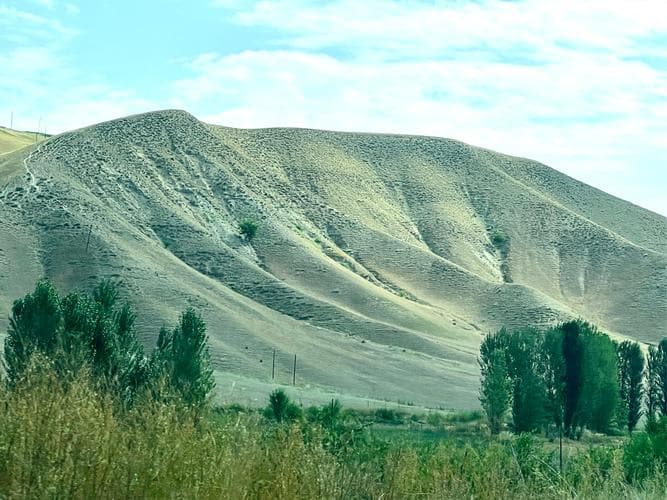
My working rule: phone the scenic area’s service line and ask specifics. Is there a car park that takes a six-metre vehicle? Is overnight parking allowed? Any water or power connections? Asking “can I bring an RV” gets you a shrug.
Water, power and waste: the daily routine
Large C-class units carry roughly 200 litres of fresh water and 80 litres of grey, which means two days of normal use for four people, or one day if anyone insists on real showers. We learned to do all three jobs, fill, charge, dump, in towns rather than at attractions. Yining, Korla and Urumqi were straightforward, and most PetroChina and Sinopec stations along the Ili valley let us top up water free, a couple asking for a small purchase first. A 20-litre collapsible container and a long extension lead did more for our comfort than any onboard gadget.
Signal drops out on the Duku mountain section and in the Kanas hills, so download offline maps in the city. Fuel procedures here are stricter than elsewhere in China, with ID registration and limits on filling containers; our piece on Xinjiang fuel station rules covers the pump.
Best time to go
Mid-June to mid-September is the honest window. July and August bring full campgrounds, peak pricing and the only legal shoreline camping at Sayram. Early September is my preference: pitches free up, the light improves, and grassland nights are cold rather than freezing. May and late September work if you accept that high passes may be closed or snowed on.
April was my failed trip. Mountain campsites had not opened, water points were shut off, and I spent two nights in county car parks before returning the van early. Winter RV travel here is specialist work, limited to the Kashgar and Tashkurgan side with antifreeze tanks and chains, and not a first-visit project.
Where we slept, and what it cost
Pitches ran ¥120 to ¥300 a night with hookups and shared washrooms: Hongguangshan and Toutunhe on the Urumqi fringe around ¥120–150, the Ili River site near Yining about ¥120, Nalati ¥180, Bayanbulak town ¥80–150. In peak weeks the Sayram pitches sell out days ahead and prices climb, so I book three to five days out through the official channel and keep the East Gate car park as a fallback.

Wild camping is a grey area, not a free-for-all. Fenced pasture belongs to a herding family, and parking on it unasked is simply rude. Around Zhaosu there are informal spots where nobody minds. Our camping guide for Xinjiang goes into the etiquette and safety side in more detail. If you want a night off the van, a yurt stay is a reasonable break, and a real bed after five nights on RV cushions is welcome.
Food: stock the fridge in the city
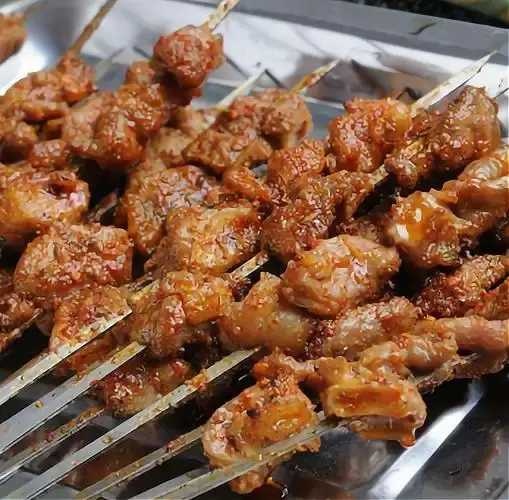
Scenic-area shops charge what they like. We loaded up at wholesale markets in Urumqi and Yining: bottled water by the case, nan bread that keeps for weeks and revives in mutton soup, tubs of Tianrun yoghurt, chilli flakes, fruit, and lamb cut small by the butcher for stewing. Remember the no-open-flame rule inside reserves, so cook before you enter or after you leave. We still ate out most evenings anyway. Roadside nan-pit lamb ribs in Urumqi’s Lingguan Lane, about ¥30 a head with the van parked at the kerb, was the best value meal of the trip.
Practical tips I would give a friend
- Cap driving at three to four hours a day. The body catches crosswind and fatigue arrives sooner than in a car.
- Check the height sticker on your door frame. The Duku’s general limit is 3.5 m with tunnel portals near 3.2 m, so a 2.8 m van is fine, but a roof box changes the maths.
- Reverse with a spotter outside. Every scrape I have seen on a rental happened in a car park.
- Carry cash. Some remote stations and small campgrounds still prefer it.
- Mountain day-night swing runs about 15°C. Pack a light down jacket even in July, and if you run a diesel parking heater, keep a vent cracked and treat carbon monoxide as a real risk.
- Add 20 percent to any car-based time estimate. Our driving distances and road conditions guide has the base numbers.
A nine-day loop that worked
Day 1: collect the van in Urumqi, shop, sleep at a city-fringe site. Day 2: Sayram Lake, roughly 550 km, park facing east. Day 3: lake circuit, then down through Guozigou to Yining for a full resupply. Day 4: Yining to Nalati, about 260 km, vehicle permit reserved in advance. Day 5: grassland day on foot and by shuttle. Day 6: Nalati to Bayanbulak, only 90 km, dump and refill in town. Day 7: the Duku’s central section back toward Dushanzi, early start. Day 8: Tianchi as a soft landing. Day 9: clean the van, return it, fly out. Our self-drive Xinjiang guide covers the permits and seasonal closures behind a route like this.
FAQ
Is a campervan cheaper than hotels and a car? Usually not. Rental plus pitches plus higher fuel consumption lands close to a mid-range hotel budget with a compact SUV. You are buying location and flexibility, not savings.
Can I drive an RV with my home licence? No. Mainland China does not recognise IDPs. You need a temporary Chinese licence arranged in advance, typically 7–10 days.
Are towable caravans workable? Rarely. Nalati refuses them and parts of the Duku restrict large towed rigs. Choose an integrated van.
How far ahead should I book? One to two months for July and August; a couple of weeks off-peak, when rates fall 30 to 40 percent.
Is it suitable for young children? Yes, and it removes the daily luggage shuffle. Keep drives short, expect cold nights, and pick a C-class with a proper bathroom.
Disclaimer
Prices, gate policies and reservation systems here change frequently, and several figures above are peak-2026 quotes that will drift. Use this as a planning baseline, then confirm rental terms in writing with your operator and vehicle rules through each scenic area’s official channel shortly before you travel. Border routes may need permits your rental company does not arrange. I have no commercial relationship with any operator mentioned, and I paid for all three trips myself.
About the author
Karl Huang has travelled in Xinjiang since 2016 and writes the practical road-trip coverage on Xinjiang Attractions, covering self-drive logistics, seasonal timing and camping. He has driven the northern loop in a rented C-class campervan, a compact SUV and once a very unsuitable sedan, and now prefers the campervan for lakes and the SUV for anything with a gate.