Published: 22 August 2026 | Author: Karl Huang, Xinjiang Attractions
Two months of the year sit in an awkward gap here, and they are the two we now book on purpose. The Xinjiang off season runs from November through April on most ticket counters, but April and November are the only months in that window when the weather is survivable without a ski jacket and the roads are mostly clear. We have driven both, twice in April and once in early November, and the pattern held every time: you save real money, you get viewpoints to yourself, and you write off roughly a third of the region because it is frozen shut or not yet awake.
This page is not a general seasonal overview. It is the trade-off sheet we wish we had before our first April trip, when we drove nine hours toward a grassland that was still brown.
Quick reference: Xinjiang off season at a glance
| Factor | April | Early to mid November |
|---|---|---|
| Typical daytime range | Kashgar 20-24C, Urumqi 15-18C, Altay 8-12C | Kashgar 9-12C, Urumqi 0-3C, Altay -5 to -1C |
| Headline sight | Apricot blossom, Sayram ice shove, wild tulips | First snow on the Tianshan, ski openings, bare poplar light |
| Closed or pointless | Duku Highway, Bayanbulak, most grassland, Kanas core scenery | Duku Highway, high passes, Ili blossom valleys, lake swimming |
| Ticket pricing | Split month: Sayram and Kanas still low, Tianchi back to peak from 1 April | Low season across almost every gate from 1 November |
| Crowds | Thin except Qingming weekend and blossom peak | Thinnest fortnight of the year before ski season loads up |
| Book it if you want | Blossom photography, southern Xinjiang cities, cheap hotels | Snow without ski-week prices, empty old towns, low light |
What the ticket counters actually mean by low season
The dates matter more than the word. Sayram Lake, Nalati, Kanas and Hemu run their discounted window from 1 November to the end of April, so both of our target months qualify. Tianshan Tianchi does the opposite and flips back to peak pricing on 1 April, which caught us out on a Tuesday morning when we expected to pay the winter rate. In 2026 the published numbers were Kanas 160 yuan in peak against 90 in low season with the 110 yuan shuttle compulsory either way, Sayram 145 against 90, Nalati 95 against 45, Hemu 60 against 30, Wuerhe Devil’s City 60 against 30, and Tianchi 95 in peak against 45 from November to the end of March.
Altay goes further in deep winter with an all-area Kanas ticket at 100 yuan valid three days across Kanas, Hemu and Baihaba. That deal is still live in early April, which is the single strongest financial argument for going before the peak switch.
April: the month that pays you back in blossom
April is the only month when the far south flowers before the north thaws, and the schedule is tight. On the Pamir side, Tashkurgan county publishes bloom windows by township: Tar around 25 March to 5 April, Datong roughly 1 to 10 April, and Kukexiluke starting in late March with the longest run. Up in Ili, the Tuergen Apricot Valley peaks between 5 and 15 April, and Daxigou keeps going into early May at higher altitude.
We flew into Kashgar on 6 April and reached Datong village two days later. The blossom had another four days in it, the guesthouse cost 180 yuan, and there were maybe fifteen other visitors on the slope. A bloom lasts seven to ten days, so we now check the county tourism account the week before and accept that we might arrive to bare branches.
Sayram Lake in April, and the 7am alarm
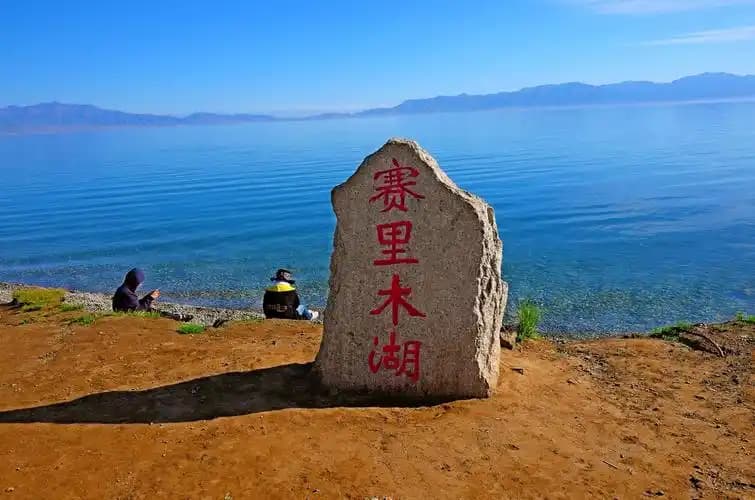
Ice shove is the reason to be at Sayram in April rather than June. Slabs pile up along the shoreline as the lake breaks apart, and the official photography advice is to shoot between 7:00 and 9:00 while the light is low and the surface still holds. That advice is right. We were on the eastern shore at 7:40 on 12 April with the car thermometer at minus six, and we had a kilometre of broken ice entirely to ourselves.
By mid-April the shove is finishing. Arrive on 25 April and you get a blue lake and no ice, which is lovely but not distinct from what you would see in the May shoulder season at a higher ticket price. The lakeside food options are also thin at that time of year, so we carried bread, eggs and a thermos from Bole.
What April does not give you
Grass. This is the honest headline. Nalati was greening in patches when we passed on 14 April, and the high summer pasture above it was still the colour of straw. Bayanbulak sits above 2,400 metres and had frozen ground. Kanas and Hemu were cold and leafless, and locals told us plainly not to bother until late May.
The other loss is the driving. The Duku Highway did not open until 1 June in 2026 and is shut for both of our off-season months, along with most of the high crossings covered in our notes on seasonal pass closures. Plan a route that uses expressways and valley roads, not mountain shortcuts.
April dust, and the hours to avoid
Nobody mentions this in the blossom posts. Spring dust is a genuine planning factor in the Tarim Basin, and the traffic authority publishes the risky windows: the G315 desert stretch between Hotan and Minfeng tends to get dusty from 10:00 to 16:00, and the G580 Aksu to Hotan desert road from 14:00 to 18:00. We crossed the G580 at 09:30 with clear air and watched visibility drop to a few hundred metres by mid-afternoon on the return leg.
Practical response: drive desert sections in the morning, carry a dust mask, keep the cabin recirculation on, and do not schedule your one and only Taklamakan crossing for a late afternoon.
November: the quiet fortnight before the ski crowds
The first three weeks of November are the cheapest travel weeks in northern Xinjiang, and the reason is a gap in the calendar. Autumn tourism has ended, low-season gate pricing has started on 1 November, and the ski resorts have not all opened. In the 2025-26 season Koktokay opened first on 12 October, Jikepulin followed on 10 November, Baiyun near Urumqi on 14 November, and both Jiangjunshan in Altay and Qinggeli Langshan on 18 November.
That sequence gives you a usable window. Fly to Altay in the first half of November and hotel rates are still ordinary, whereas New Year bookings to the same airport ran well above the previous year. Jiangjunshan sells day tickets from 230 yuan, runs a season from November to the end of March, and in 2026 offered visitors from outside the region one free session on production of a flight ticket into Altay. More on the terrain in our piece on skiing in the Altai.
November in the south, where it is still warm
Kashgar in mid-November was the pleasant surprise of that trip. Afternoons hit 11 or 12 degrees, the old town was working rather than performing, and the Sunday livestock market ran as normal with no tour groups at all. Hotan and Turpan behave similarly. The desert cools off fast after dark, but daytime walking is comfortable and the light is low enough to shoot all day.
North of the Tianshan the picture is different. Urumqi was near freezing, city heating had started, and everything indoors was warm while everything outdoors demanded a proper coat. If your trip is mostly museums, bazaars and food, November barely costs you anything in comfort.
Daylight, clocks and how it changes your day
The whole region runs on Beijing time despite sitting far west, and the seasonal swing is bigger than most visitors expect. In mid-April the sun is up around 7am and light holds past 8pm, which gives you a genuine twelve-hour driving day. In mid-November sunrise slips to almost 9am and it is dark before 7pm.
We rebuilt our November itinerary around that. Breakfast at 8:30 in the dark, first stop at 10:00, long lunch, and everything visual finished by 17:30. Trying to fit four sights into a November day is how people end up driving mountain roads after dark.
Where we slept, and what was closed
Off-season lodging is cheap and patchy in the same breath. City hotels in Urumqi, Kashgar, Yining and Korla stay open all year and discount hard: we paid 150 to 260 yuan for rooms that list at double in July. Village guesthouses are the gamble. In Hemu and Baihaba many family homestays shut after the October holiday and reopen for the ski season or for June, and the ones still trading may not have reliable heating.
Our rule now is simple. Book cities online without worrying, but phone ahead for anything rural, and never assume a mountain guesthouse has water in April. Two places we called in early April had drained their pipes against the frost.
Food in the off season
You lose the fruit and gain the fire. April is too early for melon, grapes and the roadside apricot stalls, so the sweet side of the local table is mostly dried and preserved. What you get instead is the winter kitchen at its best: gangzi rou in a mug, lamb soup with a hot nang, hand-pulled laghman that arrives too hot to eat. In November the same food tastes even better because you are cold.
One warning. Small-town restaurants in tourist zones close for the season. In Bayanbulak in November we found exactly one canteen open, run by a family from Sichuan, and we ate there twice because there was no alternative within forty kilometres.
A seven-day April route and a six-day November route
April, southern focus: Kashgar for two nights, up to Tashkurgan for blossom and one night at altitude, back down to Kashgar, fly to Yining, then two days between the wild tulip meadows of the Ili Valley and Tuergen, finishing with an early morning at Sayram Lake before flying out of Bole or driving to Urumqi.
November, northern focus: Urumqi for a night, Turpan for two days of ruins in low sun, back to Urumqi and fly to Altay, two days between Jiangjunshan and the Irtysh valley, then an optional run to Kanas on the all-area winter ticket if the road is clear. Both routes avoid mountain passes entirely, which is the point.
Frequently asked questions
Is April or November better value overall? April, narrowly. You still get discounted gates at the big lakes, the days are long, and blossom is a genuine headline sight. November wins on hotel prices and emptiness.
Can we see snow in November? Yes in the north, unreliably before the middle of the month. Our notes on when each region turns white break it down by area.
Is Kanas worth it in these months? Only in November if you want quiet snow and accept a limited walk. In April it is the weakest month of the year there.
How much cheaper is it really? We spent close to 40 percent less per day in April than on a July trip of similar length, mostly on hotels and gate tickets. The detail sits in our full cost breakdown.
Do we still need a border permit in April? Yes. Permit rules do not soften off season, and the Tashkurgan blossom villages sit inside the border zone.
Before you book
Ticket prices, bloom windows, resort opening dates and road status all change year to year and sometimes week to week. The figures here reflect published 2026 policy and our own receipts, and we have flagged where a date is a range rather than a promise. Check the relevant county tourism account, the Xinjiang road network service before any long drive, and the scenic area’s own mini-program for same-week opening status. We have no commercial relationship with any hotel, resort or scenic area named on this page.
About the author
Karl Huang has travelled in Xinjiang since 2016, including two April trips built around apricot blossom and one early November loop through Turpan and Altay. He writes the seasonal planning notes for Xinjiang Attractions, works from receipts and road logs rather than press releases, and rechecks gate prices against official announcements each spring. Corrections and updated bloom dates are welcome through the site contact page.