Published: August 28, 2026 | Author: Karl Huang
If you spend more than a week eating your way through Xinjiang, you eventually run into a stall whose sign just reads 米肠子 面肺子 and a row of pale, coiled things steaming behind glass. Mi changzi Xinjiang street culture is built around this unlikely pair: sheep intestine stuffed with rice, and sheep lung filled with a wheat-flour batter. I’ll be straight with you: the first look is intimidating, and the first smell is stronger than you expect. But this is one of the few Xinjiang offal food traditions that locals line up for at 8 a.m., not just after dark, and it earns a spot on any serious Urumqi street food list. I’ve eaten it in three cities across several trips, and this guide comes from those visits plus the vendors who actually make it.
| Item | What it is | Typical price (2026) | Best time to eat |
|---|---|---|---|
| Mi changzi (米肠子) | Rice-stuffed sheep intestine, steamed | ¥25–40 / bowl | Morning, fresh off the steamer |
| Mian feizi (面肺子) | Wheat-flour batter set inside sheep lung | Sold as a combo | Morning to late afternoon |
| Combo plate | Both chopped, dressed in garlic-vinegar sauce | ¥25–40 | 8–11 a.m. is best |
What mi changzi and mian feizi actually are
Mi changzi (米肠子) translates roughly to “rice intestine.” A cook takes cleaned sheep casing and packs it with a loose stuffing of raw rice, diced sheep tail fat, onion, salt, cumin and black pepper. The roll is tied off and steamed until the rice inside is fully cooked but the casing stays intact. Sliced, it looks like a pale spiral with flecks of orange fat and green herb.
Mian feizi (面肺子) is the stranger half. The cook pumps a thin batter of wheat flour and water, sometimes with a little starch, straight into a sheep lung through the trachea, then steams the whole organ until the batter sets into a spongy, white, almost bread-like mass. It sounds like a science experiment. Eaten cold and thinly sliced, the texture sits closer to a firm tofu skin than to meat.
The two are almost never ordered apart. A vendor weighs out a mix, chops both into bite pieces, and dresses them in a sharp garlic-vinegar sauce with chili oil and cilantro. Some stalls also slip in a few pieces of liver or stomach to round out the plate. This combo is what most people mean when they say they “ate mi changzi” — the lung comes with it.
How the stall actually makes them
On a May morning in Urumqi I stood at a counter near the Erdaoqiao area and watched the whole process. The vendor’s hands moved faster than I could follow: rinse the casing, whip the rice mix, pipe it in with a funnel, knot the end with string, then lower the rolls into a tall steamer already holding two lungs inflated like pale balloons. Twenty minutes later she pulled them out, let them cool on a tray, and started chopping to order. Nothing was pre-sliced and sitting around — that was the detail that sold me on the hygiene more than any sign did.
The batter-for-the-lung step is the one that surprises visitors. It isn’t a sausage in the Western sense; there’s no meat in the lung at all, just set flour. If you’re expecting a Uyghur sausage dish you’ll be confused, because mi changzi is the only meaty one of the pair. Calling mian feizi a sausage would be wrong, and vendors will correct you with a smile.
The first time we actually ate it
My first plate was in Kashgar, not Urumqi, outside the old town where a row of metal carts sets up after dark. I pointed at the glass case, held up two fingers, and got a styrofoam bowl of pale slices swimming in red oil. The garlic hit first, then the rice in the intestine gave a soft chew, and the lung was the surprise: mild, a little squeaky, soaking up the vinegar. It was nothing like the “exotic challenge” I’d braced for. By the third bite I was fishing for the pieces of liver at the bottom. We went back the next night.
What I’d tell a nervous first-timer: eat it at room temperature, not scorching, and don’t skip the vinegar-garlic sauce. Without it the offal reads as flat and a bit iron-y. With it, the whole thing snaps into focus.
Where to find them in Urumqi, Kashgar and Yining
The dish shows up wherever Hui and Uyghur vendors sell halal breakfast, but a few spots are reliable:
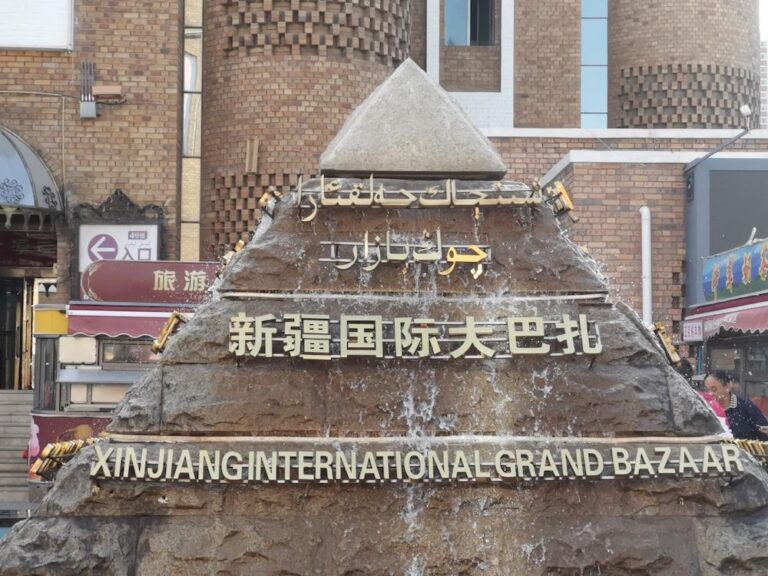
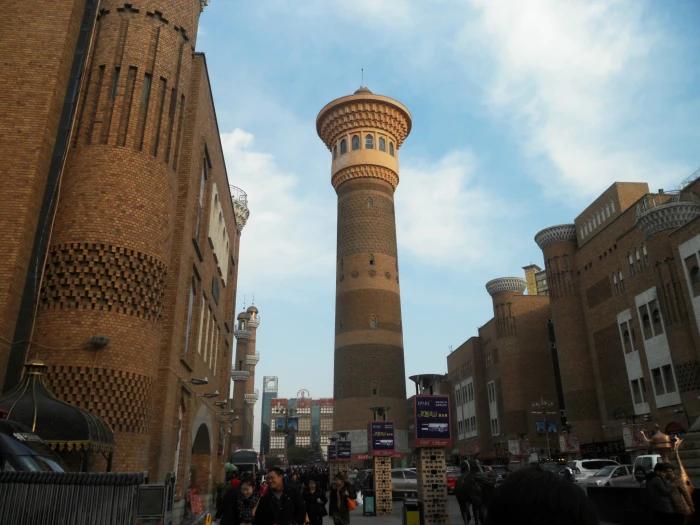
- Urumqi — Erdaoqiao (二道桥) and the streets around the International Bazaar. The highest concentration of offal stalls is here, mostly morning and late-afternoon. Look for the ones with a constant local queue, not the ones waving menus at tour buses.
- Kashgar — the lane food outside Id Kah Mosque in the evening, and the smaller morning carts deeper in the old town. Portions are generous and prices sit below Urumqi’s.
- Yining (Ghulja) — Stalin Street (斯大林街) and the edges of Liuxingjie (六星街) where Hui vendors set up folding tables. The Ili versions lean a touch fattier and are often served with a side of cold noodles.
If you want the broader picture of night-market geography before you commit, our Xinjiang street food crawl plan maps the main evening clusters city by city. For the indoor markets where these vendors rent space, see our guide to where locals really eat.
Getting to the stalls
Most offal stalls sit inside older neighborhoods that buses reach better than the metro. In Urumqi, metro line 1 gets you to Erdaoqiao station, then it’s a five-minute walk into the side streets where the carts are. In Kashgar the old town is walkable and the evening carts are a short stroll from Id Kah. If you’re basing yourself elsewhere and relying on rides, our ordering-food-without-Chinese guide includes the characters to show a driver.
When to eat them
This is a breakfast-and-brunch food first, a late-night snack second. The steaming starts early — in Urumqi I’ve bought a plate at 8:30 a.m. — and the best texture is in the first few hours after the steamer comes off, when the rice is still springy. By mid-afternoon some stalls have sold out or the rolls have dried at the edges. Summer evenings are busiest for atmosphere, but honestly the 9 a.m. version is the one I’d send a friend to.
Pairing them with the rest of the street
A plate of mi changzi is rich, so locals balance it with something on the grill or in pastry. Right next to most offal stalls you’ll find Xinjiang kebab (chuanr) skewers and other dishes worth trying — a cold jug of black tea and two skewers of lamb cuts the fat nicely. Some vendors will fold the chopped offal into a bowl of laghman or a thin noodle soup if you ask, which turns it into a full lunch.
How to order without freezing up
You don’t need Mandarin. Point at the glass case, hold up fingers for the weight (most sell by the jin, about 500 g, but a single portion is usually half that), and say “suān” (酸, for extra vinegar) or “là” (辣, for chili) if you have a preference. Prices in 2026 ran roughly 25–40 yuan for a personal bowl in Urumqi, less in smaller cities. Watch which stall the locals queue at — that single signal beats any review app. Our no-Chinese ordering guide has the exact phrases written out.
A half-day offal crawl plan
If you want to make a morning of it in Urumqi:
- 8:30 — Metro to Erdaoqiao, walk into the side streets, find a busy offal stall, order one plate with extra vinegar.
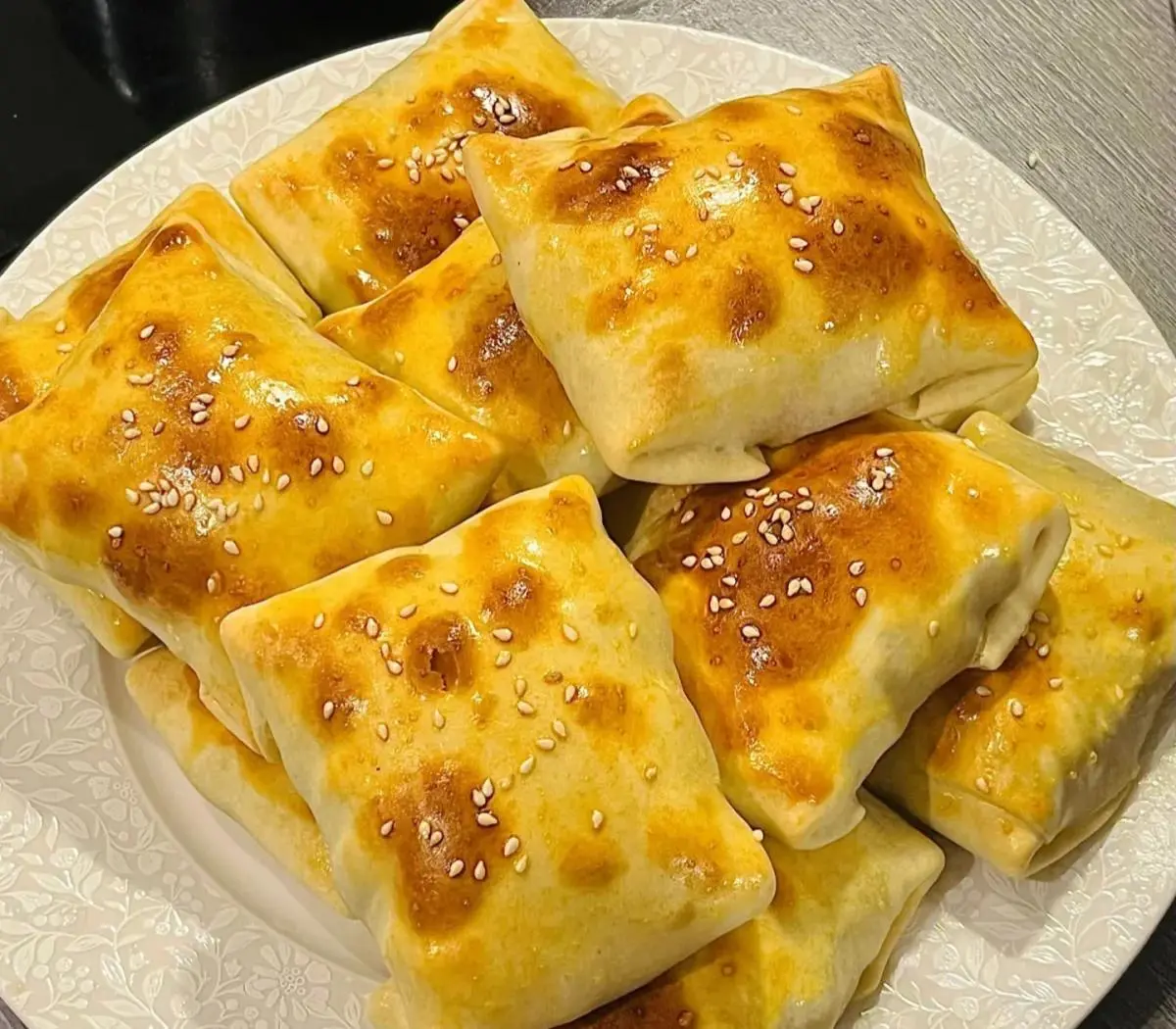
- 9:15 — Two doors down, grab a local breakfast item (a baked samsa or a bowl of taiji naan porridge) to cut the richness.
- 10:00 — Walk the bazaar proper, photograph the dried-fruit and nut stalls, then circle back for a second smaller portion if the first stall earned it.
- 11:00 — Tea stop, and you’re done before the midday heat.
Where to stay so the night market is walkable
In Urumqi, hostels and budget hotels around Erdaoqiao and the southern ring road put the morning stalls within a ten-minute walk; staying up near the university district means a 25-minute metro ride for the same bowl. In Kashgar, anywhere inside or just outside the old town walls lets you roll out of bed to the evening carts. Book early in summer — the night-market plan guide lists which districts fill up first.
FAQ
Is mi changzi safe to eat? From a busy, high-turnover stall, yes. The steaming fully cooks the rice and casing, and the garlic-vinegar sauce is itself mildly antibacterial. Avoid stalls where pre-sliced product has sat uncovered for hours, and if you have a sensitive stomach, start with a small portion.
What does it taste like? Mild and savory, not “gamey” once dressed. The intestine is chewy, the lung is soft and bland, and the sauce does most of the flavor work.
Is it halal? Yes — it’s a Muslim Hui and Uyghur dish, prepared to halal standards, which is why you’ll only find it at halal stalls.
Can I get it without the lung? Usually yes; ask for “zhǐ mi changzi” (只米肠子, only the rice intestine). You’ll pay about the same.
Is there a vegetarian version? No. Both are animal products; there’s no plant-based equivalent on these stalls.
Disclaimer
This guide is based on the author’s personal visits between 2019 and 2026 and on-the-spot vendor conversations. Prices, stall locations and opening hours change, and some carts run without fixed schedules. Offal carries a small food-safety risk for travelers with weak stomachs; eat from busy stalls and trust your judgment. This article is for travel information only and is not a health or dietary recommendation. Always follow current local regulations and your own doctor’s advice.
About the author
Karl Huang has traveled across Xinjiang by train, bus and rented car since 2019, focusing on halal street food and off-the-beaten-path markets. He writes for Xinjiang Attractions to help independent travelers eat well and safely. He is not a chef or a food scientist; the notes here come from queuing at the stalls himself.