Published: October 26, 2026 | Author: Liam Foster
Most travellers planning a Xinjiang trip have Kanas or Sayram Lake on their list, and they drive straight past Fuhai County. I did the same on my first two runs through the Altay region. Then I spent a week there in late July 2025, basing myself in the county seat and driving out to Ulungur Lake most mornings, and I realised Fuhai is the piece of northern Xinjiang the brochures leave out: a working fishing town on the shore of a 1,000-square-kilometre lake, with a sand beach, a bird-filled backwater, and a fish market that opens before the sun. This guide comes from that week plus a January 2026 return for the ice-fishing festival, and from figures I checked against the county tourism bureau and the railway timetable. Treat the numbers as a baseline and confirm them when you book.
Why this Fuhai guide is worth your time
I am not a tour operator and nobody in Fuhai paid for this. I have now visited in two very different seasons, which matters here more than almost anywhere else in Xinjiang, because the lake is a different place in July and in January. Everything below is from those trips, from people I met, and from prices and times I actually saw. Where I give a figure, it is something I would act on myself, not a rounded-off estimate copied from another site.
The numbers behind Fuhai County
| Item | Detail |
|---|---|
| Region | Fuhai County, Altay Prefecture, northern Xinjiang, on the northern rim of the Junggar Basin |
| Lake | Ulungur Lake (Wulungu Hu), about 1,000 km² (1,035 km² in the latest surveys), one of China’s ten largest inland freshwater lakes |
| Lake parts | Buluntuo Lake (the “big sea”, Dahaizi) and Jilihu (the “small sea”, Xiaohaizi), joined by the 10 km Kuyiga River |
| Fish | Some 23 cold-water species; pike, Baikal roach, bream, perch and carp are the everyday catch |
| Distance from Urumqi | Roughly 640 km; about 4.5–5 hours by car on the S21 Altay–Urumqi expressway |
| Rail | Fuhai railway station (Fuhai Zhan), on the Altay–Fuyun–Zhundong line; Beitun station is the bigger nearby hub |
| Nearest airports | Altay Airport (AAT) and Fuyun Koktokay Airport (FYN), each about a 1.5–2 hour drive |
| Best known for | Fresh fish, the Golden Coast beach, winter ice fishing, and camel milk |
Fuhai sits on the spine of the Altay loop
Fuhai’s real value is geographic. It is the town that sits between Burqin and the Kanas road to the north and Koktokay to the east, and it is strung along the same corridor that links both national scenic areas. If you are driving the northern loop, you will pass within an hour of the lake whether you plan to or not, so building in a stop costs you almost nothing in time.
Getting in is easier than the remote location suggests. The S21 expressway cut the Urumqi–Fuhai drive to under five hours, and the rail hub at Beitun, about 40 km south, carries sleeper trains from Urumqi that run roughly ten hours. Fuhai itself has its own station, so if the timetable fits you can step off almost at the lake road. From either Altay Airport or Fuyun Koktokay Airport it is a straight run south on good highway. I came in by car both times and found the roads wide and empty compared with the Ili valley.
The Golden Coast: a sand beach on a Gobi sea
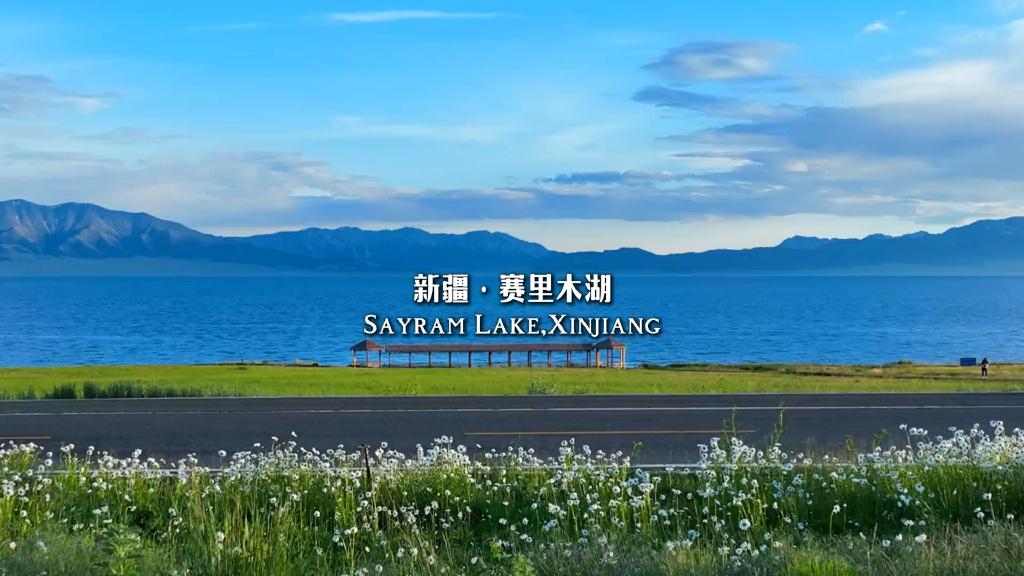
Ulungur is nicknamed the “Gobi Sea” (GeBi Da Hai), and on the north-east shore of Buluntuo Lake that nickname turns literal at the Golden Coast (Huangjin Haian). This is a resort strip built from 1999, about 22 km from the county seat, with roughly 10 km of pale sand and a shallow, slow-sloping bottom where the summer water holds around 20°C. It is, oddly, the closest thing Xinjiang has to a seaside: families from Urumqi and Karamay drive up for the weekend, rent a lakeside cabin, and swim where there is no sea for 2,000 km in any direction.
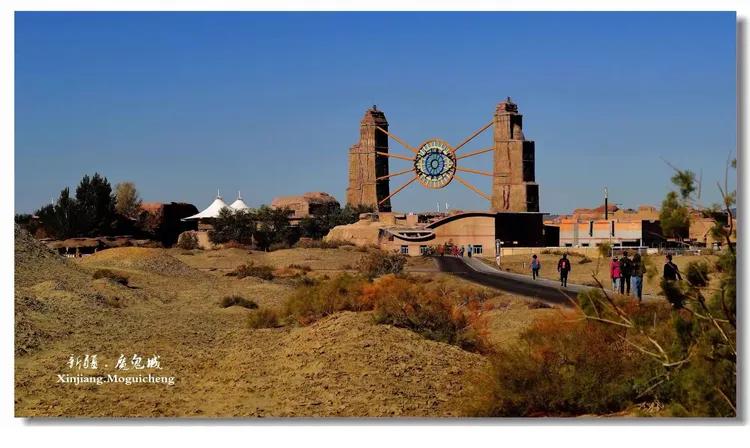
I went in late July and the beach was busy but not packed, the water was warm enough for a long swim, and a line of small restaurants sold cold beer and grilled fish by the metre. On the lake’s east shore, wind has carved a band of soft Yardang towers that locals call the “Sea Devil City” (Hai Shang Mo Gui Cheng) — worth a look at sunset when the formations throw long shadows across the water. Bring a windbreaker even in summer; the lake generates its own breeze by midday and the shade is thin.
Jilihu’s reeds and the bird island
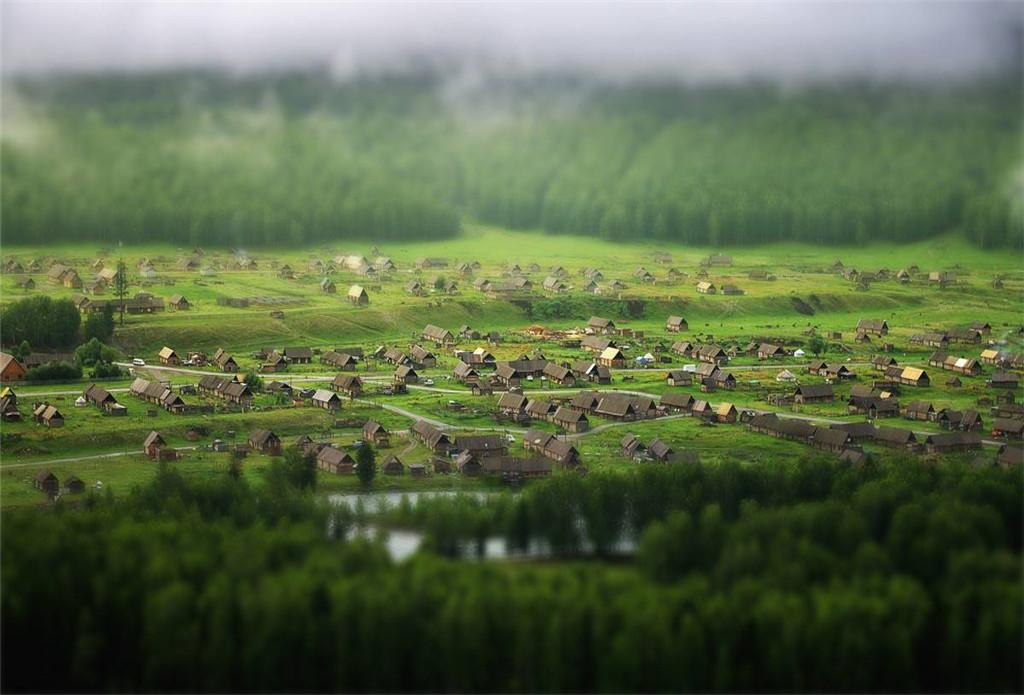
The smaller of the two lake basins, Jilihu, is the quieter half. It is linked to Buluntuo by the 10 km Kuyiga River and ringed by thick reed beds that open into a bird island where gulls, ducks, egrets and the occasional swan gather. I took a small boat out one calm morning and counted more birds than I could name, with the reeds so dense the channel felt like a green tunnel. This is the side of the lake to visit in spring (April–May) and early autumn (September–October), when the migration is on and the heat is off.
A note on honesty: the lake itself has no posted boardwalks onto the bird island, and access depends on water level and the boatman you find at the Jilihu landing. Go early, ask at your guesthouse for a local driver who knows the channel, and do not expect infrastructure. What you get in return is the part of Ulungur almost no foreign visitor sees.
What the catch looks like: market, drying yards, night grills
The fish is the reason Fuhai exists. Ulungur holds around 23 cold-water species, and the names worth knowing are bai chang gou yu (northern pike, a firm white meat with a faint sweetness), dong fang ou bian (bream), he lu (perch, called “five-stripe” locally), and the ever-present carp. The lake’s fishing history runs deep, and the working end of it is the dawn market on the edge of town.
I rolled up at 6:30 one morning and found crates of silver fish on ice, women gutting and filleting at speed, and rows of drying frames where split fish hung in the wind like laundry. By night the same fish reappears on charcoal at the shore grills, where a whole pike costs roughly 60–90 RMB and a plate of fried perch runs about 40. Order the quan yu yan (whole-fish banquet) at any lakeside restaurant and you will get the lake in six preparations — steamed, fried, soured, dried, in soup, and as a fish-and-lamb broth that won a Guinness record at the winter festival. For more on where locals actually eat across the region, our Xinjiang food markets guide is a good companion read.
Camel milk and golden jade: Fuhai off the water
Step away from the shore and Fuhai has a second economy that surprises first-time visitors. The county brands itself the “camel milk capital of China,” and the Wangyuan camel-milk company is based here, so fresh and powdered camel milk shows up in every supermarket and at the morning market. It tastes somewhere between milk and yoghurt, salty and faintly fermented, and it is an acquired but worthwhile local flavour.
Fuhai is also called the home of “golden silk jade” (jin si yu), a soft, warm-toned stone found in the local gravels and sold as beads and carvings at the roadside stalls. And it carries the title “home of the Kazakh Dastan,” the long oral epic poetry of the Kazakh people, performed at festivals and sometimes in the teahouses. None of this is on the standard Xinjiang itinerary, which is exactly why it stuck with me.
A day timed to the lake
The lake runs on its own clock. Summer mornings are cool and the light on the water is best before 9 a.m.; by noon the wind picks up and the glare off the pale sand is fierce, so a hat and sunscreen are not optional. In spring and autumn aim for mid-morning to early afternoon, when the birds are feeding and the reed channels are calm. Winter is its own season entirely — the ice-fishing festival usually lands in January, when the lake freezes a metre deep and crews haul nets through a hole cut in the ice while tourists crowd the edge with thermoses.
Practically: carry cash for the market and the small grills, because the card reader at a fish stall is hit or miss; download an offline map before you leave the city, because signal thins along the shore; and book lakeside cabins for summer weekends well ahead, since the Golden Coast fills on Saturday nights. Our month-by-month best-time guide lays out the wider regional pattern if you are stitching Fuhai into a longer route.
Building a two-day Fuhai stop into your Altay loop
Day 1 — Arrive and eat. Come in by the S21 or the sleeper train, drop your bags at a county-seat hotel (clean mid-range rooms run about 200–350 RMB a night), and spend the evening at the fish market and the shore grills. Walk the short strip of town, try the camel milk, and buy a string of dried fish for the road.
Day 2 — Lake and move on. Leave early for the Golden Coast: a swim or a long walk on the sand, then drive the east shore to the Sea Devil City for sunset light. If it is spring or autumn, swap the beach for a Jilihu boat trip to the reed channels. By late afternoon you are back on the road north to Burqin and Kanas or east toward Koktokay — Fuhai sits right on the line between them, so you lose no time by stopping.
Questions people ask about visiting Fuhai
Is Fuhai worth a detour on its own? Only if you are already in the Altay region. As a standalone destination it is thin, but as a stop on the Kanas–Koktokay loop it is an easy and rewarding half-day to two days.
Can you actually swim? Yes, at the Golden Coast in summer, where the bottom slopes gently and the water is warm. Elsewhere the shore is muddy or private to the fishing crews.
What fish should I order? Pike for a clean, meaty fillet; bream and perch for frying. The whole-fish banquet is the move if you are with a group.
Do I need a permit? The county and the lake shore are open. The only gates are the resort entry at the Golden Coast and the boat fee at Jilihu.
When is the winter festival? Typically January; dates shift with the ice, so check the county tourism bureau’s notice before you build a trip around it.
Before you pack: a practical note
This guide reflects my visits in July 2025 and January 2026. Prices, train times, resort fees, festival dates, and boat access at Jilihu change, and the weather on an open lake can close things without warning. Confirm the specifics with your hotel or the county tourism bureau before you travel. This article is for information only and is not official advice.
About your guide
Liam Foster is a travel writer who has spent eight years documenting China’s western regions by rail and by rented car. He pays his own way and prefers the towns that are not on the postcards. He last travelled through Fuhai in January 2026.