Published: 25 August 2026 | Author: Karl Huang
Most visitors picture Xinjiang through its summer postcards: green pastures, snow-capped peaks, long daylight. We spent three winters here, and the food we remember best has nothing to do with those views. Xinjiang hotpot, eaten in a frozen city at minus twenty, is the meal that taught us more about local life than any scenic stop. This guide comes from those dinners, not from a brochure, and it covers what the pot actually contains, where to find it, and what to order when the temperature drops.
We write this as travellers who have sat at these tables in Urumqi, Kashgar and Yining, asking questions and writing things down. Where we quote a price or a custom, it is something we saw ourselves or confirmed with the people running the shop. Xinjiang is a halal region, so pork never appears in a local hotpot, and we say more about that below.
Quick reference: Xinjiang hotpot at a glance
| Item | What to expect |
|---|---|
| Best months | December to February |
| Typical broth | Clear mutton stock, sometimes with tomato or mushroom |
| Main protein | Thin lamb slices, lamb spine, sometimes beef |
| Average cost | 60 to 120 yuan per person |
| Style | Copper pot (铜锅涮肉) or split Sichuan-style pot |
| Religion note | Halal only, no pork, no alcohol inside the restaurant |
| Good for | Cold evenings, groups, families |
What we found at the table
Our first real Xinjiang hotpot was in Urumqi in January 2024. The restaurant was unremarkable from the street, a row of plastic stools and a wall poster of noodle dishes. What mattered was the pot: a shallow copper basin set over a small burner, filled with a near-clear mutton broth that smelled of nothing but meat and a single scallion.

The waiter brought a plate of lamb sliced so thin it curled at the edges, plus a basket of leafy greens we could not name, a block of firm tofu, and a handful of wide sweet-potato noodles. You slide the meat in, count to twenty, and lift it out. There is no heavy spice to hide behind. If the lamb is good, the broth tells you so in the first bite.
In Kashgar a year later we found a smaller version: a single burner, two diners, and a pot of gangzi rou (缸子肉), mutton simmered in a tin mug with carrot and onion. According to the owner it is not hotpot in the Sichuan sense, but locals count it in the same family of winter warmers, and the logic is identical. You sit, you wait, you eat something hot in a cold room.
We built our own dipping sauce that first Urumqi night from a tray of small dishes: pale sesame paste thinned with a little broth, a dab of fermented tofu, and a pile of chopped cilantro. The waiter laughed at how much dried chilli we added to the mix, then gestured that the regulars keep it plain so the lamb stays the point of the meal. He was right, and we dialled it back on the second visit.
The broth and the rules
Xinjiang hotpot splits into two camps. The first is the northern tongguo shuanrou (铜锅涮肉) style: clear broth, lamb first, dipping sauce built at the table from sesame paste, fermented tofu, and chopped cilantro. The second is the split pot borrowed from Sichuan, where one half is mild and the other carries chilli and peppercorn for those who want it.
The rule that surprises newcomers is the halal one. Almost every local hotpot house in Xinjiang is Muslim-run, which means no pork on the menu and no alcohol poured at the table. Beef appears in some places, but lamb dominates. If you are travelling with dietary needs, our guide to ordering food in Xinjiang walks through how to make that clear before the food arrives.
Where to eat Xinjiang hotpot
You do not need a reservation culture here. In Urumqi, the clusters near the big night-market streets fill up after seven in the evening, and a walk of two blocks will show you three or four options with steam on the windows. Kashgar’s old town has smaller, family-run spots where the pot is part of a longer meal. Yining, in the Ili valley, leans toward the clear-broth northern style and pairs it with the local Wusu beer that the region is proud of.
Getting to these cities is straightforward even in winter. Urumqi has the main airport and a high-speed line; Kashgar and Yining both have airports and rail links. We covered the car-free versions of these routes in our piece on travelling Xinjiang with children, which works just as well for anyone who would rather not drive on icy roads.
Best time for hotpot weather
The pot makes sense from late November through February, when daytime highs in the north often sit below zero and the southern basins like Hotan stay cold but dry. We found January the most reliable month: the broth stays hot, the streets are quiet, and the autumn crowds have long gone home. On our coldest night the thermometer outside a Urumqi window read minus twenty-three, and the four-minute walk back to the hotel felt like forty. The pot is what separated a good story from a miserable one, and we plan the trip around it now rather than the other way round.
One caveat. Some mountain passes close after heavy snow, and a hotpot plan in the Tianshan range needs a weather check first. The cities themselves rarely shut down, but a side trip can wait a day.
Staying warm: where to sleep
Most mid-range hotels in Xinjiang run heating from early November, and the better ones keep it on all night. We learned to book a place with floor heating or a working radiator after one cold night in a budget guesthouse where the unit clicked off at midnight. In Urumqi and Kashgar you can find comfortable four-star options within walking distance of the hotpot streets, which means you can walk home rather than flag a cab in the cold.
Beyond the pot: other winter warmers
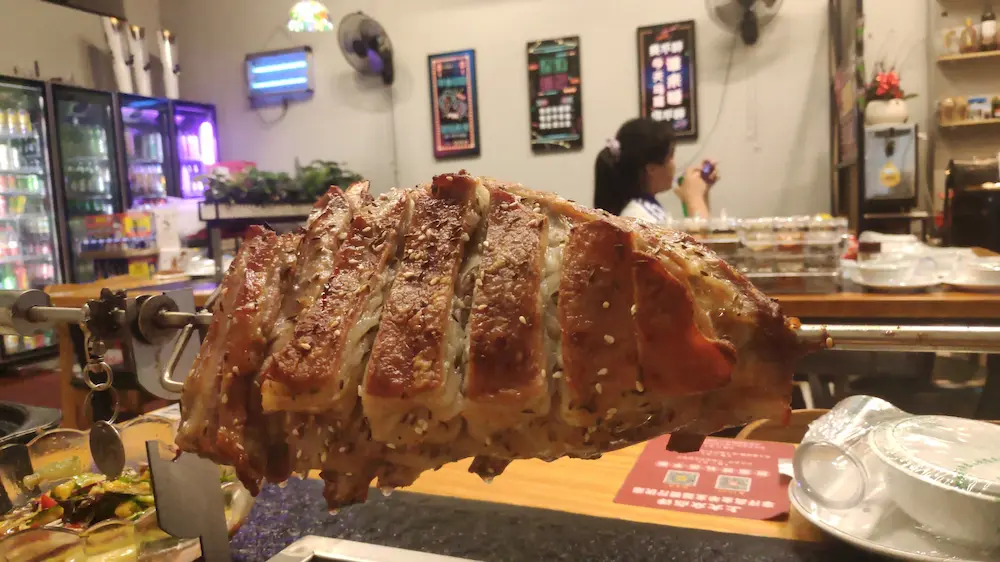
Hotpot is the headline, but the winter table has a deeper bench. Tangfan (汤饭) is a soupy bowl of small noodles, tomato, and potato that costs next to nothing and fixes a cold afternoon. Zhua rou (手抓肉) is boiled mutton eaten with the hands and a pinch of salt, simple and filling. Kaorou (烤肉) skewers and big plate chicken both arrive hot and share the same table logic: eat now, talk later.
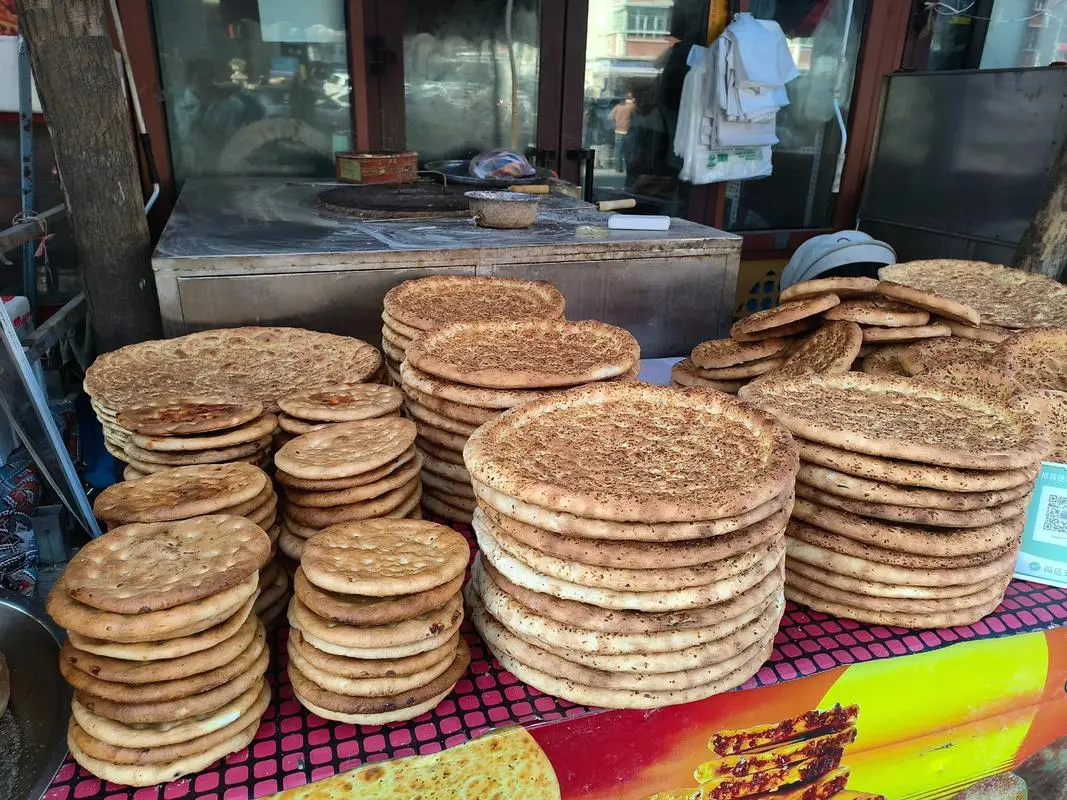
Bread matters more than visitors expect. The naan (馕) baked in the corner oven is dry enough to last days and soft enough to scoop broth. We watched a baker in Yining pull rounds the size of a steering wheel from a dome oven at six in the morning, and they were gone by nine. For ingredients to try at home, the local food markets stock dried chilli, cumin, and the flat noodles that make tangfan work.
Then there is the drink side. Salty milk tea (奶茶) from a Kazakh or Kyrgyz stall warms faster than coffee, and the region’s dried fruit, written up in our dried fruit guide, makes a sweet close to a heavy meal. None of this replaces hotpot, but together they explain why locals barely notice the cold.
Practical tips before you sit down
- Order the lamb sliced, not cubed, for the copper-pot style. It cooks in seconds.
- Build your dipping sauce early. Sesame paste thins slowly and the table gets busy.
- Ask whether the broth is spicy before ordering for children or unsure eaters.
- Hotpot runs late. Many places peak at nine and wind down near midnight.
- Carry small bills. Smaller hotpot houses sometimes struggle with card readers.
- Respect the halal rule. No outside meat, no alcohol brought to the table.
A half-day winter food plan
If you have one cold afternoon free in Urumqi, here is the loop we ran more than once. Arrive at the food market around four, buy naan and dried fruit, then walk to a hotpot street and sit by six. Order the clear broth with lamb and greens, eat slowly, and finish with milk tea at a nearby stall. You will be full and warm before the eight o’clock darkness sets in. The same plan works in Kashgar by swapping the market for the old-town bazaar.
Frequently asked questions
Is Xinjiang hotpot spicy?
Usually not. The local northern style is mild and meat-forward. Spice shows up only in the split Sichuan pots, and you control that half yourself.
Can vegetarians eat at a Xinjiang hotpot house?
Partly. The broth is meat-based, but you can load the pot with tofu, greens, and noodles. For a fuller meat-free picture, see our vegetarian eating guide.
Do I need to speak Chinese to order?
No. Pointing at the display tray works, and many menus now show photos. Our noodle guide and the ordering piece above cover the key phrases.
How much should I budget per person?
Plan for 60 to 120 yuan with a drink, more at the larger city houses. Groups split the cost of the broth, which lowers the per-person rate.
Disclaimer
This article reflects our own visits between 2023 and 2025. Prices, opening hours, and menu items change, and some restaurants close or move without notice. We are not a food-safety authority; if you have allergies or strict dietary needs, confirm ingredients directly with the staff. Halal rules are observed at most local hotpot houses, but standards vary by shop. Use this guide as a starting point, not as a guarantee.
About the author
Karl Huang is a travel writer who has spent four winters researching food and road routes across Xinjiang, from Urumqi to Kashgar and the Ili valley. He focuses on practical, first-hand guidance for independent travellers and writes for the Xinjiang Attractions editorial team. His work favours what he has actually eaten and seen over second-hand summary.