Published: October 8, 2026 | Author: Karl Huang, Xinjiang travel writer
Most guides to entering China open with a list of visa categories and stop there. We have landed at Kashgar Laining after dark and waited out a fog diversion at Urumqi in January, and what cost us time at the desk had nothing to do with the visa we held. It was a form to fill the day before, and a twenty-four hour clock starting at check-in rather than at landing.
This page covers the mechanics of Xinjiang entry in 2026 as they run on the ground: what to finish before you board, what the officer will ask, and the accommodation registration rule that went national in September. It is written from arrival-day notes, not from a policy briefing. Where a law is doing the work, we name the authority that publishes it.
Quick reference: the arrival checklist in one table
| Step | What applies | Where to do it |
|---|---|---|
| Arrival card | Optional to pre-fill, required to complete. Free. Seven categories are exempt | NIA website, 12367 app or mini-program before flying; paper or kiosk at the port |
| 24-hour transit | All open ports. You may not leave the port area without a permit | Immigration at the port you land at |
| Hotel stay | The property files you. You hand over the passport at check-in | Front desk, within 24 hours of arrival |
| Anywhere else | You or your host must register within 24 hours. Online filing since 21 September 2026 | NIA channels or the local police station; same legal effect |
| Currency | 20,000 yuan each way; foreign cash above 5,000 dollars must be declared | Red channel at customs if you are carrying it |
| Border areas | Some zones need a separate permit even on a valid tourist visa | Booked through your operator or hotel |
The paragraphs below are the long version of those six lines.
Why this is not another visa list
Our page on visas and permits for foreign tourists already works through which visa you need. Repetition would help nobody, so this one begins after that decision is made. Two corrections matter before you book.
The first concerns transit. China’s 240-hour exemption now covers 57 countries, 24 provinces and 65 open ports, widened on 20 August 2026 to include Kyrgyzstan and Vietnam. Xinjiang is not one of those 24 provinces, so a through ticket via Urumqi does not free you to stay ten days. You need a visa, or the 24-hour route set out below. The second concerns our older pages on the 144-hour scheme, which predate the 2024 expansion. Read them as history. The permit guide is the one to trust for the zones that still need paperwork.
The one new step: the arrival card
Since 20 November 2025, foreign visitors can file the arrival card before reaching China. The channels are the National Immigration Administration website, the government service platform, the 12367 application, the WeChat and Alipay mini-programs, or a phone scan of the card’s QR code. The address is s.nia.gov.cn and nothing is charged, which is why the fake fee-charging clones are worth avoiding: type it yourself rather than opening a link that arrived with your itinerary. Seven groups are exempt from filing, among them permanent residence holders, group visa arrivals, cruise passengers and 24-hour transit passengers who never leave the port area.
What goes on the form is unremarkable: your passport number, your Chinese arrival city, an address for day one. Copy the passport number from the machine-readable strip at the foot of the photo page. One wrong digit is the most common reason a traveller is sent back to a corner to start again.
What the desk actually asks
At Kashgar and Urumqi the hall is compact and the order is stable: card and passport check, two fingerprints, a glance at the entry stamp, sometimes a question about purpose. Ours ran to four questions in nine minutes and to none at all in six. The questions, when they come, are predictable. Why here, how long, where are you staying tonight. Have the name and address of night one written on paper rather than open on a phone that has just died.
Photograph the card and the stamp before you step away from the counter. It costs nothing, and that photograph is the record of when you entered, which is exactly what you need if you later apply for an extension or replace a passport at a police station.
One arrival day, minute by minute
The clearest of our landings was the 07:40 flight from Urumqi touching down at Kashgar in flat grey light. Baggage came out in twelve minutes because the terminal is small. A SIM counter sits between the exit and the taxi rank, and the agent photographed our passports and handed over a card before we had reached the front of the queue. The taxis line up outside doors two and three, and the fare to the old town metered out at thirty to fifty yuan.
None of that is remarkable. What was remarkable came at the guesthouse, where the desk asked for every passport in the party, keyed them in and printed a sheet. We did not know at the time that the sheet was the record satisfying a duty on the building’s side. A year later we slept in a yurt camp outside the city and nobody printed anything, and the duty had quietly moved to us.

Entering overland instead
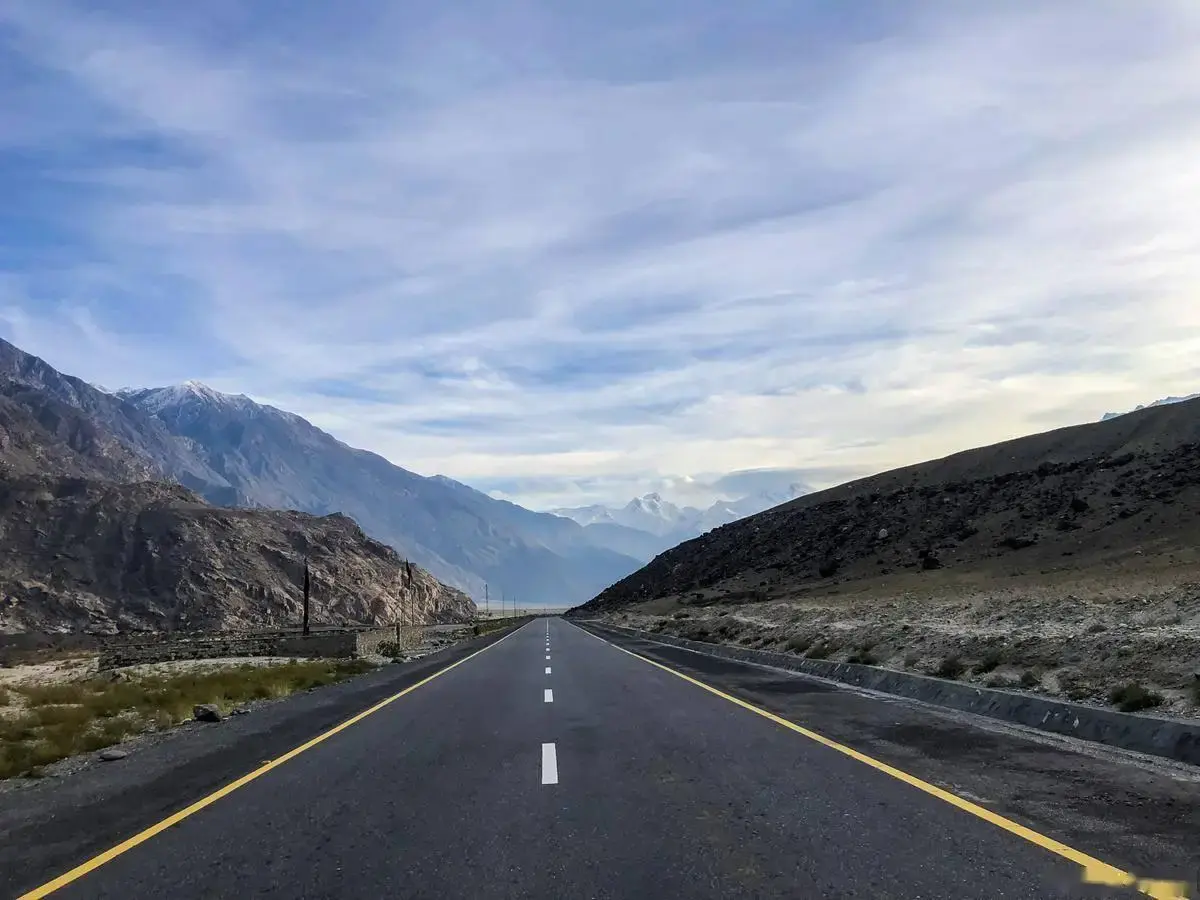
Not everyone arrives by air. The 24-hour exemption applies at every open port in China, but only inside the port’s controlled area. Sleeping in a city on the day you cross means asking the port immigration for a temporary entry permit before you leave that area. At the Khunjerab and Torugart crossings the paperwork is handled at the crossing itself, and the crossing overview sets out which of them take tourists. A land arrival from Pakistan or Kyrgyzstan is processed under the same entry rules as a flight.
The twenty-four hour clock nobody mentions
Article 39 of China’s Exit and Entry Administration Law puts the filing duty on the hotel. For hotel guests the property records you and sends the information to the public security organ. For everywhere else, you or the person hosting you must register at the local police authority within 24 hours of checking in. Article 76 sets the penalty for an unregistered non-hotel stay at a warning and a fine of up to 2,000 yuan. Hotels that fail to submit face a warning and, in serious cases, fines between 1,000 and 5,000 yuan.
The change most travellers have not heard of arrived on 21 September 2026, when the National Immigration Administration rolled out online filing for non-hotel accommodation nationwide, following pilots in seven provinces. You or your host can now file through the NIA service website, the 12367 application or the WeChat and Alipay mini-programs. The station route stays open, and an online filing carries the same legal weight as standing in front of an officer. For a stay in a guesthouse, a homestay, a rented flat or a friend’s home, that turns an awkward errand into a five-minute job done in pyjamas.
Homestays, yurts and the refusal problem
Xinjiang has a great many small family rooms and guesthouses that hold no foreign-relations qualification. Licensed, hotel-managed properties file for you. Everything else falls under the 24-hour rule, and the online channel is the cleanest way to settle it, though you will want a photograph of your passport photo page, a face shot without a hat and the address. Where the address sits on a lease in someone else’s name, let the host file.
Refusals at the door have their own history. In 2024 the Ministry of Public Security, the Ministry of Commerce and the National Immigration Administration stated that hotels may not turn away foreign guests for lacking foreign-related qualifications, and a notice from seven departments on 1 July 2024 went further, telling authorities and platforms not to publish such restrictions. The rule is national; enforcement lags in small towns. If a desk refuses you after you have paid, the immigration hotline 12367 answers in English and Chinese around the clock and 12345 takes complaints. Try another property before you argue.
Money, phones and the first hour
Cash rules are simple enough to state at the counter. The per-person limit on renminbi each way is 20,000 yuan. Foreign cash above the equivalent of 5,000 dollars must be declared in writing on arrival, and leaving with between 5,000 and 10,000 dollars needs a carriage permit from a bank, above which it comes from the foreign exchange authority. The question of dried fruit is separate; our page on carrying Xinjiang fruit through customs covers what tends to raise eyebrows.
Phones want the original passport rather than a copy, and registration can fail on unfamiliar cards, so buy the SIM at the airport counter and test it before you clear the terminal. Keep the passport in a bag you can reach, because taxis, bus counters and railway machines ask for it. Foreign cards attach to Alipay and WeChat Pay now, but keep some cash for a taxi whose terminal has died.
Order of operations for the first twenty-four hours
- Fill the arrival card at least a day before the flight, and screenshot the confirmation.
- On landing, photograph the card and the entry stamp.
- Buy and test the SIM while you are still inside the terminal.
- Reach the hotel, hand over every passport, keep whatever sheet the desk prints.
- If you are not in a licensed property, file the accommodation registration that evening, online or in person.
- Withdraw some cash and eat. The first day does not need an itinerary.
When the first day goes wrong
The clock runs from check-in, so a 23:40 arrival still leaves you until 23:40 the next day; file late rather than not at all. A lost passport means a police report before any flight out, and the report is quick only if you remember your entry date, which is what the photograph was for.
Best days to land
Land in daylight if you can. From late October the light goes early at the western end. Winter brings fog at Urumqi, where diversions to Turpan are routine and the first day goes waiting for a departure. May to September gives fourteen-hour days and open mountain roads, at the price of queues everywhere.
Frequently asked questions
Do I need a separate permit to enter Xinjiang?
No. A valid Chinese visa or visa-free entry covers the region. Separate permits exist for specific border zones, and the permit guide lists which ones and how to book them.
Can I use the 240-hour transit to see Xinjiang?
Not on the current list. The 57 eligible countries may enter through any of 65 ports in 24 provinces, and Xinjiang is not among them. The 24-hour route with a temporary entry permit is the only visa-free way in, and it works only if you stay put.
Where do I register if I sleep at a friend’s home in Kashgar?
The same evening, through the NIA online channel or in person at the local police station, foreign service station or community police office. The host may file on your behalf.
Is the arrival card compulsory?
Completing it is. One of seven exemptions applies to some travellers, including permanent residence holders and 24-hour transit passengers who never leave the port area. Everyone else files online beforehand or fills the paper card at the desk.
What if my hotel never registers me?
Ask for the printed lodging sheet first. If nothing was filed, file yourself through the online channel within the 24 hours. It takes five minutes and removes the only realistic penalty.
Disclaimer
This is travel writing rather than legal advice. Entry, transit and registration rules change often and are applied locally with some discretion. The fines quoted are the ranges written into the Exit and Entry Administration Law, not predictions about your case. Confirm anything that decides an itinerary with the National Immigration Administration, your Chinese embassy or consulate, or your hotel before you leave home.
About the author
Karl Huang writes about Xinjiang for people who arrive on a scheduled flight and want the first day to work. He has flown into both airports more often than he would like, has been turned away from one guesthouse door, and has filed the 24-hour registration form online on the evening it first became possible.
Related reading:
Kashgar versus Urumqi airports,
Khunjerab Pass,
Xinjiang border crossings, and
visas and permits for foreign tourists.
References:
Accommodation registration rules for foreigners, National Immigration Administration ·
Online arrival card filing, National Immigration Administration ·
Cash carrying limits, General Administration of Customs