Published: July 29, 2026 | Author: Dan Trewin, surf coach, Newquay, Cornwall | Reviewed and edited by the Xinjiang Attractions team
I teach surfing for a living. Fourteen years of pushing beginners onto whitewater in Cornwall, and every autumn when the Atlantic turns grumpy I go looking for something else to slide down. In September 2025 that search took me and my mate Robbo to the dunes of eastern Xinjiang, because I had read one forum post claiming you could ride sand there the way people do in Namibia. The short version: you can, sort of, and Xinjiang sandboarding turned out to be one of the strangest and most satisfying trips I have taken. The long version is this article, including all the things that forum post got wrong.
Let me be straight with you from the start, because most of what is written about dune surfing in China is copied from somewhere else. Xinjiang has no commercial sandboarding scene. There is no Huacachina here, no board-rental shacks run by guys with dreadlocks, no organised lessons. What Xinjiang has is an absurd amount of sand, one desert park where sliding down dunes is actively encouraged, and total freedom to make your own fun if you bring the right kit and some patience. If that sounds like your kind of trip, keep reading.
Quick reference: Xinjiang sandboarding at a glance
| Question | Short answer |
|---|---|
| Best venue | Kumtagh Desert Park, Shanshan county (90 min from Turpan) |
| Entry cost | About 30 to 75 RMB depending on season and shuttle options |
| Board hire | Sand sleds only, roughly 30 to 60 RMB; bring your own board to stand up |
| Best months | April to mid June, September to October |
| Summer warning | Sand surface can pass 70°C in July; dawn sessions only |
| Skill needed | None to sled; snowboard or surf experience helps a lot for standing runs |
How I ended up waxing a board with a candle stub in a Shanshan guesthouse
Robbo and I flew into Urumqi, took the fast train down to Turpan, and hired a driver to Shanshan the next morning. I had packed my old kids-size snowboard with the bindings stripped off, wrapped in a bodyboard bag, which caused a long and friendly conversation at check-in but no actual problems. Robbo, who trusts rental gear more than I do, brought nothing.
He regretted it within an hour. The hire boards at Kumtagh are sleds, plastic tubs you sit in, and they are fine for a laugh but they are not boarding. Meanwhile my snowboard would not slide at all on the first run. Sand is not snow. It grabs a clean base and stops you dead halfway down the face, which is how I found myself that evening in our guesthouse, melting a candle stub over the base while the owner’s teenage son watched with the expression of someone filing away a story about foreigners. Paraffin wax changed everything. Next morning the board ran fast and loose, and I got the longest sand ride of my life, maybe 25 seconds top to bottom on a dune the height of a ten-storey building.
The climb back up took 19 minutes. I timed it. That ratio, 25 seconds down for 19 minutes up, is the fundamental economics of sandboarding, and nobody warns you. By day two we had a system: hike the big face twice at dawn, then spend the rest of the session on a smaller shoulder dune with a five-minute walk-up. More runs, less heroism.
Where you can actually ride: an honest map of the sand
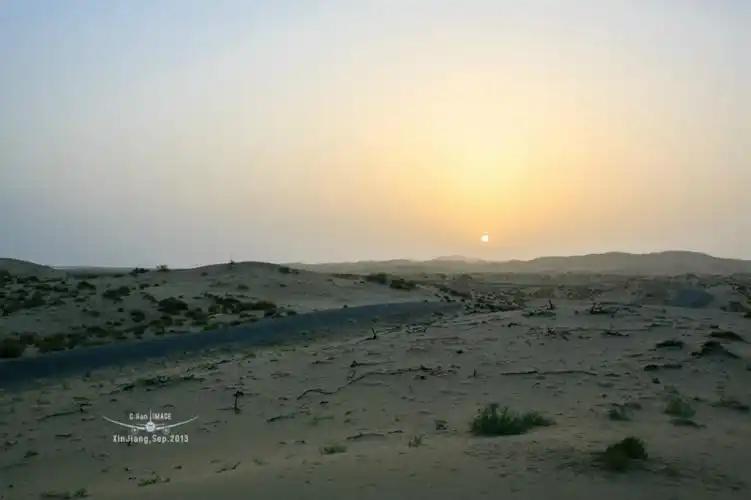
Xinjiang has four famous sand areas, and only one of them is genuinely practical for boarding. Here is the honest breakdown, because getting this wrong wastes days.
Kumtagh Desert Park, Shanshan. This is the place. The dunes rise straight out of the county town, the park has marked access, camel handlers, sled hire and shuttle buggies, and nobody minds if you carry your own board up a face and ride it. We covered the destination itself in more depth in our Kumtagh Desert guide, so I will stick to the riding here: the main tourist dune is busy but the ridgeline walks southeast into quieter bowls within 20 minutes, and that is where the good, unmarked faces are.
The Taklamakan. The big one, and the dunes along the desert highways are enormous and empty. But logistics eat you alive: it is a full expedition with a driver, there are no facilities, and the best faces are far from anywhere. If you are already doing a Tarim Basin crossing, stopping for an afternoon session at a roadside dune is a brilliant bonus. Flying to Xinjiang only to board the Taklamakan is not a plan I would recommend to anyone.
Gurbantunggut. Skip it for boarding. The northern desert is mostly fixed dunes held together by vegetation, fascinating for other reasons, as our Gurbantunggut article explains, but the faces are too anchored and too shallow to ride.
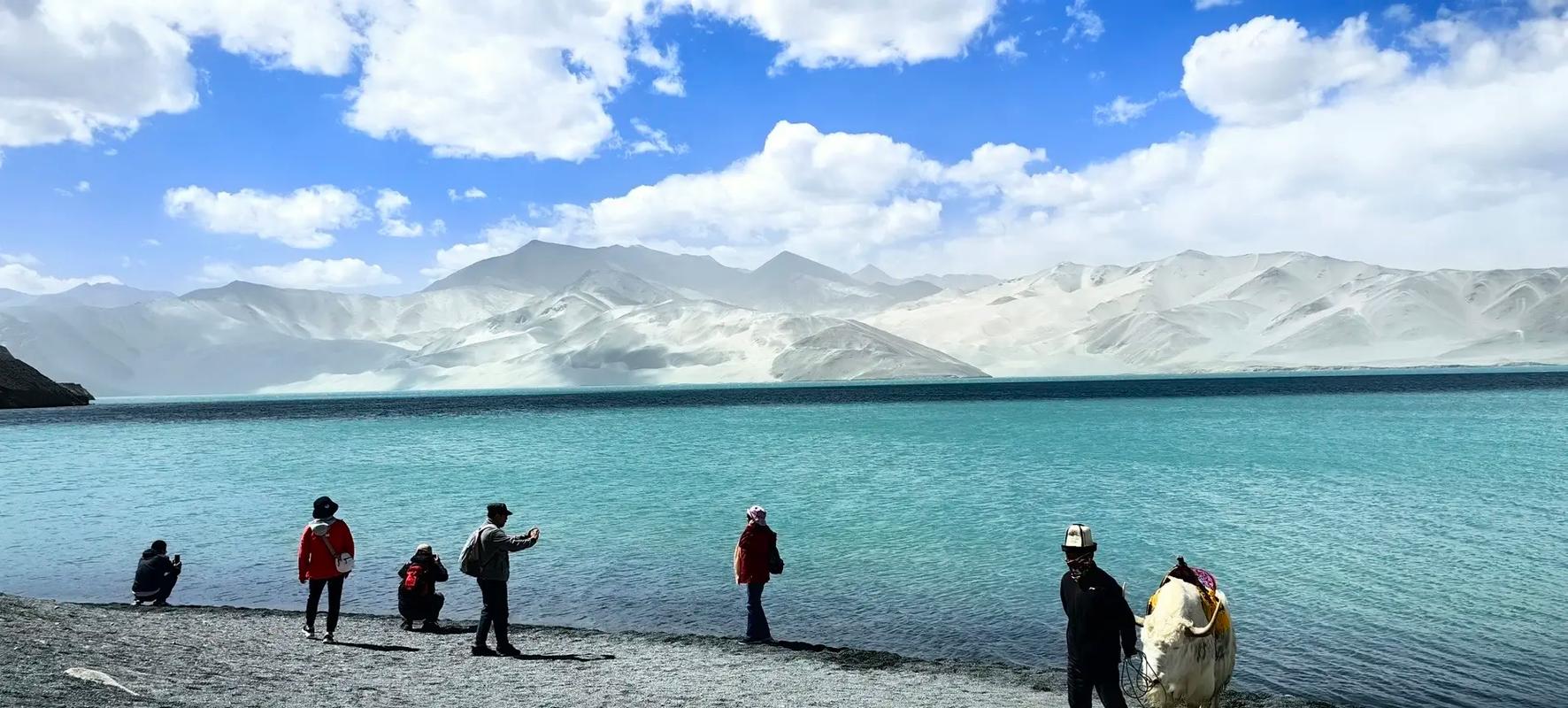
White Sand Mountain on the Pamir Plateau. You will see photos of these pale dunes above Baisha Lake and think, that is the spot. It is not. The area sits along the Karakoram Highway in a border-permit zone, the slopes run into the lake, and locals regard the mountain with real respect. Take the photo from the viewpoint like everyone else and leave the sand alone.
Getting there without a support crew
Shanshan is the easy answer. High-speed trains run from Urumqi to Turpan North in about an hour, and slower services continue toward Shanshan itself; check current timetables on the official China Railway 12306 site or app, since schedules shift seasonally. We used a driver arranged through our Turpan hotel for the Turpan to Shanshan leg, around 300 RMB, because it gave us flexibility with board bags and dawn starts. Turpan deserves a day or two in its own right, and our Turpan city guide covers the karez channels and the old towns properly.
Carrying a board around China was less painful than expected. Trains accepted my wrapped snowboard as ordinary luggage. Domestic flights count it as sports equipment, so check your airline’s fee page before booking. Inside the park, the shuttle drivers shrugged at the board and charged nothing extra.
The best time for Xinjiang sandboarding is not when you think
Everyone assumes desert means summer trip. In July and August the Turpan Depression is the hottest place in China, with air temperatures above 45°C and sand surfaces hot enough to injure bare skin. Our September dates were deliberate and I would still call them one week too early; the first three afternoons were unusable and we rode only dawn sessions, roughly 7:30 to 10:30 am, before the sand started radiating like an open oven. Nearby Aydingkol Lake, the lowest point in China, is the reason this basin cooks the way it does.
Late April to mid June and mid September through October are the sensible windows. October brings cooler days you can ride right through, at the cost of colder nights. Winter boarding is possible and the dunes occasionally get a dusting of snow, which locals told us makes the sand run strangely fast, but I cannot verify that one personally.
Where we stayed
In Shanshan we took a family guesthouse ten minutes’ walk from the park gate, about 160 RMB a night for a twin with its own bathroom and, crucially, an outdoor tap for de-sanding gear. The owner filled our water bottles from a chilled dispenser every morning without being asked. Chain hotels exist in the town centre for 200 to 300 RMB if you want air conditioning you can trust in shoulder season. In Turpan we spent one night at a courtyard hotel under the grape trellises, closer to 280 RMB, worth it for the shade alone. Wild camping among the dunes is technically the dream, but read our Xinjiang camping guide first, because rules around desert parks are stricter than the empty landscape suggests.
What we ate
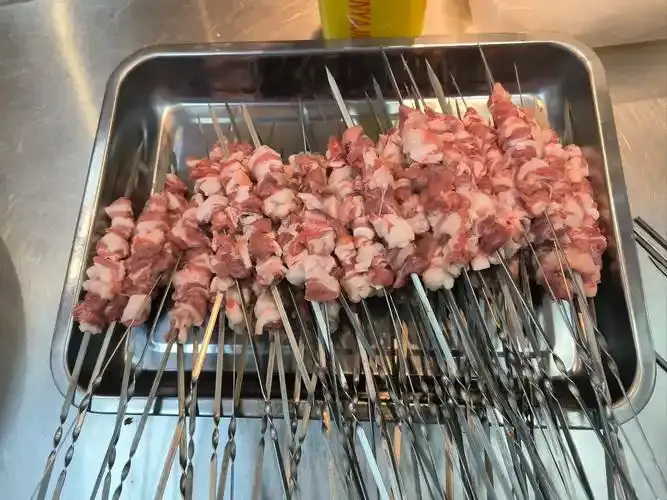
Shanshan surprised us. The night market near the main square did skewered lamb at 5 RMB a stick, and a laghman joint by the bus station became our regular; hand-pulled noodles with peppers and lamb for 22 RMB, portions built for people who climb dunes all morning. Turpan added the fruit: this is grape country, and in September the raisin sellers let you taste six varieties before you commit. Robbo developed a genuine dependency on the green seedless ones. Budget maybe 60 to 80 RMB a day for food if you eat where locals eat; our full Xinjiang cost breakdown has wider numbers.
Gear and hard-won practical tips
These are the things I wish someone had told me before the trip.
Wax is non-negotiable. Plain paraffin candle wax rubbed into the base, re-applied every three or four runs. Without it a snowboard simply does not slide on sand. Proper sandboard base wax exists but candles are available in any Chinese corner shop.
An old board is the right board. Sand shreds bases. Bring the beater you were going to retire, not your good deck. Riding without bindings works fine on sand if you screw in a simple foot pad, and it makes airport life easier.
Sealed goggles, not sunglasses. One gust at the ridgeline and sunglasses are jewellery. Ski goggles worked perfectly. Phone lives in a zip-lock bag, always. Sand got into my supposedly sealed camera anyway and the zoom ring still crunches today.
Fall like a surfer, not a snowboarder. Sand does not slide with you the way snow does; it stops you fast, so tumble loose and roll. Neither of us got hurt, but the potential for a wrist injury on a hard-packed face is real, and rescue out here is not quick. Sort proper cover before you travel; our insurance and safety guide explains what policies tend to exclude, and adventure sports clauses are exactly the fine print that matters here.
Stay for dark. The desert sky above Kumtagh at 11 pm was the best free show of the trip; the stargazing field guide on this site lists it for good reason.
A five-day sand-focused itinerary
Day 1: Fly into Urumqi, fast train to Turpan, buy candles and zip-lock bags, sleep early.
Day 2: Morning at the karez museum and Emin minaret, afternoon transfer to Shanshan, evening walk to scout the dunes.
Day 3: Dawn session on the main face, sled hire for a laugh mid-morning, retreat by 11, night market, return for sunset photos.
Day 4: Dawn session on the southeast bowls, afternoon rest, stay past dark for the stars.
Day 5: Last short session if legs allow, train back toward Urumqi or onward east.
Xinjiang sandboarding FAQ
Can I rent a real sandboard anywhere in Xinjiang?
As of our September 2025 visit, no. Kumtagh hires sit-on sleds only. If you want to stand up, bring a board.
Is it suitable for kids?
The sleds, absolutely; we saw local families racing them all morning. Standing runs on the big faces are for people happy falling at speed.
Do I need a permit?
Not for Kumtagh or the Turpan area. Border-zone deserts like the Pamir dunes are a different matter entirely, and off-road driving into wild desert has its own rules; ask locally and err on the side of the marked areas.
How fit do I need to be?
Fit enough to climb a 100-metre sand slope repeatedly in warm weather. That is harder than it reads. The climbing is the sport; the riding is the reward.
Sandboarding or dune bashing, which should I pick?
Different animals. Buggy rides and camel treks are bookable at the park gate; boarding is self-organised. Do the buggy once, then earn your runs.
Disclaimer: We paid for every ticket, bed, meal and candle ourselves and have no affiliation with any park, hotel or operator named here. Prices and schedules were accurate in September 2025 and will drift; confirm current figures before you travel. Sandboarding carries genuine injury risk and many travel insurance policies exclude it as an adventure activity unless you add specific cover. Ride within your ability and never board alone in remote dunes.
About the author: Dan Trewin has taught surfing in Newquay, Cornwall for 14 years and holds ISA Level 2 coaching credentials. He has ridden sand in Namibia, Peru and now China, and maintains that the walk up is character-building. This piece was reviewed and edited for accuracy by the Xinjiang Attractions editorial team, who travel and verify routes across the region year-round.