Published: August 11, 2026 | Author: Karl Huang
I have been going to Xinjiang’s Sunday bazaars since 2019. The first one I ever saw was in Kashgar, and it was loud enough that I assumed every market in the region worked the same way. They don’t. The Hotan Sunday Bazaar operates on a different rhythm and a different set of goods than its more famous cousin up north. This guide comes from three visits across different seasons: late March when the apricot blossoms were opening, June during early summer heat, and October after the walnut harvest.
Hotan Sunday Bazaar at a Glance
| Location | Northeast of Hotan city center, near Beijing East Road / Taiyang Road |
| Main day | Sunday (largest); smaller daily sections operate year-round |
| Peak hours | 10:00 – 14:00 local time (~12:00 – 16:00 Beijing time) |
| Key sections | Livestock ring, dried fruit alley, jade tables, silk row, carpet shed, food lane |
| Currency | RMB (cash preferred; some vendors accept WeChat/Alipay) |
| Entry fee | Free |
| Best months | March–May (mild) and September–November (harvest season) |
What the Hotan Sunday Bazaar Actually Feels Like
The first thing you notice is the dust — not the fine kind you find in a museum, but the sort that coats your sunglasses in five minutes and settles into your shoe creases. The second thing is noise: Uyghur, Mandarin, and other languages layered over clattering carts, bleating sheep, and cleavers thwacking wooden blocks.
I arrived at 9:30 on my first visit, which felt early until I remembered that “early” in Hotan means something different from Shanghai or even Urumqi. Official clocks show Beijing time, but life here runs roughly two hours behind. Vendors were still setting up. A man in a brown cap arranged pyramids of dried figs under a blue tarp. Two women unrolled bolts of atlas silk onto a long table. By 10:30 the place had filled like a river reaching flood stage.
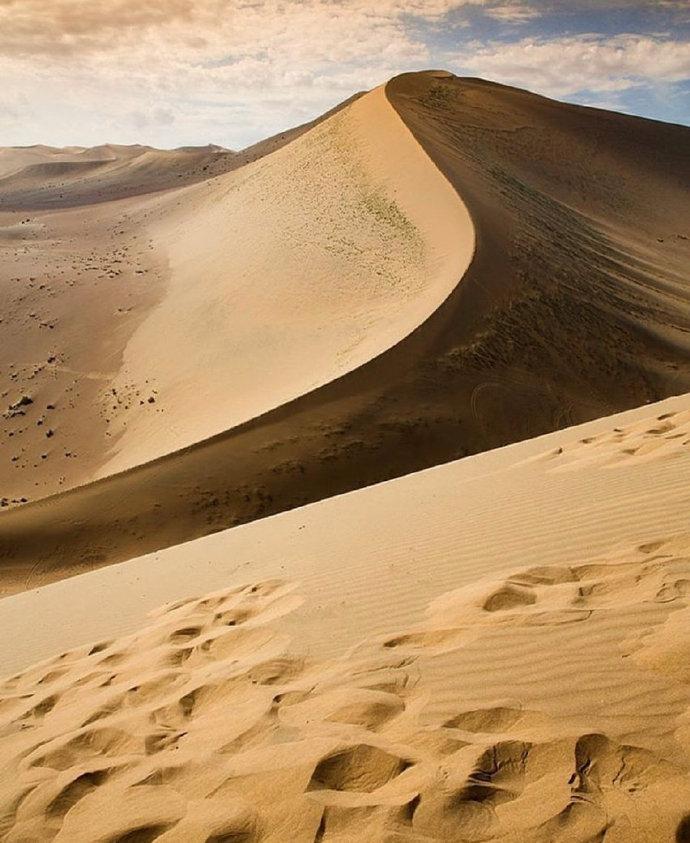
The bazaar sprawls over an area larger than a football field, with semi-permanent sheds for bigger vendors and temporary stalls that appear only on Sundays. There is no single entrance gate; you walk in from any side along roads that become pedestrian lanes once you are fifty meters inside. Signage is mostly Chinese and Uyghur Arabic script. English maps exist online but are often outdated — the layout shifts each year as the city expands around it.
The Livestock Section
If you have been to the Kashgar Livestock Bazaar, Hotan’s animal section will feel familiar but smaller. You will find sheep, goats, cattle, donkeys, and occasionally camels changing hands through cash deals and handshakes. The difference is tone: Kashgar’s market has become tourist-facing with photo zones and English guides. Hotan’s corner is still a working market where farmers from Moyu, Luopu, and Qira counties come to trade.
I watched a transaction for two young goats in October. The buyer inspected teeth, ran his hands along the ribs, then spent fifteen minutes talking price while both men drank tea from a thermos. No contract, no receipt — just a handshake and red 100-yuan notes. If you are not buying animals, walk through for atmosphere before 11:00; by noon many have been loaded onto trucks and driven away.
Silk, Carpets, and Handicrafts
Hotan’s silk reputation goes back over a thousand years. The town of Jiya (吉亚), just east of the city, still runs small-scale sericulture, and much of that production ends up here on Sundays. You will see plain white silk rolls, dyed atlas silk with characteristic ikat patterns, and finished scarves in every color. For details on weave density, dye fastness, and pricing, see our atlas silk shopping guide.
The carpet section occupies a long shed near the center. Most pieces are wool-on-wool, hand-knotted in local style with geometric medallions and stylized pomegranate motifs. Sizes range from small mats (60 × 90 cm) to room-sized rugs (3 × 4 m). Prices depend on knot density and whether dyes are natural or synthetic. Bargain — the listed price is a starting point. Our Xinjiang handicrafts article covers carpet quality markers if you want to read up first.
Jade, Dried Fruit, and Walnuts
This is where Hotan’s bazaar stands apart from nearly every other market in Xinjiang. Jade tables sit under awnings near the dried fruit alley, offering everything from rough river stone to polished nephrite beads, bracelets, and carvings. Most material comes from the Yurungkash and Karakash Rivers south of the city. Some is genuine Hotan jade; some is not. If buying beyond a small souvenir, read our jade shopping guide first — it covers how to spot treatments and avoid common scams.
The dried fruit section runs parallel to the jade tables. Hotan is famous for walnuts, pomegranates, and thin-skinned raisins, with selection peaking during harvest season (September–October). I bought a kilogram of paper-shell walnuts (纸皮核桃) for 35 yuan in October; the vendor cracked one open with his fingers to show how easily the shell came off. Dried figs, mulberries, and apricot kernels are also abundant. Bring a spare bag or buy one from a stall — vendors weigh purchases on old spring scales.
Food at the Bazaar
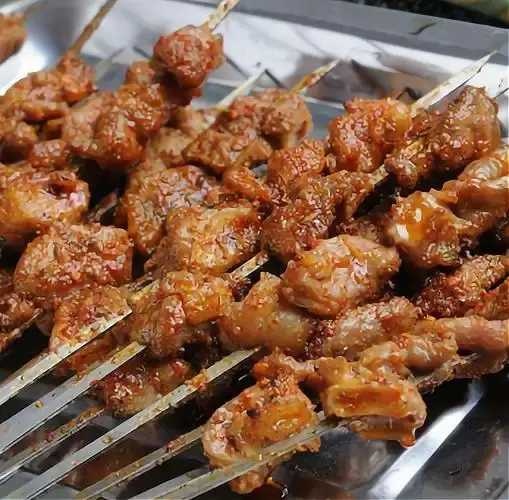
The food lane runs along the eastern edge — plastic stools, oilcloth tables, gas burners, but the flavors are exactly why you came:
- Samsa (烤包子) — baked lamb-and-onion dumplings from a tandir oven. Crispy bottom, steamy top. 3–5 yuan each.
- Kebabs (烤羊肉串) — charcoal-grilled lamb skewers. Spice blends vary by stall: some heavy on cumin, others favor chili and Sichuan pepper.
- Polo (抓饭) — carrot-rice pilaf with lamb chunks. Served with pickled vegetables. Filling and cheap.
- Naan (馕) — fresh flatbread in several sizes. Sesame version for snacking; thicker oil-brushed naan keeps for days stored dry.
- Roast pigeon (烤鸽子) — a Hotan specialty rare in northern Xinjiang. Whole birds seasoned with cumin, star anise, chili, roasted until crisp-skinned.
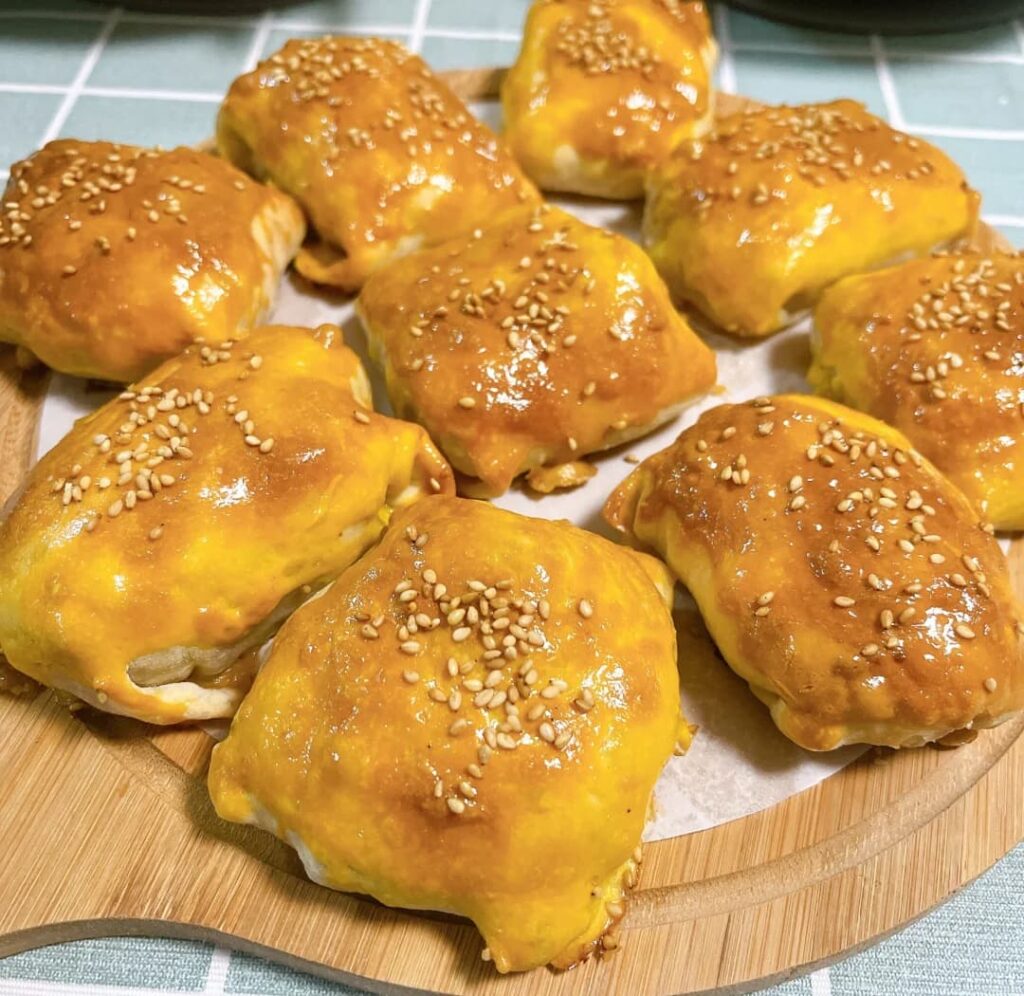
A full meal costs 25–50 yuan depending on meat quantity. Bottled water and tea are everywhere. Pork does not appear here; vegetarian options are limited to bread, fruit, and simple noodle dishes without broth.
Getting There
Hotan has an airport (HTN) with daily flights from Urumqi (~2 hours). The train station sits on the southern leg of the Taklamakan loop railway — reach Hotan by rail from Kashgar (~5 hours), Korla, or Urumqi (with transfer). In town, the bazaar is a short taxi ride or 15–20 minute walk from most central hotels. Drivers should arrive before 10:00 for parking; roads congest by mid-morning as farmers arrive with loaded trucks and carts.
When to Visit
Sundays are the big day, but indoor handicraft and dried fruit sections run daily (roughly 10:00–19:00). Livestock is genuinely Sunday-only. Best months: March–May (18°C–28°C, apricot blossoms) or September–November (hotter in September at 30°C+, but walnut and pomegranate harvests fill the fruit alleys). Summer exceeds 35°C with heavier dust. Winter is quiet; some outdoor sections close.
Where to Stay
- Mid-range — Business hotels along Beijing East Road, clean doubles with AC and breakfast, 200–350 yuan/night. Functional and convenient to the market.
- Budget — Guesthouses near the old town from ~120 yuan. Confirm they accept foreign passports before booking.
- Upscale — One or two international-standard hotels opened since 2023, 500+ yuan. Worth it for reliable Wi-Fi and English-speaking staff.
Bargaining
Vendors expect negotiation on handicrafts, carpets, and jade. Food prices are generally fixed; dried fruit has wiggle room for 2 kg+ purchases. Our bazaar bargaining guide covers the method: start at 50–60% of asking price, be friendly, smile, walk away if needed. Aggressive haggling is considered rude.
A Morning Itinerary
- 9:00 — Leave hotel. Grab naan and tea nearby.
- 9:30 — Arrive while vendors set up. Walk the perimeter to orient yourself.
- 10:00–11:00 — Livestock section (most animals on display now).
- 11:00–12:00 — Jade tables and dried fruit alley. Taste samples if offered (polite to buy if you do).
- 12:00–13:00 — Lunch in the food lane: samsa and kebabs.
- 13:00–14:00 — Silk and carpet sheds. Take notes, compare prices, do not rush.
- 14:00+ — Crowd thins. Rest at hotel or continue to the Hotan Jade City area or Yurungkash River if you have a vehicle.
Frequently Asked Questions
Is it open every day? The full market with livestock and outdoor stalls is Sunday-only. Indoor sections (handicrafts, some dried fruit) run daily but with a fraction of Sunday’s energy.
Do vendors speak English? Most do not. A translation app helps enormously. Numbers work fine with fingers and a calculator.
Can I pay by card or phone? Cash is king. WeChat/Alipay accepted by maybe a third of vendors (mostly younger ones). Cards rarely accepted. Carry small bills.
Safe for solo female travelers? I have traveled through Hotan in mixed groups without issues beyond normal curious staring. Use standard crowded-market sense: keep valuables close, dress modestly, avoid isolated corners after dark.
How does this compare to Kashgar’s Sunday Market? Kashgar is bigger, more polished, more tourist-facing. Hotan feels rawer, more focused on regional trade (jade, walnuts, silk), less photographed. If time allows only one, Kashgar offers more spectacle; Hotan offers more authenticity. Both complement each other well.
What should I definitely buy? Dried figs or paper-shell walnuts — cheap, light, better souvenirs than mass-produced trinkets. A small piece of atlas silk or hand-woven coaster also travels well.
Disclaimer
Market locations, hours, and prices change without notice. This guide reflects conditions observed during visits in 2024–2026. Verify locally before traveling. The author has no financial relationship with any mentioned vendor. Jade carries counterfeiting risk; buy from reputable dealers and consider independent appraisal for high-value items.
About the Author
Karl Huang has traveled extensively across Xinjiang since 2019, visiting over 40 prefectures and counties including multiple trips to the Hotan region. He writes about Xinjiang travel with a focus on practical, on-the-ground information that guidebooks often miss.