Published: July 28, 2026 | Author: Willem Dekker, with editing by the Xinjiang Attractions team
I bake bread for a living in Utrecht, and it was bread that taught me the most about Xinjiang Islam. On our second morning in Kashgar, I watched a man drop a piece of naan on the pavement, pick it up, touch it to his forehead, and set it on a wall ledge where birds could reach it. Nobody around him reacted. It was ordinary behavior. My wife Annelies and I spent eighteen days in the region in October 2025, from Kashgar to Turpan to Urumqi, and this article collects what a curious, respectful traveler can actually see of Muslim daily life there: the food rules, the greetings, the rhythm of the week, and the etiquette that keeps you from embarrassing yourself. Everything below comes from our own trip, cross-checked against what local guides and hosts told us.
Quick reference: Xinjiang Islam for travelers
| Question | Short answer |
|---|---|
| Main Muslim communities | Uyghur, Hui, Kazakh, Kyrgyz, Tajik and others; practices vary between them |
| Food to expect | Halal (qingzhen) restaurants everywhere; no pork on Muslim-run menus, alcohol rules vary by venue |
| Can non-Muslims enter mosques? | Some historic mosques admit visitors with tickets, e.g. Id Kah in Kashgar; dress modestly and follow posted rules |
| Common greeting | “Yaxshimusiz” (Uyghur, “how are you”); “Assalamu alaykum” between Muslim men |
| Bread etiquette | Never place naan face down, never step over it, tear it rather than cutting when shared |
| Best cities to observe daily culture | Kashgar and Turpan for old-town life, Urumqi for the Hui quarter around Shanxi Mosque |
What we actually saw: faith woven into ordinary days
Guidebooks tend to treat religion in Xinjiang as a list of monuments. The mosques and mausoleums matter, and we cover them in our guide to Xinjiang Islamic architecture, but the living culture shows up in smaller places. In Kashgar’s old town, our guesthouse host Memet washed his hands three times before kneading dough for breakfast naan, a habit his grandfather insisted on. At a butcher stall near the livestock market, the seller pointed at his knife and said one word in English: “halal.” He wanted us to understand the animal had been slaughtered correctly before we bought the lamb skewers next door.
The week has a shape here. Friday early afternoon, jumah prayer time, is when older men in square doppa hats walk toward the neighborhood mosque, and some small shops pull their shutters half down for an hour or two. We learned to plan our shopping around it rather than against it. Sunday, by contrast, belongs to commerce, which we wrote about in our piece on Xinjiang bazaar culture.

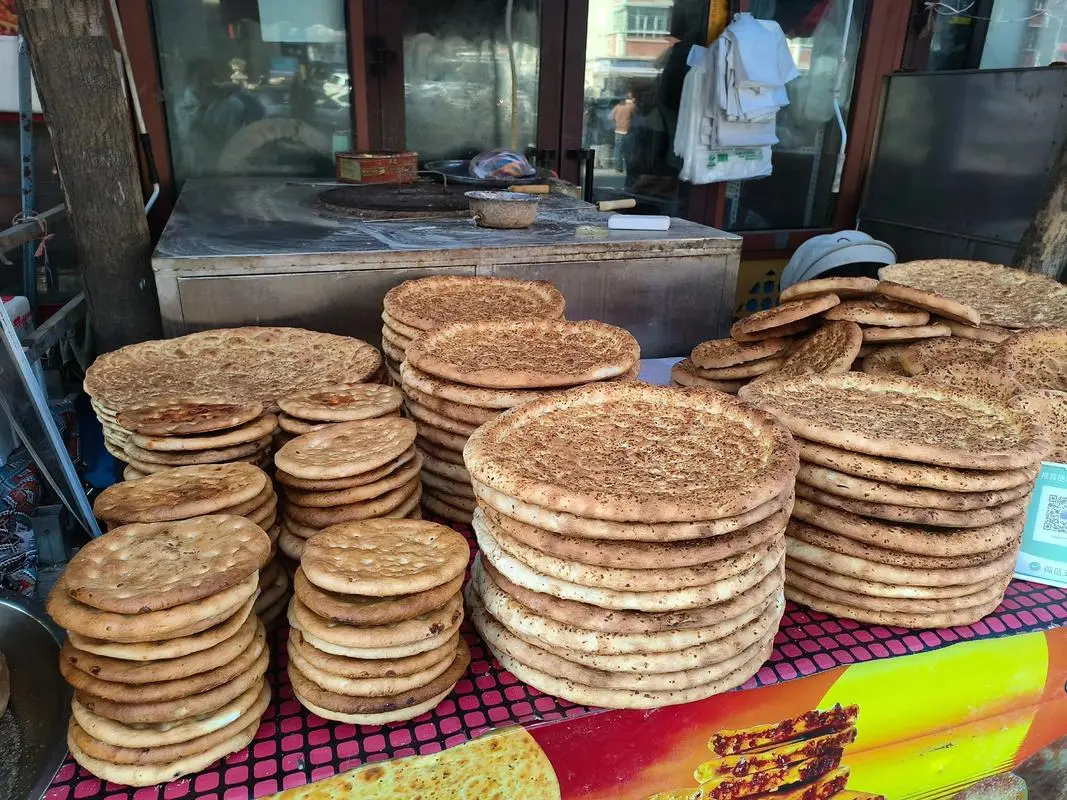
Bread deserves its own paragraph because it carries near-sacred weight. Naan is not just food; wasting it is considered shameful in a way a Dutch baker can respect. Loaves are stacked face up at every bakery. When a family shares one, the eldest usually tears it. Day-old naan gets dried, not discarded, and turned into a breakfast dish soaked in tea. If you buy a loaf as a snack, and you should at 4 or 5 RMB, do not stuff the leftover half in a bag under your shoes. Our guide Dilnur physically winced when a tourist in our minivan did exactly that.
Getting to the places where the culture is most visible
Kashgar is the natural base. Flights from Urumqi take under two hours and cost us 620 RMB each in October. The high-speed rail option runs Urumqi to Kashgar in roughly eleven hours via Turpan and Aksu, which sounds long but let us watch the desert roll past for the price of a decent dinner, about 300 RMB in second class. Within Kashgar, everything an observer needs sits inside the old town or a 15 RMB taxi ride from it: the Id Kah square, the bakery lanes, the copper workshops that still pause for prayer calls.
Turpan is the second stop I would insist on. The Emin Minaret stands at the edge of grape-drying villages where Hui and Uyghur families live side by side, and the contrast with Kashgar is instructive. Urumqi rounds things out with its Hui community around the Shanxi Mosque area, where the food culture leans toward beef noodles rather than lamb polo.
When to visit
We chose late October and would choose it again: mild days around 15°C, thin crowds, grapes still hanging in Turpan. Spring (April to May) works equally well. If your dates overlap with Ramadan, read our first-hand account of Ramadan in Xinjiang before you go; restaurants stay open, but rhythms shift and evening meals become the day’s main event. The Corban Festival (Eid al-Adha) is the year’s biggest celebration, and our report on the Corban Festival explains what visitors can join. Summer works too, though Turpan above 40°C tested our Dutch tolerance for heat.
Where we stayed
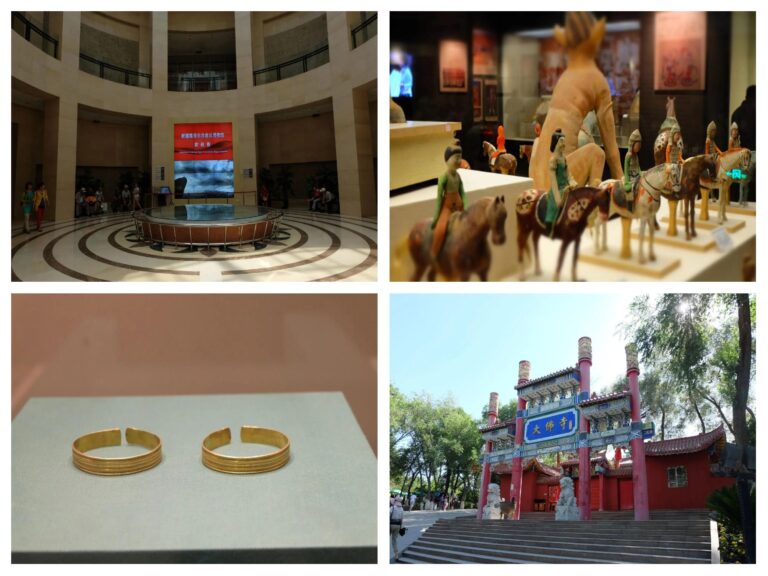
In Kashgar we booked a courtyard guesthouse in the old town for 380 RMB a night. The family running it kept a halal kitchen, which meant no outside pork products; they asked us politely on arrival and we simply left our stash of Dutch salami sealed in the luggage. Nobody searched anything, it was a matter of trust. In Turpan we paid 320 RMB for a vine-shaded courtyard hotel near the museum. Urumqi has every international chain; we picked one near the Hui quarter for 450 RMB so we could walk to breakfast noodles. Booking through Chinese apps got us roughly 20 percent below the prices we saw on international sites.
Eating well, eating respectfully
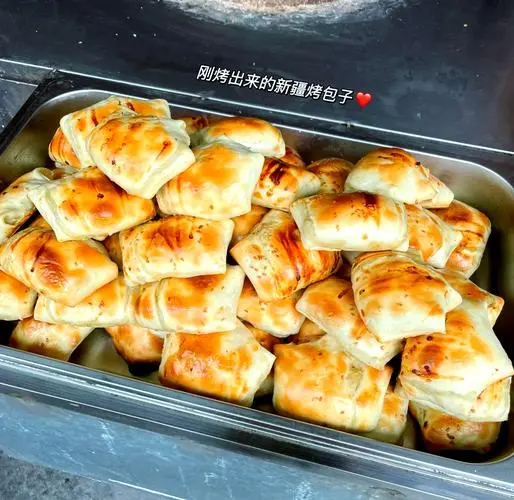
Halal eating in Xinjiang is effortless because it is the default in most neighborhoods. Look for the Arabic script or the Chinese characters for qingzhen on signboards. Our favorites, in the order we would reorder them today: polo (rice with lamb and yellow carrots, 25 RMB a plate), tonur-baked samsa at 5 RMB, laghman noodles pulled to order, and baked whole fish in Turpan. Tea opens and closes every meal; pouring for others before yourself earns quiet approval, a habit we explain more fully in our Xinjiang tea culture guide.
Two rules kept us out of trouble. First, never ask a Muslim-run restaurant to cook something with pork or bring pork products inside. Second, alcohol is inconsistent: some Uyghur restaurants serve beer, many do not, and waving a bottle around in one that does not is poor form. When in doubt we drank pomegranate juice, pressed fresh for 10 RMB, and missed nothing.
Practical tips from our notebook
- Dress modestly around mosques and in old-town lanes: covered shoulders and knees for everyone. Our full Xinjiang dress code guide has specifics.
- At Id Kah Mosque, buy the visitor ticket (45 RMB when we went), remove shoes where indicated, and skip photos of people praying. Details in our Id Kah Mosque visiting guide.
- Ask before photographing anyone, elders especially. A smile and a raised camera with an eyebrow works in any language; about half said yes to us.
- Handshakes: wait for a woman to offer her hand first. Annelies found a nod and a hand over the heart universally welcomed.
- Learn three words: “yaxshimusiz” (hello/how are you), “rahmet” (thank you), “hosh” (goodbye). Effort mattered more than accuracy.
- Friday 13:00 to 15:00: plan museum or lunch time rather than shopping in mosque neighborhoods.
- Communities differ. Kazakh herders, Hui traders and Uyghur farmers practice with different emphases; our overview of Xinjiang ethnic groups sorts out who is who.
- General manners beyond religion are covered in our Xinjiang etiquette guide.
A five-day culture-focused itinerary
Day 1, Kashgar: old town on foot, naan bakery lane at 8:00 when ovens fire up, Id Kah square in the late afternoon.
Day 2, Kashgar: Sunday livestock market in the morning if your dates allow, Apak Khoja Mausoleum after lunch, teahouse until dinner.
Day 3, fly or train toward Turpan: evening arrival, night market for baked fish.
Day 4, Turpan: Emin Minaret at opening time, grape valley villages by taxi (200 RMB half day), courtyard rest through the hot hours.
Day 5, Urumqi: Hui quarter breakfast noodles, regional museum for historical context, evening flight out.
FAQ about Xinjiang Islam and daily life
Can non-Muslim travelers visit mosques in Xinjiang?
Several historic ones sell visitor tickets, Id Kah in Kashgar being the best known. Smaller neighborhood mosques are working spaces, not attractions; admire them from outside unless invited.
Is halal food easy to find?
Easier than non-halal in most districts. Qingzhen signage is everywhere, and even convenience stores stock halal instant noodles.
Do women travelers need a headscarf?
No. Modest clothing is appreciated near religious sites, but Annelies never covered her hair and never felt out of place.
Will language be a problem?
Mandarin gets you through hotels and transport. In markets, translation apps plus pointing worked fine for us, and Uyghur greetings opened doors apps cannot.
Is it appropriate to discuss religion with locals?
Let hosts lead. People happily explained food rules and bread customs to us when we asked practical questions; we kept conversations to daily life and travel, which is also the scope of this article.
Disclaimer: This article describes cultural practices and food customs as we personally observed them as tourists in October 2025, supplemented by what local hosts and licensed guides told us. It is a travel resource, not a religious or academic reference, and it deliberately limits itself to what visitors can see and do. Prices, opening hours and ticket policies change; verify locally before you rely on them.
About the author: Willem Dekker runs a small bakery in Utrecht, Netherlands, and plans his holidays around bread traditions. He and his wife Annelies traveled through Kashgar, Turpan and Urumqi for eighteen days in October 2025, paying their own way with no sponsorships. This piece was fact-checked and edited by the Xinjiang Attractions editorial team, who have covered the region since 2024.